





THE SUNNY southeast. The historic southeast. Seafood. The Opera Festival. The coastline. That’s pretty much Wexford in a nutshell.
There’s something special about arriving somewhere new and immediately feeling at home. In Co. Wexford, that feeling comes naturally.
It’s a place where fishing villages still go about their business, ancient castles tell remarkable stories and long stretches of sandy beach are as inviting in the winter as they are in the summer — think walks in blustery weather to clear all those cobwebs away.
Whether you’re planning a family holiday or a short escape to Ireland, Wexford will deliver.
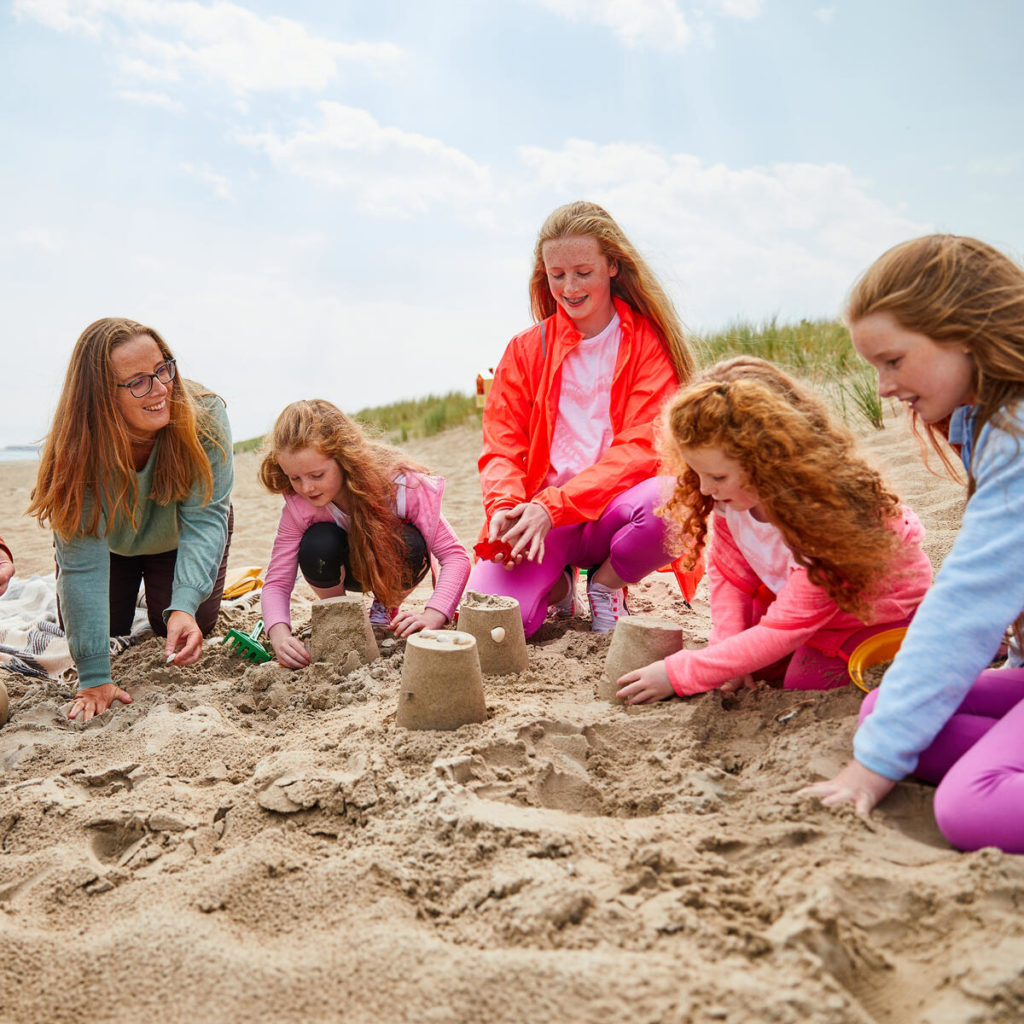 Adventures await in Co. Wexford
The coast
Along Wexford’s coastline, every turn reveals a different landscape. At Kilmore Quay, colourful fishing boats bob in the harbour and you can enjoy fresh local seafood. The Hook Peninsula offers dramatic scenery, hidden coves and Hook Lighthouse, a landmark that has watched over the coast for quite a while. It dates back to the early 13th century, one of the longest continuously operational lighthouse in the world. A visitors’ centre boasts first-class displays tracing the history of the beacon — it seems that Ireland’s first beam team were monks who may have blagged the design for their distinctive tower from the Pharos in Alexandria. Those monks, eh? Always with the big ideas...
By hook or by crook you should try to get there, not least because the expression “by Hook or by Crook” is believed to date from the 14th century and this very area. According to legend, the ‘Crook’ refers to Crook village across Waterford Harbour. Local legend says that Oliver Cromwell, during his 1649 campaign in Ireland, vowed to take Waterford “by Hook or by Crook” — meaning he would capture the city by landing forces either at Hook Head or at Crook. NOTE: Other legends are available.
Elsewhere, the sweeping sands of Curracloe Beach and nearby Raven woodland set the scene for peaceful walks and family adventures. These are the simple pleasures that make a holiday memorable: sea air, beautiful surroundings and the freedom to explore.
Then there are the Slobs — the world-famous stretch of dunes, mudflats and reclaimed land which are home to thousands of seabirds, wildfowl and waders.
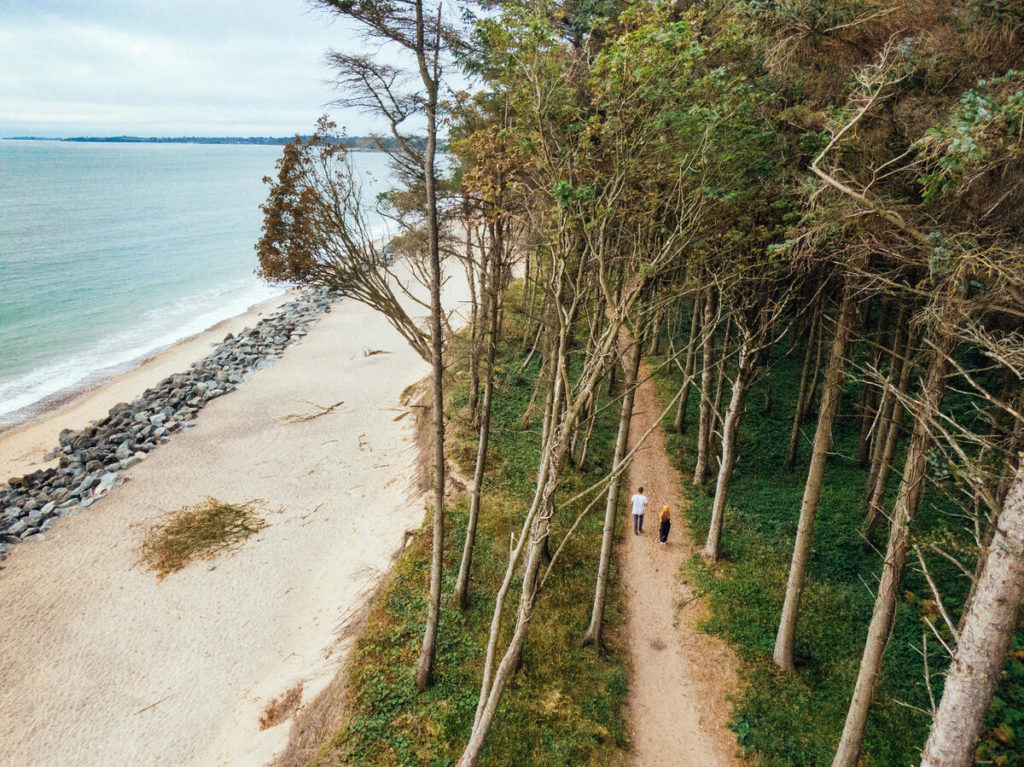 Take a walk on the wild side in Courtdown Woods
Wexford Town
“By the creek of Baginbun, the battle for Ireland was fought and won.”
Baginbun, in the south of Wexford, was where Norman ships landed in 1170. The Normans, who’d first arrived in numbers the previous year, soon take over large swathes of the country. The couplet, probably dating back many centuries, is harsh, you may think, but the contemporaneous chronicles told it like it was.
Next year, the 2027 European Year of the Normans will mark over 850 years since the Normans first landed at Bannow, County Wexford, in 1169. Baginbun, by the way, is believed to get its name from the two ships that landed, La Bague and La Bonne.
The man at whose behest the Normans first came to Ireland — sort of* [see carefully worded note below] — was one Diarmuid Mac Murrough. The story of the Norman Conquest begins with the wily, deceitful villain Mac Murrough pitted against the well-meaning but hapless incompetent Tiernan O’Rourke, another local leader. There had been handbags between the pair since 1152, and, as is the way of these things, a female interest soon entered the story. Dervorgilla she was called, and her abduction led to events that eventually spiralled into a takeover of Ireland by the Normans.
[* The Normans probably would have come anyway.]
This lengthy history of occupation, oppression and subsequent insurrection has given Wexford much of its character. Mac Murrough made the village of Ferns his centre of operations, and duly founded an abbey there.
A 12th-century High Cross in the grounds of the now ruined abbey founded by Mac Murrough, a prior prior so to speak, marks a grave traditionally identified as McMurrough’s. And in something of an ironical turn of events, the rebel leader Father Murphy — whose main aim in life was to rid Ireland of the occupying force and their successors (for further elucidation, listen to the words of the song Boolavogue) — is also believed to be buried here, in the same cemetery.
As you stand in the old graveyard of St Mary’s Augustinian Abbey — with the breeze soughing through the old, gnarled trees — it’s hard not to feel the whole sweep of Irish history surround you. The beginning of modern Ireland stems from Ferns, and the names hang on the breeze — Mac Murrough, Strongbow, Aoife, Henry II.
Yes, even Henry, the first ‘Lord of Ireland’, made it to Wexford. He probably came to put manners on Strongbow — who by this time had gone a bit ‘native’ and was evidently enjoying the craic too much.
A fine soft day intervened. The weather was so atrocious that Henry stayed put in Wexford. And who can blame him, given the attractions of the town? The old West Gate, one of the town’s surviving entrances, was where Henry spent Lent 1172. Sadly, craic was far from his mind — he was earnestly trying to assuage his guilt for murdering Thomas Becket. To paraphrase John O’Farrell in An Utterly Impartial History of Britain — Henry was an energetic, determined and intelligent operator who defeated rebels on all fronts, and set down the principles of English law. But you kill just one archbishop . . .
Still, no time for further reverie. It’s time to march on old Wexford Town, as many have done before us.
Wexford Town is a rugged, imposing place with a harbour boasting more than one thousand years in the business. The tight, meandering streets are mediaeval in character — and very attractive, packed with pubs, independent shops and cafes. It’s a first-class place for strolling, with mediaeval reminders (walls, buildings, monuments) throughout the town.
Tintern Abbey
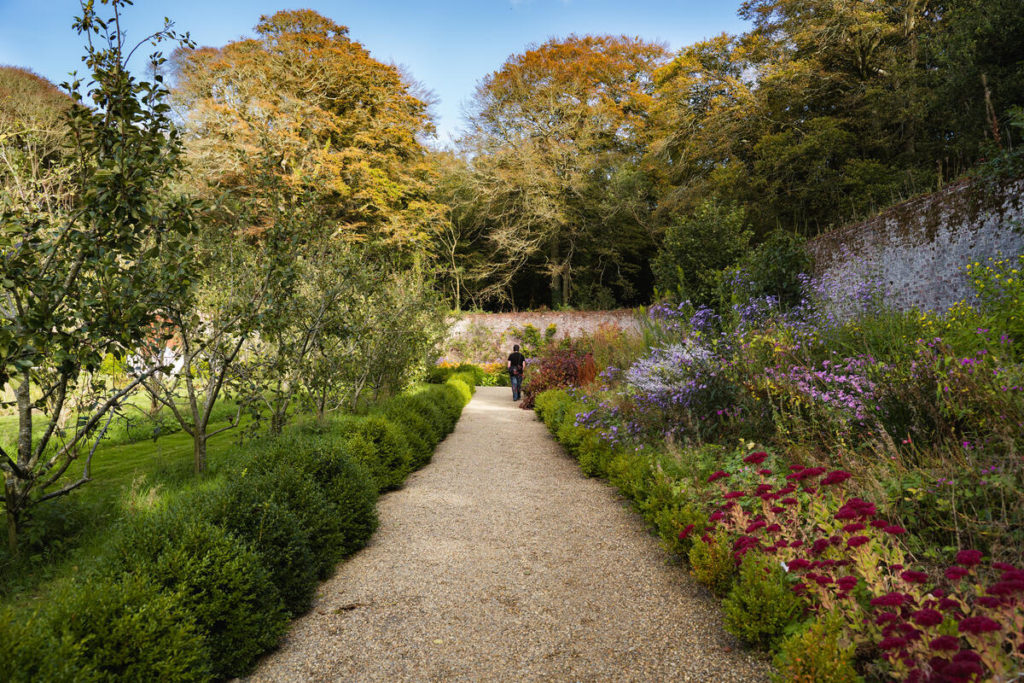 The walled garden at Tintern Abbey
Tintern Abbey, founded around 1200 by William Marshal, the Norman lord of Leinster, is a hauntingly beautiful ruin on the Bannow Bay estuary. The abbey’s grey stone arches and ivy-clad cloisters are evidence of its Cistercian past. Take a stroll along the riverside woodland trails, have a peek into the walled garden, or cross the ancient Tintern Bridge with its view of the tide sweeping in.
Culinary Wexford
A holiday in Wexford wouldn’t be complete without experiencing its local food and welcoming hospitality. From seafood by the coast to cosy cafés, independent restaurants and seasonal local produce, there’s plenty of dining out without dishing out.
Spend an evening exploring Wexford Town, settle into a welcoming restaurant or discover the flavours across teh county in the many villages that have good food at the top of their agenda. Or menu.
For families, Wells House & Gardens and Johnstown Castle Estate offer beautiful grounds and memorable outdoor adventures.
Robert Millar, Chair of Visit Wexford and Area Manager of the Talbot Collection, said: “The county offers visitors a memorable mix of experiences, history and hospitality. Wexford has so much to offer visitors, whether they’re planning a family holiday, a relaxing weekend away or a longer stay exploring Ireland’s Ancient East. From our beautiful coastline and rich heritage to fantastic food and welcoming towns, there’s something for everyone to discover. As we look ahead to 2027 and the Year of the Norman, it’s an especially exciting time to experience the county’s unique character and stories.”
The Irish National Heritage Park
Set beside the River Slaney at Ferrycarrig, just outside Wexford town, the Irish National Heritage Park outdoor museum explores how people lived, worked and sheltered across the centuries. Its 35 acres of woodland, marsh and shoreline contain 16 reconstructed historical sites, built using materials and techniques appropriate to their periods.
The route takes in a Stone Age campsite, an early farmstead, a megalithic tomb and a ringfort. There is a monastery, a crannóg and a Viking boatyard, with each stop adding another layer to the story of settlement in Ireland.
The appeal lies in the ordinary questions these places raise. How did you keep warm? Store grain? Cook dinner? Protect your family?
Alongside the reconstructions, the park contains genuine archaeological remains associated with the Anglo-Norman arrival in 1169.
Guided tours explore prehistoric Ireland, early Christianity and the age of invasion. Allow time to wander, though: the riverside setting is part of the pleasure, and there are few more agreeable ways to consider the considerable effort our ancestors put into simply getting through a day.
Enniscorthy
Enniscorthy is a town that rewards a little uphill effort. Its streets climb from the River Slaney towards a castle, while across the water Vinegar Hill provides a reminder that this corner of Wexford has witnessed rather more than passing traffic.
Start with Enniscorthy Castle, whose origins stretch back to the thirteenth century. Over its long history it has accommodated soldiers, prisoners and families; today its exhibitions explore the town’s past and celebrate the pioneering furniture designer and architect Eileen Gray, born nearby.
From the rooftop, the view helps put everything in place: river, rooftops and the surrounding countryside.
Then make for Vinegar Hill, where Crown forces defeated the rebels on June 21, 1798. The ruined windmill gives the summit its unmistakable outline. On a quiet day, with the town spread below, it takes some imagination to picture the violence once concentrated here.
Back among the streets, leave time for a wander and something to eat. Enniscorthy’s appeal lies partly in its scale: there is enough history for a substantial visit, but little need to rush between sights.
Wear comfortable shoes, bring a coat for the hill, and give the place an afternoon. Its stories deserve more than a hurried stop.
Tulach a’tSolais (or Mound of Light) on Oulart Hill, just outside Enniscorthy, is a monument to the 1798 Rebellion. The mound is a room – containing two abstract curved oak forms – hollowed out of a small hill. It’s illuminated by natural light falling through a long concrete slot which bisects the grassy structure. This starkly beautiful sculpture contrasts memorably with the pastoral Wexford landscape.
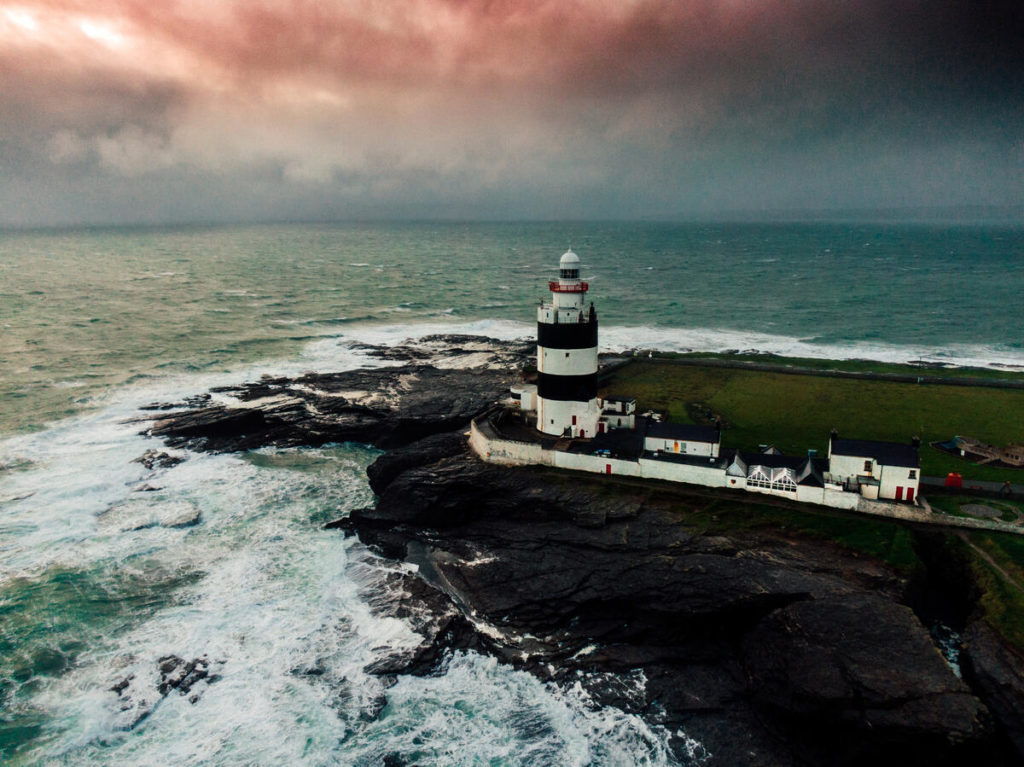 Wexford's iconic Hook Lighthouse
Courtown
Courtown is a thriving village and holiday resort. Beaches, water-sports (particularly kayaking) and fishing, and behind the sand-dunes the lovely Courtown Wood. A winter walk here is magical. A huge cedar of Lebanon takes pride of place beside the river, a near neighbour of two gigantic redwoods.
In the middle of Courtown Wood is the Cross of Kilbride, all that remains of an ancient church. Framed by arching chestnut branches and in spring candelabras of white blossoms, it seems an ideal place for spiritual contemplation.
The Leaning Tower of Tagoat
Not quite as famous as the one in Pisa, but worth a visit nonetheless. The tower in question is part of the remains of a Norman castle on Lady's Island, on the Wexford coast. Not far from Carnsore Point of Met Éireann fame (whose weather station's findings are read out every day on RTÉ), Lady's Island has no such publicity machine working for it. So you're guaranteed a peaceful, tranquil day by the lagoons of Ireland's most south easterly point.
Johnstown Estate
For a slow-paced afternoon, the lakeside walks, gardens and fascinating history of Johnstown Castle Estate are an ideal stop for anyone, families, couples, or solo travellers.
The castle looks as though it was designed with a storybook illustrator in mind: turrets, Gothic windows and handsome stonework reflected in the surrounding lakes.
Just outside Wexford town, the estate offers woodland walks, ornamental gardens and a four-acre walled garden, with plenty of reasons to linger.
A guided tour will show you the grand interiors as well as an 86-metre servants’ tunnel, built to keep domestic staff discreetly out of sight.
In the former farm buildings, the Irish Agricultural Museum tells another side of the story, exploring the tools, traditions and hard work that shaped rural Ireland, from turf.
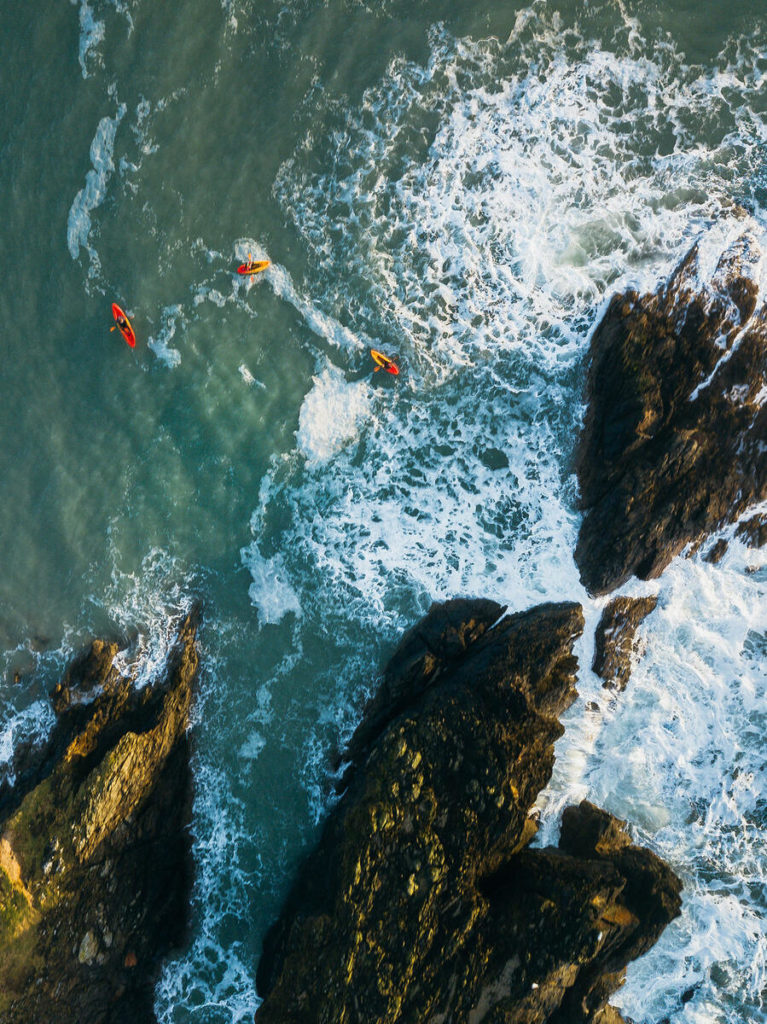 Fancy a spot of sea kayaking off the Wexford coast?
New Ross
New Ross, by the River Barrow – the second longest river in Ireland, fact fans – is notable for its steep hill and numerous narrow, winding streets. From the wide quays the town rises to the hill behind, and the streets, no more than lanes, are just wide enough for a few donkeys to negotiate with their loads taken from the waiting ships below.
President John F. Kennedy’s Irish family roots in Wexford are commemorated at the JFK Arboretum at New Ross containing over 500 different rhododendron and azaleas, an internationally important collection of over 4000 different trees and shrubs.
The Kennedy story was a familiar one in 19th century Ireland. Wexford was the embarkation point for thousands of Irish emigrants bent on a new life in the Americas. The Dunbrody Famine Ship, a reconstruction of a three-masted barque originally built in Quebec (1845) is now moored in New Ross. It was from here in 1848 Patrick Kennedy, a cooper, boarded a ship to escape famine-beleaguered Ireland. Within two generations the Kennedys had become one of the richest and most influential families in America.
New Ross was founded in 1207 by Isabella, one of Strongbow’s daughters, who married Guillaume de Maréchal, Earl of Pembroke. Originally called Nova Villa Pontis by the Anglo-Normans, great industries, such as shipbuilding, took root, the perfect natural harbour accommodating well over 350 ships at one time. About 14 guilds flourished here and at least five languages were spoken.
New Ross boasts a tholsel, which may sound like a throat infection but is in fact a Norse word for a toll house. Here, for centuries past, rights of passage were paid. The present tholsel was built in 1749 and renovated 50 years later. Now the seat of local government, it guards two treasures, the maces of Edward III and Charles II.
The people here have always been fiercely independent, and forceful of their rights. At one stage the townsfolk rebelled against resident monks and were excommunicated. They seemed, as far as I know, quite unperturbed by this turn of events, and their reputation, locally, grew considerably.
But we’ll leave it to the British Library to have the last word on this historic place, where history both tumultuous and terrible lurk round every corner. But it has unparallelled beauty and drama in its landscape. The Harleian Manuscripts held in the museum describe the town in verse, in old French, “une vile en Ireland/ la plus bele”.
A town in Ireland/the most beautiful. An epithet that could equally be applied to the whole county of Wexford.
Where to stay:
Whether you prefer a characterful country house, a coastal hotel or a family-friendly self-catering stay, explore Wexford's accommodation options to find your perfect escape.
Discover the county and plan your next Irish getaway at visitwexford.ie.
