





MONTENEGRO is currently European travel’s shiny, chic new thing. But is it the real deal?
On a plush platform in the heart of the Bay of Kotor, the staff of a tiny floating bar pull bottles of wine on strings to the surface, revealing tiny barnacles in place of the labels.
They emerge slowly from crystal-clear water and, when they’re cracked open, the aged glass surfaces glisten in the summer sunlight. The wine is served cold alongside a plate of fresh mussels drawn from the same water. Afterwards, punters hop in for a swim in the flickering afternoon light.
Montenegro is currently having a moment, and Kraken, an offshore bar booked up weeks in advance at the height of summer, is one of those spots.
The bar is also reflective of the country in general: ruggedly beautiful, somewhat free-spirited, a little rough around the edges and capable of offering experiences that fall just a little outside the European sun-holiday norm to which holidaymakers have become so accustomed.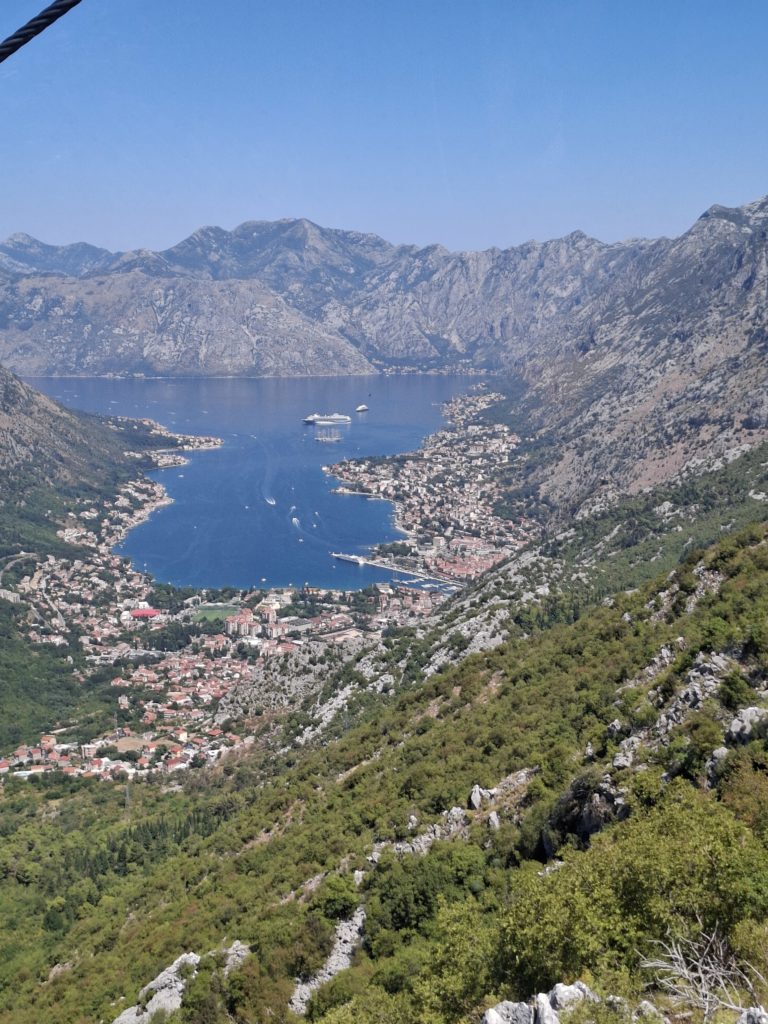
The town of Kotor itself is perhaps the jewel in the crown. Its roots go back millennia, but the maze-like Old Town is Venetian-era, a gorgeous web of stone squares and alleyways weaving their way down to the water.
It’s a shady haven overlooked by the town’s soaring hillside fortress, the pathways to which are a heady slog in the thick summer heat.
Kotor sits at the head of the bay, which is made up of the most dramatic steep-sided valleys rising towards 1,000 metres, the barely tidal sea flowing gently to and fro through a tiny gap in the hills at the far end.
The bay’s various towns occupy rare flat spaces, and the route between them is often a waterside drive which, in some spots – such as on the route to and beyond the town of Prčanj – sits hair-raisingly close to the water, with rare passing places seeming to invite a tyre over the edge. There is barely space for these places to exist at all. But their setting is magnificent.
Above the city, a cable car whisks you to almost 1,400 metres, where the whole bay opens up before you. It’s a crowded spot – perhaps the absolute peak of the Montenegrin coast’s current viral Instagram fame – but for good reason.
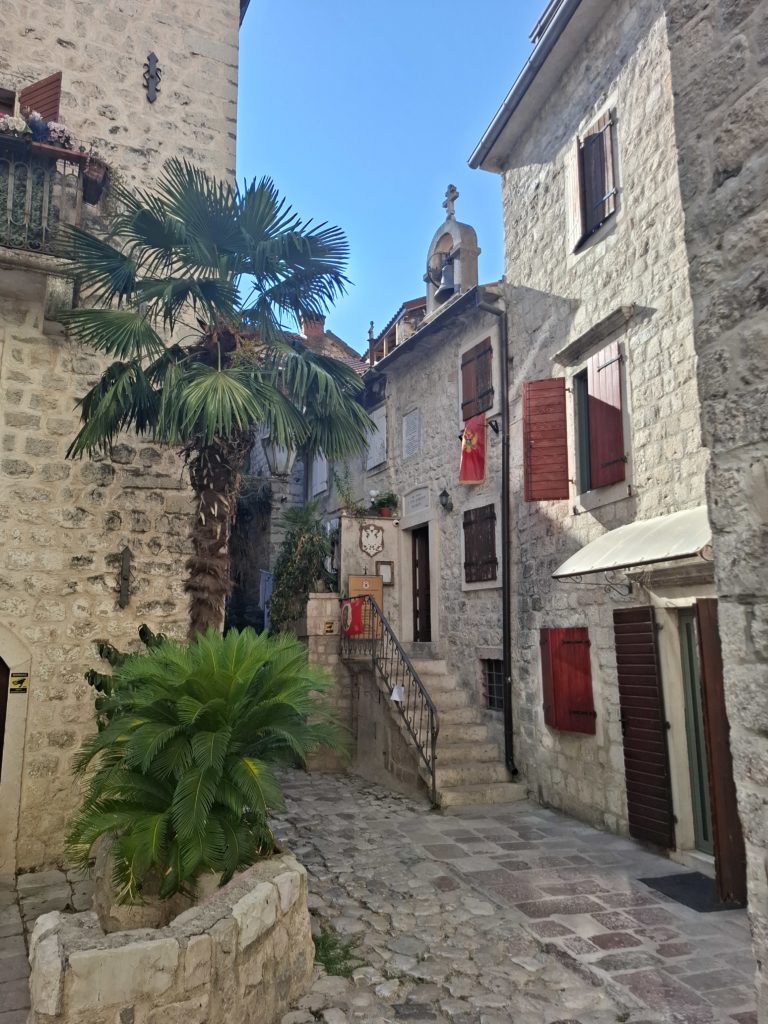 Kotor Old Town
An Alpine Rollercoaster shoots you over the edge of the cliffside above it all to take in the views at speed, and a newly installed Sky Bar straps you in 20 metres above even the highest peak, where you can sup champagne as the sun sets, your legs dangling over the drop as the whole bar slowly rotates.
A more serene, sloping, sunset-view bar offers a Balkan dance party and drinks on ice from its carefully angled outdoor tables.
As gorgeous as Kotor itself is, it feels more like a place to visit than a place to stay in, at least at the height of summer.
The Old Town is best experienced in the evening, rather than in the scorching midday heat, and all the best summer locations are to be found around the sides of the bay.
We pick tiny Prčanj, where sporadic seafood restaurants jut out into the water and the drive from the city feels at times like navigating a narrow pier with two-way traffic.
The Prčanj side of the bay falls into shade from the surrounding peaks in the evening, at which point the local beach bar switches to playing gently beat-overlaid versions of Abba and Simply Red, while parents watch their children charge around a swimming area roped off from the speedboats and cruise ships that pass by.
The beaches are pebbly, surrounded by craggy peaks, clear water and restaurants offering affordable oysters and grilled squid. As the sun sets, you retreat to a large, heavily air-conditioned apartment that comes in at less than €100 a night for a family of four. As a value proposition, it’s very hard to argue with.
Boat rides across the Bay of Kotor are, unsurprisingly, a big attraction.
The popular Blue Cave route whisks you past an old island prison turned into a hyper-luxury hotel, past dingy submarine tunnels and on to beaches accessible only from the water, and gleaming caves lit early in the morning by the angled sun. The water, no matter where you head, is a cliché of clear, flickering turquoise.
Some tours go to Our Lady of the Rocks, a church sitting on a man-made island built by fishermen who were inspired, centuries ago, by an image of the Madonna beneath the surface.
Its walls now feature silver tributes of thanks from passing sailors, as well as rugged wooden chests of coins and an ornate tapestry by a sailor’s wife, woven in part from her own hair, its strands greying visibly over 25 years of work as she waited in vain for his return.
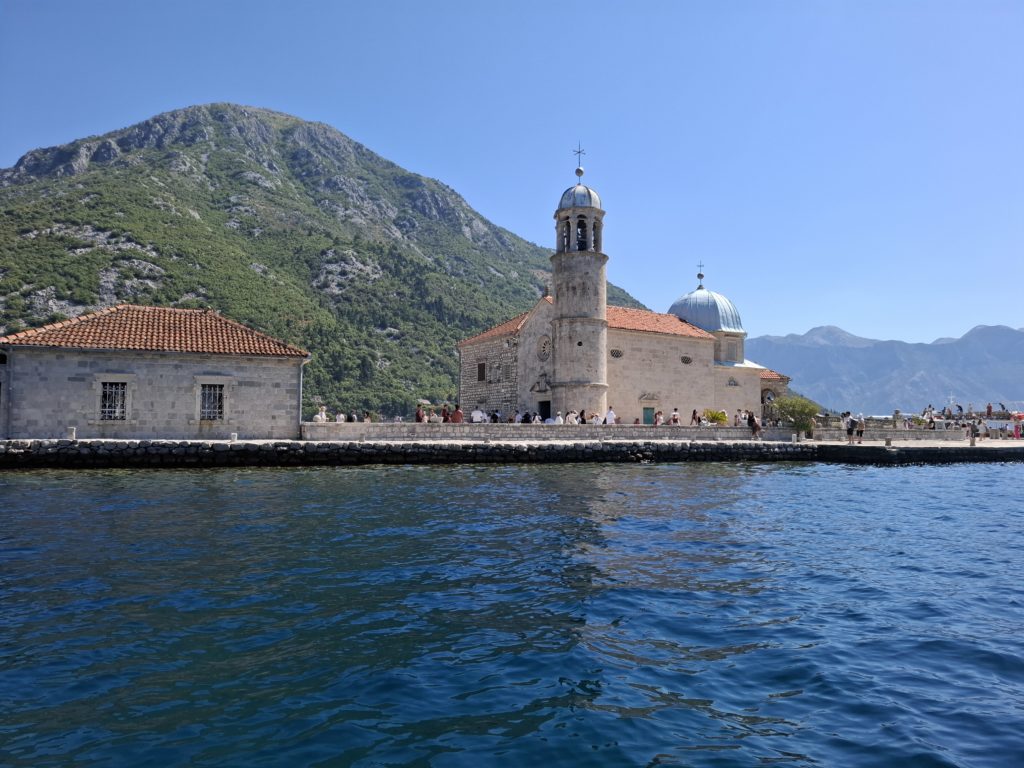 Our Lady of the Rock
While the Bay of Kotor and nearby Budva are by some distance the main tourist centres, locals consistently point elsewhere in the country as their personal favourite, in part, it seems, because those places haven’t yet been uncovered by the growing numbers of tourists.
The north, in particular, is, according to a local we chat to in comfortable English at a play park, “cool, mountainous and relaxed”. We don’t make it that far – one for next time – but do take up recommendations to spend a day in the capital, Podgorica, swimming, eating and lounging at the laid-back Imanje Knjaz water park, and another at the memorable Lake Skadar.
The latter is particularly sensational. The massive, shallow body of water stretches across the border into Albania, but the tiny, wood-heavy town of Virpazar is the place to start.
From there, affordable boat tours whisk you out across the 26-degree water into the heart of sweeping aqua meadows, thick with water chestnuts, where rare birds hop across the plants. There are breaks for a swim in the murky water and, afterwards, dinner options include breaded pork wrapped around cheese, a local speciality, as well as seafood served on a moored pirate ship.
Budva, in truth, is our only disappointment. While it makes a decent base for lots of experiences and clearly has a vibrant nightlife scene, it’s currently something of a building site at its heart, and the city beaches are either dirty and crammed with overpriced deckchairs or privately linked to the plusher hotels.
The hotels themselves have a bit of an “any coastal holiday resort” vibe – a little generic 18–30.
The food is solid, a mix of seafood and Balkan heaviness, and the Old Town is a beautiful, if roasting-hot, experience. Water sports include affordable parasailing, but the town doesn’t shine like Kotor.
At little more than 20km from its better-known rival, it strikes us as more of a day-trip option, just about worth navigating the clearly insufficient road infrastructure for a drop-in visit.
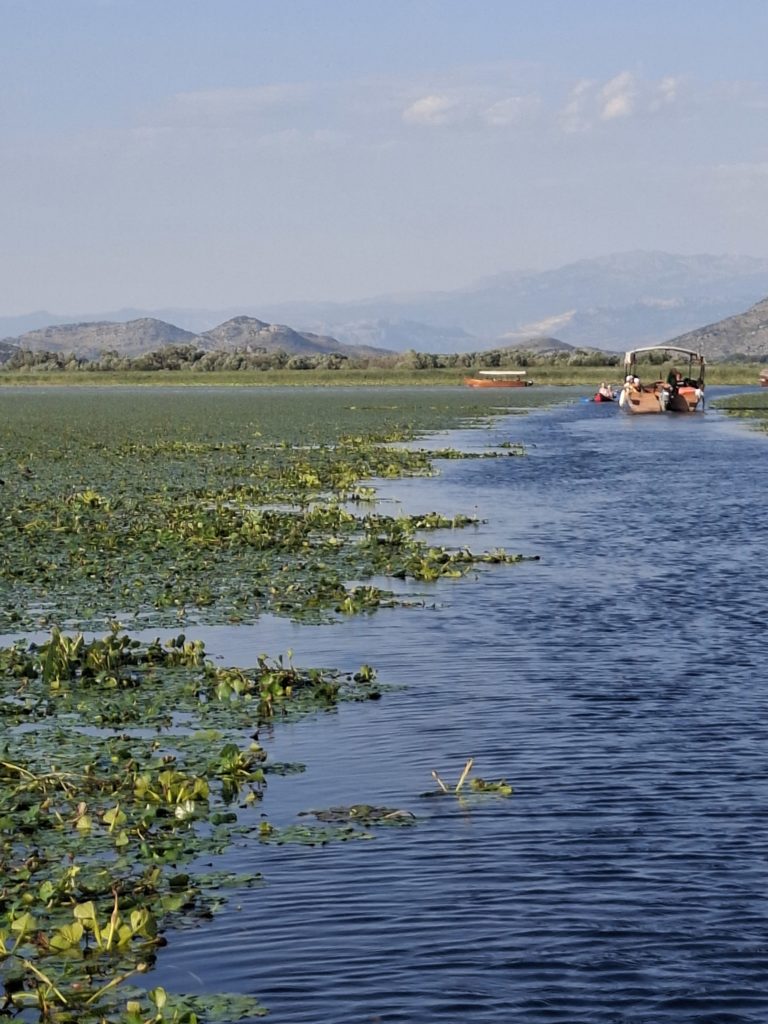 Skadar Lake
On the subject of that road infrastructure, half of Montenegro feels under construction – a response, no doubt, to the rapidly increasing interest. Driving across the border with Croatia is a serious half-day undertaking.
It’s worth it, though, as a whole, for somewhere that manages to be both more affordable and more quirky and original than much of the established sun-holiday realm.
From tales of 22 legendary cats that chased the plague from Kotor to a local habit of children painting the larger stones found among the gravel at beach bars while their parents break for a beer in the much-needed shade, Montenegro has an overwhelming air of welcoming contentment.
Everything from irishpost.com and the print edition is available on the Irish Post App — plus more! Download it for Android or Apple IOS devices today.
See More: Montenegro
