





ON 17 SEPTEMBER 1996, Irish singer Susan McKeown, alongside her band, The Chanting House, released her debut studio album, Bones.
Though only a moderate commercial success, the record attracted widespread critical attention. Rhythm awarded Bones five stars, naming it one of the best releases of the year, as did Hot Press.
But what contemporary critics seemed to recognise most clearly was the album’s refusal to observe conventional boundaries of language or genre.
The Los Angeles Times described McKeown as a soulful singing feminist who blended progressive Irish folk music with a harder-edged pop-rock sensibility.
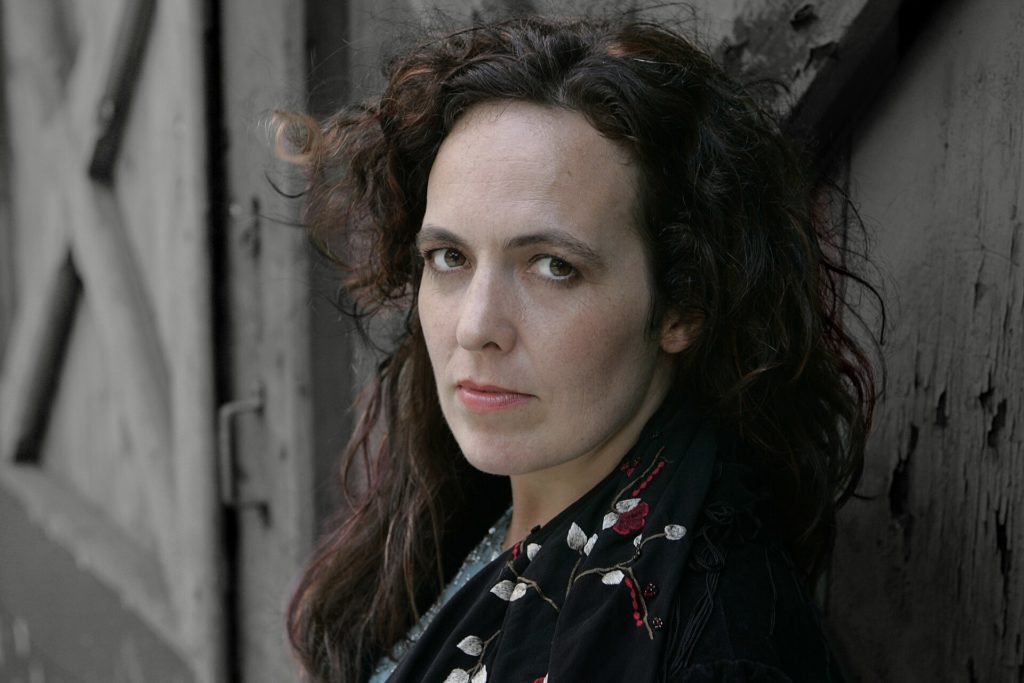 Susan McKeown (Pic: Peterphoto/WIkimedia Commons)
The Boston Globe called the album arrestingly original. Most notably, TIME magazine wrote: This is the kind of music that will link Ireland’s musical past with its future.
Thirty years on, TIME’s prediction feels uncannily prescient. Bones was much more than an adventurous Irish folk-rock record; it was a boundary-breaking experiment in what Irish-language music could sound like in diaspora — and a remarkably early demonstration of how expansively Irish musical identity could be imagined.
Born and raised in Dublin, McKeown began busking on Grafton Street while still in secondary school. During her undergraduate studies at University College Dublin, she developed a fascination with Irish folk music.
Later, during a summer spent in the US on a J-1 visa, she became enamoured with alternative rock, particularly the experimental, underground sounds of New York City’s then-thriving East Village music scene.
The encounter expanded her vision of what an Irish musician might do with the traditions of home. After taking her degree in 1989, McKeown co-founded The Chanting House with fellow Dublin-based musician John Doyle.
Initially performing as a trad duo, the pair toured Europe with Donogh Hennessy and other musicians, playing an eclectic mix of original rock songs and Irish traditional music.
The Chanting House released a self-titled debut mixtape in 1990 and were invited to perform on RTÉ’s two late-night chat shows, The Late Late Show and Nighthawks.
That same year, McKeown received an Arts Council bursary that facilitated her move to New York City, with Doyle following shortly afterwards.
By the early 1990s, McKeown had developed a cult following in New York’s East Village, headlining storied venues including Sin-é, CBGB, The Bottom Line and the Bowery Ballroom.
She also completed a record-setting run of more than 30 sold-out performances at Club Fez and performed with Sinéad O’Connor.
This momentum eventually culminated in Bones, which received a limited release through McKeown’s own label, Sheila-na-Gig Music, in 1995, before receiving a wider release through the prestigious indie label 1-800-Prime-CD in 1996.
The album was a startling amalgamation of chamber pop, alternative rock, blues and Irish folk music.
In an interview with Billboard, McKeown explained that she wrote songs using the rhythms of jigs and reels while ensuring they remained unmistakably rock songs.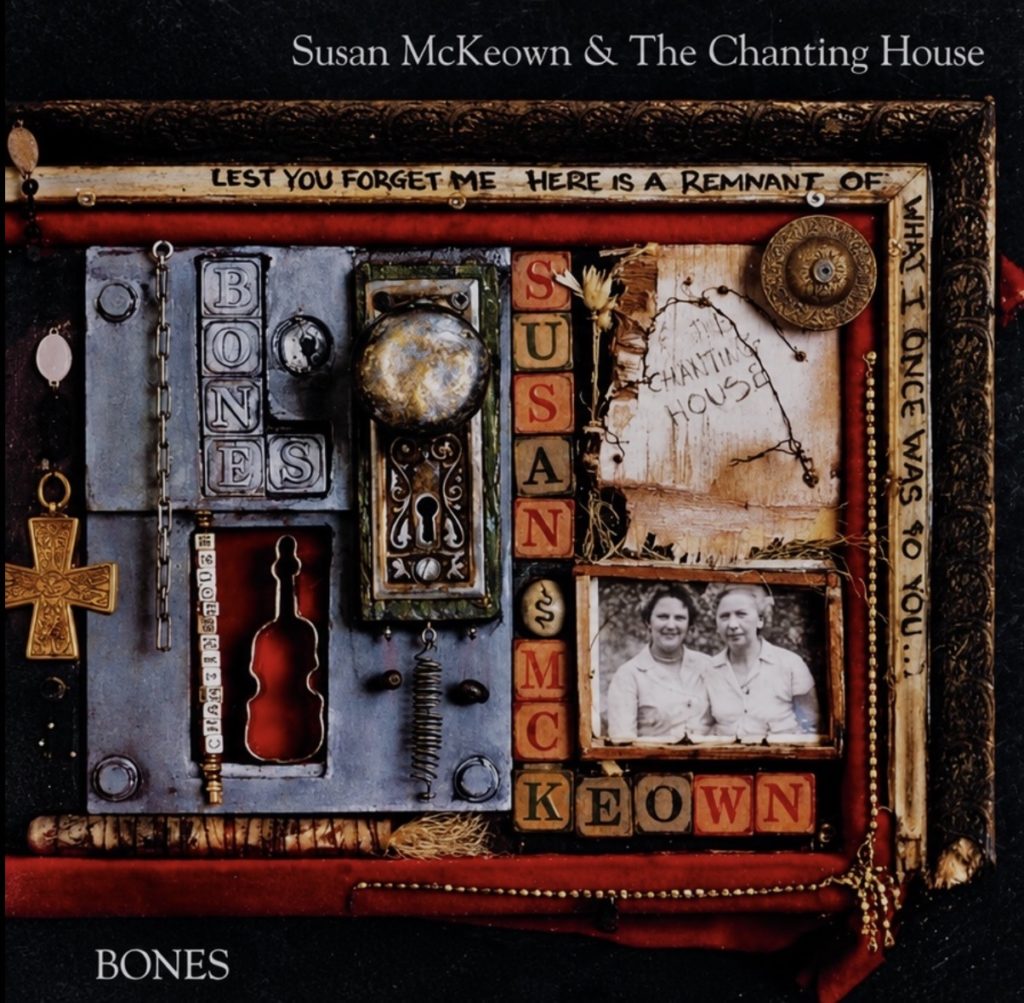
Traditional music was dear to her, she said, but it was up to a new generation to decide how it would be carried forward.
That philosophy is audible throughout the record. Tracks like Westron Wynde/Westlin Winds reimagine traditional material through a folk-rock sensibility, while Gorm puts a contemporary spin on the ancient tradition of keening.
The album’s hybridity was not simply a matter of instrumentation. McKeown sang in both English and Irish, while tracks like Snakes/Mná na hÉireann folded traditional Irish poetry into an unmistakably contemporary pop-rock framework. Snakes later gained popularity on American radio, inspiring its release as a single — a distinctly unusual achievement for a song that moved so freely between languages, traditions and genres in the mid-1990s.
The album’s opening track, Cé Leis É? — Whose is it? — sees the speaker playfully teasing a stubborn partner over a bright and buoyant melody of bouzouki, guitar, harmonium and drums.
Considerably darker tracks, like Salomé, find McKeown narrating the beheading of John the Baptist through the lens of midrash. The gothic rock ballad explores the speaker’s surrender to the powerlessness of infatuation.
By contrast, the decidedly triumphant Jericho possesses an epic, almost cinematic quality. It is no wonder the tune was later featured on the soundtrack for the 1999 BBC series The Irish Empire.
The latter half of Bones proves less playful and more restless, exploring a sense of unfettered longing. On Love & Superstition, the speaker bemoans the late-night realities of life in diaspora, while I Know I Know concerns a lover who rushes out of intimacy under the moonlight.
The more mischievous Curiouser finds its speaker teasing a lover who desires intimacy only when depressed. Here, the production is particularly effective, as McKeown sings through layers of rock-infused hurdy-gurdy, 12-string guitar, bass pedal and bagpipes.
On the album’s closing title track, Bones, McKeown’s vocals become slightly distorted over an eerie accordion melody. Music critic Mike Boehm described it as a cabaret-style song recalling Tom Waits under the influence of Kurt Weill.
Its deceased speaker begs a lover to preserve both her memory and her body, asking that the dirt not be thrown away.
It is a hauntingly fitting conclusion to an album so preoccupied with inheritance. The bones are what remain: the fragments of something that once had a living body.
But McKeown’s approach to tradition throughout the album suggests that preserving the bones does not mean preserving the flesh around them. The body can change, and so can the language used to describe it. What matters is that something survives — and that someone is willing to give it a new life.
Thirty years on, Bones reveals Susan McKeown as a pioneering figure in the transformation of Irish popular music, expanding possibilities that contemporary artists like CMAT, Fontaines D.C. and The Mary Wallopers now freely explore.
McKeown’s subsequent career makes Bones look less like an audacious one-off than the beginning of a sustained artistic project.
Dubbed the Celtic High Priestess, she has continued to move between musical traditions and genres, collaborating with artists including Fairport Convention, Natalie Merchant, Linda Thompson and The Klezmatics, with whom she won the 2007 Grammy Award for Best Contemporary World Music Album.
Time and again, she has treated tradition not as a fixed vocabulary to be preserved, but as material to be continually reinvented. That may be the future TIME heard in Bones.
Thirty years later, it sounds less like a prediction than a description of the world Susan McKeown helped us learn how to hear.
Everything from irishpost.com and the print edition is available on the Irish Post App — plus more! Download it for Android or Apple IOS devices today.
See More: Bones, Susan McKeown, The Chanting House
