





FIONA McCann’s novel Love & Other Liabilities is a warm and engaging story of second chances set on a remote West Cork island.
The story revolves round accountant Lily Barrett who returns to Inish Ruin intending only to sell her late grandmother’s cottage. She plans to leave as quickly as possible.
Determined to avoid both memories and the people she left behind, she finds herself instead drawn back into island life — and face to face with old heartbreak.
As unexpected complications mount, from an eccentric houseguest to an unwanted dog and a meddling but well-meaning community, Lily is forced to confront the past she thought she had escaped.
Set against the wild beauty of the Irish coast, the novel explores loss, belonging and the fragile possibility of starting over.
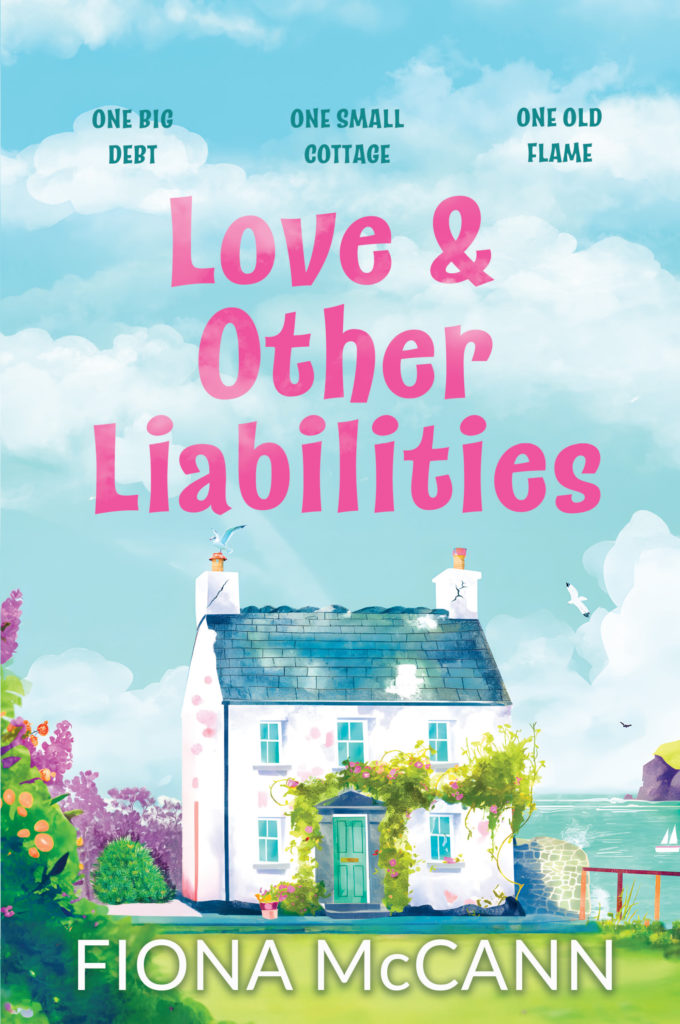
Here, Fiona McCann reflects on the real-life inspirations behind her novel...
WHEN you think of a classic, romantic ‘meet cute’ setting, the Intensive Care Unit of a hospital doesn’t ordinarily spring to mind. A coffee shop certainly. A bookshop or train carriage, sure. But across the bed of an injured motorcyclist? Not so much.
But sometimes life is stranger than fiction, and in 1969 my mum, Carmel Feeney, a nurse who had just returned from a year travelling around America, was on her first day at work in St Finbarr’s Hospital in Cork when she came into the ICU.
In attendance already at the unfortunate motorcyclist’s bedside was my dad, Fin Breatnach, a third-year medical student ‘doing the rounds’.
Both were masked, both just 22, but their eyes met, sparks flew, and in the space of a few moments they’d left a lasting impression on each other.
So much so that when my dad met his friend shortly after, who told him all about the ‘brand new nurse’ who was gorgeous and who he was intending to ask out, my dad said his goodbyes, immediately doubled back, and asked her out first.
Well, all’s fair in love and war, I guess — in real life as much as in fiction.
They were married three years later, and by the time I arrived my dad was doing a six-month stint in obstetrics in the Erinville Maternity Hospital.
He was on call there the night my mum went into labour with me — which was as well because when I came into the world looking a concerning shade of blue, there was no paediatrician on duty. So it was left to him to get me started.
His next posting was at the Mercy Hospital, where he was inspired to focus on paediatrics. It was the early 1970s, when the use of chemotherapy to treat cancers in children was in its infancy.
My dad’s interest in this area ignited, but it meant a move from Cork to Coventry, where he would complete his paediatric training, and after that to Great Ormond Street in London for his oncology training.
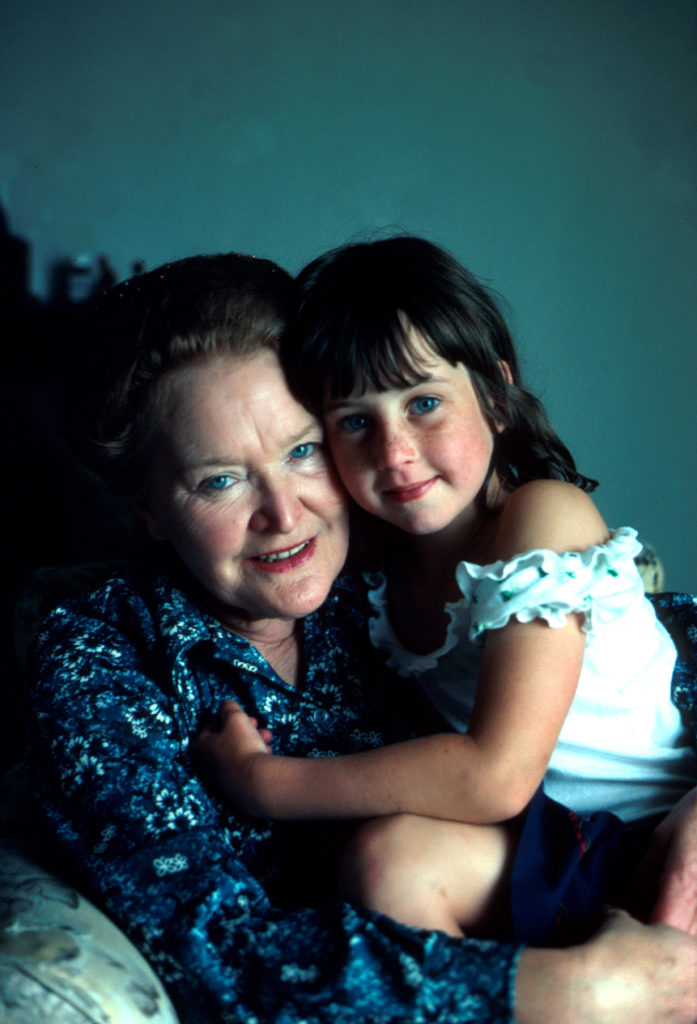 Monica Breatnach (Granny Mon) and Fiona pictured in 1980
When we finally returned to Ireland, it was to live in Dublin, where he started work at Crumlin Children’s Hospital and established Ireland’s first paediatric oncology centre.
It was extremely high-pressure work, time-intensive and without half as many staff as a comparable unit in the UK would have had.
But he was fortunate that for respite in the summer we could go to Sherkin Island, West Cork, where his mum, my gran, had a cottage.
Those trips were the highlight of the year for my parents as well as for my siblings and me.
From Cork city, we’d turn onto the N71 and start counting down the towns and villages — the place names having an almost mystical sound to us: Innishannon, Bandon, Clonakilty, Rosscarbery, Leap and on to Skibbereen.
And after that came the last and, to our minds, most beautiful stretch of the journey to Baltimore.
And then the ferry crossing to Sherkin Island, where the holiday would really begin. The island had been a feature of Dad’s childhood summers because his parents, Monica and Riobárd Breatnach, loved the place and its outer neighbour Cape Clear.
So much so, in fact, that Riobárd, a professor of Old and Medieval English in UCC, translated Conchúr Ó Síocháin’s Seanchas Chléire (The Man from Cape Clear) into English in 1975.
Riobárd was also on the very first jury for the Cork Film Festival. Seemingly, he invited all the distinguished members to visit the famous Fastnet Lighthouse, during which trip everyone, bar himself, was horribly seasick.
He died at just 61, the year after The Man from Cape Clear was published, but my gran, a wonderful storyteller in her own right and a most resilient lady, continued to live on the island alone for another twenty years, despite urgings from her family to live with them in Cork or Dublin instead.
But she insisted if she was going to be heartbroken, she’d rather be so in a beautiful place, and stayed.
And my goodness, did we all find Sherkin beautiful.
It was a playground for us as children: traipsing across pock-marked cow fields, down to pristine beaches which we often had to ourselves, jumping in off the rocks into the incoming tides and then racing back to the cottage, always with sky-rocketing appetites.
It was an experience in peace and freedom, and in such contrast to the noise of Coventry and London and even Dublin that we revelled in it.
Only the skies in Sherkin seemed to carry any drama, with the weather rolling in from miles away and the spectacular, drawn-out summer sunsets that rounded out each day.
It’s maybe no wonder, when I was given the advice to write what you know and love some years ago, that I immediately thought of Sherkin as the setting for a book.
I arrived on the pier with my main character, looked up the steep hill, took a deep breath and started walking, combining memories with imagination to see what would happen.
What happened, many drafts later, was Love & Other Liabilities, a second-chance romance set on my own island of ‘Inish Ruin’.
It’s the story of an emotionally walled-off woman who has to return to the island where she grew up to save her finances but is instead forced to face up to the past — and the boy who broke her heart — with the help of an irrepressible flatmate, an elderly bride-to-be, an unruly dog and an island of well-intentioned meddlers.
It’s a summer escape from the February rains. A love story from me to my favourite place.
And as for the ‘meet cute’? Well, you’ll just have to read it to find out.
See More: Fiona McCann, Love & Other Liabilities
