



KILLARNEY musician Niamh Ní Charra’s latest album Donnelly’s Arm is a richly textured collection.
Better than that, it underlines her status as one of the finest performers in contemporary traditional music, not just in Ireland but globally as well.
Best known for her years as a featured fiddler with Riverdance, Ní Charra has long balanced deep roots in the Sliabh Luachra tradition with a willingness to explore beyond it.
That balance is evident throughout this, her fifth album, much of which took shape during the Covid-19 lockdown period.
At its core is a tight musical partnership with guitarist Kevin Corbett and bodhrán player Dominic Keogh.
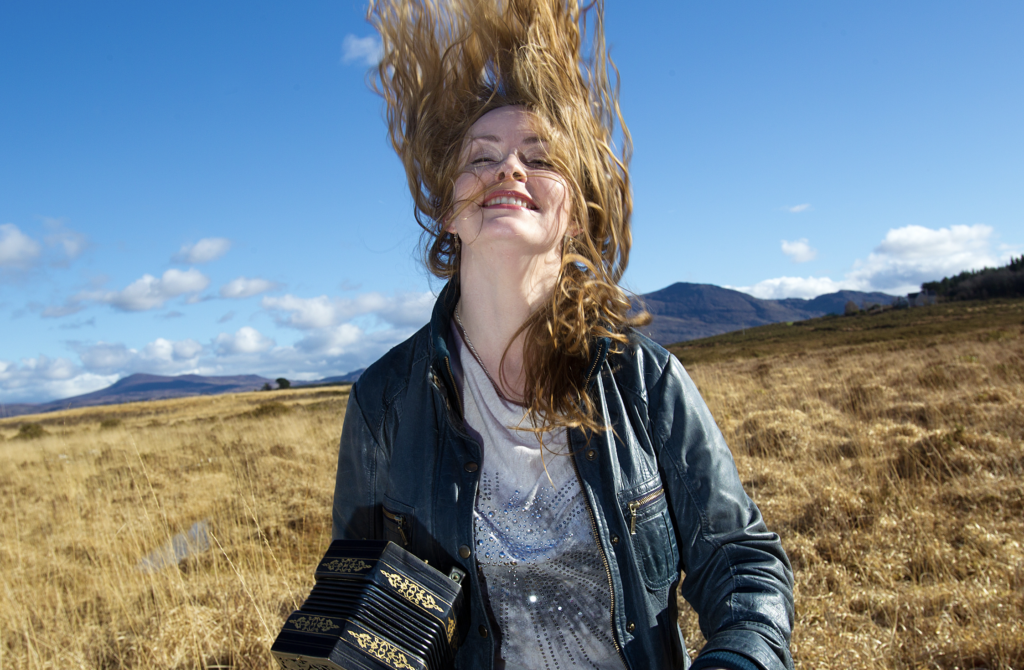 Niamh Ní Charra has released new music
It works extraordinarily well. The backing provides a steady but imaginative foundation, allowing Ní Charra’s fiddle and concertina playing to move freely between styles.
This is one of the hallmarks of her playing — from the legato style found in Clare music to the odd snap of the more vigorous Nova Scotia approach (presumably inherited from Donegal or Scottish music). Whatever the source, it is deliciously addictive.
Corbett brings a modern sensibility to the arrangements, his accompaniment shifting from understated to inventive without ever overwhelming the tunes. Many albums could take a lesson from that.
Donnelly’s Arm opens with a set of jigs led by Ní Charra’s own composition, The Copper Mines of Killarney — her melodic instincts and connection to place very much to the fore.
From there, the record moves easily through a mix of traditional material and original pieces, with influences stretching from Kerry to diaspora-influenced Irish music.
Ní Charra has always shown a flair for structuring medleys, and that skill is on display here. Sets move between rhythms and moods with ease, keeping this listener very engaged.
Polkas and slides sit alongside waltzes, airs and reels, while occasional departures — including a Basque tune — add further colour.
There is also a strong vocal presence. Ní Charra sings in both Irish and English, bringing a light touch to lively songs and a more measured delivery to slower material.
Tracks such as Ceol an Phíobaire, accompanied by uilleann piper Mikie Smyth, highlight her ability to convey mood as well as melody, while Cad é Sin adds a more playful note.
Guest musicians are used sparingly but effectively. Órlaith McAuliffe (flute and whistle), Claire Sherry (banjo) and Kate Ellis (cello) all contribute at key moments, adding texture without distracting from the central sound. Ellis’s cello, in particular, deepens the emotional pull of the air Eanach Dhúin.
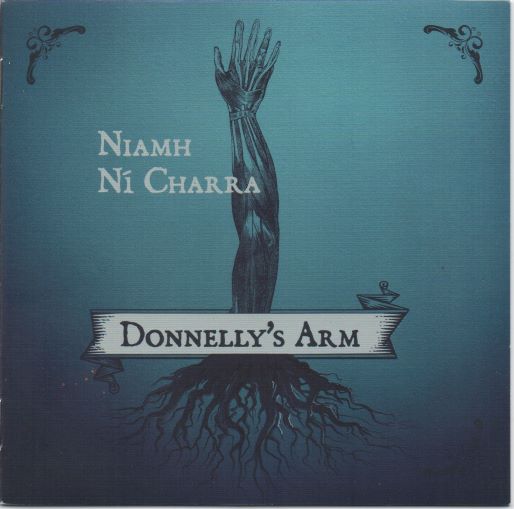 The album was released this month
The album’s title track draws on the story of 19th-century boxer Dan Donnelly, whose preserved arm became a macabre curiosity in Irish folklore.
Ní Charra translates that tale into a lively set of reels — one of several examples of how she draws inspiration from history without becoming overly reverential.
If there is a defining quality to Donnelly’s Arm, it is its sense of ease. The playing is assured and the production is top class — clean, clear and confident.
Around a third of the tracks are Ní Charra’s own compositions, and they sit comfortably alongside well-known traditional tunes.
After an eight-year gap since her previous release, this is a strong return. Rooted in tradition but open in outlook, Donnelly’s Arm offers familiarity and freshness in equal measure — a combination that has become Ní Charra’s hallmark.
Also available from Copperplate - Niamh Ní Charra: From Both Sides, Niamh Ní Charra: Happy Out, Niamh Ní Charra: Cuz, A tribute to Cuz Teahan.
The tale of Donnelly’s Arm
TWO hundred years ago, Dublin boxer Dan Donnelly — a champion of his era — died aged just 31. A colourful figure from the docklands, he rose to fame after defeating leading English prize-fighters, later becoming a publican known for his larger-than-life lifestyle.
His story took a darker turn after death. Buried in Bully’s Acre, Donnelly’s body was stolen by grave-robbers and taken to a surgeon. Though recovered by admirers, it was missing his right arm — reputedly unusually long and central to his success in the ring.
Preserved for study, the arm travelled widely: from Edinburgh medical rooms to a Victorian circus, before returning to Ireland, where it was displayed in pubs including one in Kildare, near the site of his early victories.
The tale, part folklore and part history, remains one of Ireland’s most striking sporting legends — and continues to inspire new retellings today.
Everything from irishpost.com and the print edition is available on the Irish Post App — plus more! Download it for Android or Apple IOS devices today.
See More: Donnelly's Arm, Kerry, Killarney, Niamh Ní Charra
