





A LETTER appeared once in the Irish Times from a gentleman in Dublin.
He wrote:
“I have just returned from a day trip to Limerick. Within five minutes of my arrival in the city centre two wild dogs ran by me and a drunken gentleman shouting obscenities in a butcher’s window collapsed, shattering the shop’s window.
I was impressed by the improvement since the last time I was there,
Yours etc, Adrian Weckler, Glasnevin”
Yes, Limerick does suffer from something of an image problem.
The city of the Cranberries and of Thomond Park, of Terry Wogan, Richard Harris and Frank McCourt, The Rubberbandits and former president Michael D. Higgins, has had to work hard to persuade people that it is a fine destination to visit. And it certainly is. The city has undergone a facelift and is a perfect destination for a weekend — or longer break.
Of course, I blame the press for its bad name. Instead of reporting that there are more castles in Limerick than you could shake a pikestaff at, that the City contains one of the finest museums and art galleries in these islands, and that Lough Gur has to be one of the most astounding lakes in Ireland, these awful journalists just want to concentrate on the seamier side of life.
To be fair, Limerick city has always had its extreme side. Human habitation can be traced hereabouts to 3500 BC. Thereafter, the usual suspects arrived.
The Vikings fetched up here in about 922 and settled at the lowest crossing point of the River Shannon where it meets the sea.
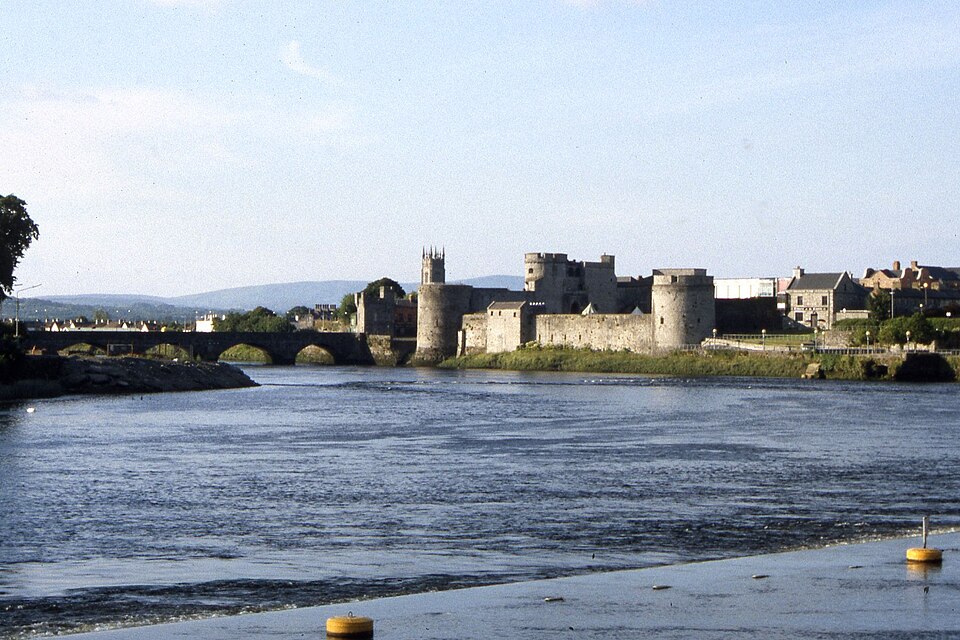 King John's Castle, Limerick, with the Shannon flowing past (pic Colin Park, Geograph)
Hot on the heels of the Danes and co. came the Normans in the 12th and 13th centuries, followed a few years later by the those two foremost agents of bloodletting in Ireland, Edward the Bruce and Oliver Cromwell.
The poetry question
TO QUICKLY put one question to rest immediately: the poetic form known as “a limerick” probably wasn’t invented in the city; but it might have its origins in the nearby town of Croom.
You will be familiar with the form:
One day while eating a curry / I left in a bit of hurry /
The waiter said “Hey, / You’ve forgotten to pay /
But by then I was half way to Surrey
Situated on the River Maigue, Croom is just about in the dead centre of Co. Limerick. The old castle of the Geraldines lies behind the high wall that borders the road on the southern approach to the village, and there’s a real hint of old Ireland in the air.
However, Croom’s main claim to fame is this poetry business and the origins of limericks. The town is celebrated as the meeting place of the 18th-century Filí na Máighe. These poets, writing as Gaeilge, produced a huge body of literature – and here a contentious issue enters the story: this could be the very place where the poetic form known as the ‘limerick’ may have entered the language (and before you put pen to paper, yes there are several alternative theories for the origins of the poetic form).
The Croom version is that the light verse was the invention of the Maigue poets, such as one which began:
“Is duine mé dhiolas leann lá.”
James Clarence Mangan translated the whole poem as:
“I sell the best brandy and sherry
To make my good customers merry
But at times their finances
Run short as it chances
And then I felt very sad, very.”
This, of course, led to the verse form beloved throughout the world
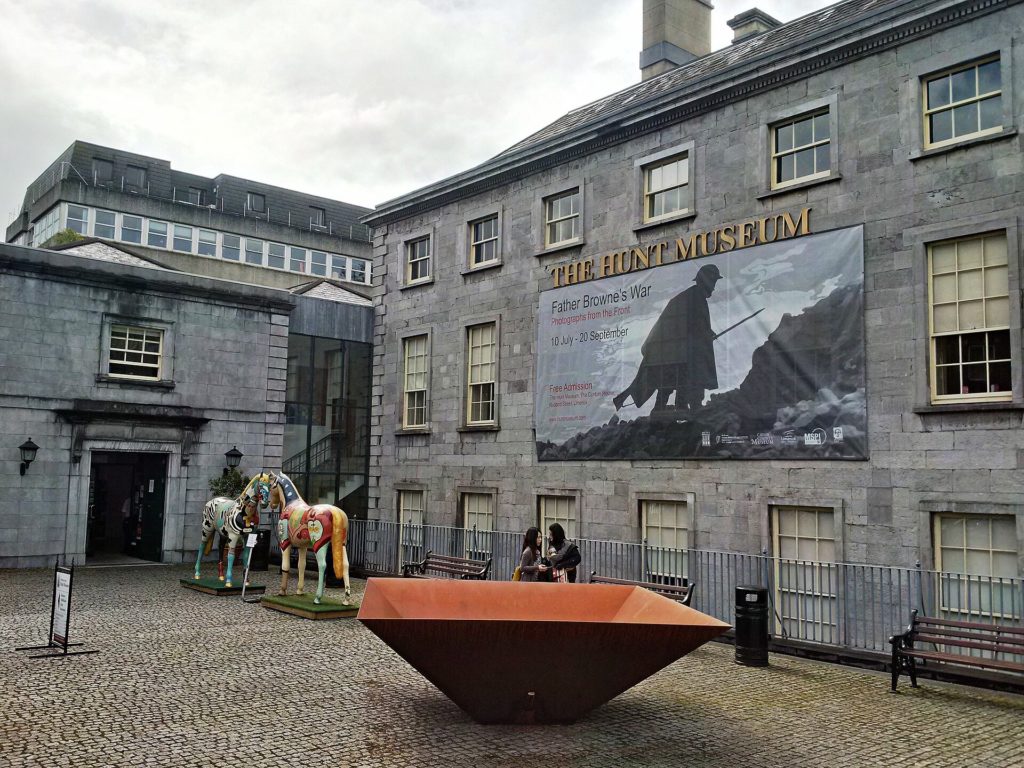 The Hunt Museum, Limerick (GilPe : Wikimedia :CC-BY-SA-4.0)
Limerick develops
LIMERICK’S official motto is: Urbs antiqua fuit studisque asperrima belli, which means, as most Irish Post readers will know, “An ancient city well versed in the arts of war.” This motto is displayed on the city’s coat of arms and originates from a description of the ancient city of Carthage in Virgil’s Aeneid.
But all that history has led to one fascinating city.
As you stand on Sarsfield Bridge and watch a hundred swans swim effortlessly down the Shannon towards the Atlantic, the gaunt contours of King John’s Castle are etched out against the western horizon.
The impressive King John’s Castle, some 800 years old, is a quintessential example of Anglo-Norman architecture. Located on King’s Island along with the rest of the remains of Limerick’s medieval centre, the castle boasts an impressive visitor’s centre. From the ramparts of the castle, views of the Shannon are naturally panoramic — if you wanted to protect a city in Norman times, a good view of the hinterland was a prerequisite.
King’s Island is also the home of St Mary’s Cathedral, probably built around 1190, making it older than the castle. If you only visit a limited number of cathedrals every year, this one should be top of your list.
The Treaty Stone on Thomond Bridge is one of the landmarks of Limerick. The Treaty of Limerick, which ended the Williamite War in Ireland, was reputedly signed by Patrick Sarsfield and Godert de Ginkell, a Dutchman, on the Treaty Stone, an irregular block of limestone which once served as a mounting block for horse riders.
The use of “Patrick” greatly increased as Sarsfield’s fame grew, and he is generally seen as having popularised the name. Godert, on the other hand, never really caught on.
Limerick’s main thoroughfare, O’Connell Street, runs southwards to the Crescent, a beautiful collection of elegant Georgian buildings, now largely occupied by financial institutions.
Limerick City Gallery of Art (limerick.ie/gallery), in the historic Carnegie Building on the grounds of the People’s Park, has some stunning collections of both contemporary art and sculpture. It is home to a permanent collection of Irish art, featuring works from the early 18th to 20th century. The gallery houses the National Collection of Contemporary Drawing, founded by the artist Samuel Walsh in 1987.
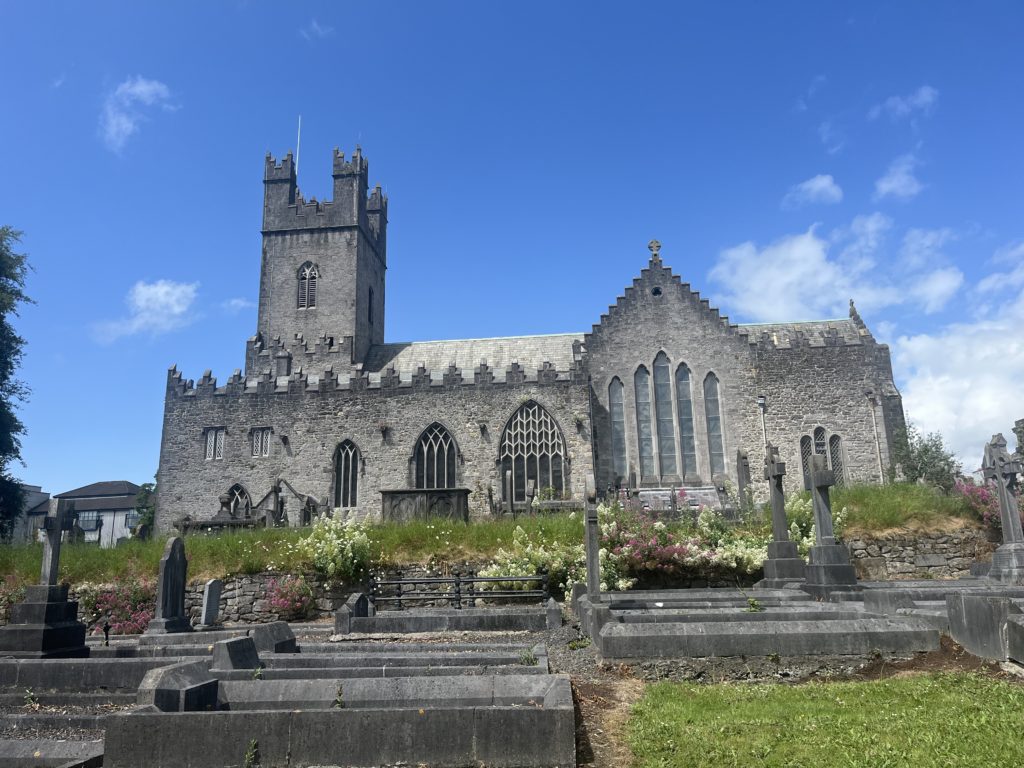 St Mary s Cathedral, Limerick city (Tourism Ireland)
Thomond Park
For sporting enthusiasts, Limerick has, of course, Thomond Park. The famous rugby stadium offers behind-the-scenes tours that include visiting the Munster Rugby dressing room, pitch side, and the post-match interview area, along with an interactive museum experience about the club’s history.
Tours are available Monday to Friday, and on Saturdays for pre-booked groups, and typically last approximately 1 hour and 15 minutes (thomondpark.ie/museum-tours/).
Having sated yourself with stories of mauls, scrums and up-and-unders, you’ll likely fancy a wander along the Shannon. The Curragower Bar & Kitchen gastropub in the heart of the city’s Medieval Quarter not only offers excellent food, but also a magical view of King John’s Castle reflected in the water. It’s the perfect backdrop for a pint and seafood pie — chunky pieces of salmon, hake and prawns.
Foyne’s Flying Museum, Co Limerick
On July 9,1939, Pan Am's luxury flying boat, the Yankee Clipper landed at Foynes. This was the first commercial passenger flight on a direct route from the USA to Europe, just at the start of World War II.
Foynes had become the pivotal point for air traffic between North America and Europe. Back then flying was a more rigorous business than today (well, not counting some budget airlines) so it's no wonder that Irish coffee was invented here — to fortify the doughty air travellers. Coffee, cream, whiskey and sugar usually did the trick for even the most nervous of passengers.
The Foynes Flying Boat Museum recalls this era with exhibits and illustrations, a 1940s style cinema and the original terminal building. Photos, paraphernalia, a B314 Flying Boat replica, films — and of course plenty of Irish coffee — make this an intriguing museum.
Where to stay
Located in the heart of Limerick, The Savoy the five-star hotel is within a few minutes' walk of the shopping district, the River Shannon, King John's Castle and the Milk Market.
Boutiquery and luxury in a Georgian townhouse Pery Square, with just 20 rooms. www.oneperysquare.com/
River views, great facilities (they’ve got a swimmig pool) , and excellent value in this city centre hotel.
Where to eat
Housed in Plassey House on the University of Limerick campus, The East Room is widely regarded as one of the city's finest restaurants. Chef Derek FitzGerald's tasting menus focus on seasonal Irish produce, presented with modern techniques while keeping the emphasis on flavour rather than theatrics. Typical dish might be: truffled goat cheese, roast honey pear & beetroot, chicory & pickled cherry, walnuts and of course served with sourdough
A long-established favourite just off O'Connell Street, Freddy's has earned a loyal following for combining classic Irish ingredients with contemporary European cooking. It strikes an excellent balance between fine dining and a relaxed atmosphere, and has a strong emphasis on local produce. Don’t leave Limerick without trying their BBQ pulled pork taco.
Located on Steamboat Quay overlooking the Shannon, The French Table blends classic French techniques with Irish ingredients. It has built an outstanding reputation over many years for polished cooking and attentive service.
Also worth trying
Cornstore Limerick — popular for steaks, seafood and lively atmosphere. The
SpitJack — one of the city's best casual dining venues, particularly known for rotisserie meats and brunch.
Dolan's Pub and Restaurant — combines good traditional food with one of Ireland's best-known live music venues.
