



ALTHOUGH Ireland is surrounded by hundreds of islands and islets, only 20 of them are inhabited.
And in the back of my mind, I have always wanted to visit all of them. I suspect it all started with a family day trip to Rathlin Island, six miles off the coast of Northern Ireland. I was 11 years old and it included a stop-off at the island’s only fish and chip shop. The food was great. The island was magical.
Rathlin was first brought to my attention when I picked up the Ladybird children’s book about Robert the Bruce, one of Scotland’s biggest heroes. In 1307 he was forced into exile after daring to defy the English King, Edward I, and take the Scottish crown.
Edward’s men were ordered to hunt him down, but he knew they were coming for him and took a boat from Mull of Kintyre’s quiet shores to Rathlin’s unfamiliar terrain – luckily, it was only 11 miles away.
And so, the story goes, it was while Robert was hiding in one of Rathlin’s sea caves that he watched a spider trying to build a web.
The spider failed many times, but he persevered. It was this observation that sparked Robert’s determination to go back to Scotland, reclaim his title and fight for Scottish independence. It’s strange to think that this tiny island played such a pivotal role in the early history of Britain.
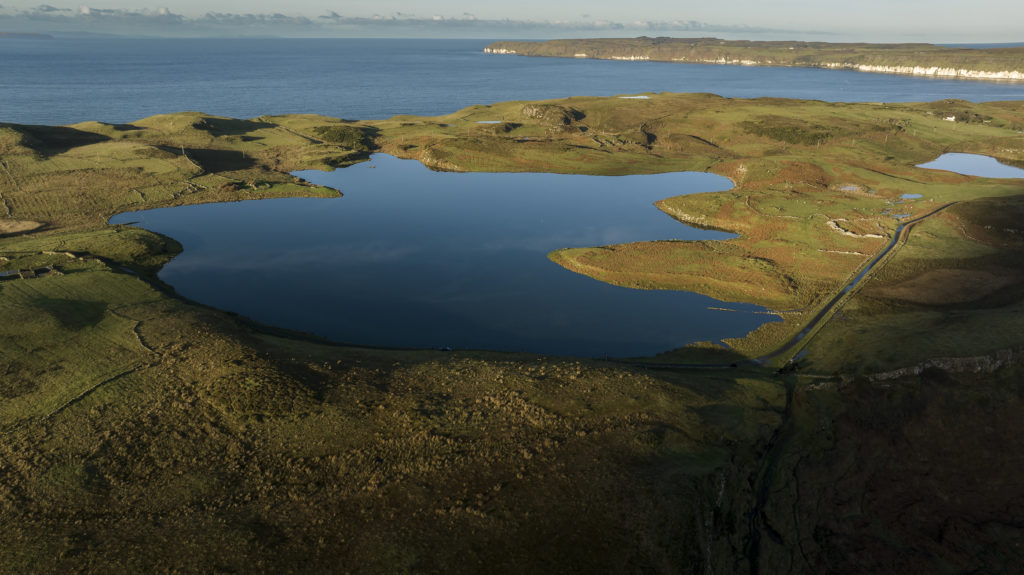 Rathlin Island
Today, the island still has a fantastic fish ‘n’ chip shop, The Hungry Seal, and tourism is one of its main earners. It has about 150 permanent residents, but it’s fair to say that its most famous residents are the thousands of puffins that return every spring to breed.
In fact, it’s home to Northern Ireland’s largest seabird colony – around 250,000, including Guillemots, Kittiwakes, Razorbills and Gannets. It literally is a bird paradise.
Rathlin is a speedy 20-minute ferry ride from Ballycastle in County Antrim and there are buses which go from the pier to the RSPB Seabird Centre at the West Lighthouse.
But the island is roughly six miles long and two miles wide, so with sensible walking shoes, you could see it all on foot.
Beside the pier is an 18th-century guest house, shop and the island’s only pub – McCuaig’s Bar. And if you only get as far as the pub, it’s still worth it because there are plenty of stories and songs to be had. Many shipwrecks lie off Northern Ireland’s coast and on the pub’s walls are the name plates of those which met such a fate off Rathlin.
At the very other end of Ireland is another island with a huge puffin population. Skellig Michael lies eight miles off the coast of County Kerry and gets its name from the archangel Michael and the Irish Gaelic word for ‘stone in the sea’.
It’s the larger of two small uninhabited islands and yet, in the last 20 years, it has become one of the country’s most popular destinations.
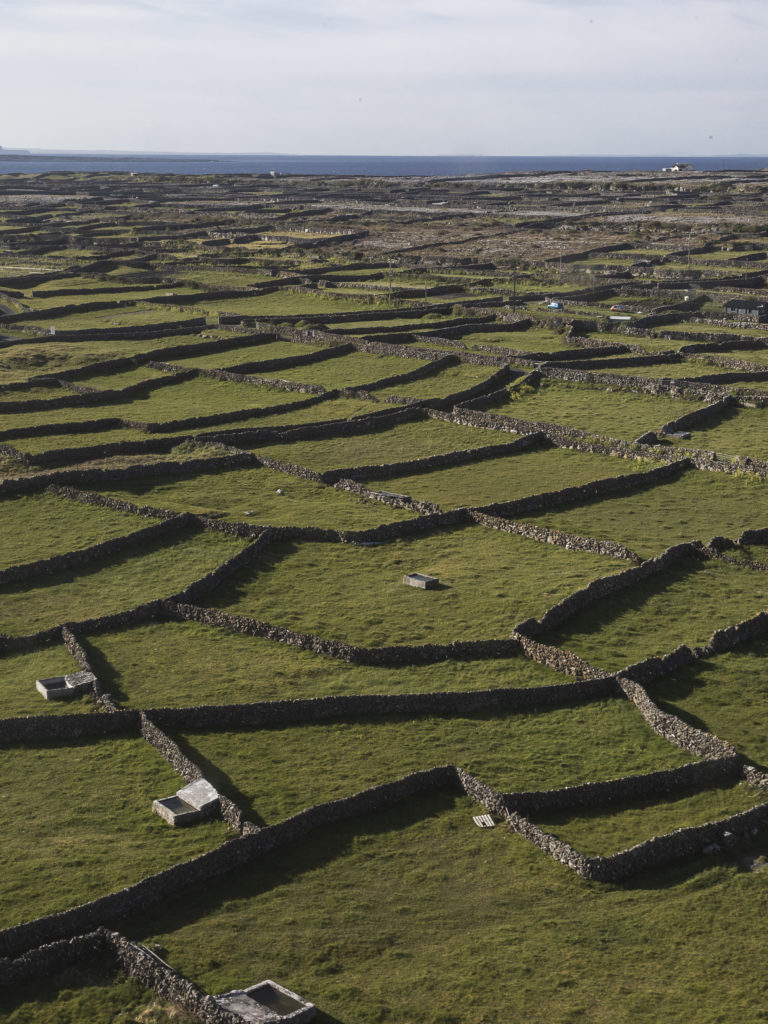 Inis Meain island
If you include the bird watchers, Skellig Michael attracts three very distinct types of pilgrims. Visiting Jedis – aka Star Wars fans – nicknamed it Star Wars Island after it doubled as the ocean-covered planet Ahch-To – sacred birthplace of the Jedi Order and the location for Luke Skywalker’s self-imposed exile.
Boat services go to the island between May and the end of September from several harbours, including Portmagee on Kerry’s Iveragh Peninsula. But make sure you book tickets in advance. Numbers on the island are limited.
Not being a massive Star Wars fan, I was there to see, and get my head around, something even more mind blowing than Lightsabers.
This inhospitable rocky crag in the wild Atlantic was once a monastery, which UNESCO has described as “the most spectacularly situated of all the Early Christian island monastic sites in Europe.” And it is a monastery like no other, founded in the 6th century by Kerry-born St Fionan.
Helped by a small band of devout monks, St Fionan carved out steps as far up the rock as they could go – about 180 metres. They are steep, uneven and total 618 and, if you’re brave enough, you can follow in their footsteps.
At the top, they levelled out the rock, building a walled enclave with small beehive-shaped stone huts to protect themselves from monstrous waves and brutal winds. Here, they slept and prayed, but it must have been a hellish existence.
And yet, there were moments of calm when they could fish and collect birds’ eggs from the rocks. They even grew small pockets of barley and oats and carved out ducts in the rocks to collect rainwater.
But by the 13th century, treacherous weather and Viking raids had forced them back to the mainland. For those who did endure years of isolation, and whose gravestones still stand there today, it was for them their stairway to heaven.
From County Kerry’s stormy seas to the sheltered waters of County Cork’s Bantry Bay, there lies another story of man’s desire to shape Ireland’s untamed island landscapes.
Traditionally, it was called Ilnacullin, but it is commonly known as Garinish Island. The small ferry ride from Glengarriff Harbour on the bay takes just 15 minutes and, if you’re lucky, you’ll see the seal colony on tiny Garvillaun on the way, and glimpse over at Murphy’s Island, which was once owned by Maureen O’Hara.
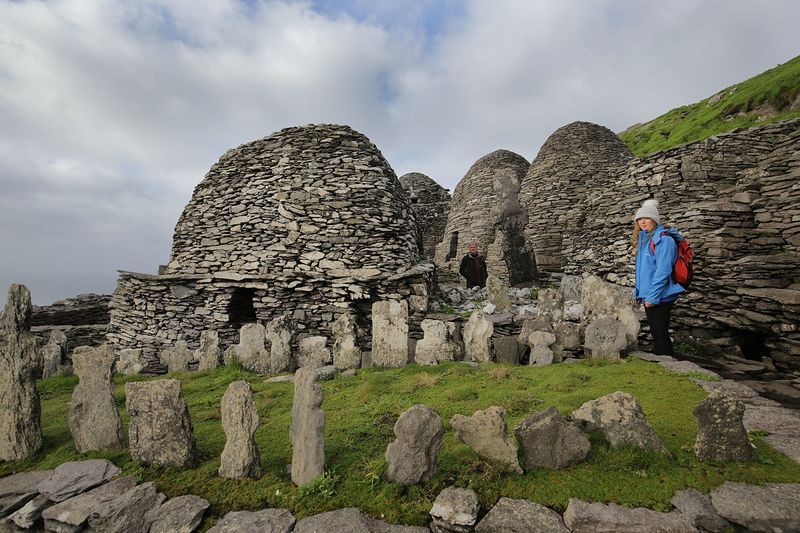 Skellig Michael
Garinish Island had been a military base and still has a Martello Tower built by the British in 1815, following the threat of a French invasion in 1796, led by the Irish patriot Wolfe Tone.
But in 1910, the British sold the 37-acre island to Belfast businessman and Liberal Party MP John Annan Bryce, whose brother was the British ambassador to Washington. His wife Violet, who came from a wealthy Cavan family, was an equally well-connected socialite.
The Bryces shared a passion for horticulture and saw the island as the perfect place to build a mansion and a garden paradise.
When they bought the island, however, it was a combination of rock and peat bog, so the couple knew it would take an exceptional garden designer to transform it. Harold Peto, who was already a celebrated garden designer and architect in the UK, rose to the challenge.
This pocket of Ireland benefits from a milder, more humid micro-climate, so as well as planting native species, the Bryces also brought exotic flowers, shrubs and trees from all over the world.
Peto then set about creating everything from an Italian garden with an ornate sunken pool to a Grecian Temple. No expense was spared. When it was finished, the Irish Independent called it “one of the world’s most beautiful gardens”.
The only downside to this ambitious plan was that although the Bryces had a beautiful cottage to live in while the garden was being done, which you can also visit, they ran out of money and the mansion never got built. But friends continued to visit and one of them was the playwright George Bernard Shaw.
He was working on his masterpiece St Joan, and one can only imagine he found their dream garden the perfect antidote to penning the gruesome death of this French saint. The Bryces are long gone, but the gardens remain and their son left it all to the Irish nation.
Many Irish playwrights have been inspired by the islands of Ireland, not least the great master J.M. Synge, who in 1898 first visited the Aran Islands, off the west coast of Ireland.
He lived for several months on the middle Aran Island, Inis Meáin, which has an extraordinary landscape dominated by fields which are divided by walls made of the island’s limestone. Fishing and farming have always been pivotal to the islanders’ survival and, as if etched into the land itself, the walls their ancestors built to protect animals and crops are the first signposts of the island’s beating heart.
Nearly 100 years later, the playwright and filmmaker Martin McDonagh, who was born in south London to Irish parents from Mayo and Sligo, was also inspired by life on the island. He returned every summer to his family’s Irish homesteads, and one year, they took a boat out to Inis Meáin.
It was to sow a seed. In 1994, still only in his 20s, McDonagh wrote a play set on the island in the 1930s. It was a dark comedy and he called it The Cripple of Inishmaan.
Premiered at the National Theatre two years later, the play went to Broadway and a World Tour followed. Then in 2011, he returned to Inis Meáin with his parents to see the first staging of the play on the island itself.
It was produced by Galway’s award-winning Druid Theatre Company and the island’s 200 residents were invited, as was Mary McAleese, the then President of Ireland, RTÉ News and the press. I was one of them.
The play got a standing ovation and to celebrate McDonagh headed down to Teach Osta – the island’s only pub. Known for its fantastic trad sessions, Guinness and the most beautiful beer mats in Ireland, everyone came, too.
Small ferries go from Rossaveel in County Galway to Inis Meáin all year round, but you can also get there from Doolin in County Clare. Although making a living on any island isn’t easy, tourism has certainly helped with government organisations such as Heritage Ireland carrying the mantle for some of the island’s most important historical places.
The large stone fort which sits at the highest point on the island, Dun Crocbhur (Conor’s Fort) is a great example. Now classified a National Monument, it is said to date back 1,000 BC and is still a mystery.
Of course, the traditional Aran Island jumper has become a symbol of the islands themselves. And on Inis Meáin, one of its biggest success stories has been the Inis Meáin Knitting Company.
Set up in 1976 by Tarlach de Blácam and his wife, Áine, it’s now the island’s biggest earner, exporting to stores from New York to Shanghai. With cashmere jumpers selling for over €1,000, this must surely be the most remote luxury shopping destination in the world.
Like all the islands, Inis Meáin leaves you in awe of its landscape, its culture and its people. I hope to return many more times.
For more information visit www.ireland.com, www.ireland.com/northernireland and www.heritageireland.ie
Everything from irishpost.com and the print edition is available on the Irish Post App — plus more! Download it for Android or Apple IOS devices today.
