





IRISH dancing, long associated with competition stages and Riverdance tours, is finding a new audience in community halls and pubs across London.
Better known for its discipline, it is increasingly being embraced as a lively, social way to bring people together.
Few understand that shift better than Jessie Leach, founder of Jig and a Swig, a London-based Irish dancing community that combines classes with post-dance trips to the pub.
“I come from a London Irish family,” she says. “My mum taught me Irish dancing when I was growing up, and I took part in a lot of competitions when I was younger.”
Leach’s own journey reflects the traditional pathway many dancers follow.
When she turned 18, she successfully auditioned for Riverdance and performed in the United States.
But she was at a crossroads.
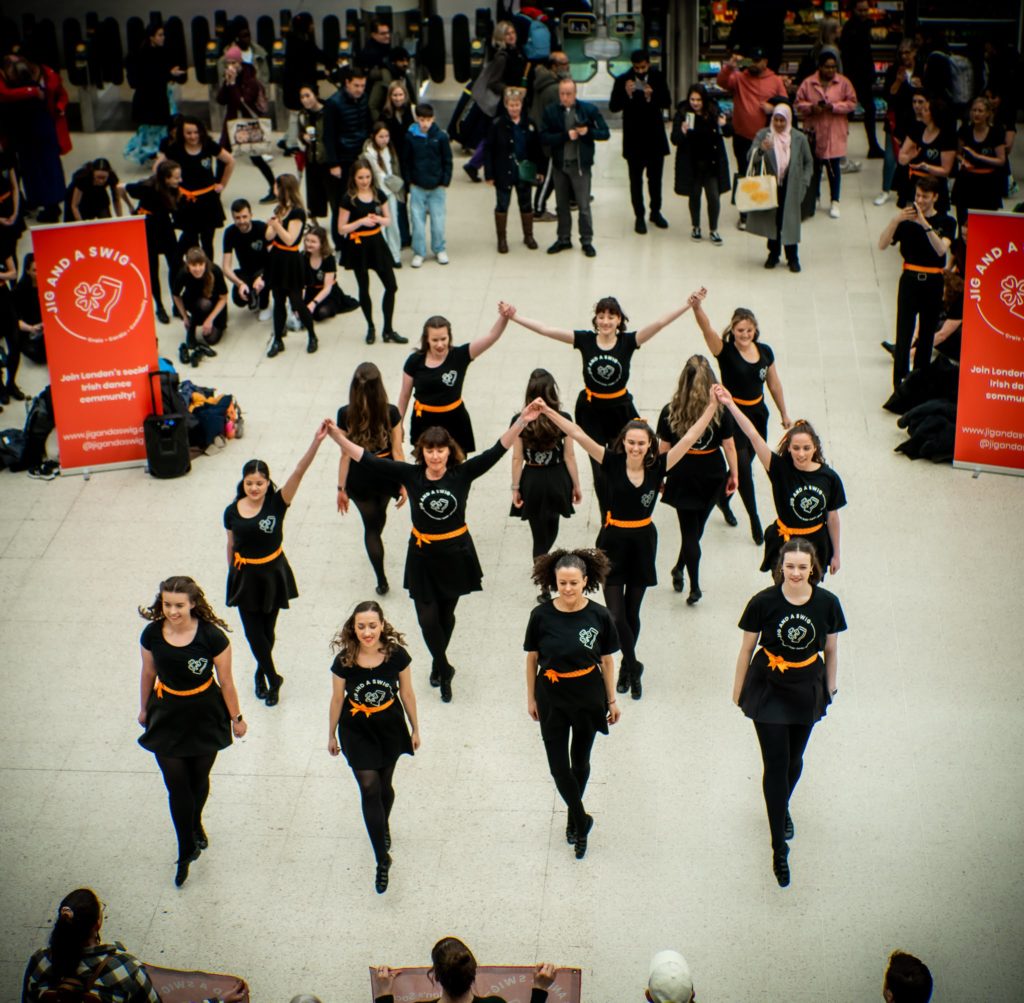 Oh! don't mind us! (Photo by Jig and a Swig)
“It was sort of like choosing between two dream jobs,” she explains. “I was offered my first 9-to-5 job in London for a women’s charity that I really loved. I ended up choosing the 9-to-5 job.”
While she continued to take part in some tours, the reality of professional Irish dancing in Britain proved limited.
As her career in London took over, dancing faded into the background until an idea began to form.
“It started really small,” she says. “I asked some friends to join me in the community hall beneath where I worked and taught them a céilí dance. They had never Irish danced before, but it ended up being really good craic.”
That first informal class in 2019 laid the foundations for something much bigger. After the disruption of the pandemic, demand surged in unexpected ways.
When classes resumed, around 20 strangers signed up for the first one, and it continued to grow from there.
Today, Jig and a Swig attracts over 400 people every week across 17 classes, with attendees ranging from complete beginners to experienced dancers.
What sets it apart is not just the dancing but also the ethos.
"There is no separation between people who have been doing it for decades and people who are new. Everyone dances together; everyone supports each other.”
That inclusivity is central to Jig and a Swig.
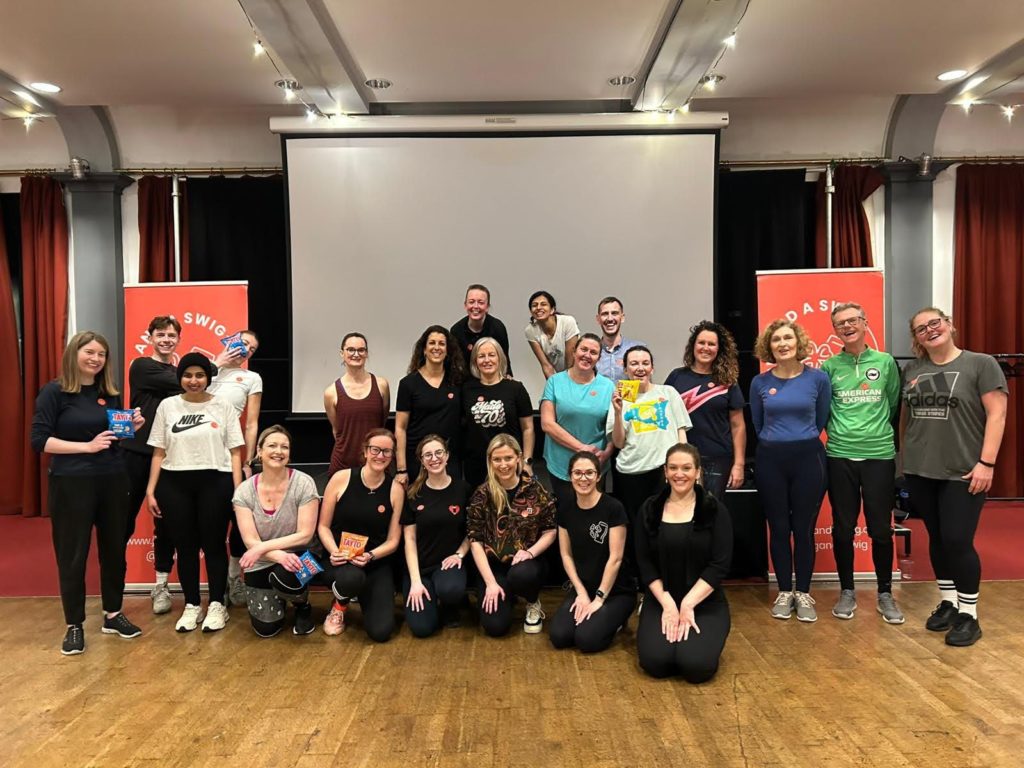 Classes have between 12-30 people (Photo by Jig and a Swig)
“You don’t have to be a particular age, nationality or ability level. It has opened up people’s perception of what an Irish dancer can be.”
In a city as international as London, the classes have drawn people from across the world.
“I had someone join from Argentina who was tearing up in her first class, saying, ‘You don’t know how much it means to me to be here.’”
One student called Taito, who was visiting from Japan, left a lasting impression.
“He didn’t speak much English, but he really wanted to learn céilí dancing. He ended up doing six classes in three weeks.”
Afterwards, he sent an email to say how welcome he felt and that he would continue Irish dancing back home.
One woman, Xara from Galway, said that when she moved to London, it was one of the first things she signed up for: “I was really blown away by all the different people there; it was so much fun, and you really felt like you made friends straight away.”
These stories show the global appeal of Irish dance, something Leach believes has been growing steadily since the 1990s.
“Since Riverdance, you can see it has an international appeal. It speaks to people of all nationalities and backgrounds.”
But today’s revival is being driven by something deeper than spectacle.
“Most people say they come because they want to learn Irish dance, but for many, it is about community,” she says.
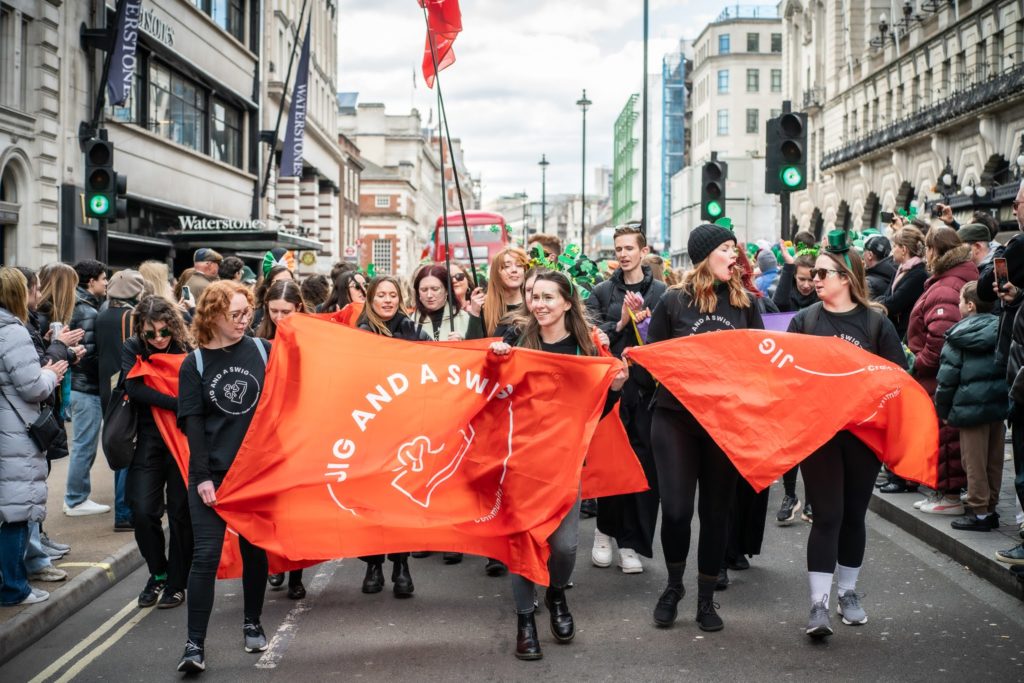 London's St Patrick's Day parade (Jig and a Swig/Photo by Christopher Beschi)
Each class is followed by a trip to a local pub, hence the name. It is here that connections are cemented, and friends are made.
“When I set it up, I didn’t realise how important it would be to people in terms of finding a sense of belonging,” Leach says.
Beyond the social side, there are physical and mental health benefits too.
“It is joyful, it is a really joyful way of moving.”
That joy is visible, even to passersby.
“It surprises me every time we are dancing in public. You see people’s body language change; they start tapping their feet, itching to join in.”
It is perhaps this simple, infectious energy that explains why Irish dancing is thriving once again, not just in Ireland, but across Britain and around the world.
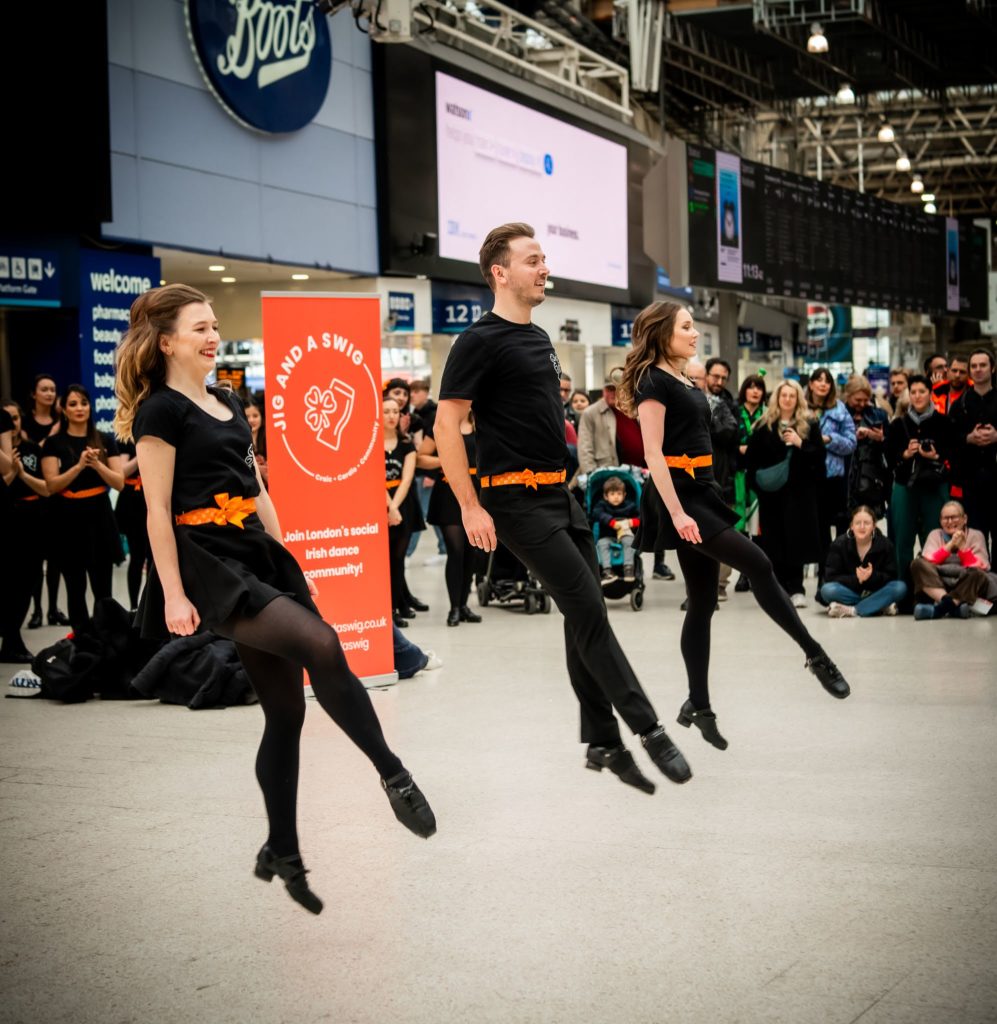 Off we go! (Photo by Jig and a Swig)
Everything from irishpost.com and the print edition is available on the Irish Post App — plus more! Download it for Android or Apple IOS devices today
