





THE Last Bantam, a one-man play written and performed by Michael Hughes, returns to London this January (25-26) with performances at the Drayton Arms Theatre in Kensington & Chelsea.
It tells the extraordinary story of Britain’s First World War “bantams” — some 30,000 men between five feet and five foot three who were initially rejected for military service before being recruited into specialist battalions.
At the heart of the play is an Irishman. Patrick Michael Wolfe is a Dublin schoolteacher who enlists in 1915, not out of blind militarism but in the belief — widely held at the time — that Irish participation in the war would secure Home Rule once the conflict ended. His journey takes the audience from the streets of Dublin to the mud and terror of the Western Front, tracing a path marked by loyalty, prejudice, courage and ultimately betrayal.
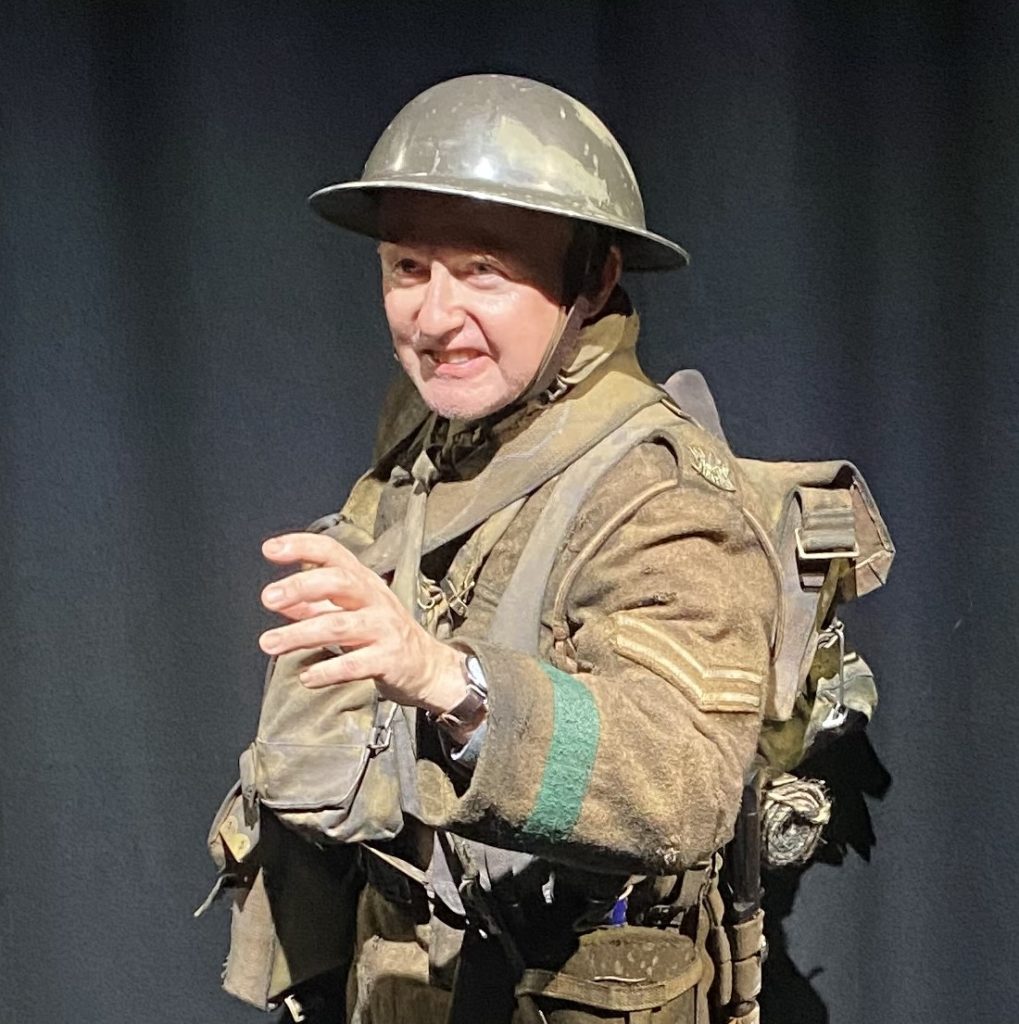 Michael Hughes performing at the Edinburgh Fringe (picture Michael Gill)
Hughes’s monodrama is one of the few theatrical works to examine Ireland’s complicated relationship with the First World War while also shining a light on the largely forgotten bantam soldiers. These were men deemed physically unsuitable for combat, yet who went on to play vital roles in some of the war’s most dangerous theatres, including tunnelling operations and early tank warfare.
Critics have consistently praised the production. Fringe Review called it “a masterclass in storytelling”, while the Derek Awards described it as a “giant of a play”.
Reviewers have highlighted Hughes’s ability to bring the audience uncomfortably close to the front line with minimal staging, using letters, memory and direct address to create an intimacy that feels almost trench-like in its confinement.
The character of Wolfe speaks with quiet pride about his service. He is no conscript, he reminds us, but a volunteer — one who swallowed whole the promise that Ireland’s constitutional future would be secured through sacrifice. That belief is tested repeatedly as the play moves between moments of humour, tenderness and harrowing realism.
Hughes, who won the Derek Awards’ Spirit of the Fringe Award for The Last Bantam, delivers the piece almost entirely in uniform, centre stage, relying on subtle shifts of voice, posture and lighting to conjure comrades, officers and enemies alike. The effect is deceptively simple and devastatingly effective.
The play’s Irish dimension sets it apart. Wolfe’s story runs in parallel with events at home, including the Easter Rising of 1916, when British troops — some of them Irish — were deployed against rebels in Dublin. The tension between Wolfe’s loyalty to the war effort and the political reality unfolding in Ireland gives the work its emotional charge.
Hughes is an experienced performer and writer, best known previously for his ensemble comedy Radio Moscow Roadshow, which sold out at the Edinburgh Fringe. The Last Bantam has since toured widely, appearing at the Edinburgh Fringe over three consecutive years, as well as in London, Nottingham, Hampshire and at the Chalke History Festival.
This January’s London dates offer audiences another chance to encounter a quietly powerful piece of theatre. It restores dignity to forgotten soldiers and confronts the uneasy truths of Ireland’s First World War experience
The Last Bantam
Sunday, January 25 (5pm) - Monday, January 26 (7.30pm)
Drayton Arms Theatre
153 Old Brompton Road, London SW5 0LJ www.thedraytonarmstheatre.co.uk/the-last-bantam
Ireland and the First World War — a divided legacy
IRELAND’S experience of the First World War remains deeply contested. Around 200,000 Irishmen served in the British Army, with an estimated 35,000 killed. Many enlisted believing that loyalty would be rewarded with Home Rule after the war.
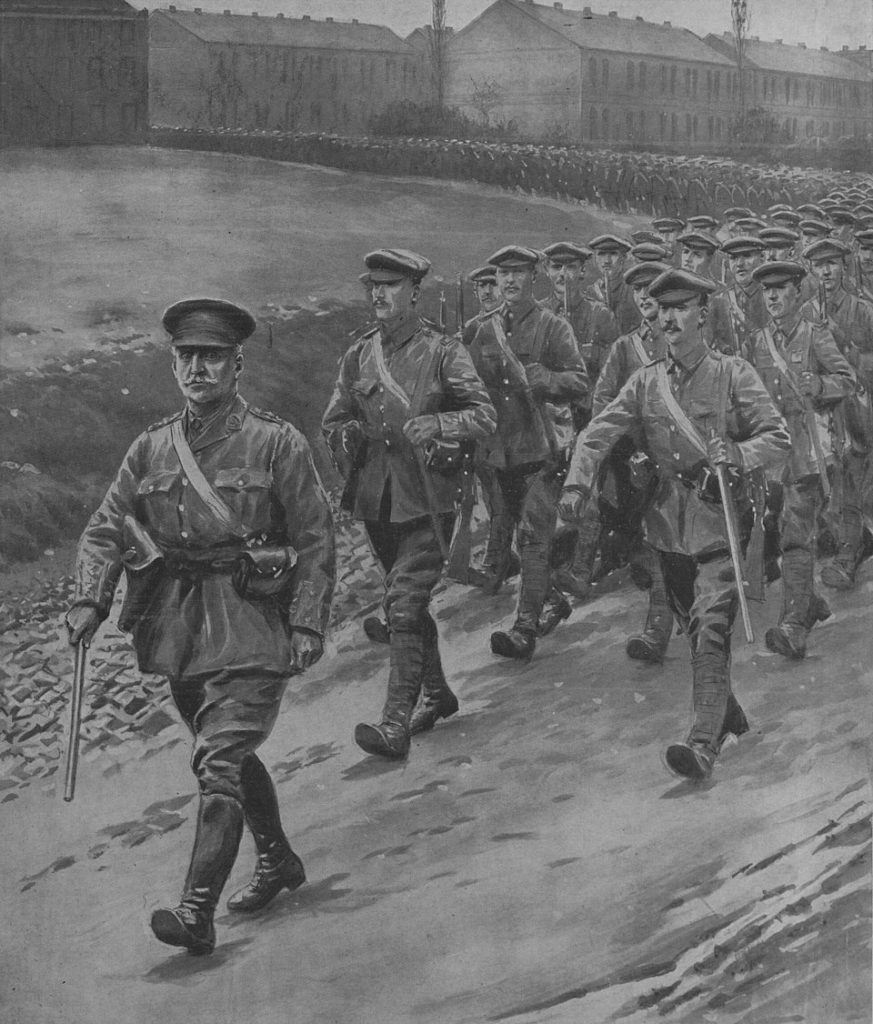 Captain Willie Redmond (1861-1917), MP, leading Irish troops during the First World War
Instead, the Easter Rising of 1916, the executions that followed, and the subsequent War of Independence reshaped Irish public memory. Those who fought in British uniform often found their service marginalised or actively rejected in the decades that followed.
Plays such as The Last Bantam occupy an important space in revisiting this history, not to settle arguments, but to acknowledge the complexity of Irish choices in a time of imperial war, political uncertainty and fractured loyalties.
See More: First World War, Irish Soldiers, Theatre
