




THE TWELFTH of July stands unmistakably for one major event in Irish history.
The date is traditionally associated with the Battle of the Boyne, at which William III defeated the forces of the deposed King James II in 1690.
Less widely known is that the same date two hundred years ago marked the completion of a UK General Election which had considerable implications for Catholic Emancipation in Ireland.
At the heart of the 1826 election campaign was the issue of Catholic Emancipation, a long-running grievance in Ireland and among English Catholics.
Since 1793, Irish Catholics meeting the relevant property qualification had been able to vote in parliamentary elections, but Catholics were prohibited from sitting as Members of Parliament. The election ran from June 7 to July 12, 1826.
Despite the anti-Emancipation Lord Liverpool emerging from the election with an increased Tory majority, momentum for change generated by Daniel O’Connell’s Catholic Association was becoming increasingly difficult to resist. Only three years later, emancipation was on the statute books.
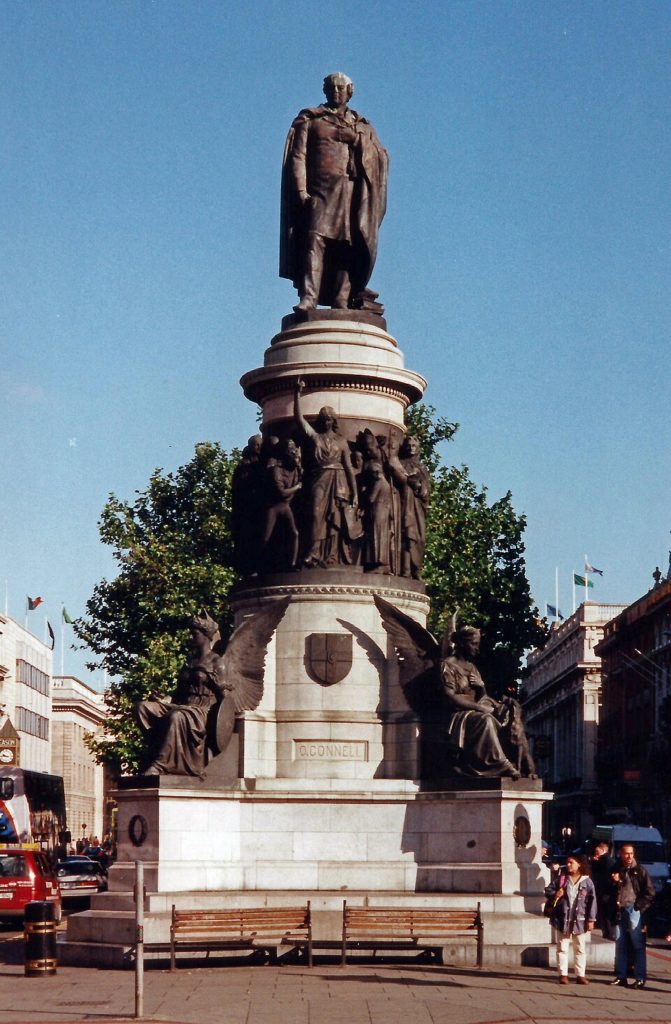 The Statue of Daniel O'Connell in Dublin (CC BY-SA 4.0)
O’Connell’s triumph in the County Clare by-election of 1828 proved decisive. Although elected, as a Catholic he could not take his seat without swearing oaths incompatible with his faith. The political crisis helped force the issue of emancipation to the fore.
It was a period in British and Irish history when almost all the great political dramatis personae of the era were on stage. Liverpool, Peel, Wellington, Canning, Grey, Grenville and Lansdowne were among the leading British figures. Castlereagh — Robert Stewart, Viscount Castlereagh — an Ulsterman and opponent of emancipation, had left the scene following his death in 1822. O’Connell, through force of personality and strength of will, came to embody the campaign of the Catholic Association. No one approached him in effectiveness or reputation.
In Westminster, O’Connell found in Robert Peel a political nemesis — although Peel was eventually to play a central part in delivering emancipation. O’Connell subjected him to some of his most withering invective. Their relationship remained rocky, but Peel, along with Dublin-born Duke of Wellington, ultimately accepted the necessity of Catholic Emancipation in 1829.
Emancipation was supported by many Whigs, while strong opposition remained among Tories, particularly those representing conservative rural England. The House of Lords — a much more influential body in the 1820s than today — was a major obstacle to reform, although some supported the Catholic cause.
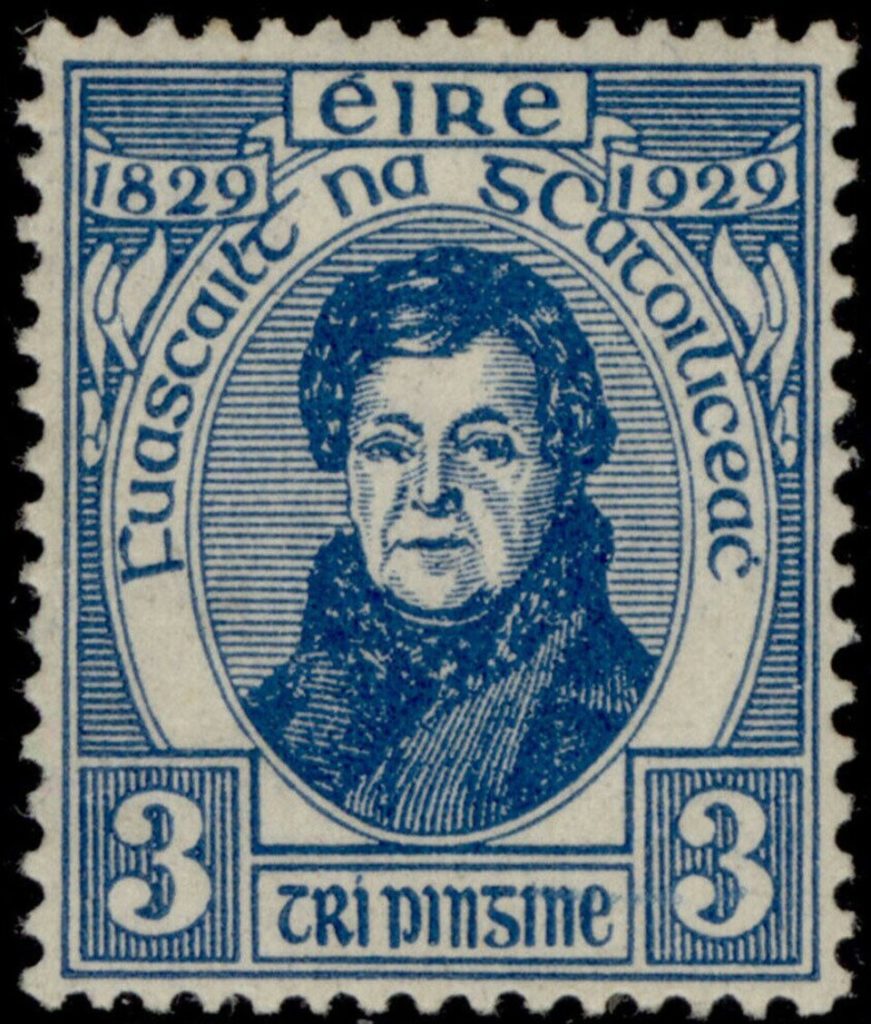 Daniel O'Connell depicted on a three pence Irish postage stamp
In the three years between the return of a firmly anti-Emancipation Tory majority in 1826 and Catholic Emancipation in 1829, circumstances turned decisively in O’Connell’s favour. The views of King George IV were important to any change, while Peel and Wellington ultimately concluded that continued resistance risked serious unrest in Ireland.
The Roman Catholic Relief Act of 1829 did not change things overnight; public attitudes and institutions took much longer to adjust. For O’Connell it was only a partial success. He proceeded to concentrate much of his political effort on Repeal of the Union.
Subsequently, some have dismissed O’Connell’s contribution to the longer struggle for Irish self-government. His cancellation of the planned Monster Meeting at Clontarf in October 1843, in the face of a government ban and the danger of considerable loss of life, damaged his reputation among those who favoured more militant methods.
Yet emancipation was a testament both to the merits of the cause and to O’Connell’s parliamentary and popular campaigning. It was also one of the first great Irish exercises in mass political organisation and pressure on Westminster, establishing methods that would be seen again, in different forms, during the later campaigns for Irish self-government.
It is perhaps ironic that two significant historical events with such different meanings should be associated with the Twelfth of July. One was sharp, decisive and military; the other date marked a stage in a long political process that helped produce profound change. Considered together, they illustrate something of the historic Anglo-Irish dilemma.
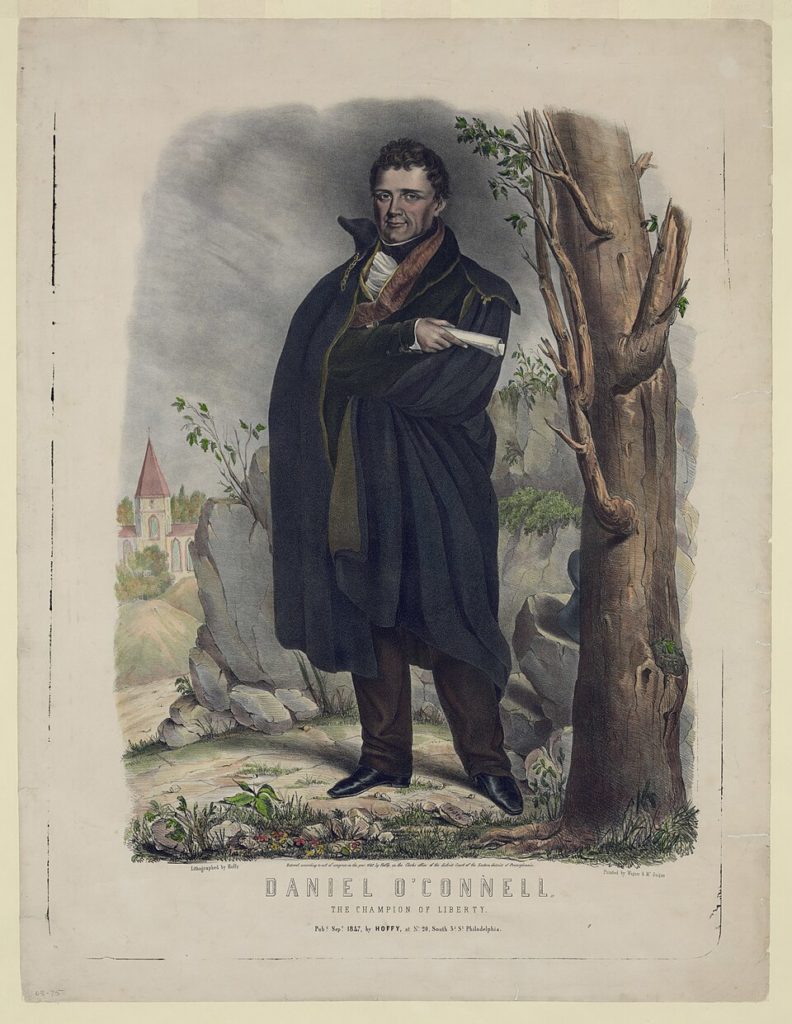 An early portrait of Daniel O'Donnell (public domain)
The 1826 election demonstrated to Irish nationalists how firmly Westminster controlled the determination of Irish affairs under the Union. Irish representatives and interests would inevitably form a minority within a UK parliament. Many would ultimately conclude that the effective advancement of those interests required Irish self-government.
Events were to swing between parliamentary politics and physical force from the 18th into the 20th century. Such was the continuum of Irish history.
O’Connell’s commitment to peaceful political action also found echoes much later in Irish history, notably in John Hume’s political vision and the process that culminated in the Good Friday Agreement of 1998. O’Connell was also an outspoken opponent of slavery, and his friend and contemporary Frederick Douglass met and admired him during his visit to Ireland in 1845. The wider principle that profound political change could be pursued without recourse to violence would later become central to figures including Mahatma Gandhi and Martin Luther King Jr.
Among the European states that achieved or recovered independence in the aftermath of the First World War, the Irish Free State was notable for maintaining parliamentary democracy while democracy collapsed in many other new states. Ireland’s long engagement with parliamentary politics, and practitioners of that art such as O’Connell, formed part of that inheritance.
Something to be proud of.
Paul McElhinney is a writer and journalist living in Wexford. He is the author of Lion of the RAF, a biography of Air Marshal Sir George Beamish. His main interests are history, politics, sport and culture.
Everything from irishpost.com and the print edition is available on the Irish Post App — plus more! Download it for Android or Apple IOS devices today.
See More: Catholic Emancipation, Daniel O'Connell, Ireland
