



IN 1936, ninety years ago, Europe was in turmoil.
The Spanish Civil War had begun, Adolf Hitler had remilitarised the Rhineland in defiance of the Treaty of Versailles, and fascism was on the march across much of the continent.
In Britain, King Edward VIII was heading towards the abdication crisis that would shake the monarchy later that year. Ireland itself was still a young state, barely fourteen years removed from civil war.
Yet amid all that uncertainty, Ireland’s first commercial flight departed Dublin. Aer Lingus was on its way.
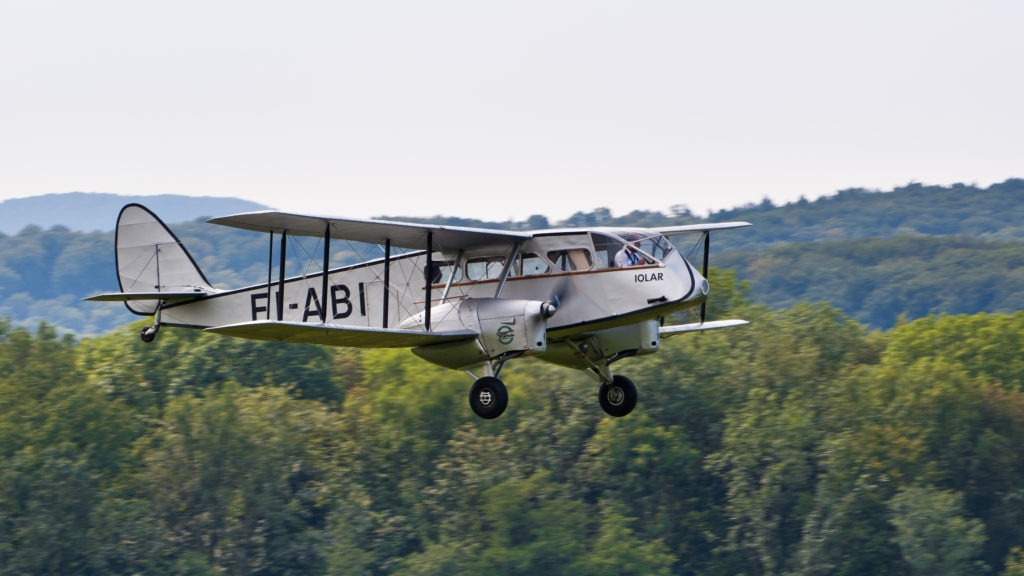 The Iolar Aer Lingus De Havilland DH-84 Dragon (Julian Herzog CC BY 4.0)
AER LINGUS was founded on April 15, 1936, by the Irish Government with initial capital of £100,000. Today £100,000 would barely buy you one wheel assembly on a modern Airbus.
AER LINGUS Teoranta was registered as an airline on May 22, 1936. ‘Teoranta’ means ‘limited company’. The word ‘Lingus’ is derived from the Irish ‘loingeas’ meaning ‘fleet’. Today Aer Lingus is Ireland's national airline, using the IATA designator EI.
THE name Aer Lingus is an anglicisation of the Irish form Aer Loingeas, which means Air Fleet. The name was proposed by Richard F O'Connor, who was County Cork Surveyor, as well as an aviation enthusiast. Aer Lingus was originally pronounced 'air ling-us' (as the Irish Aer Loingeas is pronounced) and only later did the pronunciation change to the 'air ling-gus' used now.
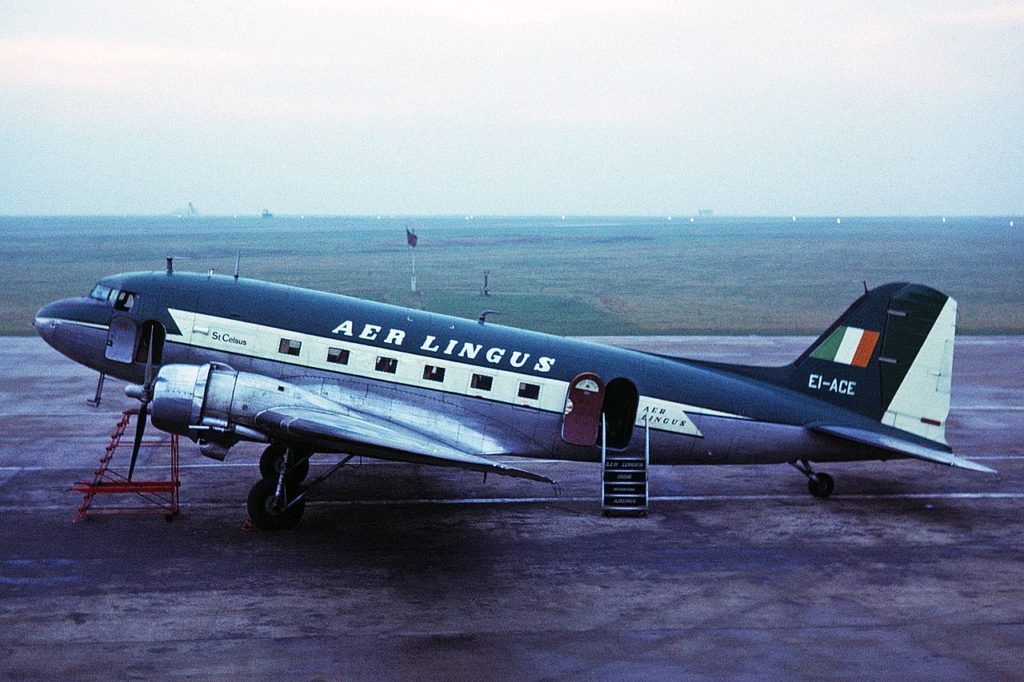 An Aer Lingus Dakota (picture Ken Fielding CC BY-SA 3.0)
AER LINGUS originally operated under the marketing name “Irish Sea Airways”, a temporary commercial title used before the airline formally adopted the Aer Lingus name in 1936.
THE airline’s origins also lay partly in the fledgling Irish military aviation service created after independence. The first pilots and mechanics associated with Irish civil aviation had often served with the National Army Air Service — later the Irish Air Corps — which itself emerged in the chaotic years after the British withdrawal.
WHEN British forces and the Royal Air Force finally departed following the ratification of the Anglo-Irish Treaty, it is claimed (although not historically verified) that two British aircraft were unable to take off. They were, according to legend, impounded. Along with two other aircraft, this was the nucleus of what became the Irish Air Corps.
THE first route linked Baldonnel Airfield in Dublin with Whitchurch Airport in Bristol in England. Flight no. 1 departed Ireland on May 27, 1936. That first aircraft was a six-seat de Havilland DH.84 Dragon biplane named Iolar, meaning “Eagle”. Its registration was EI-ABI. Flying at speeds that touched 130mph on occasion, it touched down on schedule shortly after midday.
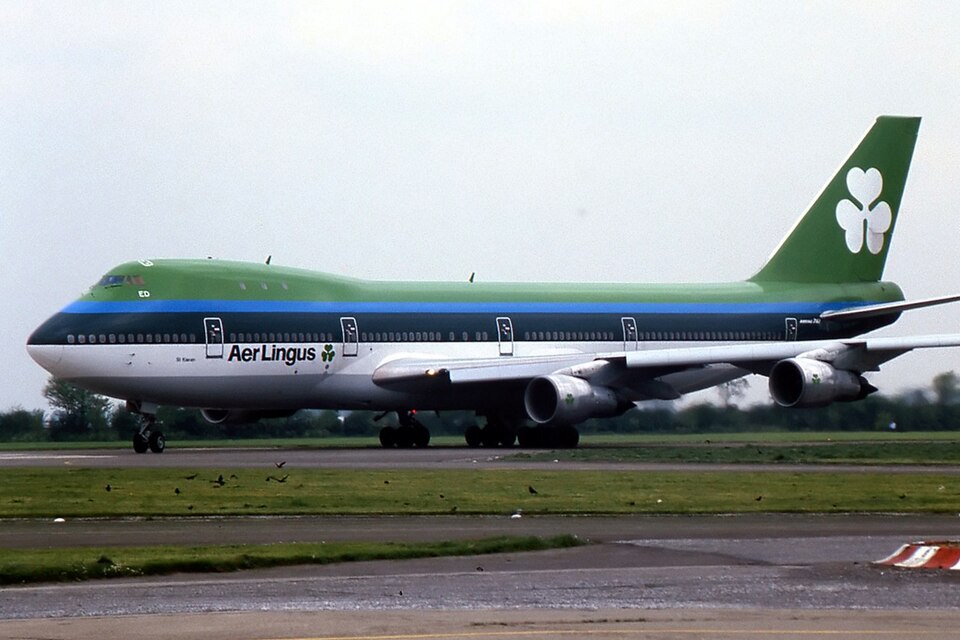 An Aer Lingus Boeing 747 (CC0)
THE airline bought the de Havilland six-seater for £2,400 from the Blackpool and West Coast Airline in England.
IN May 1936, the entire Aer Lingus workforce, believed to have numbered around a dozen, cheered the first flight on its way.
LONDON was added to the network later in 1936 using Croydon Airport.
THE first ever Aer Lingus employee was Nobby Rafter, employed as a booking agent. His duties for the first trip weren’t overly onerous as there were only five passengers. The only cargo aboard was a consignment of newspapers bound for London.
THE airline’s first chairman was Seán Ó hUadhaigh, a key figure in early Irish aviation development.
IOLAR was the 38th plane on the Irish Aircraft Register, and was blessed by the Irish Air Corps chaplain, the Rev W. O’Riordan.
JOHNNY Maher, a former Air Corps mechanic, became Aer Lingus's first chief mechanic. Sometimes called ‘a Prince among Airmen’ he kept his original spares - a few spark plugs and not much else - in a biscuit tin. 'Johnny Maher's biscuit tin' became, almost inevitably, Aer Lingus jargon for the spare parts division, even as late as 1965, when the company carried over £20 million worth of spares.
THE fourth Aer Lingus plane to be bought was called 'The Big Fellow', not because of its size but due to its deployment to England during the Treaty Talks. It was there in case the talks failed and Michael Collins, known as the Big Fellow, had to be spirited out of the country.
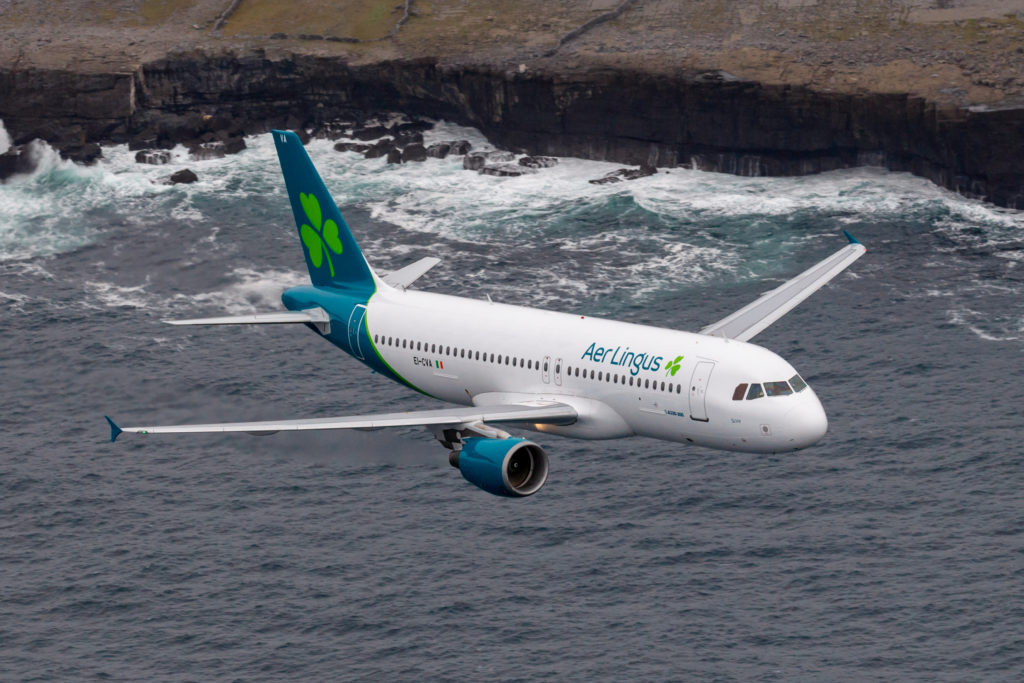 An Aer Lingus aircraft heads out across the Atlantic (image courtesy of Aer Lingus)
IN 1937 the Irish Government took full ownership of the airline through Aer Rianta.
IN January 1940 a new airport was completed in the Dublin suburb of Collinstown and Aer Lingus moved their operations to the new aviation centre. Apart from a new DC-3 service to Liverpool and an internal service to Shannon the airline's services were curtailed during World War II. By January 1, 1944 the Aer Lingus fleet stood at two de Havillands (the ‘Eire’ and the ‘Sasana’), plus a Douglas DC3.
IN 1945 the first Aer Lingus cabin crew arrived (then called stewardesses or hostesses). Their starting salary was something in the region of £4/17/6 per week.
PARIS joined the Aer Lingus route map in 1946, and because of its rate of growth, Aer Lingus bought seven Vickers Viking planes, and a mail service between Ireland and Britain had begun. The Dublin-London route was reinstated after World War II using a Douglas DC3 Dakota aircraft. The fare was £6.10s one way. And you could have stocked up on fruit for the journey for the first time since before the war – oranges went on sale again in Henry Street, Dublin for 2d each.
THE airline’s earliest summer route included flights to the Isle of Man.
AER LINGUS launched a Dublin–Liverpool route during its first year of operation.
IN 1947 a new service from Dublin to Rome began. Fares were £33 single, £48 return. Flying was evidently still for the very rich – based on most estimates, £33 in 1947 would be the equivalent of nearly £1,700 in today’s money. In that same year the ballpoint Biro went on sale in Dublin for 45s, or about 50 pence. Back then it was an expensive piece of kit. Check-in staff largely used pencils.
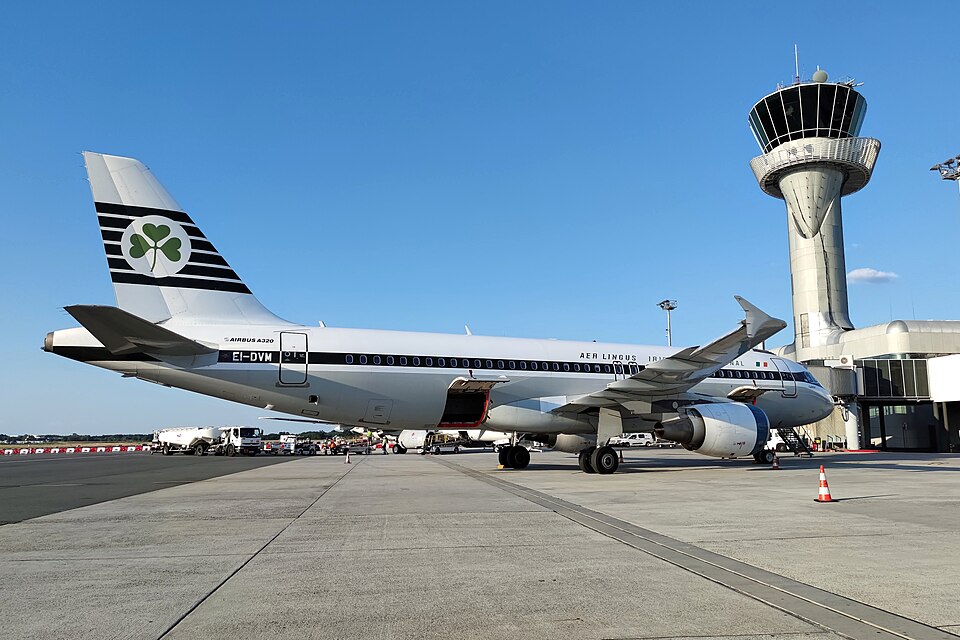 Airbus 320 (Picture Dylan Agbagni, Wikimedia Commons (CC0)
IN 1947 the first three Lockheed Constellations, the main transatlantic plane of the time, arrived in Dublin. The biggest airliners to date, the Aer Lingus aircraft were named after Ireland’s named saints: St Brigid, St Brendan and St Patrick.
AER Lingus began the 1950s with the company’s first ever night flights, called Starflights. As it happens, 1950 saw Radio Éireann (later to become RTÉ) begin broadcasting the Angelus at the request of Archbishop John Charles McQuaid.
BY 1950 almost 200,000 people were flying on Aer Lingus planes, mostly Douglas DC3 Dakotas, one of the most reliable and versatile planes ever built. The decade began with Taoiseach John Costello taking an Aer Lingus flight to Rome to be received by the Pope. He was there to celebrate the first post-war Holy Year; however, the pint of stout stayed steady at around a shilling (about 5 pence).
IN 1956 Aer Lingus introduced a new, green top livery with a white lightning flash down the windows and the Irish flag displayed on each plane's fin, and Louis Armstrong (Satchmo) travelled to Ireland to give two concerts in Dalymount Park, Dublin.
IN 1958 radar was installed at Dublin Airport and the Super Constellation named Padraig took off for the US. Meanwhile CIE, the Irish transport authority, were still using 300 horse-drawn vehicles.
IN June 1979 Aer Lingus appointed its first woman pilot, Gráinne Cronin. That same year traffic wardens (both male and female) appeared on the streets for the first time, and also for the first time - from October onwards - CIE, the transport authority, appointed female drivers and conductors.
AER LINGUS entered the jet age in 1960, with Boeing 720s covering the routes from Dublin to New York and to a new destination, Boston. The first ever Aer Lingus jet was called Padraig.
BRENDAN Behan was one of the first passengers to avail himself of the new Aer Lingus transatlantic route in 1960 - he was heading for New York to attend the opening of The Hostage. He pledged he would drink only soda water, 'a good drink, invented in Dublin', but it proved to be a promise he, alas for his health, wouldn't keep.
AER Lingus’ radio callsign is “Shamrock”.
IN 1963, Aer Lingus's management thought it would be a good idea to bring some Carvairs to the fleet. In that type of plane, passengers could bring their cars into the plane and fly with their cars on board. But taking your car with you on a plane was an idea that never, ahem, really took off.
IN 1974 a new livery was unveiled and the word International disappeared from the fuselage titles on Aer Lingus' planes. The livery that was at that time revealed to the world of transportation included two different colours of blue and one green, plus the white shamrock on the tail fin.
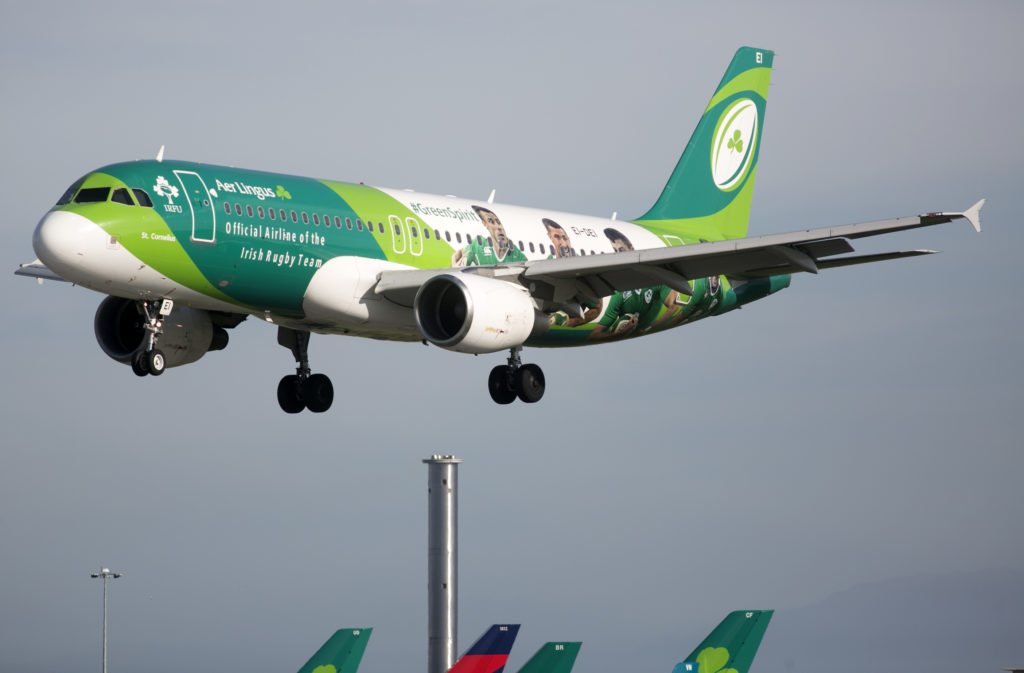 An Aer Lingus aircraft pictured at Dublin Airport
IN SEPTEMBER 1977, some of Ireland’s greatest art treasures were conveyed across the Atlantic on four separate Boeing 747 flights – the Book of Kells, the Ardagh Chalice, the Tara Brooch, the Cross of Cong, St Patrick’s Bell and the Gleninsheen Collar. They were bound for an exhibition in the Metropolitan Museum of Art in New York.
AER LINGUS was the first airline outside Alitalia to be used by Pope John Paul II, when in 1979 he flew from Rome to Dublin and later from Shannon to Boston on an Aer Lingus plane chartered for him.
AER LINGUS remains one of the safest airlines in the world — a fact supported by industry data and industry ratings. It consistently receives a maximum 7-star safety rating from AirlineRatings.com, which monitors more than 400 airlines.
LOS ANGELES remains the longest Aer Lingus route at 8,338 kilometres (5,181 miles).
ON May 1, 1981, 113 passengers on board an Aer Lingus flight from Dublin to Rome were hijacked by a Frenchman. On his apprehension (and the safe release of the hostages) Monsieur Dax, the hijacker, gave an interesting reason — he wanted to know the Third Secret of Fatima. In the event, Monsieur Dax failed in his attempt to uncover the secret, and subsequently received a lengthy jail sentence for his trouble, none the wiser about the visions in the central Portuguese town of Fatima.
THE airline became an all-Airbus airline in 2005.
THE original Iolar aircraft was restored by Aer Lingus to airworthy condition in 2011
Everything from irishpost.com and the print edition is available on the Irish Post App — plus more! Download it for Android or Apple IOS devices today.
See More: Aer Lingus, Irish History
