




FROM travel chaos and storm damage to the arrival of a new pope, we look back at some of the stories that hit the headlines in the year gone by,,,
Headaches at Holyhead
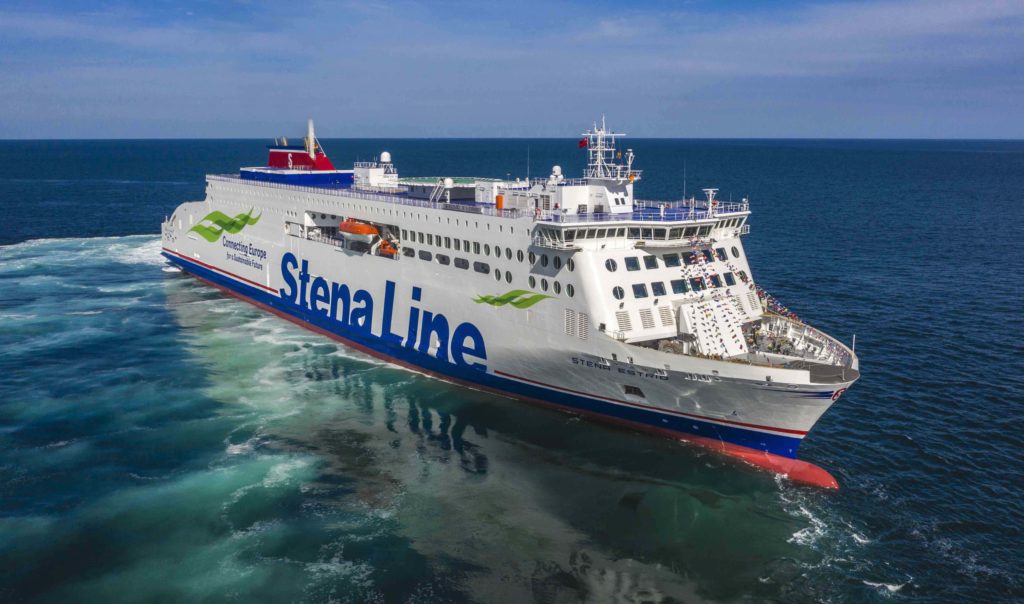
The year begin with the continued closure of Holyhead port.
All sailings were cancelled at the port from December 7, 2024 after Storm Darragh caused significant damage to two of its berths.
When the new year arrived, the port was still out of action, although by January 16 access to one terminal was restored.
Ferry services were back in operation from Terminal 5, but Terminal 3 remained closed as further repair works were needed.
Terminal 3 did not reopen until Friday, July 18, brining an end to the headache caused by the lack of connectivity between one of Ireland and the UK’s busiest trade routes.
Seán Canney, Ireland’s Transport Minister, said he was “very pleased” to see both berths in Holyhead Port finally back in full operation.
“The route between Holyhead and Dublin is not only the shortest crossing between Ireland and the UK, but one of our most vital trade routes offering smooth and efficient passenger and freight services,” he explained.
“This re-opening brings additional resilience to our sea connections, as we revert to the synchronised sailing schedules favoured by and aligned to the systems used in the logistics sector.”
He added: “I know how much work and close collaboration between local authorities, port operators, ferry companies, and logistics industry representatives it has taken to bring us to this point.
“I thank all involved and look forward to continuing to work together on strengthening the resilience of our sea links.”
Storm Éowyn sees red
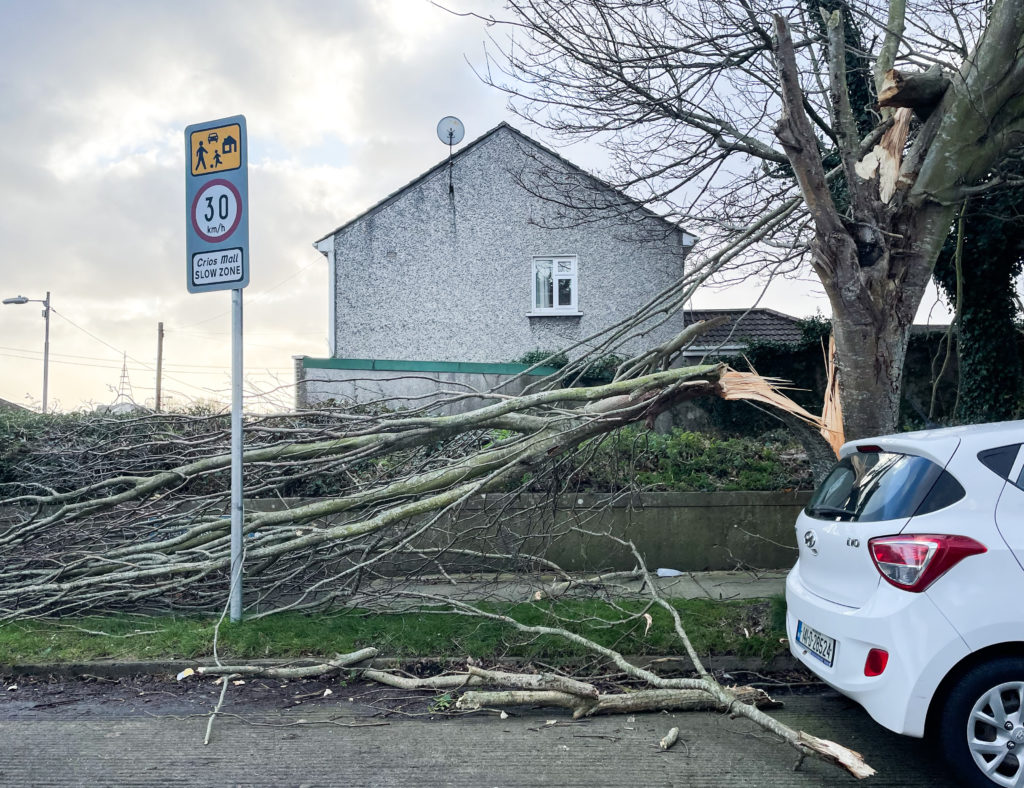 Storm damage in Dublin following Storm Éowyn
Red weather warnings were issued across Ireland and the UK as Storm Éowyn made landfall in January.
Both nations were effectively put into temporary lockdown as they braced themselves for the impact of what was forecast as the “worst storm ever seen” on these islands.
Schools were closed; public transport was out of operation and employers advised staff to work from home until the worst of it was over.
A mammoth cleanup operation got underway once the storm had passed, with nearly 800,000 homes, farms and businesses in Ireland being left without electricity.
Technicians from across Britain and Europe provided support to Ireland in the aftermath.
The following day the Electricity Supply Board (ESB) mobilised all its resources, with the help of additional crews from the UK, to get the country back up and running again.
“Skilled technicians from counterparts in Austria, Finland, France, Great Britain, Germany, Netherlands and Norway are on the ground in the worst impacted areas,” ESB confirmed in a statement issued at the time.
Border restrictions impact North
Border regions in Northern Ireland that rely on cross-border business were among those hardest hit by new travel rules implemented by the British Government in April.
Since January a new Home Office travel scheme requiring all non-European visitors to obtain electronic travel authorisation (ETA) prior to their arrival has been in effect.
It means all non-European travellers must now present the ETA, which currently costs £10, to be allowed to pass through the UK border.
On April 2 the scheme extended to European visitors too, and on April 9 the cost of obtaining the required ETA increased to £16 per person.
The new restrictions have impacted tourism in the North, which traditionally welcomes 67 per cent of its overseas holidaymakers from outside of Britain and Ireland via southern Ireland.
Now, tourists who wish to pay a visit to the North of Ireland while spending time in the south will have to get the paperwork done first and also pay for the privilege.
SDLP Economy Spokesperson Sinéad McLaughlin raised further concerns about the impact of the ETA on cross border communities in the North.
“Since the pandemic, an extraordinary effort has been made to rebuild our tourism industry and related businesses across Northern Ireland,” she said.
“However, the introduction of the ETA scheme presents a real risk of undoing this hard work.
“The threat of this scheme, particularly on our tourism sector and small businesses, cannot be underestimated.”
She added: "Border regions, such as the one I represent in Derry, will be among the hardest hit.”
Speaking in the Northern Ireland Assembly, Economy Minister Dr Caoimhe Archibald said she was "deeply concerned about the impact of the introduction of the ETA scheme and what it will mean for our tourism sector".
She has called on the British Government to make Northern Ireland exempt from the scheme.
Papal sorrow and joy
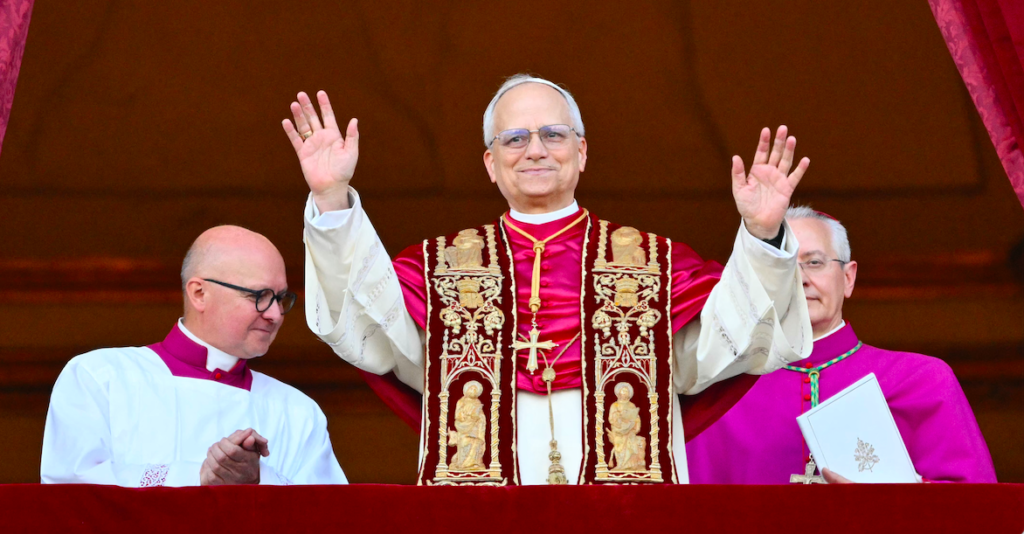 Pope Leo XIV appears on the central balcony of St Peter's Basilica
The world stopped to mourn Pope Francis following the Pontiff’s death in April.
Then President of Ireland Michael D. Higgins led the Irish delegation that attended the funeral at the Vatican before Pope Francis was laid to rest at Santa Maria Maggiore Basilica in Rome.
Italian officials confirmed more than 400,000 people gathered at St Peter's Square for the funeral and lined the streets as the Pope's coffin was taken to his final resting place.
Millions more watched the livestream of the event from homes across the globe.
Spirits were lifted among the Catholic community the following month when Leo XIV was elected the new Pope.
Cardinal Robert Francis Prevost ascended to the throne of St Peter, becoming the 267th Bishop of Rome and Supreme Pontiff, on May 8.
The 69-year-old hails from Chicago, though he spent many years as a missionary in Peru before being elected head of the Augustinians for two consecutive terms.
He is the first American to hold the papacy.
Controversial Legacy Act repealed
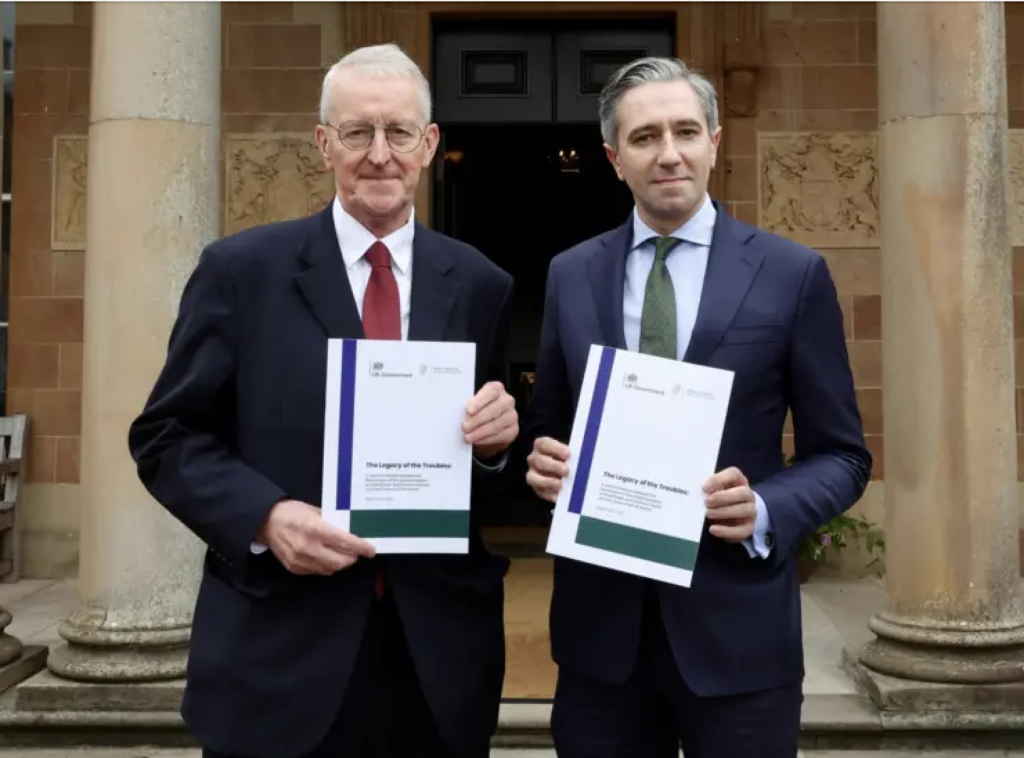
A new agreement was made on issues relating to the legacy of the Troubles this year.
The British and Irish Governments revealed their new joint framework in September.
Launched by Tánaiste Simon Harris and Secretary of State for Northern Ireland Hilary Benn at an event held in Hillsborough Castle, The Legacy of the Troubles: A Joint Framework replaces the controversial Conservative government’s Legacy Act 2023 which came into effect in Britain in 2024.
“The Joint Framework provides for sweeping reforms of the mechanisms designed to address the legacy of the Troubles in Northern Ireland, and across this island,” Mr Harris said.
“Agreement on the framework represents a welcome return to a partnership approach on Northern Ireland by the two governments,” he added.
“The 2023 UK Legacy Act was unilaterally conceived, unilaterally drafted, and unilaterally implemented. Today is a step-change from that,” he explained.
“The Joint Framework will bring about root and branch reform of the UK Legacy Act and the commission it established.”
Elements within the new framework include lifting the current ban on taking civil cases related to the Troubles period in Northern Ireland and restoring inquests which were stopped under the Legacy Act legislation.
It will also “completely overhaul” the independence and governance of the Independent Commission for Reconciliation and Information Recovery (ICRIR), which will be renamed the Legacy Commission and have a statutory Independent Oversight Board, a Victims and Survivors Advisory Group and an independent appointments panel advising on senior appointments.
The new Northern Ireland Troubles Bill, which is based on the new framework, is currently going through the legislative process at Westminster.
Grim excavation work begins
The excavation of the site of a former mother and baby home in Co. Galway, where 796 children are believed to be buried, began in June.
Works got underway at the location in Tuam on Monday, June 16, and will continue for a period of 24 months.
Families of those affected were invited to view the site in the early weeks of work after which it became fully closed off to the public.
“From the start of works, the entire site, including the Memorial Garden, will be accessible only to staff carrying out the works and 24-hour security monitoring will be in place,” Daniel MacSweeney, who leads the Office of the Director of Authorised Intervention, Tuam (ODAIT), which is responsible for the excavation, said.
“The initial four weeks involved setting up the site, including the installation of 2.4-metre hoarding around the perimeter,” he explained.
“These measures are necessary to ensure the site’s forensic integrity and to enable us to carry out the works to the highest international standards that govern the excavation and recovery programme.”
Catherine Corless, who first discovered that a septic tank had been used as a mass grave at the site of the home, welcomed the milestone in the fight for justice for the young people buried there.
“It's hard to put into words the relief that I feel right now, knowing that the skeletal remains of those 796 precious little souls will be finally set free from the horrific sewage system and the way that they were so callously disposed of,” she told The Irish Post as the excavation began.
Ireland gains Cern membership
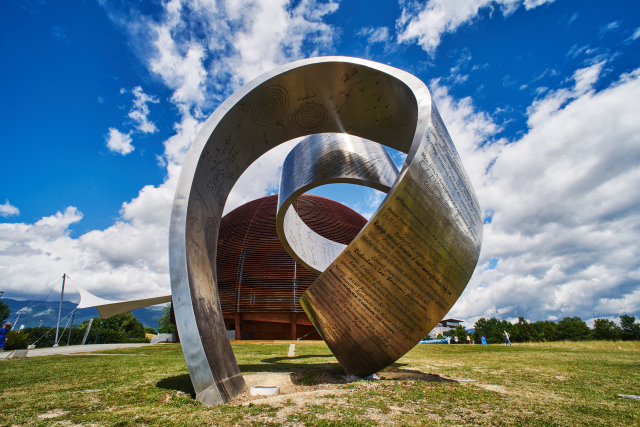 The CERN centre in Geneva, Switzerland (Pic: CERN)
This year Ireland officially joined the European Organization for Nuclear Research (CERN) as an associate member state.
Minister for Further and Higher Education, Research, Innovation and Science, James Lawless, confirmed the nation’s membership, which he claimed, “marks the culmination of a national ambition, delivered through Minister Lawless’ leadership and strategic direction”.
"Joining CERN as an Associate Member is a landmark achievement for Ireland,” Minister Lawless said.
“It reflects years of ambition, collaboration and strategic leadership,” he added.
“I am proud to have led this national effort, working across Government and with our research community to turn aspiration into action."
CERN is an intergovernmental organisation which operates the largest particle physics laboratory in the world.
Associate membership is expected to bring benefits to Ireland across research, industry, skills, science outreach, and international relations.
It will open doors for Ireland’s researchers to participate in CERN’s scientific programmes and will make Irish citizens eligible for staff positions and fellowships there.
Membership will also allow Irish businesses to compete for CERN contracts.
Soldier F found not guilty
In October a British army veteran who was involved in Bloody Sunday in Derry in 1972, was cleared of all charges in relation to the incident.
The man, referred to as Soldier F as he could not be identified, was on trial in Belfast that month.
He was accused of murdering James Wray and William McKinney when members of the Parachute Regiment shot dead 13 civil rights protesters on the streets of Derry on January 30, 1972.
He was also charged with five attempted murders during the incident in Derry's Bogside area.
Soldier F denied all seven charges and was found not guilty on all of them by judge Justice Patrick Lynch at Belfast Crown Court.
The judge told the court that the evidence presented against the veteran fell "well short" of what was needed for conviction.
Relatives of those who died in Bloody Sunday, which happened at the height of the Troubles in Northern Ireland, have campaigned for years to get justice for their loved ones.
In a statement read outside court, the Bloody Sunday families said they “don't blame” the trial judge but claim the blame “lies firmly with the British state and with the RUC who failed to investigate the murders on Bloody Sunday properly or indeed at all".
Ryanair goes paperless
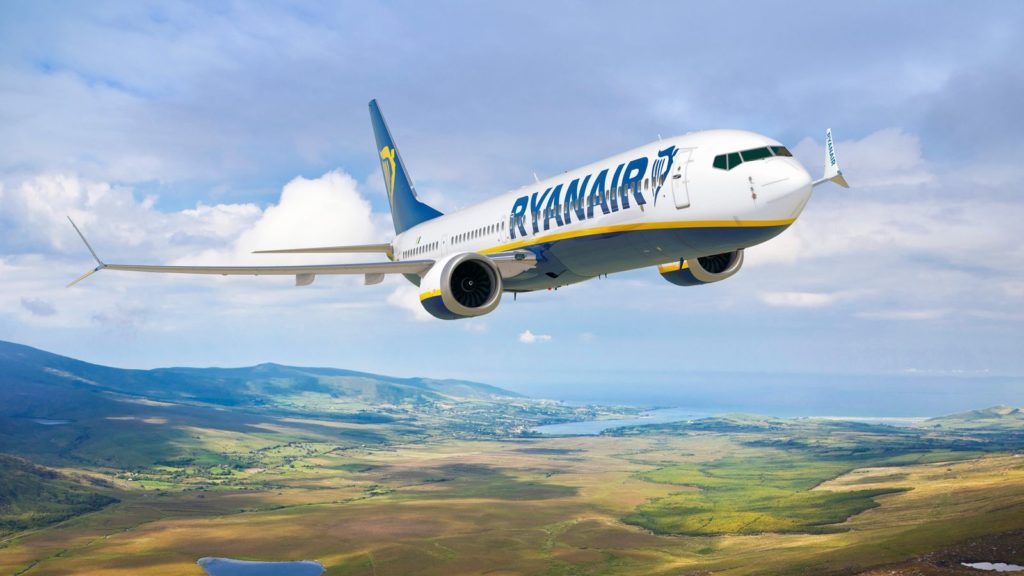
Ryanair went digital last month.
From November 12 the Irish airline made the move to digital-only boarding passes, which it says has been a huge success.
The airline no longer issues passengers with paper boarding passes as it embraces a digital-only system.
Halfway through the first day of the new system, Ryanair confirmed it has operated more than 700 flights under the initiative without any delays - with 98 per cent of passengers presenting a digital pass at the airport.
"So far, day one of Ryanair's DBP (Digital Boarding Pass) has been a huge success as over 700 flights and more than 100,000 passengers enjoyed the improved service and better experience of paper-free boarding at Ryanair airports," said CMO Dara Brady.
"We estimate our DBP initiative will save up to €40m annually and this will help us to lower ticket prices and make air travel more competitive for Ryanair's customers."
Ryanair said that the two per cent of passengers who didn't arrive at the airport with a digital boarding pass had still checked in online prior to arrival and were issued free-of-charge boarding passes.
While 'one or two' passengers did have a problem with their phones, they were still boarded without difficulty as boarding gates had their details from their online check-in.
"Customer feedback was universally positive as passengers swiped their phones through airport security and boarding gates," added a statement from the airline.
As well as saving money, Ryanair says the initiative provides a better service for customers and is better for the environment, avoiding the printing of 300 tonnes of paper each year.
Stars shine at Irish Post Awards 2025
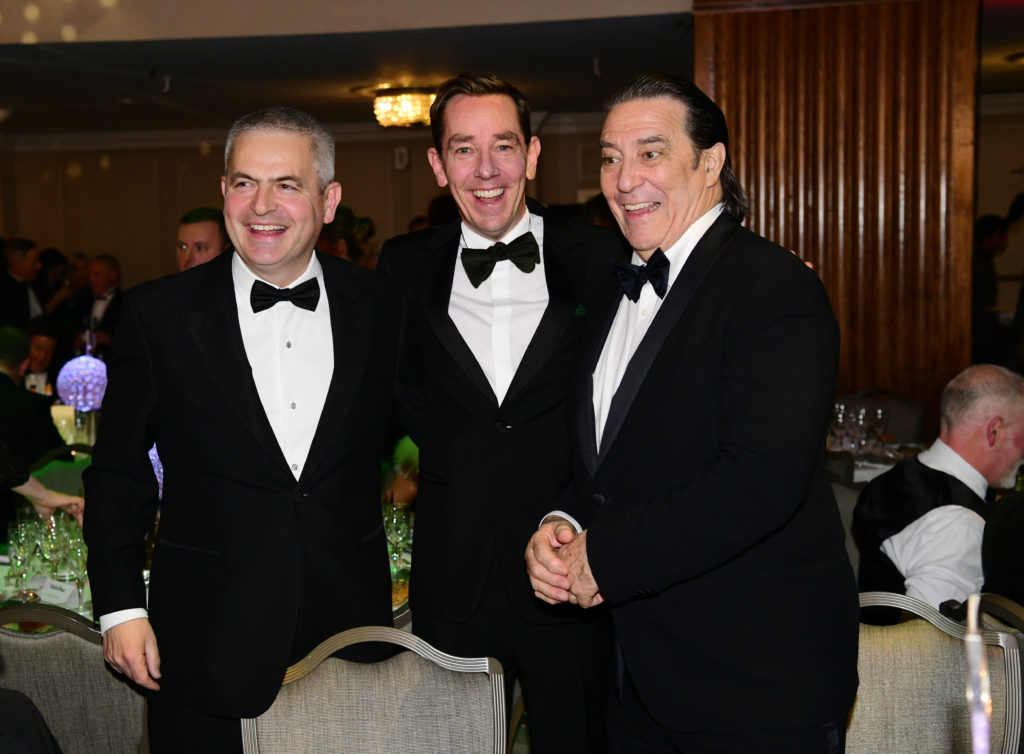 Irish Post Publisher, Elgin Loane, Ryan Tubridy and Ciarán Hinds attend The Irish Post Awards 2025
Irish talent from across the worlds of arts, sport, business and culture lit up London last month as the Irish Post Awards 2025 returned to the Grosvenor House Hotel.
More than 1,000 guests gathered for the glitzy Park Lane event – which has become one of the most important dates for the Irish diaspora in Britain.
Hosted by Ryan Tubridy, with co-host Lisa McHGugh, the 2025 award winners included Jim Sheridan, Ciarán Hinds, Tom Vaughan-Lawlor, Roisin Conaty and Clodagh McKenna.
Aiden O’Brien, Picture This, Oisin Rogers, Killian Donnelly and the construction firm O’Halloran & O’Brien were also honoured on the night.
Tubridy set the scene for the evening by reflecting on the deep ties between Ireland and Britain, remarking that while the two nations share “a complex history, the Irish community here has always bridged the gaps”.
