





AN INITIATIVE by the National Museum of Ireland is helping people across the country to preserve their local history, while also providing a connection for the Irish around the world.
The Irish Community Archive Network (iCAN) works with local volunteers to gather, digitise and share community records, from photographs and letters to oral histories, maps and place names.
The project is delivered by the National Museum of Ireland in partnership with the Heritage Council and local authority heritage offices.
Lorna Elms of iCAN said the network grew from modest beginnings into a national programme supporting 55 community archives across nine counties.
“I joined the National Museum in 2003 in their education department,” she said.
“I had done a summer school programme at Loughborough University, and it was there that I heard about community archives. I took the idea back to the National Museum of Ireland, and we decided to run a small pilot scheme.”
“So it really did start as a small acorn, and it has grown into a big oak at this point.”
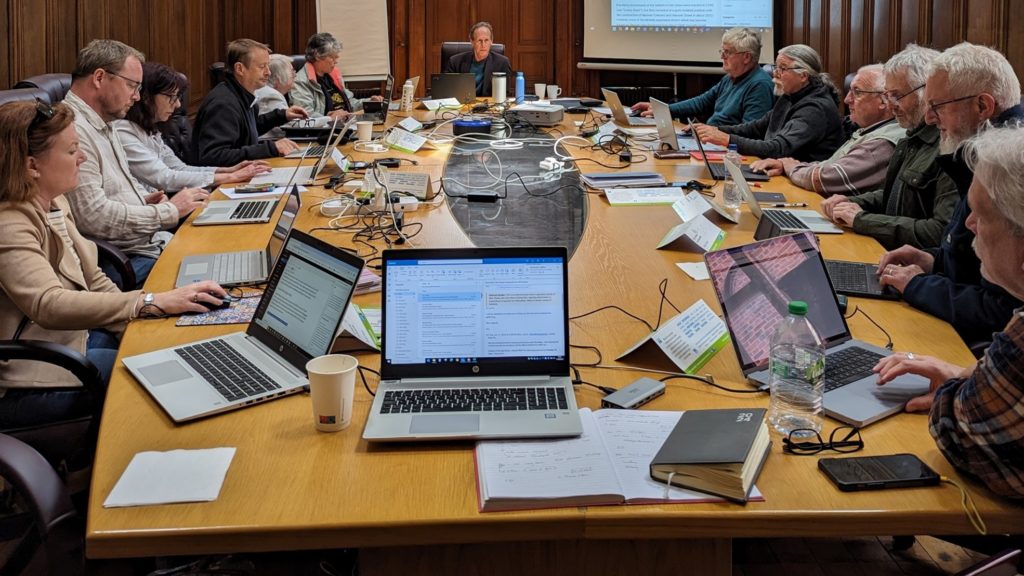 The team hard at work (Photo by iCAN)
The first pilot project began in 2009 and was gradually expanded over the following years.
By 2016, iCAN had 17 member archives, prompting the museum to seek external partners to help the initiative grow.
A major boost came in 2023 when the Heritage Council joined the project.
“When the Heritage Council came on board, we had 22 archives, and now we have 55,” Ms Elms said. “Our collective aim is to have 80 community archives by 2028.”
Groups that join iCAN receive access to a fully subsidised digital archive platform, along with training in digital skills, oral history, copyright and presenting material online.
Members can also apply for small grants of up to €1,500 to fund equipment such as scanners, laptops and digital recorders, or to help preserve fragile books and documents.
“We take a very broad interpretation of heritage,” Ms Elms said. “Anything that falls within the heritage of that particular community: tangible, built, oral history, memories, local place names… it all matters.”
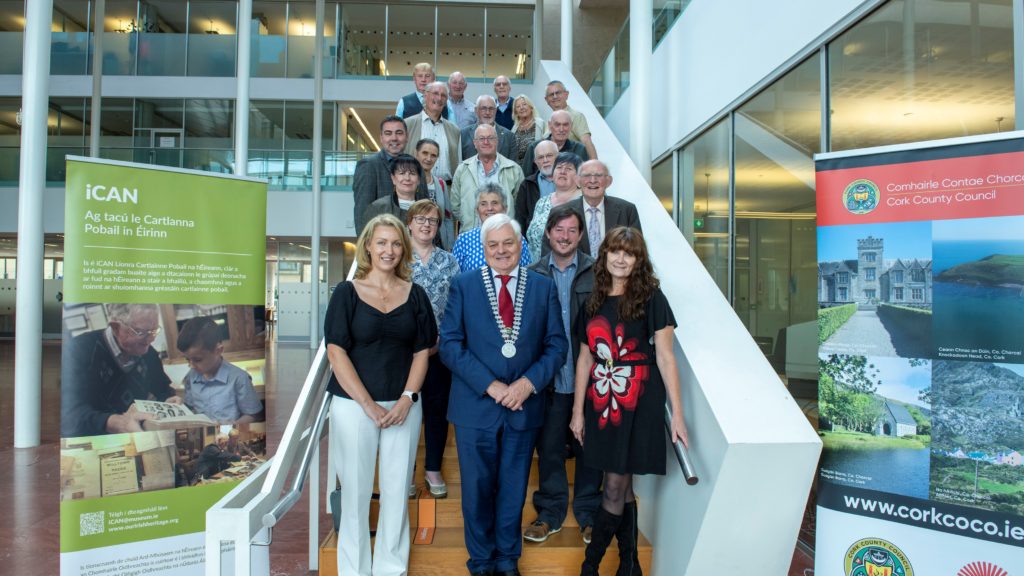 The initiative is headed by the National Museum of Ireland in partnership with the Heritage Council (Photo by iCAN)
She said attitudes to who “owns” history have shifted in recent years.
“Traditionally it was historians or museum curators who told the history of Ireland, but now it’s far more accepted that it’s the people in the local community who know their community best,” she said.
“They’re the best people to be recording it, and we’re here to support them in that work.”
The network also plays a key role in connecting Irish communities with the diaspora.
The iCAN platform allows people abroad to contribute their own documents and photographs, which are approved by local groups before being published online.
“The local community archive gives the diaspora a place to go, a place to connect with others,” Ms Elms said.
She cited examples of overseas volunteers making major contributions, including a man in San Jose, California, working with an Irish heritage group to uncover an 18th-century local census, and a woman in Australia who helped transcribe 19th-century land records in County Clare.
“Sometimes this leads to visits from abroad,” she said. “They meet distant family members, and it’s brilliant for the local economy and rural tourism.”
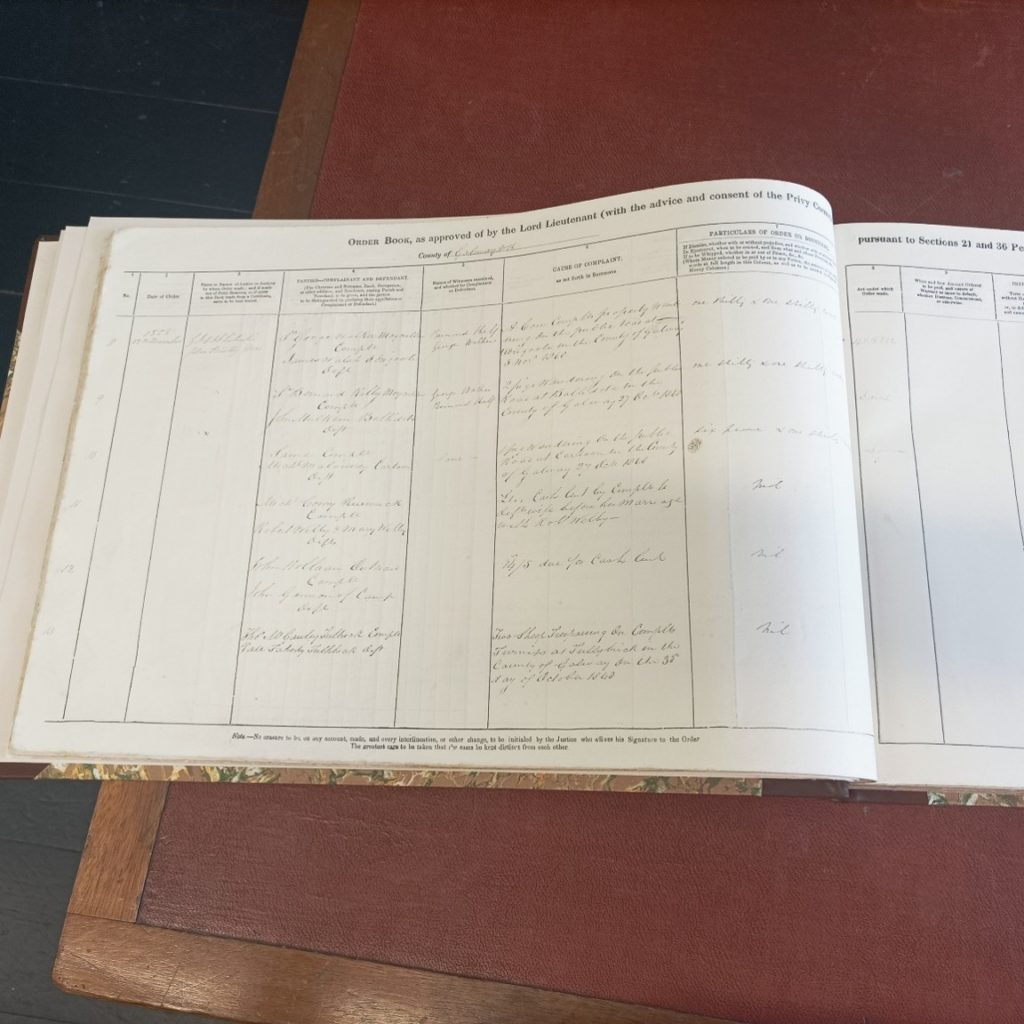 Records like these are invaluable (Photo by iCAN)
iCAN has also led several exhibitions.
In 2018, 'Our Irish Women' was done to commemorate The Representation of the People Act, which allowed some women the vote.
In 2024, the National Museum hosted its first exhibition curated by a community member, Mary Anne Fanning: Remembering Our Community Midwives, which proved so popular that 22 local groups contributed research on nurses and midwives from their own areas.
Looking ahead, the network is preparing for National Heritage Week in August, a major nationwide celebration.
“We’ve seen people who are really passionate about their local community,” Ms Elms said.
“With each passing generation, a lot gets lost. We want to help preserve and digitise material so that nothing else is lost or forgotten.”
For more information you can visit them: here
Everything from irishpost.com and the print edition is available on the Irish Post App — plus more! Download it for Android or Apple IOS devices today
