




DUBLIN is now one of the most popular city destinations for tourists from all over the world. Our multi award-winning travel writer MAL ROGERS presents an A-Z of the city.
A is for Átha Cliath, the Ford of the Hurdles, the original name for the city used from early mediaeval times. The name Dublin comes from the Irish Dubh Linn, meaning "Black Pool", referring to a dark tidal pool where the River Poddle met the River Liffey. The Vikings adapted the name to Dyflin sometime around the 9th century, which evolved into the English "Dublin". Dublin was ruled at the time by a Viking called Ivar the Boneless, so he knew a thing or two about names.
B is for Bewley’s. Long before coffee became a staple in Ireland, Bewley’s on Grafton Street was serving a decent brew. The grand old dame of Dublin cafés was founded by the Quaker Bewley family in 1840, and they've been percolating for the punters ever since. It’s long been a meeting place for writers, journalists, shoppers and tourists alike.
B is also for Bar 161 on Green Street. This award-winning cocktail bar says they are “Staunchly Irish and fiercely independent”. For cocktails, try the Belfast Coffee — Bán poitín, cold brew, cream, demerara, nutmeg. Or have a go at a Northern Oates — Pangur poitín, oloroso, Móinéir strawberry wine, black olive, cacao, cardamom, fennel seeds.
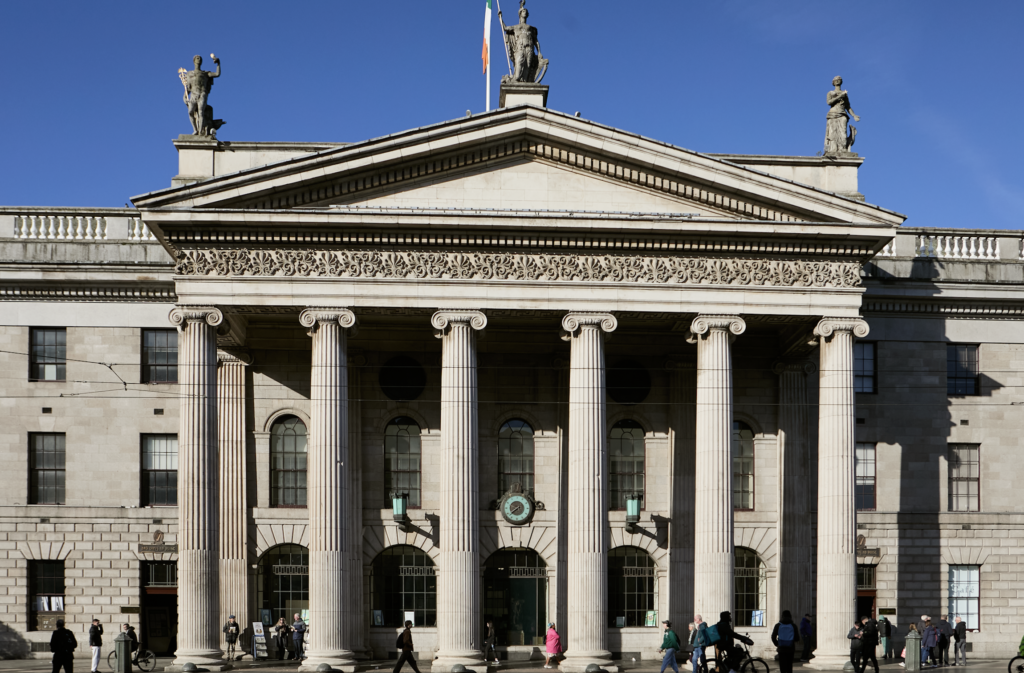 Christ Church Cathedral
C is for Celts. Dublin is today the largest city under the exclusive control of the Celts. C is also for Christ Church Cathedral, which stands at the city’s medieval heart. This is where Dublin first took shape. Founded around 1030, the cathedral has survived conquest, collapse, rebellion and restoration, its crypt older than the city itself. And finally, C is for the Cobblestone pub in Smithfield. This is basically pints on the table and music drifting on the air. Sessions, gigs, classes, talks, dances — you can expect them all. For a more choreographed story of one arm of Irish music, traditional dance, head for nearby Jig, the Story of Irish Dance, located at the theatre within the Powerscourt Centre. Jig is a show featuring performers who take audiences, yes, step by step, through the history of Irish dance, explaining it all.
D is for Dollymount Strand: The long neck of land to the north-east of Dublin affords great views across Dublin Bay to the Wicklow Mountains, with a great 1950s feel thrown in for good measure. It was reputedly on Dollymount Strand that the famous Dubliners musical group first met — when the five individual members all bent over to pick up the same starfish. NB 1: Ethnomusicologists have expressed doubt about this episode. NB 2: Or, as a famous Dubliner, the Duke of Wellington, once said (in a different context): "If you believe that, you'll believe anything." (Historians have also expressed doubt about this too, but the phrase is often attributed to the Duke.)
D is also for Doheny & Nesbitts, 5 Lower Baggot Street Lower, Dublin 2. A gem of a pub, even in a city studded with them. The seeds of Ireland's economic success were sown here by a select band of civil servants, politicians and economists in the late '80s in what journalists still describe as 'The Doheny and Nesbitt School of Economics'.
E is for Easter Rising. For more elucidation, visit the GPO, the Garden of Remembrance Glasnevin Cemetery or Kilmainham Gaol. Have a copy of Yeats' Easter 1916 to hand: “a terrible beauty is born”.
E is also for Epic Ireland. It showcases the unique journey of the Irish people around the world across the centuries. Quite simply, Epic is a monument to the way the Irish Diaspora has changed the world. Located in the CHQ Building on Custom House Quay, just a five-minute stroll from O’Connell Street, the museum tells the story of the Irish people’s dispersal throughout the world.
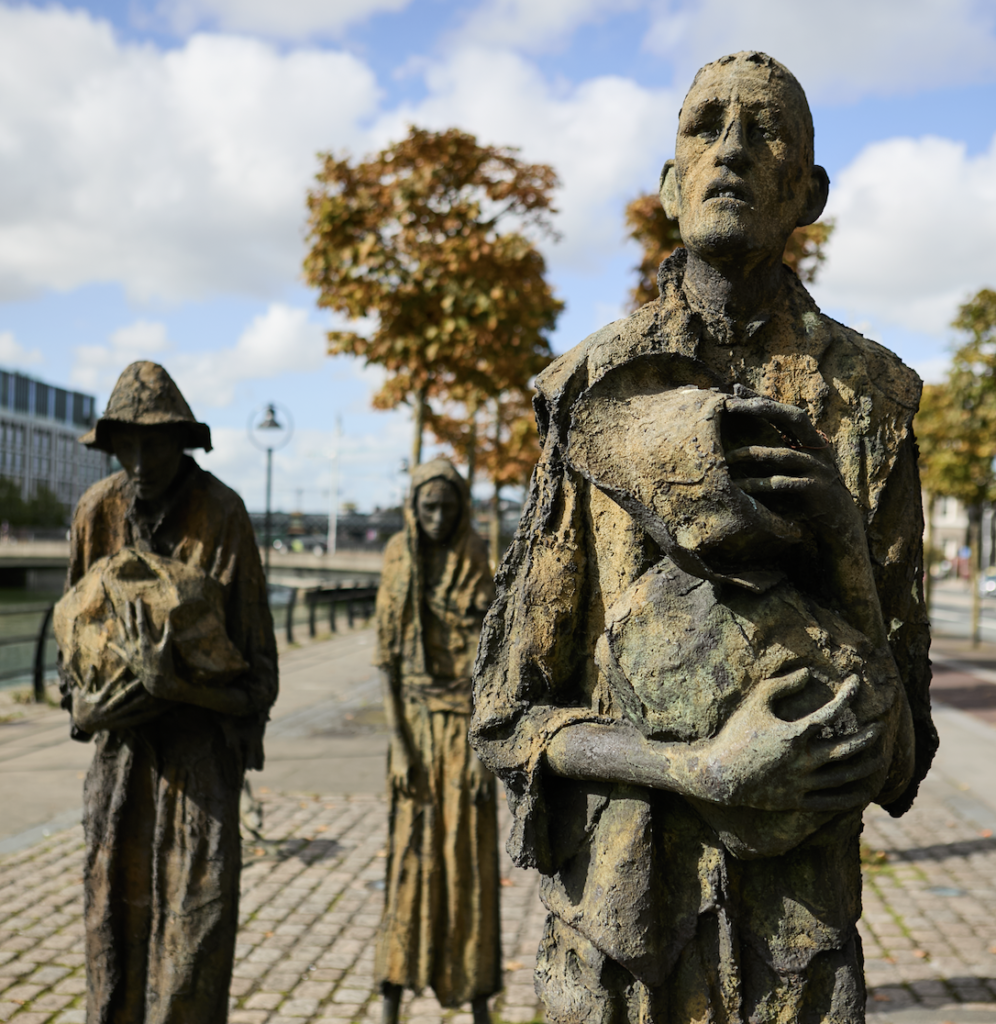 Dublin's Famine memorial
F is for the Famine Memorial. Rowan Gillespie’s gaunt bronze figures are stretched along the Liffey on the north quays of the River Liffey, at Custom House Quay, between the Custom House and Sean O’Casey Bridge. The figures, looking bent under hunger and loss, face towards the river and the ships that carried so many away. It is a deliberately unlovely scene. This is a reminder of starvation, exile, political failure and colonial misrule.
G is for Guinness. No visit to Dublin would be complete without downing a pint of porter. A visit to the HQ of the black stout, the Guinness Storehouse, comes with a complimentary pint in the Gravity Bar when you complete your tour. This gives you one of the finest views across Dublin. A brew with a view. You can almost hear the charcoal-grilled voice of Ronnie Drew singing The Rare Ould Times.
H is for the Huguenot Cemetery, tucked behind St Patrick’s Cathedral. One of Dublin’s quietest historical footnotes, the cemetery was established in the late 17th century for French Protestant refugees fleeing persecution. Names etched in stone recall craftsmen, weavers and merchants who helped build modern Dublin.
I is for The Iveagh Gardens, a Dublin secret. Laid out in the 19th century behind St Stephen’s Green, they are quieter, shadier and far less performative. Sunken lawns, a rosarium, a maze and a murmuring waterfall create a sense of ordered retreat. Office workers eat sandwiches, tourists stumble in by accident, and the city softens its voice. Unlike Dublin’s grand parks, the Iveagh Gardens don’t announce themselves — they wait to be discovered, and reward those who do.
J is for Joyce. He spent most of his adult life outside Ireland, but his shadow still hangs heavy over the city of his birth. Visit the James Joyce Centre at 35 North Great George's Street. Just say to yourself, "Yes I said yes I will Yes!" And disregard the former Provost of Trinity College who remarked that the book was “for the corner-boys who spit in the Liffey”.
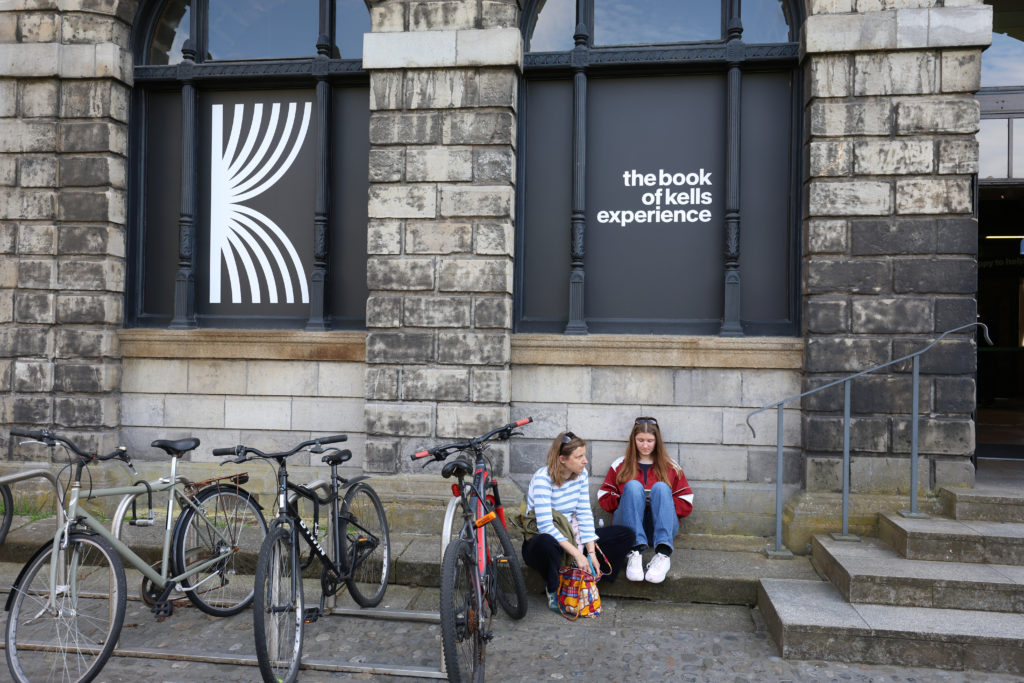 The Book of Kells experience
K is for the Book of Kells. The priceless illuminated manuscript housed in the Long Room of Trinity College. Turns out you can judge a book by its cover. Amongst the top half-dozen most valuable books in the world, it was produced by Celtic monks around AD 800. It is quite simply one of the most beautiful man-made creations you'll ever see. It was written in Latin on the vellum of, reputedly, 170 cattle — sadly there’s no vegan version, no vegetarian option.
CAUTION: In the old days they used to say that the true Dubliner "never saw the Book of Kells, climbed Nelson's Column or visited Marsh's Library."
L is for the Leo Burdock is on Werburgh Street in the Liberties, just by Christ Church Cathedral. The fish and chip shop has few surprises: fresh fish, proper chips the size of Packie Bonner’s fingers, pasties and sausage, eaten standing or on the street outside. Celebrities line the walls, but Burdock’s real achievement is consistency. Remember the fast food ethos? Cheap cost, fast service, good food: it is a universal rule that you can have any two out of the three. Never all three. But Leo Burdock comes close to the hat trick.
M is for MacNeice, Louis (poet) who summed up Dublin with the lines "Garrison of the Saxon / Augustan capital / Of a Gaelic nation." (Louis was tough on rhyme, and tough on the causes of rhyme.) Talking of which, Lady Dufferin was the first person to rhyme Dublin with troublin'.
M is also for the previously mentioned Marsh’s Library. Ireland’s oldest public library, it was founded in 1707 by Archbishop Narcissus Marsh (now that’s an excellent name for a bishop) and holds over 25,000 books from the 16th–18th centuries. The library smells of candle wax, polished wood, leather and old books (naturally enough), and the shelves are still enclosed in their original 18th-century cabinets. Some books still have bullet holes in their leather-bound spines, the product of ‘friendly’ gunfire during the 1916 Rising.
N is for Nelson’s Pillar, gone but not forgotten.
N is also for the National Gallery, free to enter. It houses a collection that stretches from the Old Masters to modern Irish painting, with Caravaggio (The Taking of Christ), Vermeer and Jack B. Yeats all under one roof. It also houses Dublin painter Louis le Brocquy’s A Family is riveting and unsettling: ghostly figures, strained intimacy, and a cold psychological tension. It was initially (the 1950s) not much liked by ‘Official Ireland’ who preferred rural imagery and tranquil scenes. Have a look for yourself and see what you make of it.
O is for O'Connell Street. Its gracious proportions, weathered statues of Ireland’s heroes and the historical GPO don’t quite outweigh the preponderance of fast food outlets and worse. Nonetheless, the GPO is one of the architectural gems of Dublin. The decorated frieze above the portico is topped off with three statues — Hibernia, Mercury and Fidelity — visiting tourists used to be told by locals that these were the 12 apostles. When it was observed that there were only three, the reply was that the others were inside, sorting the mail.
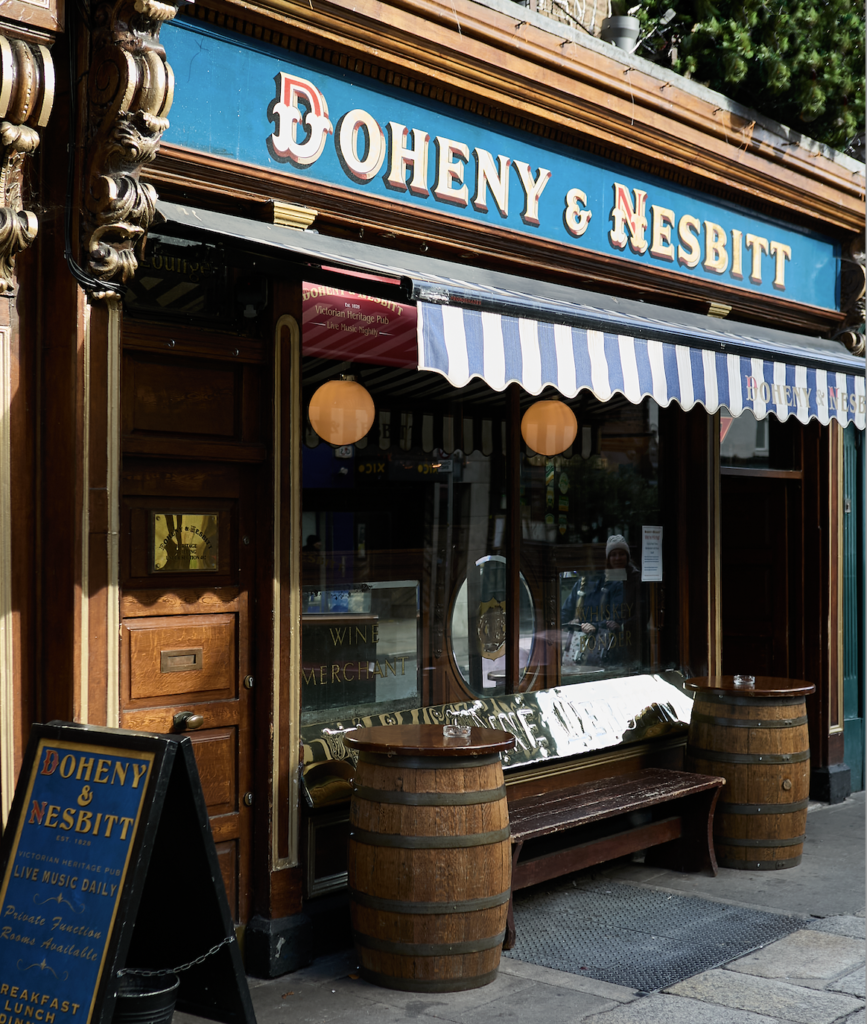 P is for pubs - this Dublin has plenty of
P is for pubs. Dublin surely boasts the greatest concentration of real, old-fashioned, honest-to-God pubs anywhere in the civilised world. The best? In this author’s writer’s opinion possibly Palace Bar on Fleet Street. This dazzling example of Victorian splendour is still a vital part of Dublin everyday life. A traditional music fix is available on certain nights upstairs — a dozen or so musicians huddled in a dimly-lit corner. They serve a decent pint too: “like a candlelit procession down your throat,” as a barman there once told me.
P is also for the Phoenix Park. One of the largest enclosed city parks in Europe, it stretches west from the city centre in open grassland, trees and long, slow roads. Deer roam freely, joggers circle at dawn, and presidents, popes, ambassadors and have all appeared here. Home to Áras an Uachtaráin and Dublin Zoo, it has absorbed centuries of ceremony, protest and leisure.
Q is for the queen. At one time a large statue of Queen Victoria stood outside Leinster House. In order to prevent her suffering the same fate as William, and for that matter the statues of George I, George II and Viscounts Gough and Carlisle (all destroyed or vandalised), she was taken into protective custody. As Ireland disentangled itself from imperial symbolism, the statue was put into cold storage and in 1988 was given as a present to the city of Sydney, Australia. William III, however, found a more useful role in Irish life. The metal remains of his statue, which stood near Trinity College, were eventually melted down and used to patch holes in the capital's ageing sewage pipes.
R is for Richmond Barracks. Tucked away in Inchicore, this is one of Dublin’s most powerful historic sites, yet often overlooked. Used as a British Army barracks, it became a key holding centre in the aftermath of the 1916 Rising, where more than 3,400 people were detained. All 77 women arrested were held here, questioned and separated from the men. Long ignored, one surviving block has been restored as a free public museum, restoring women to the centre of the Rising’s story.
S is for South Bull Wall. Try a bracing walk along the South Bull Wall, built in the late 1700s. A triumph of marine engineering and ideal for an alternative view of Dublin. You can also look over at North Bull Wall, commissioned by Captain Bligh — and just in case you don't know who he is, you scurvy, snivelling, cowardly landlubbers, he was master of the Bounty.
T is for Temple Bar, with all its performative medieval charm. If it’s clubbing you want, this is the place. Don’t be surprised, however, to encounter a hen party from London — ten women apparently sharing one outfit — or a stag group from Glasgow, phones aloft, documenting the night in case anyone ends up briefly detained by the gardaí or the police.
U is for Ulysses, the novel which changed world literature. Based on a single afternoon's stroll round the city, Joyce was confident that the whole of Dublin could be rebuilt from scratch using the information in his masterpiece.
V is for Vikings, who held sway in the city from about 1000 AD. For further elucidation head for Dublinia – Viking and Medieval Museum. It’s an interactive museum at the heart of the old city (in the Christ Church area) where visitors can explore Viking houses, streets, exhibits on Viking life, even walk a medieval tower and see re-enactments and artefacts from the Viking era.
W is for Whelan’s on Wexford Street. Since the late 1980s it has been a rite of passage for bands and audiences alike, its low ceiling and sticky floor hosting future stars before they were anything of the sort. Intimate, loud and proudly unpolished, it remains a place where great gigs still happen. Regularly.
W is also for The Winding Stair. Perched on Lower Ormond Quay overlooking the Liffey and Ha’penny Bridge, The Winding Stair remains one of Dublin’s most beloved bookish institutions. The ground-floor bookshop still shelves a rich mix of fiction, poetry and Irish writing, while upstairs the restaurant champions seasonal Irish cuisine with river views. A meeting place for readers, writers and diners alike, it retains the quiet charm and creative spirit that have defined it for decades.
X is always difficult in Ireland, simply because there's no X in the Irish language. But we can offer you the Church of St. Francis XAVIER, a Jesuit building of 1832, notable for its Ionic portico. It’s a serene architectural gem in the heart of Dublin. Or just be "exoirreh and deloirreh" to be going to Dublin's fair city.
Z is for zoo — Dublin Zoo in Phoenix Park, of course, which has recently undergone a major facelift. Don't forget this is the third oldest zoo in the world, and where the MGM roaring lion was born. You could do just as well, though, to go to the Natural History Museum in Dublin — one of the top zoological collections in the world.
For more information visit ireland.com
