



STANDING on the spot where the great artist spent 43 years obsessively creating more than 250 canvases of his iconic water lilies, I noticed two dark blue dragonflies swooping past, locked together in an amorous embrace.
For a fleeting moment, it felt as if Monet himself, on this balmy evening in the garden he created, was sending a message about the love he felt for this place and the surrounding poppy-filled meadows that proved so inspiring to his work.
This was Giverny, the Normandy village 80km north-west of Paris, where the once-struggling artist spent his happiest and most productive decades in the imposing, green-shuttered former farmhouse, Maison du Pressoir (named after its original apple press), and the huge, flower-filled haven that became the inspiration for so many of his canvases.
As the soft dusk light began to fade and the babbling crowds of daily visitors thinned out, it was possible to sit on a bench and imagine life there in the 1890s for him and his second wife, Alice, amid the hectic bustle of their blended family of eight children: the laughing, crying, running and hiding as they played, while their father stood on the Japanese bridge in the water garden, recreating the sweeping willows and those pink-tinted lilies with rapid sweeps of his brush.
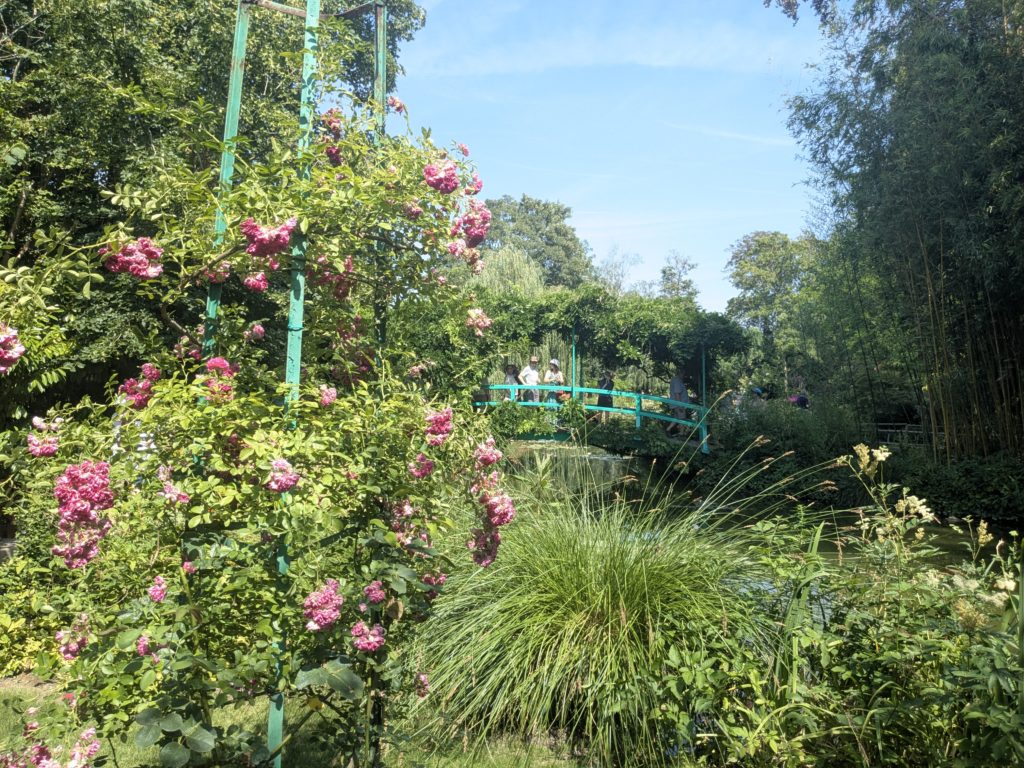 The Japanese Bridge in the Monet water farden (Pic: Sue Mountjoy)
On strolling through the house itself – recreated authentically as if they had never left – I wondered at the hubbub that emerged from his legendary long lunches in the bright yellow dining room. The talk of art was largely ignored in favour of his other love, food, with such animated guests as the sculptor Rodin and Monet's fellow Impressionists, including Renoir, Degas, Pissarro and Cézanne – the latter revelling in producing his rich version of the classic French fisherman's stew, bouillabaisse.
Such vivid moments of contemplation came to me regularly on the week-long trail I followed with my partner and photographer, Sue Mountjoy, around some of the key waypoints of Monet's life in his beloved Normandy.
We followed what might be called the Normandy Monet Trail, from Honfleur through Étretat and Rouen to Giverny, which proved to be more than a journey through some of France's most beautiful landscapes – it opened up a window on the birth of modern art and Monet's story of friendship, rebellion and innovation with the courageous group of artists who enabled us to view the world with fresh eyes.
After taking the Brittany Ferries route from Portsmouth to Caen, we spent a few idyllic days in a tiny harbourside gîte in Port-en-Bessin-Huppain, a proper working fishing port, largely unspoilt by tourism and pretty enough to have attracted the next generation of artists, known as the Neo-Impressionists.
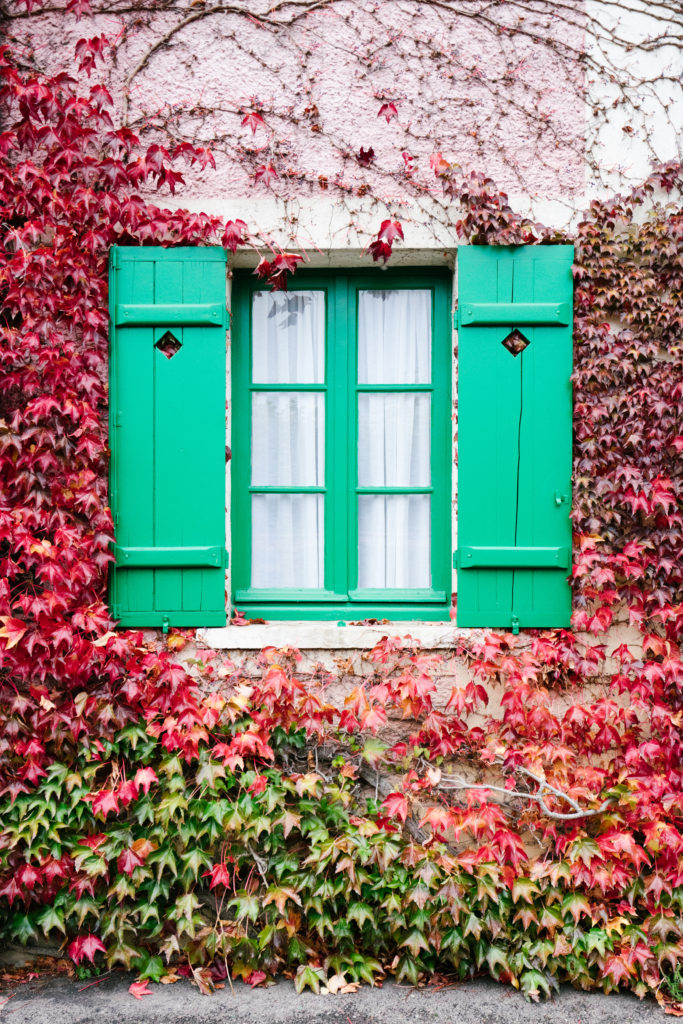 Autumn leaves frame a window at the Giverny house (Pic: Sue Mountjoy)
Among them was Georges Seurat, who spent time there in 1888 producing a remarkable set of six local paintings (prints can be viewed in the port's cultural centre) using a new technique called Pointillism. Unlike Monet's rapid and sweeping style, this involved painting thousands of dots of pure colour which blend in the viewer's eye to create shimmering light and atmosphere. Monet admired such methodical and painstaking work but preferred his instinctive approach and rapid response to changing light.
Nowhere was that more obvious than at our next stop, the history-dripping port of Honfleur, where experts believe Monet's artistic vision was formed. From our central base by the harbour, Hotel L'Absinthe, we walked the cobbled streets lined with the same half-timbered houses that Monet would have seen when he was a teenage painter under the wing of local master artist Eugène Boudin.
In the town's extraordinary Eugène Boudin Museum we saw some of Monet's early works which set the stage for the youngster's progression towards full Impressionism, encouraged by Boudin himself to paint in the open air and respond quickly to changing light and skies.
At the nearby La Ferme Saint-Siméon, perched on a cliff overlooking the Seine estuary, I stood in the light and airy twin-window "Monet Bedroom", where he spent long periods developing his style, sometimes heading out to paint the same road 10 times in different seasons and different light – an obsession with atmosphere that eventually led him to produce his famous haystack and poplar series.
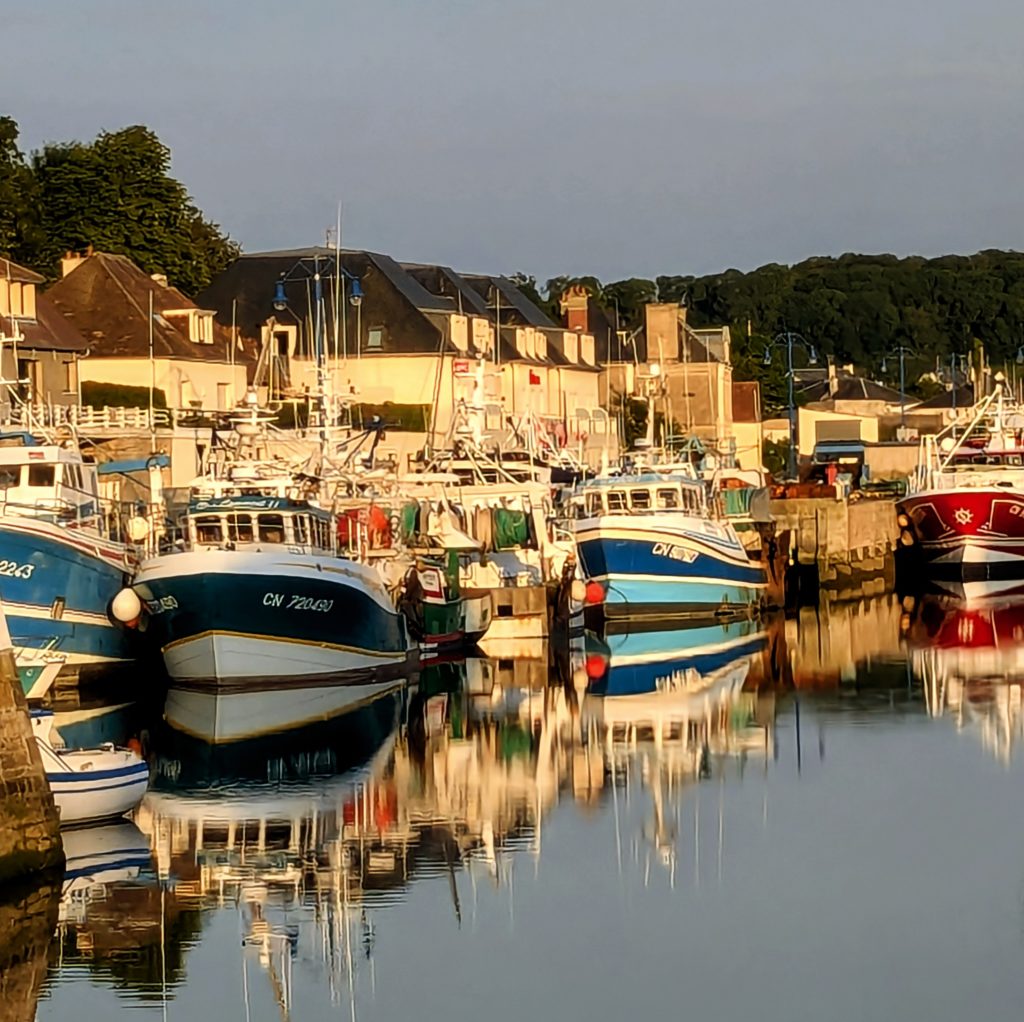 The harbour at Port-en-Bessin-Huppain which fascinated the later Impressionists
Now a luxury hotel, in the 1860s the 17th-century Norman farmhouse was a hostel for struggling artists, run like a creative colony by the kindly hostess Mère Toutain, who would sometimes accept paintings (now worth millions of pounds) from guests like Monet who couldn't afford the 40 francs-a-month cost of board.
Our other key Monet Trail stops included the famous chalk cliffs at Étretat, which he painted almost obsessively, before spending a couple of days in the lively Joan of Arc city of Rouen, where he spent five months painting 28 studies of the elaborate Gothic façade of the country's largest cathedral.
From the ancient picture window of Mauquoit, at 81 Rue Grand-Pont, the former lingerie shop where he worked with his easel, I stood and imagined how his eyes had perceived the light and shadow playing across the countless intricate stone carvings, as well as the shifting colours, the morning mist and the textures altered by smoke, rain and sunshine.
As I stood in the city's fascinating Musée des Beaux-Arts and stared at their Monet cathedral study, The Portal and the Tour d'Albane, Grey Weather, the overwhelming greyness struck me first, but then came the orange clock, the more subtle greys and the blues, and I realised it was not the cathedral he had painted so much as the light itself.
Later, as we dined at France's oldest inn, the fabulous La Couronne, dating from 1345, I wondered whether, during his Rouen period, the food-loving Monet had sat at a nearby table in what was already a fashionable restaurant and just a short walk from his lodgings.
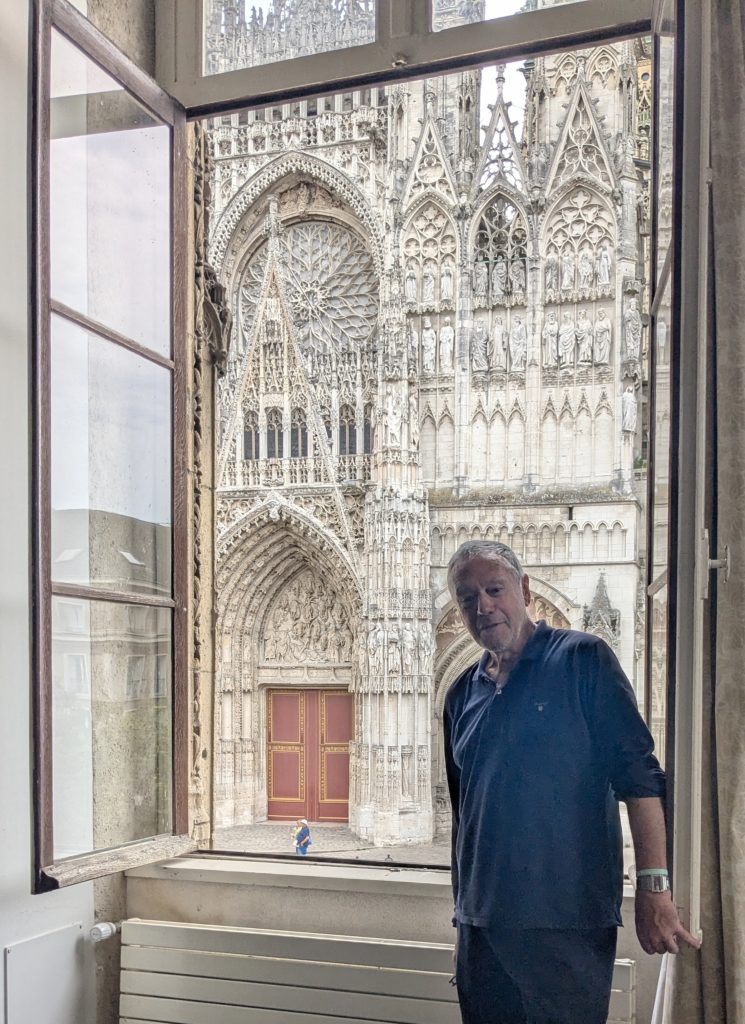 James pictured at the window where Monet painted Rouen Cathedral (Pic: Sue Mountjoy)
Next day, as we sat once again in contemplation in his glorious Giverny home and studio, we realised that the essence of his art is not the stone, the lilies or the flowers – it is his enigmatic sense that the world, minute by minute, is never seen in quite the same way twice. Truly enlightening.
Impressionism's early days and development
Impressionism was a movement begun by Monet and a group of fellow avant-garde artists who wanted to break away from the conservative painting style of carefully blended brushstrokes and historical or religious subjects favoured in France in the late 19th century.
It was the rebellious Monet himself who inadvertently gave the movement its name when he exhibited a painting of the outer harbour of Le Havre at the group's independent Paris exhibition in 1874 and called it Impression, Sunrise.
Art critic Louis Leroy cruelly dismissed the work and others at the exhibition as merely "impressions" rather than finished paintings – and the name was adopted by the whole group. Impressionism was born.
Those loose brushstrokes, vibrant colours and emphasis on natural light in scenes painted quickly in the open air soon swept across the world and opened the door to modern art, paving the way for Post-Impressionism, Fauvism and Cubism.
For Monet, though, life was often difficult. He was regularly penniless during his early career until his work gained wider popularity, particularly in Britain and the United States. That success enabled him to create, as a living work of art, his home at Giverny, where he died from lung cancer in 1926 at the age of 86, suffering from cataracts but continuing to paint almost to the end.
Factfile
With more than 100 Impressionist sites to visit across the Paris region and Normandy, the options are tantalising but need tailoring to your time and interests.
Around seven million people visit each year to savour the museums, galleries, artists' homes and the landscapes that made Impressionism one of the world's best-loved art movements.
To see some of Monet's best-known works, London's National Gallery has 18 paintings, including Water-Lily Pond and The Water-Lily Pond, while Rouen's Musée des Beaux-Arts is renowned for his cathedral paintings. Paris has the richest collections, with the Musée de l'Orangerie and the Musée d'Orsay displaying Water Lilies, Poppies, Haystacks and many other masterpieces.
In this centenary year since Monet's death at Giverny, there are more events and exhibitions than ever celebrating the master's life and work.
If you want to create and follow your own Monet Centenary Trail, everything you need can be found at impressionistadventures.com.
Where to book:
For accommodation, check out Hotel L’Absinthe in the heart of Honfleur (https://www.absinthe.fr/en/); in the centre of Rouen’s historical district, try the Hotel Gustave Flaubert (https://www.hotelgustaveflaubert.com/).
For a sea crossing from Portsmouth to Caen, check our Brittany Ferries (www.brittanyferries.com) and check out their advance prices for the CClub Lounge with quiet seats, great views and food and drink included throughout the voyage.
For cut-price airport parking and hotels, try Holiday Extras: go to www.holidayextras.com or call 0800 316 5678.
Everything from irishpost.com and the print edition is available on the Irish Post App — plus more! Download it for Android or Apple IOS devices today.
