





ON JUNE 13, 1914, a young doctor and the daughter of an Irish Parliamentary Party MP were married at St Michael’s Church in Dún Laoghaire.
After the wedding breakfast at the Royal Marine Hotel, my great-grandparents, Dr Michael Ahern and Nora O’Dowd, boarded the 1:40pm boat for London and Paris, setting off on honeymoon. It was the beginning of a new life — or so it must have seemed.
Michael was a recently qualified doctor from Brosna, Co. Kerry, and a graduate of the Royal College of Surgeons. His wife, Nora, was a nurse and the daughter of John O’Dowd, the nationalist Member of Parliament for Sligo. O’Dowd was a prominent member of the Irish Parliamentary Party under John Redmond, representing Sligo at Westminster from 1900 to 1918.
Just 19 days before Michael and Nora were married, the Government of Ireland Bill had passed its third reading in the House of Commons, bringing Home Rule closer to reality than at any previous point.
Yet the political crisis over Ulster remained unresolved. Unionists had armed themselves against the measure, while the Irish Volunteers had been established to support it, raising the prospect of armed conflict.
For John O’Dowd, the parliamentary campaign of which he had been part for years appeared to be approaching its goal — but how Home Rule would be implemented remained deeply contested.
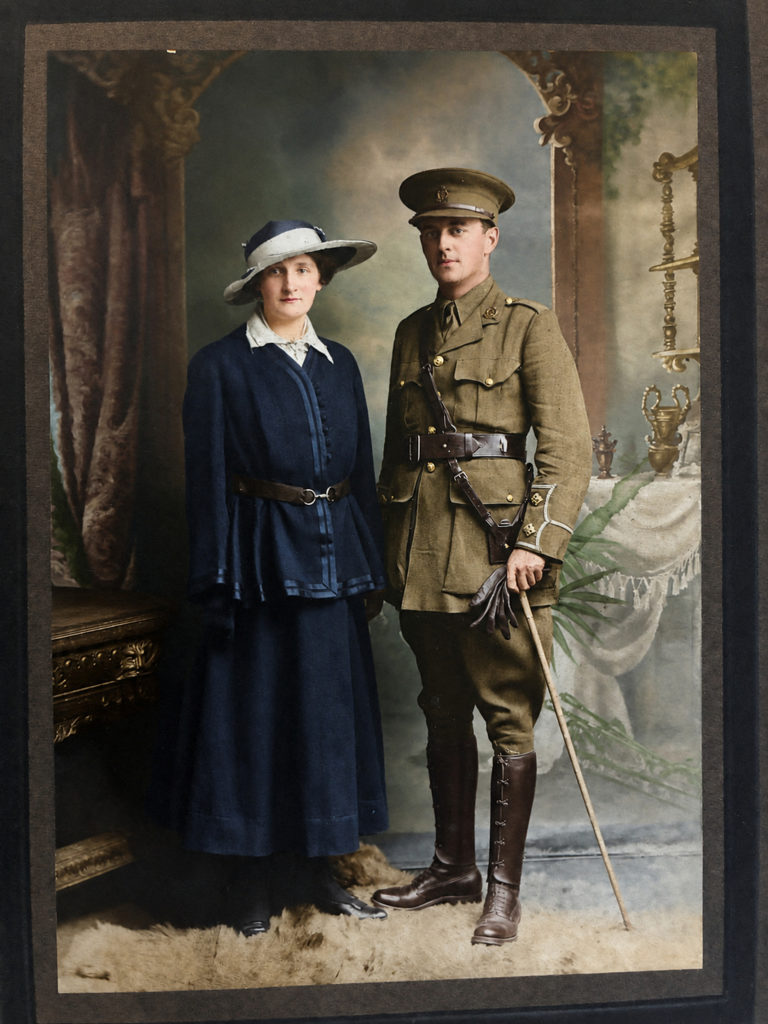 Nora O’Dowd and Lieutenant Michael Ahern, Dundalk, 1916 (Pic: McNamara family archive)
Then, on June 28, Archduke Franz Ferdinand was assassinated in Sarajevo. Within weeks, the crisis had spread across Europe. In August, Britain went to war with Germany.
A report in the Sligo Champion on June 24, 1916, covering his father-in-law, the local MP, also recorded Michael’s departure. He was leaving for France just weeks after the Easter Rising in Dublin, as the British Army prepared for the Somme offensive on the Western Front.
For an Irishman such as Michael, service in the British Army did not necessarily carry the political meaning it would acquire in the years that followed. Michael’s own circumstances capture the complexity of that Ireland.
He was from Brosna, Co. Kerry, from a Catholic family and had trained as a doctor in Dublin. He was leaving behind a young family — ten months before his departure for France, Nora had given birth to twin daughters, Aileen and Nora.
France, just before the Somme
Michael arrived in northern France in June 1916 at the moment the British army was assembling for an offensive on a scale not previously seen on the Western Front. On July 1, the Battle of the Somme began. By the end of that first day, almost 20,000 British and Commonwealth soldiers had been killed and more than 57,000 had become casualties. It remains the worst single day in British military history.
Michael was about to witness the human consequences of one of the defining battles of the First World War. Across the Irish Sea, meanwhile, his own country was dealing with the consequences of the Easter Rising.
This had erupted in Dublin in April 1916, only weeks before Michael arrived in France. For Nora, the Rising was not a distant political event. She was at home with their ten-month-old twin daughters, and in November 1916, Michael and Nora’s third child, Mary Rose Ahern, was born at Denmark House in Dublin.
The building stood only a few hundred yards from the General Post Office, by this point a blackened shell in the centre of the city.
Family accounts indicate that Mary Rose died within weeks of her birth. Her death, however, has not yet been conclusively established in the surviving records.
For the Ahern family, therefore, 1916 was not simply a year in the history books. Its events were unfolding on either side of Michael’s absence: war in France, rebellion in Dublin, and a family trying to continue its life between them.
1918: The war ends, Ireland changes
On November 11, 1918, the guns fell silent on the Western Front. The fighting in Europe was over; Ireland was entering a period of profound political change. A month later, Ireland went to the polls in a general election that transformed the country’s political landscape.
Sinn Féin won a sweeping victory, while the Irish Parliamentary Party, the political movement that had dominated Irish politics for decades, was reduced to a small number of seats. Among those defeated was John O’Dowd, Michael’s father-in-law, bringing an end to his parliamentary career.
For men like Michael, returning from British military service could mean coming home to a country profoundly different from the one they had left.
They had left an Ireland still governed within the United Kingdom, where Home Rule remained the principal nationalist political objective. They returned to an Ireland in which Sinn Féin had become the dominant nationalist force and where the legitimacy of British rule was increasingly contested.
Former servicemen occupied a complicated position within this changing society: some encountered suspicion because of their service in the British Army, while others simply faced the challenge of rebuilding their lives in a country whose political landscape had changed dramatically during their absence.
In January 1919, Sinn Féin’s elected MPs established the First Dáil in Dublin. The War of Independence followed, and the relationship between Ireland and Britain entered a new and violent phase.
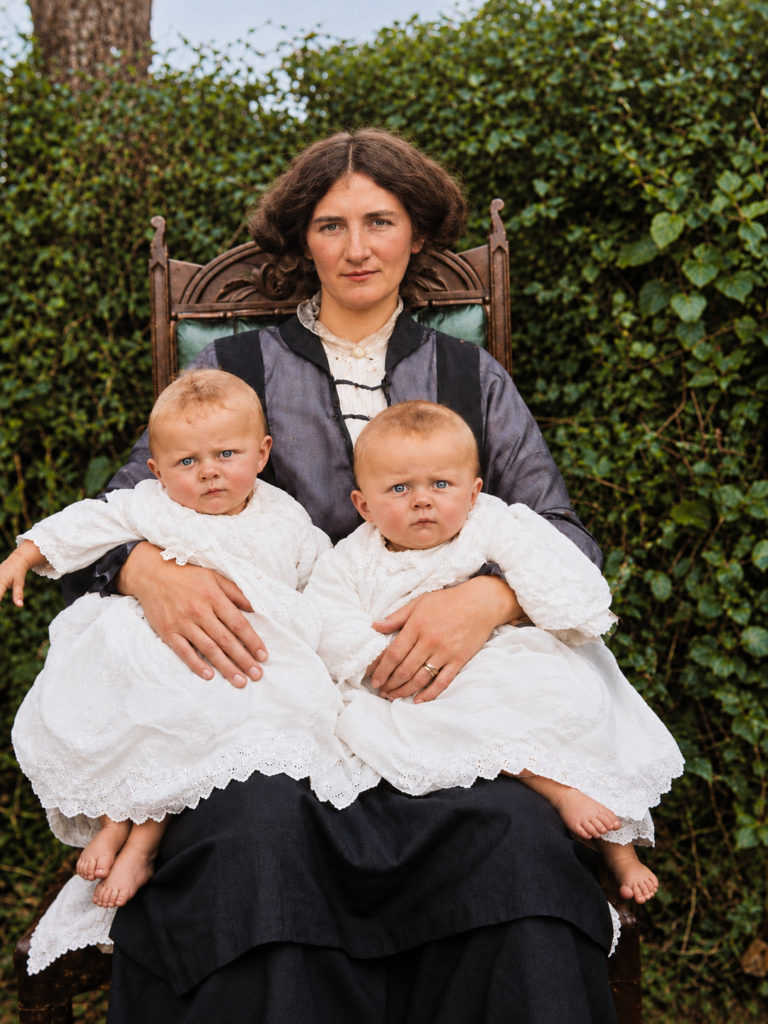 Nora O’Dowd with twin daughters Aileen and Nora, circa 1916. (Pic: McNamara family archive)
After the war: a family comes apart
The end of the war did not mean that Michael simply returned to the life he had left behind. Family tradition records a troubled aftermath. Michael is remembered as developing a serious problem with alcohol and finding it increasingly difficult to hold down employment.
The family moved from Ireland to London, then on to Birmingham and then to Swansea, but a settled life proved elusive.
The family record left by his daughter, Nora, my grandmother, offers a rare glimpse behind the official documents. Her account describes a family gradually coming apart. At one point, Michael’s twin daughters, Aileen and Nora, ended up in an orphanage in London.
The reasons for Michael’s decline are impossible to establish with certainty. With modern knowledge, it is tempting to view his difficulties through the lens of psychological trauma.
He had served as a doctor with the Royal Army Medical Corps during one of the most destructive conflicts in history, but the psychological consequences of war were not understood or recognised as they are today. The records tell us what happened to Michael; they cannot tell us why.
Nora and the girls eventually moved to Sligo, while Michael remained apart from them, moving back to Brosna in Co. Kerry, where he would die in 1929, eleven years after the war ended, at the age of 43.
More than 200,000 Irishmen served in the British Army during the First World War, and approximately 40,000 were killed.
Their stories deserve to be remembered. For some, the burden of the war was carried quietly, in wounds, memories, disrupted families and lives that never quite returned to what they had been. For men like Michael, there was another challenge: returning to a country whose political meaning had changed while they were away.
Michael Ahern was one of those men. For him, the war was over in 1918. Its consequences were not.
Brían McNamara is Assistant Director, International Engagement, at the University of Brighton
Substack link: livesbehindtherecords.substack.com/
See More: Armistice, Brian McNamara
