





ON A cold and stormy Saturday morning in Strabane, about 200 people are out protesting.
They have spread themselves out along the white line running up the middle of Main Street and they are waving large Irish tricolours.
They are objecting to their town competing for a UK Town of Culture award.
This would bring a grant of £3m to Strabane to stimulate cultural activity, music, theatre and the arts generally. They are not objecting to the money, but they are objecting to the label on the award: the UK reference.
Strabane is in the UK. It is a border town west of Derry, by the River Mourne, where it joins the Finn to form the Foyle. There is a view of the hills of Donegal. It is a depressed town, but it is surrounded by beautiful countryside.
It was also a troubled town during the violence of the IRA campaign between 1970 and 2005.
It is the only Irish town since the Second World War that has been bombed from the air. That was when the IRA dropped two milk churns full of explosives from a helicopter onto the police station.
They didn’t go off.
So there is a legacy of militant republican culture here, though it is fractured.
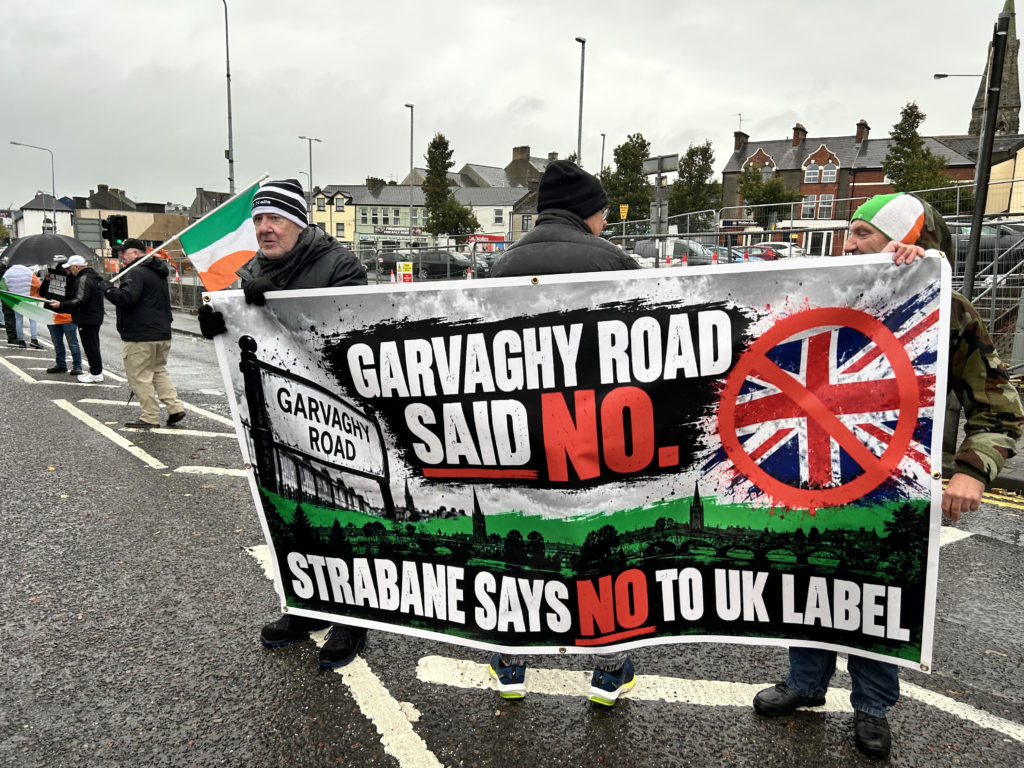 The Strabane protest (Pic: Malachi O'Doherty)
Sinn Féin is happy with the UK Town of Culture bid. So, I suspect, are most people.
I asked one of the protesters what his objection was, and he complained that the people of Strabane had never been consulted on whether they should be part of the UK or not.
I contradicted him. I said the referendum on the Good Friday Agreement accepted that Northern Ireland was part of the UK until a majority wished to merge with the Irish Republic.
He argued that Ireland should never have been divided in the first place.
Perhaps not.
One of the banners read: “Our culture is not for British rebranding.”
And I find a flaw in that argument too.
What is a town’s culture? Is it a legacy of tradition that people should adhere to, or is it just what they do? Is it prescriptive or descriptive?
There will be many republicans who believe that a native Gaelic culture has been suppressed, and many traces of that culture still remain.
I suspect more people in Northern Ireland speak Irish now than did before the Troubles, since it became a badge of assertion of Irish identity at a time when that identity felt challenged.
The culture of Strabane is much like the culture of other British towns. The conversations in the pubs will be about football and politics. People at home on a Saturday night will be watching Strictly Come Dancing. And practically everyone will be speaking English, though with a local accent.
And the cultural development of Strabane facilitated by that £3m, if they win it, will be what the people of the town want it to be.
One of the banners compared the local campaign with the protest last month against Orangemen being allowed to parade along the Garvaghy Road in Portadown.
This was the biggest street protest for decades in Northern Ireland. The Parades Commission gave permission for 35 Orangemen to walk silently down the Garvaghy Road, which, thirty years ago, was the scene of horrific violence around Orange parades and local objections to them.
The planned parade was stopped by the police to prevent a clash with protesters and ultimately, after two weeks, it was banned by the Northern Ireland Secretary of State.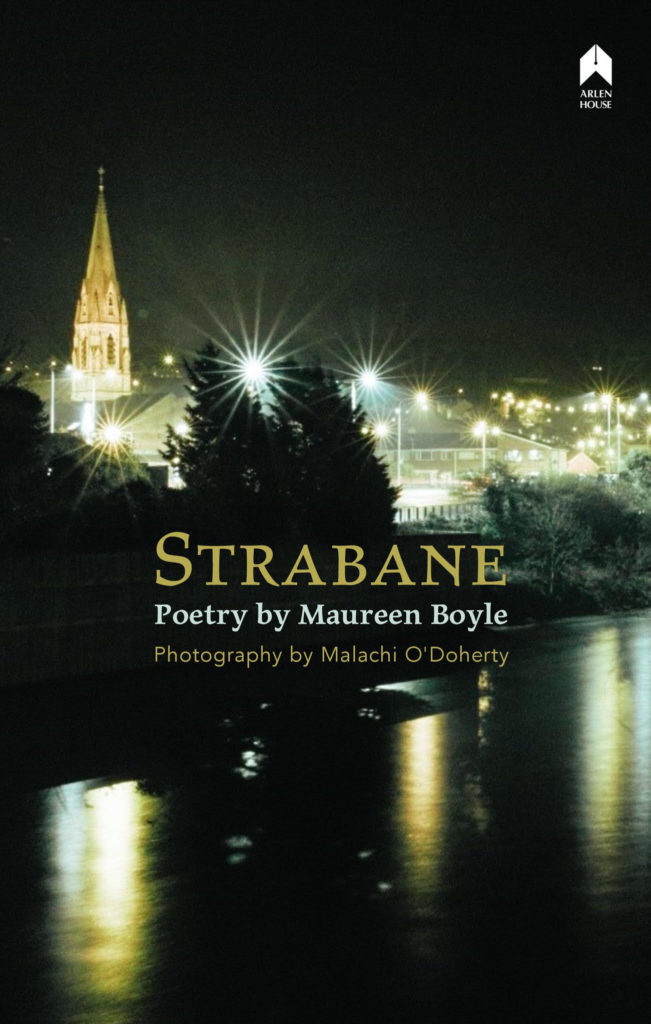
And the fallout from that continues, with the Sinn Féin First Minister, Michelle O’Neill, and several of her ministers having been interviewed by the police about their part in the protest.
The Strabane protesters’ comparison of their campaign with the Garvaghy Road campaign is perhaps an effort to inflate their importance.
People flocked from around the country to support the Garvaghy Road protest. On the night of the Strabane protest, thousands of Orangemen gathered in Portadown to support the banned parade.
People I spoke to in Strabane thought the protest against the labelling of the Town of Culture bid was a bit ridiculous.
I posted a picture of that protest on Facebook and attracted hundreds of comments and over seventy thousand views.
Most of the comments sneered at the protest, but many also sneered at Strabane, seeing the protest as typical of small-town bigotry.
I love Strabane. I love the Alley Theatre and the history of a place that spawned the genius of Flann O’Brien and others. I love some of the public art, like the statue of O’Brien and the amazing Tinnies, enormous metal sculptures of a traditional band.
I love the Oysters restaurant and the brass band tradition there. I love the view of the river and the fly fishers wading through it.
I have seen how the town has been joked about by people who don’t know it.
My wife, Maureen Boyle, wrote a poetry sequence about Strabane which was broadcast on Radio 4. Singer-songwriter Paul Brady is from the town.
I love the humour of the people there.
I hope they win their bid, that it enables the town to be a bit more proud of itself, and that chauvinistic republicans will reconsider their ill-founded objection.
Everything from irishpost.com and the print edition is available on the Irish Post App — plus more! Download it for Android or Apple IOS devices today.
See More: Garvaghy Road, Northern Ireland, Strabane
