



THE mountain of Croagh Patrick, known locally as the Reek, and the traders who travelled up and down selling their wares have been featured in a riveting documentary.
Deirdre McGuirk, a member of the Louisburgh Killeen Heritage Group, has helped document the story of the “Traders on the Reek”, a once-familiar sight during the annual pilgrimage of Reek Sunday.
Before settling in Louisburgh, McGuirk worked as a tour guide in nearby Westport, a background that would later feed into the group’s work.
In 2024, the heritage group launched the ‘Traders on the Reek’ project, supported by funding from the Irish Community Archive Network (iCAN) and Mayo County Council.
Working alongside the Louisburgh Area Men’s Shed, they produced a documentary capturing the memories of those involved in the tradition.
“We spoke to those in the area and wanted to record the history and the heritage of the traders that used to sell their wares along the way,” McGuirk explained.
For generations, Reek Sunday, the last Sunday of July, has drawn pilgrims to the summit.
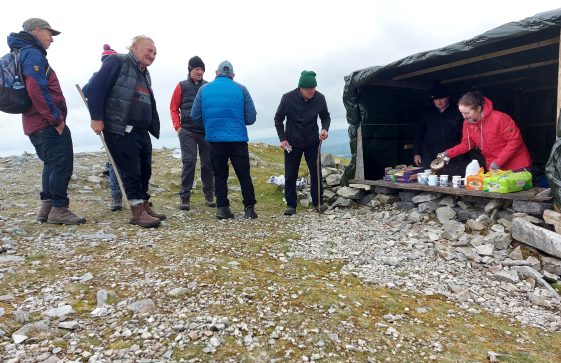 Traders on the Reek (Louisburgh Killeen Heritage/Photo by Mary O'Malley)
The pilgrimage goes back more than a thousand years and is believed to have origins in the ancient festival of Lughnasadh.
The festival was Christianised and added to the story of Saint Patrick fasting on the mountain for 40 days and nights.
The earliest historical record of a pilgrimage up the Reek comes from 'The Annals of Ulster' more than 900 years ago.
Masses have taken place at the very top in a small chapel, and it was not unusual for pilgrims to make the climb barefoot as a sign of penance and contrition.
While some still make the climb each year, the experience today is very different from decades past, when it would draw thousands.
"Local people would climb Croagh Patrick the night before Reek Sunday and set up stalls,” McGuirk said.
“They’d bring their goods up with donkeys and sell tea and sandwiches. You might be able to buy rosary beads and holy pictures as well.”
At its height, over a dozen stalls would line the route to the summit, serving pilgrims who had often travelled on buses from all across Ireland.
Traditionally pilgrims would arrive in the middle of the night and start the climb so they’d be at the very top at sunrise.
In the documentary the traders describe in detail the effort they put in to making the stalls, which would involve a handful of donkeys laden with supplies bringing up timber, covers and water in the weeks before Reek Sunday.
All in all, the animals could be making more than ten runs each.
But that tradition has largely disappeared.
While some attribute the declining numbers due to a fall in Catholicism in Ireland, the mountain now sees more year-round use from outdoor adventurers.
One man, Alan Colgan from Dublin, described climbing the mountain recently, not for the holy site but for exercise.
“It was only a couple of years ago; me and some friends scaled Croagh Patrick one of the days when the weather wasn’t too bad. It was really beautiful and a great hike.”
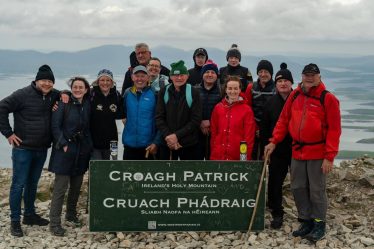 A climb to the summit (Louisburgh Killeen Heritage/Photo by Brendan Gilmartin)
Through their documentary, the group sought to ensure those memories are not lost. The film has already struck a chord, attracting more than 31,000 views online.
Among those featured are members of the Needham family, who carried on the trading tradition for decades.
“They’d be making sandwiches 24 hours before everyone arrived, making pots of soup and flasks of tea,” she said.
The climb itself has also changed over time. Where pilgrims once tackled loose and difficult terrain, today a carefully constructed stone path helps protect both walkers and the mountain.
“They didn’t have climbing gear. If you look at old footage, women were climbing in skirts and shoes, and men in shirts and ties,” McGuirk said.
Although the mountain now sees more visitors for hiking and tourism, McGuirk believes something unique has been lost.
“The traders of the Reek would very much miss Reek Sunday,” she said.
For McGuirk and the Louisburgh Killeen Heritage Group, preserving these stories is about ensuring that future generations understand the richness of local tradition on one of Ireland’s most iconic peaks.
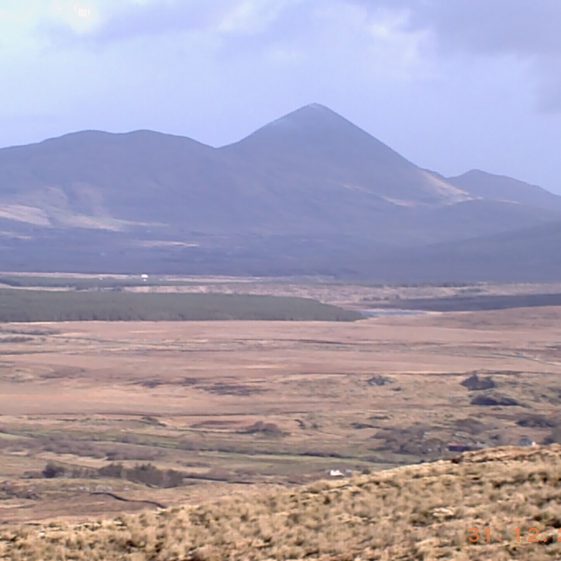 Croagh Patrick (Louisburgh Killeen Heritage/Photo by Mary O'Malley)
You can watch the documentary: here
For more information on Louisburgh Killeen Heritage you can visit them: here
Everything from irishpost.com and the print edition is available on the Irish Post App — plus more! Download it for Android or Apple IOS devices today
