



COLLEEN Rose Curran landed her dream role straight out of training, joining the cast of The Phantom of the Opera.
This week she told us that her grandparents light candles for her success, shared her early memories of seeing The Wizard of Oz on stage, and revealed her dreams of performing in a Sondheim show.
Q: Colleen, you are starring in one of the most successful musicals of all time – The Phantom of the Opera. Tell me about the experience?
A: It’s a very surreal experience. I had auditioned for Christine a few times, so when the call came that I’d booked the job, there was a lot of squealing. I started off as a second cover and never expected to even go on for the role.
Since then, it has been incredible to progress into being the alternate Christine Daaé.
The show is such a huge phenomenon – to have played for nearly 40 years is such a feat – so having played a small part in that legacy is thrilling.
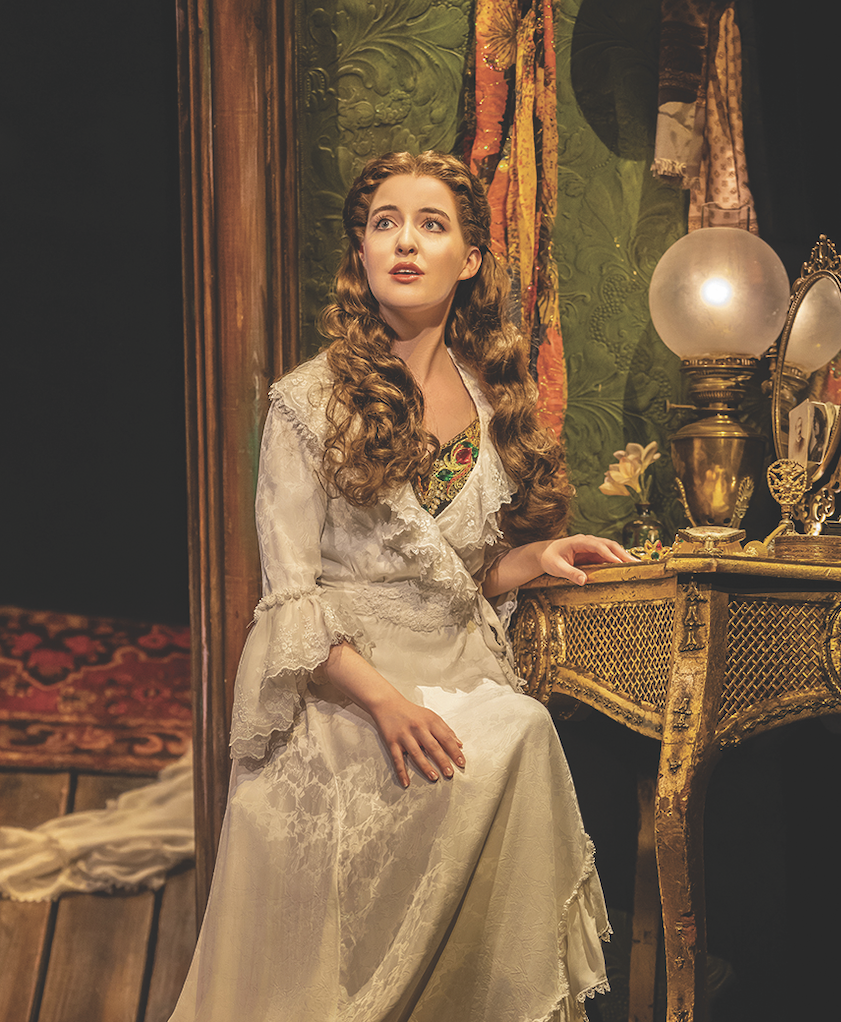 Colleen Rose Curran as Christine Daaé (picture by Johan Persson)
Q: Those high notes that Andrew Lloyd Webber loves must be a challenge?
A: They most definitely can be! But a lot can be owed to a great singing teacher and plenty of practice.
Q: You made your West End debut back in 2023 straight out of training – tell me about that?
A: It was unexpected! I had really primed myself for a lot of nos – I’m quite used to them by now – so it was remarkable to go straight into a dream show. There were so many firsts and I remember the whole thing being dizzyingly wonderful. Trying on those iconic costumes for the first time felt like stepping into one of my daydreams.
Q: Tell me about your Irish roots?
A: I’m from Donegal on my mum’s side and Meath and Leitrim on my dad’s, though they both spent most of their lives in Birmingham while I was growing up.
I stayed, alongside my cousins, with my grandparents on Cruit Island in Donegal during all the school holidays, and I still try to go back there regularly. It makes a nice change from the chaos and bustle of London.
Q: What is your favourite childhood memory of a trip to the theatre?
A: I vividly remember going to see The Wizard of Oz when I was about 10. My parents bought me a box set of old musical films when I was very young and I watched it so many times.
Then there was a TV show auditioning Dorothys for the London production, and we followed that, so as a treat my parents brought my sisters and me to see it at the Palladium.
I even picked Saint Dorothy as my confirmation name that year – completely coincidentally, so I said.
Q: When did you decide that the stage was the place you wanted to be?
A: I hated school. I was quite shy and, while I did well academically, I never really engaged with many subjects except English literature and drama.
The school shows were the highlight of my year. I’m a big advocate for arts training in state schools – it led me to joining a youth theatre outside school.
I was never given a single line, but I loved it, and from then on I was stubbornly set on becoming an actor.
Q: Your family must be so proud – do you like when they are in the audience or does it make you more nervous?
A: They are! They’ve seen me through many rejections and lows, and I know my parents and grandparents are constantly lighting candles for me in church whenever I have an audition. It feels like such a blessing that they can come and watch. I actually love knowing they’re in – growing up in a non-stagey household, I know they’re never watching through a critical lens.
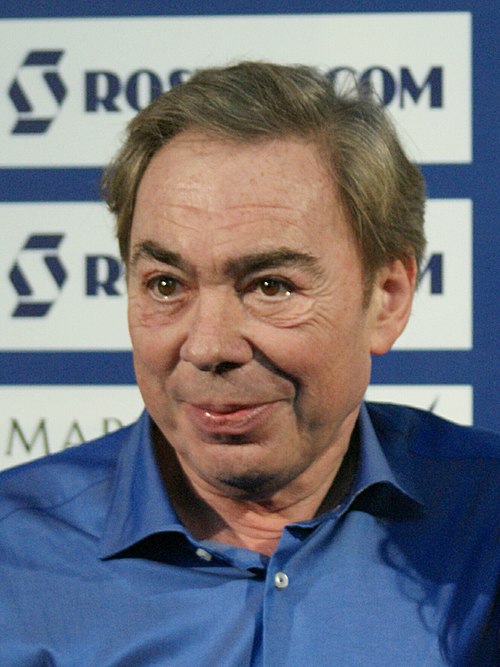 Andrew Lloyd Webber (Pic: Daniel Kruczynski CC BY-SA 2.0)
Q: Do you think Irish theatre is in a good place at the moment – have you been to see anything in Ireland recently?
A: Unfortunately, I really wouldn’t know! I’ve seen a lot of theatre since moving to London, but not much in regional theatres elsewhere. It’s definitely something on my radar.
There are so many incredible Irish actors and writers at the moment, so I’d like to think that’s reflected in the theatre scene.
Q: What advice would you give to aspiring young performers?
A: Be as open-minded as possible. Go and see as much varied theatre as you can – there are lots of discount schemes for young people, so make full use of those.
Q: It is a very tough industry – how do you stay positive and focused?
A: Remember why you started. It’s very easy to become self-critical when rejection feels so personal. Stay kind, and try to build a life outside the industry – don’t rely too much on “success” for validation.
That’s easier said than done, of course, and sometimes I’m not positive at all, but I remind myself that those moments pass.
Q: What would be your dream role if you could pick any show?
A: That’s a difficult one – I have so many! I’d love to perform in a Sondheim show in any role.
I’m not above playing the cow in Into the Woods. Or it would be exciting to originate something completely new.
Q: Is there a skill you wish you had learned along the way – or one you are thinking of taking up?
A: Many! I have a real habit of impulse shopping and one of my more notable purchases was an old accordion… which I’ve barely practised. So maybe I’ll pick that back up again.
Q: Finally, what keeps you grounded amid the excitement of West End life?
A: Going home. Being with family, being by the sea in Donegal – it reminds me what really matters. That balance is so important.
https://www.thephantomoftheopera.com/london
The Phantom — a brief CV
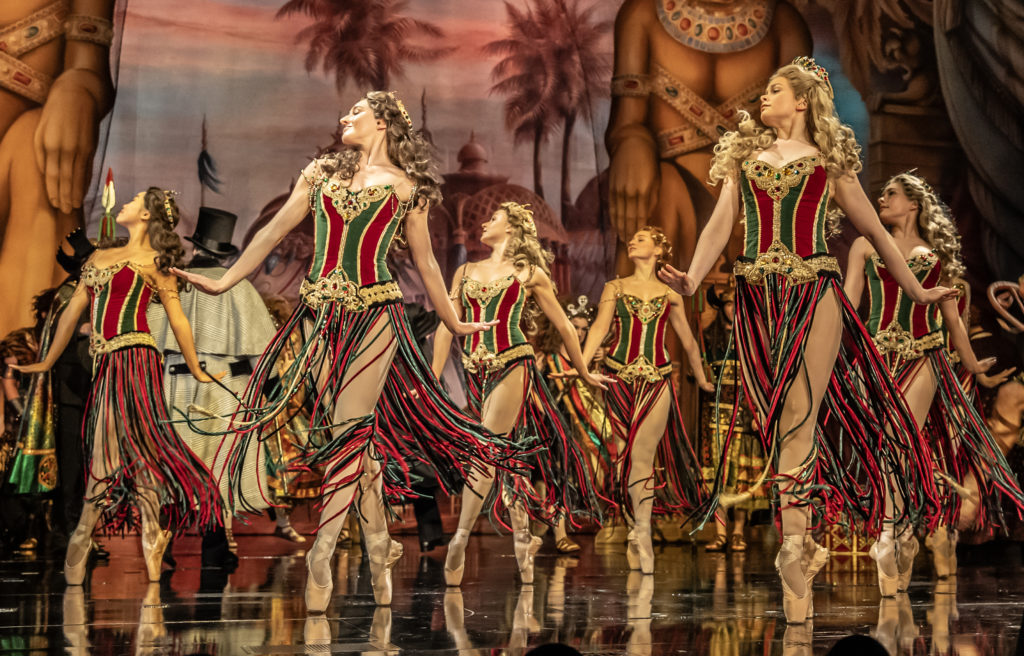 The Phantom of the Opera company (Pic: Johan Persson)
THE Phantom of the Opera is one of the most enduring gothic tales in modern culture, a story of obsession, beauty and tragedy set beneath the Paris Opera House. First published in 1910 by the French writer Gaston Leroux, it has inspired countless adaptations — none more famous than the musical by Andrew Lloyd Webber.
Webber’s version had its world premiere forty years ago on October 9, 1986, at Her Majesty’s Theatre in London’s West End. The original production starred Michael Crawford as the Phantom, Sarah Brightman as Christine Daaé, and Steve Barton as Raoul. Directed by Harold Prince, the show quickly became a sensation, praised for its sweeping score, lavish staging and unforgettable set pieces — not least the crashing chandelier that echoed the drama of Leroux’s original novel.
At its heart is the figure known only as the Phantom — a masked man living in the labyrinth beneath the opera house. A musical genius, but physically disfigured and socially rejected, he creates a hidden world underground, from which he exerts control over the theatre above.
Above ground, young soprano Christine Daaé begins to rise to fame. She believes she is guided by an “Angel of Music,” unaware that it is the Phantom himself, who has become deeply obsessed with her. To him, she represents both artistic perfection and emotional salvation.
Complicating matters is the return of Christine’s childhood friend, Raoul, Vicomte de Chagny. Their rekindled romance provokes the Phantom’s jealousy, setting the stage for a tense and increasingly dangerous conflict. Using his intimate knowledge of the opera house, the Phantom manipulates events, threatens the management, and punishes those who defy him.
The story builds to a dramatic climax when Christine is taken to the Phantom’s underground lair. There, she confronts the man behind the mask — not just a figure of terror, but a deeply wounded individual. In a pivotal moment, she shows him compassion rather than fear.
This act of kindness becomes the turning point. Moved by Christine’s humanity, the Phantom ultimately releases her, allowing her to leave with Raoul. It is an act of self-sacrifice that underscores the tragedy of his life — a man capable of great beauty and love, yet doomed by his isolation.
The musical’s success has been extraordinary. Opening in London in 1986 and later on Broadway in 1988, it has become one of the longest-running and most successful stage productions in history.
More than a century after Leroux’s novel, and nearly four decades after Webber’s adaptation first took the stage, The Phantom of the Opera continues to captivate audiences — a timeless tale of longing, music and the desire to be understood.
Everything from irishpost.com and the print edition is available on the Irish Post App — plus more! Download it for Android or Apple IOS devices today.
See More: Colleen Rose Curran, Phantom Of The Opera
