





MEN'S ACTION NETWORK coordinator Michael Lynch has warned of a growing demand for men’s mental health support as the Derry charity struggles with funding and reduced staffing.
Michael Lynch, a coordinator and counsellor at Men’s Action Network (MAN) in Derry, Northern Ireland, said the charity continues to receive a huge number of requests despite having a lot less staff than it had at its peak.
Speaking ahead of International Men’s Day on November 19, Lynch said men were often taught from an early age to suppress their emotions.
“From a very early age men are taught big boys don’t cry, and if we ask for support somehow, we are failing,” he said.
Created in 1994, MAN supports men across Northern Ireland, offering help with issues like anxiety, depression, suicidal thoughts, relationship problems, domestic and sexual abuse, and addiction.
Lynch, who lives in Derry, was one of the charity’s founding members.
“There was a group of us men who decided at that we would open a safe space for men to come forward, where they would have a place where they could talk and we could support them,” he said.
“That’s how Men’s Action Network came about.”
The network started as a weekly self-help group, with only around 20 people at the first few meetings.
Over the next few years, its work grew as it developed relationships with local referral agencies.
“What we built up is an expertise of how we engage with men and understand how men are,” he said.
“We create the environment where they can relax, feel at home and have conversations.”
But keeping those services going has become harder and harder.
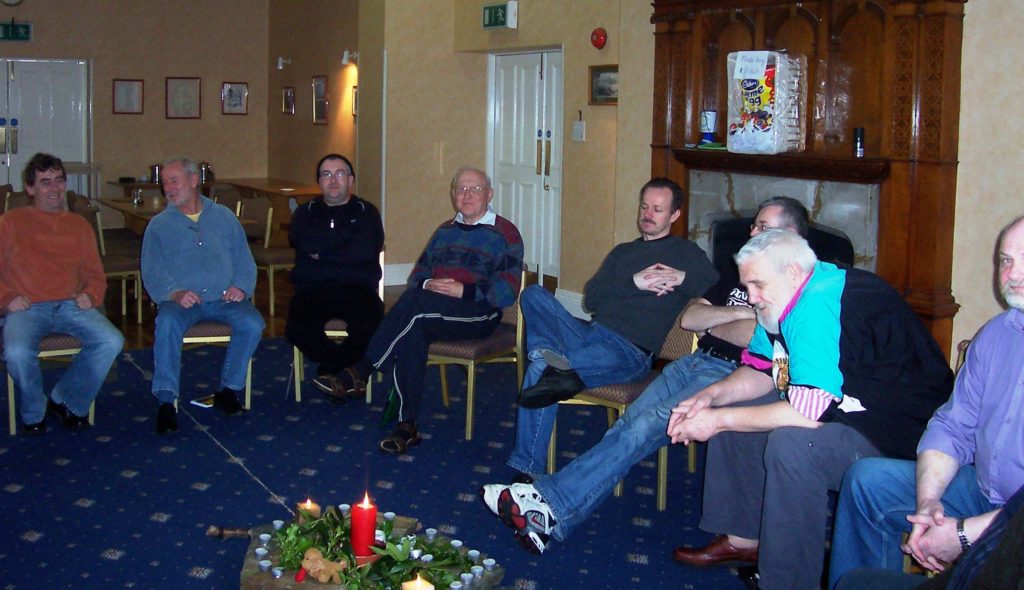 The early meetings of the charity, which was set up in 1994 (Photo by MAN)
Lynch said that MAN used to have a team of 16 counsellors and project workers, compared with five counsellors it has at the moment.
At its peak, during and after Covid, the network was seeing around 2,500 men a year.
“Funding is still so important, and we really rely on the goodwill in the local community,” Lynch added.
He also called for the Northern Ireland government to introduce a dedicated men’s health policy, saying the charity had been campaigning for one for almost 20 years.
“When we go to government departments for our early prevention and intervention work looking for funding, they say, ‘Oh well, there's no policy that requires us to do it’,” he said.
For Lynch, improving men’s mental health means addressing both the availability of support and the social pressures that discourage men from opening up.
'Men are often conditioned to think, "I have to deal with this all on my own; I have to manage this,"' he said.
“But we are human beings, and we feel, but often we don’t have the emotional space to actually express that.”
MAN delivers support in its offices as well as in schools, prisons and in the local community.
The charity also works with local trusts and is part of the Men’s Help Forum to raise awareness and encourage men to seek help before their problems spiral out of control.
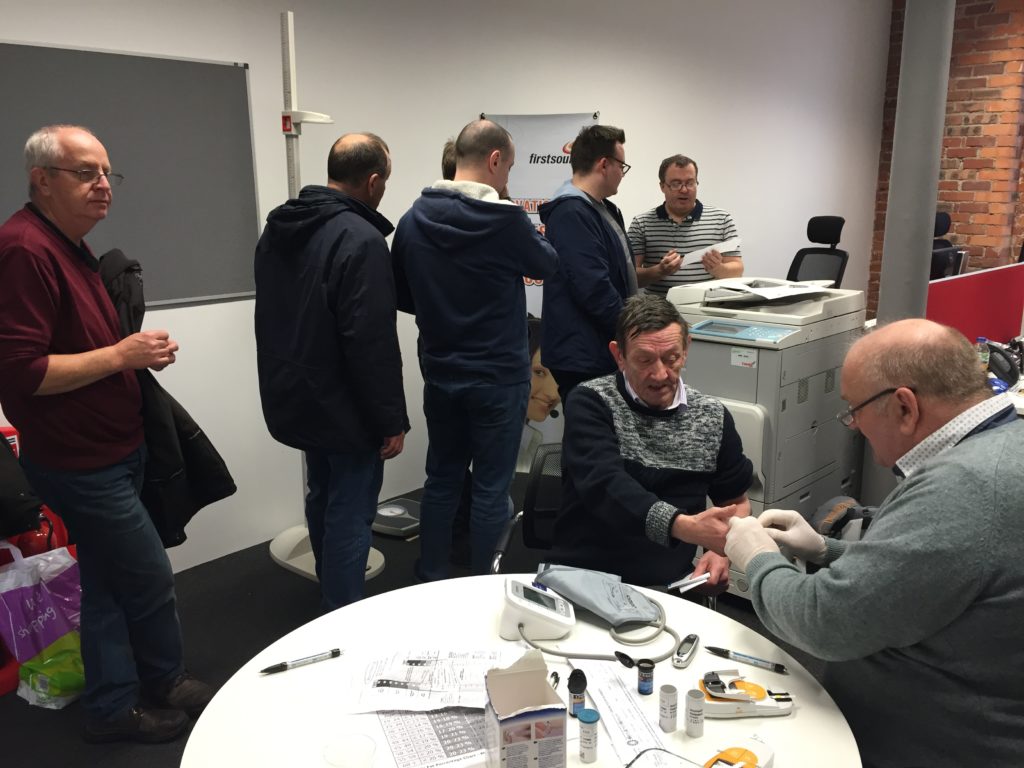 The charity councillors and volunteers hard at work (Photo by MAN)
Lynch said his work includes helping men to understand their emotions and identify ways forward and addressing anger and the issues that come with it.
“The core of anger is a voice that needs to be heard and needs to be met, and when those needs aren’t met, we feel rejected as a human being,” he said.
He stressed that supporting men does not mean excusing harmful behaviour.
“While we always support men, we also challenge men when we see behaviour that is in any way abusive,” he said.
“We as a policy will not work with anybody that has abused a partner or a child.”
Lynch cited suicide and life expectancy as two major concerns in men’s health, saying men died by suicide at least three times more often than women and died five or six years earlier.
“Over 30 years I have spoken to thousands of men, and many of them have said, ‘I thought I couldn’t do this; I thought somehow this was weak’,” he said.
His message is that seeking support can be an important first step, but that people must also be willing to take that first step.
“It doesn’t matter if a dozen people try to help; no one can do it for you. You do have control over your own destiny,” he said.
If you want to offer support you can find them: here
Everything from irishpost.com and the print edition is available on the Irish Post App — plus more! Download it for Android or Apple IOS devices today
