





EARLY conversations about end-of-life care must be had if death matters and outcomes are to be improved for members of the Irish community in Britain.
A new report encourages community organisations across the country to play a role in prompting these conversations among their members to ensure their end-of-life experiences are dignified, culturally sensitive and in-keeping with the person’s wishes.
The recommendations were made in the Sing our own Song: End-of-Life Care and the Irish Community in Britain report by the Irish in Britain (IIB) organisation.
They follow the largest national consultation in the community on this subject as part of the Meitheal Muintire: Irish End-of-Life Project.
“Recognised as a minority ethnic group with a distinct cultural, social and health profile, the Irish community in Britain also has the oldest median age of any ethnic group, at 54 years,” the report states.
“This demographic reality, combined with high levels of dementia, cancer and chronic illness, results in sustained and growing demand for high-quality, responsive palliative and and-of-life care (PEOLC),” it adds.
“Drawing on evidence from community consultations, key informant interviews, digital surveys and a panel discussion, this report identifies persistent gaps in culturally competent care at the end of life and after death,” the report confirms.
“While examples of good practice were identified, the evidence highlights a systemic lack of understanding of the cultural, religious and social needs of Irish people within PEOLC services.
“These shortcomings persist despite both the ageing profile of the community and the prevalence of complex long-term conditions that require end-of-life support.”
 The Meitheal Muintire Irish End-of-Life Care Project was led by the Irish in Britain (IIB) organisation
The Meitheal Muintire Irish End-of-Life Care Project came about after Irish community organisations across Britain reported families and friends were upset and dissatisfied by the poor care experienced by Irish people at the end of their lives and when they died.
“There was little if any consideration of cultural and religious needs and no appreciation of traditions and customs which shape expectations of dying, death and funerals,” the report explains.
When the project launched an online survey on the topic, most survey respondents agreed that the distinctive needs of Irish people were either “not very well recognised or not recognised at all” by mainstream medical or palliative care services.
“The picture was only slightly better in hospices or in services supporting care at home,” the report adds.
“Conversely, respondents reported that community services, religious organisations and family care at home recognised the distinctive needs of the Irish quite well or very well.
“Although medical care was very important, respondents believed that being listened to, having individual needs recognised, support from family and friends and availability of services were much more important.
“The respondents particularly identified the need for culturally appropriate care, respect for religious needs and awareness of cultural customs and traditions.”
Those findings have been reinforced throughout the life of the project, which has now made several recommendations, based on those findings, on how to improve end-of-life care for members of the Irish community in Britain.
“The Irish community in Britain is diverse and there is no single set of beliefs or practices around death and dying,” the report, authored by Dr Mary Tilki, states.
“However, shared traditions and experiences continue to shape expectations of a “good death”, often informed by practices in Ireland even among those that are long resident in Britain.
“These include a preference for care at home, if possible, the central role of family and community, and the importance of ritual and meaningful farewell, whether care takes place at home, in a care home or hospital.”
Dr Tilki adds: “The Irish community in Britain represents a significant and established population with deep roots in collective care and mutual support.
“Irish in Britain and its member organisations have the reach and operational expertise required to act as strategic partners to commissioners and providers,” she added.
“With appropriate recognition and investment, they are well placed to co-design, deliver and sustain culturally competent palliative and end-of-life support – improving outcomes, reducing crisis admissions and restoring dignity at the end of life.”
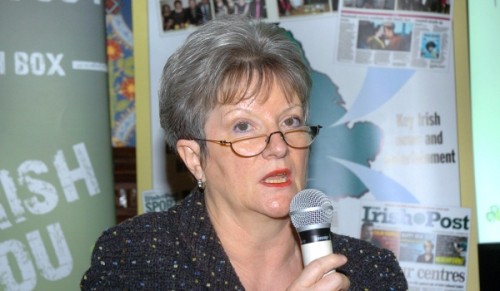 Dr Mary Tiki is the author of the report
The report further explains the impact that Irish organisations across Britain can have in improving the situation.
“Perhaps the primary role is for community organisations to encourage individuals and families to have early conversations about end-of-life and death matters,” it states.
“They can play an important role in helping people make decisions and plan for the end of their lives, because they are trusted in a way in which non-Irish services are not.
“It is important for their own sake that the person’s wishes are known in advance of death or loss of capacity, but it also alleviates the burden on family later.
“Wishes must be recorded as it is not safe to assume the family know, especially if there is sudden death or loss of capacity.”
The report makes four main recommendations to improve end-of-life outcomes for Irish people in Britain.
They focus on representation and policy, raising awareness, practical provision and service development.
“IIB should coordinate an advocacy programme to support advance planning for the end of life, supporting community organisations, individuals, families, and carers,” the report adds.
“Legal instruments such as wills and powers of attorney are vitally important, as is the focus on enabling early, informed conversations about personal wishes, values and expectations, including preferred place of care, treatment choices, funeral arrangements and final resting place,” it explained.
“For many, these practical discussions provide reassurance and clarity, even when legal matters feel difficult to approach.”
Following the launch of the report, IIB CEO Brian Dalton committed to taking the project forward, stating: “We will work in partnership with anyone, we see this as a universal theme affecting communities across Britain today.”
He added: “For many Irish people, dying is understood as a social and communal process as well as a medical one.
“Family presence is central, and ritual provides comfort. There is often a strong preference to be at home.
“People want their origin story, their spirituality and their history to be recognised in this process, enabling what we understand to be a good death.”
Everything from irishpost.com and the print edition is available on the Irish Post App — plus more! Download it for Android or Apple IOS devices today.
