



JUST a few hours after leaving a frosty Nottingham, it felt surreal to be sipping iced margaritas on an apartment balcony as a wintry sun, the colour of melted amber, sank slowly, bringing twinkles from the rippling Mediterranean all the way to the distant North African coast.
In the bushes below, the eager snuffling sounds of an adult pair of wild boar could be heard, as an occasional light breeze shook the palm trees and a chatting couple passed by on their way to a nearby restaurant.
This became the theme for myself and my partner and photographer, Sue Mountjoy, as we settled into our first night at a holiday resort that would be bustling with guests in summer but felt calm and intimate on a blissful winter evening.
Like much of the Malaga region, the spacious Ramada Hotel and Suites, nestling on a gently sloping hillside overlooking the sea between Fuengirola and La Cala, changes gear as the charter crowds fly home and slower tourism kicks in.
With just a few guests to be found around its restaurants, bars, swimming pools, sunbeds, gym, tennis courts and shops, it was an ideal base for us to wind down and explore the area off-season, when the weather remains kind and, inland, the mountain villages have hardly a tourist in sight.
Our wind-down continued on our second night in the Ramada’s Grand Lounge and Bar, where a smattering of experienced winter guests were keen to swap stories about the best markets and villages.
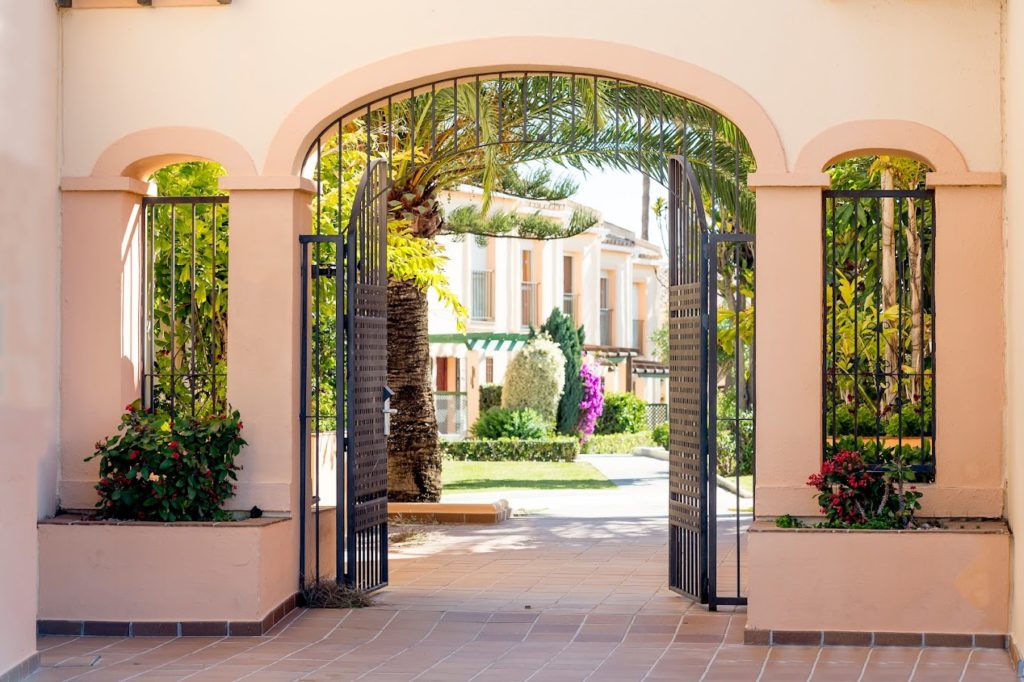 The entrance to the Ramada Hotel and Suites
At the resort’s fun Safari restaurant there was a live band, dancing and plenty of craic from the staff and guests, as well as an extensive menu that included paellas, grills, sparkling salads and the famous Burgos black pudding with Navarra chorizo.
Of course, even in winter, there is still plenty of bling and suntanned glitz around the fleshpots of Marbella, Estepona and Fuengirola, as well as those sweeping beaches where the seven or so hours of daytime sunshine gets up to 20C, perfect for a few sunbed-and-paperback sessions, although sea temperatures of around 14c make swimming less inviting.
After a busy year, our aim was to de-stress by heading for the hills, the Sierra de las Nieves, just an hour’s drive into a dramatic limestone mountain range which rises to 6,300 feet and is filled with deep gorges, towering peaks and centuries-old whitewashed villages, clinging precariously to steep slopes.
Our last trip there was meant to be a 10-day campervan tour in which we had aimed to visit eight of those villages. We had flown into Malaga on March 11, 2020, on the advice of the tour company (despite our strong concerns about the Covid crisis that was hitting Spain) and, as we had feared, we were trapped on a campsite in one of the most beautiful of those villages, gorge-straddling Ronda, as a very strict military-style lockdown was introduced within 48 hours.
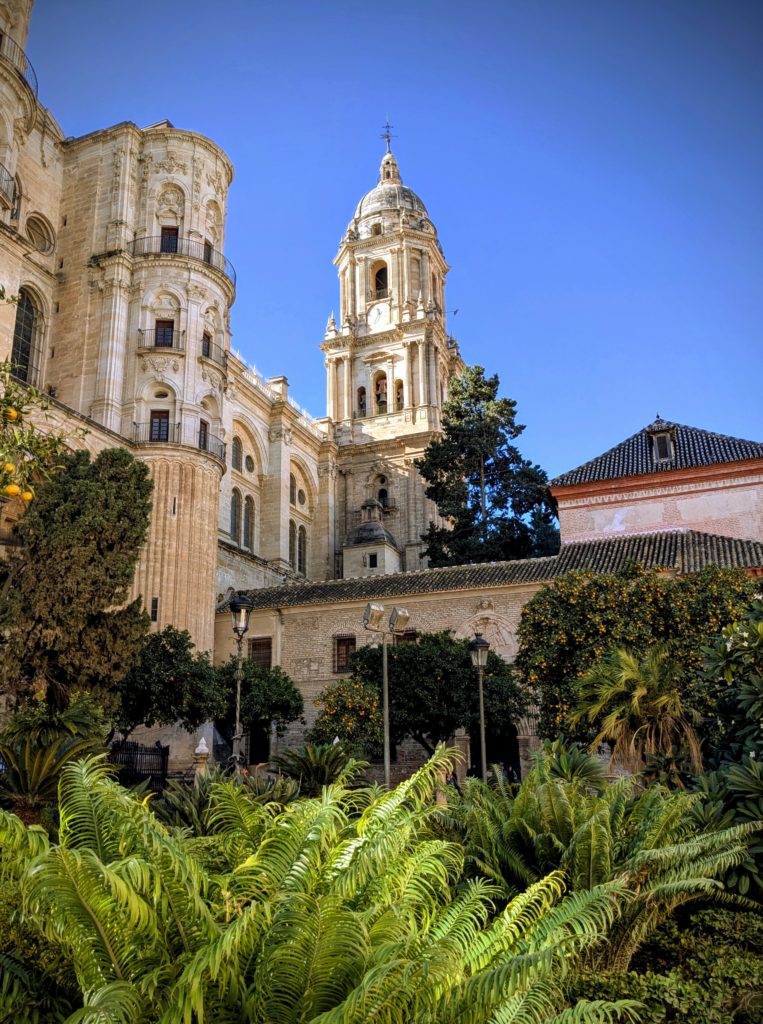 Winter sunshine in the centre of Malaga
Three days later, after being locked up alone on that empty campsite, we negotiated our release and were allowed to drive south to Malaga, passing through several armed police roadblocks and — having paid an incredible €639 for two seats — we escaped on March 16 on one of the last Ryanair repatriation flights to East Midlands Airport, where we landed in a country where face masks and social distancing were still voluntary, bizarrely.
So this time, in a hire car we picked up at Malaga Airport, we aimed to complete that tour without any of the drama of the pandemic that now seems like a living nightmare we would all like to forget.
Certainly, our Ramada base soon became our home-from-home, with a spacious two-bedroom apartment, a large, well-equipped kitchen and living room, and the bulging welcome basket that we added to the self-catering groceries we had picked up at Fuengirola’s Carrefour hypermarket on the way from the airport.
With its low-rise buildings stepping gently down towards the Mediterranean, the Ramada in winter reflected those mountain villages in atmosphere, with a few guests strolling through the manicured gardens, palm fronds and bougainvillea waving gently, maybe heading to Zac’s for breakfast or to the gym for a workout, followed by a dip in one of the near-empty pools or a few hours on the nearby beach.
So we ventured out on the ‘tourist beat’ only twice — once on the train to Malaga for a tour of the remarkably pleasant Old Town, and on a coach trip to Gibraltar, to see one of those outposts of the UK’s long-dwindled empire, including a stereotypical ‘Full English’ bacon-and-eggs breakfast at the iconic Gibraltar Senior Citizens’ Social Club.
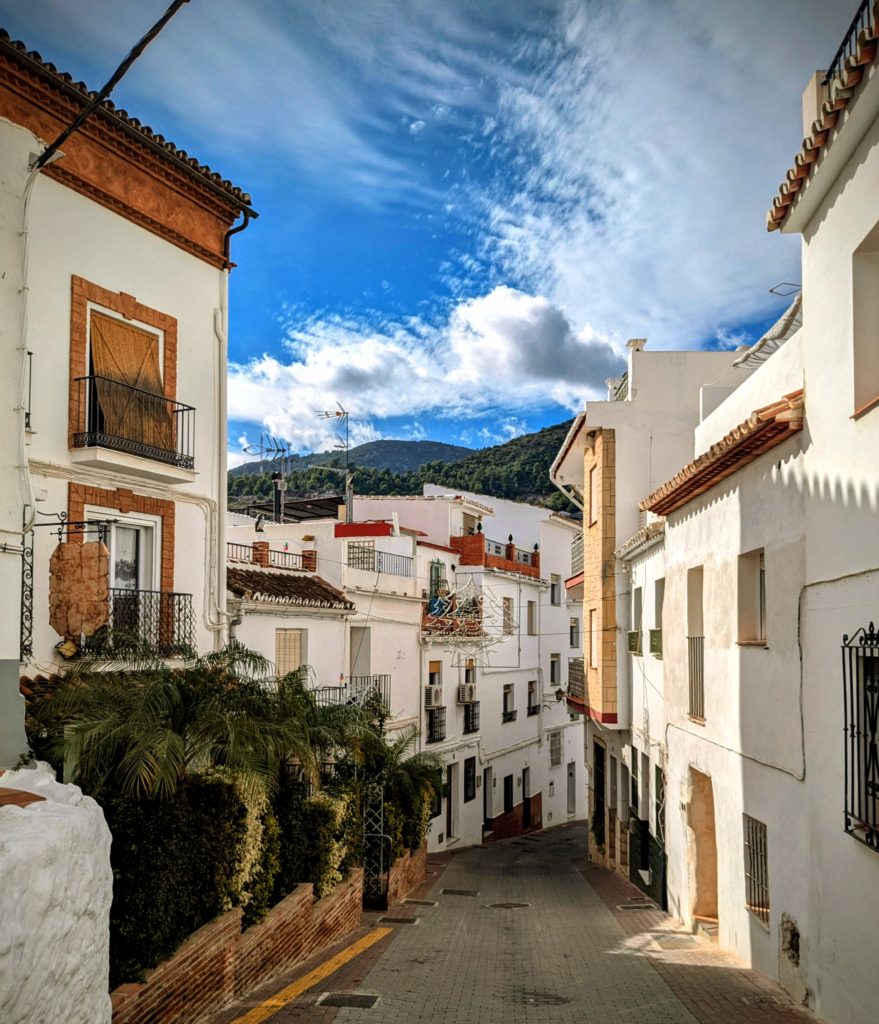 A quiet road through Ojén village
It was those ‘sugar-lump’ mountain villages that beckoned, each very different and with a history, layout and communities formed through 2,000 years of harsh living, subsistence farming and invasions which brought huge cultural change, from the Phoenicians and Romans to the Muslim Moors and, finally, the northern Spanish Christians.
The distinctive low-rise houses of the pueblos blancos were built to withstand harsh winter weather, and their cheap and disinfecting whitewashing (still renewed annually) was introduced to reflect the sun’s sharp summer heat in their exposed defensive positions on the slopes of steep hills. Here is what we found among those we visited:
Ojén: On the lower slopes of the Sierra Blanca, this grew as a mule-train village supplying olives, figs and chestnuts to the coast. It has classic steep, twisting lanes designed by its Moorish ancestors and today has a bohemian atmosphere created by its small community of painters, potters and writers.
In the gently chatty main square, Sue and I dined on local tapas that included a village sausage that the bar owner lit with burning oil — which, memorably, set fire to my napkin and had to be doused with a glass of water.
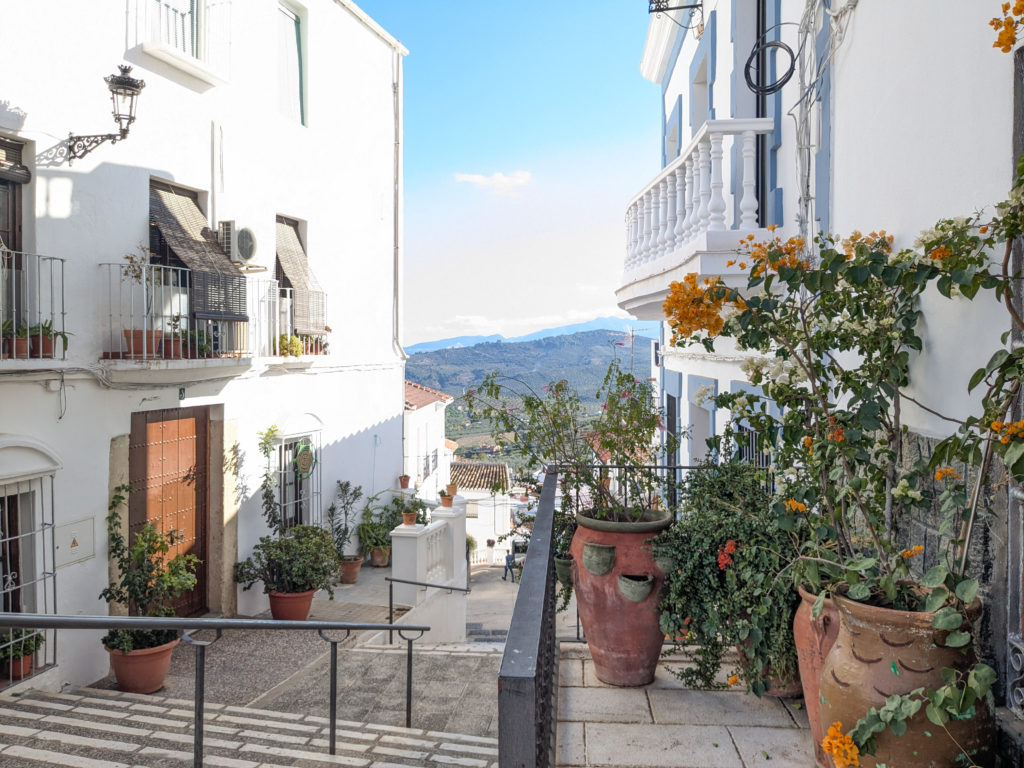 View to the mountains in Alozania village
Monda: The village has a festival culture — particularly around Easter and in summer — and is dominated by the 9th-century Castillo de Monda, originally a Moorish fortress and now a restored hotel, where you can call in for a meal or a drink with staggering views.
The community has a mix of Spanish families alongside long-settled foreign residents, and we met several in the main square, Plaza de la Ermita, where they were enjoying a glass of wine in the shadow of the impressive fountain and bronze statue honouring the traditional charcoal burners who worked in the local forests for centuries.
Guaro: One of the smallest villages in the area, but one of the most visually memorable. Once a year, during the Noche de las Velas (Night of the Candles), the entire village is illuminated by thousands of candles — a tradition inspired by France’s Lyon light festival.
Historically, Guaro was an agricultural settlement tied to olive oil, almonds and citrus. Its incredibly narrow streets — around a camel’s width — proved very challenging, particularly when I encountered another vehicle on a 90-degree turn, but we emerged unscathed.
Alozaina: One of the oldest continuously inhabited villages in the area, its origins stretch back to Roman times, with later Moorish fortifications still to be found in the remains of its hilltop castle.
This is a place with strong local pride. Agriculture — olives, almonds and cereals — still underpins daily life, and many families have farmed the same land for generations.
Here, among the people we met, were a Belgian couple who had lived there for many years but had recently sold their €175,000 restored village house (their children didn’t want it). They loved the place so much they aim to return every year for a visit, staying at a local hotel.
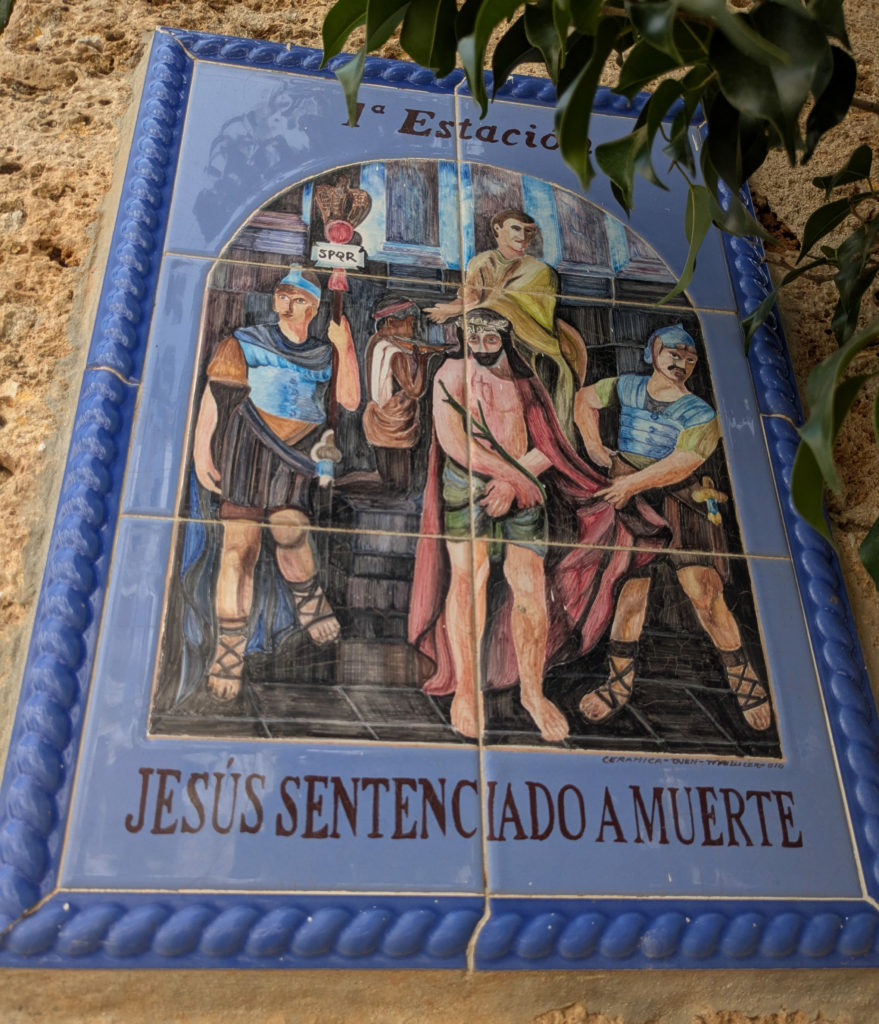 Tiled Station of the Cross on a wall in Ojen
Yunquera: This is the hiking and outdoor centre of the mountains and close to the area’s pinsapo forests — rare Spanish fir trees found almost nowhere else in Europe. This has shaped the village’s identity: forestry, conservation and hiking are at the centre of life there.
The village suffered heavy destruction during the Spanish Civil War, after which it was largely rebuilt, giving it a more uniform appearance than other white villages, but it retains a strong community feel.
In fact, we had dinner there at La Dolce Vita restaurant, where the new owners, a Lancashire expat couple (she a former oncology doctor, he a construction manager), told us of their passion for the village and the restaurant, which is already a huge hit with locals and visitors, serving traditional Sunday lunch and authentic mountain dishes to packed houses.
There are countless more such villages across the mountains, including lovely Ronda, which has become a major tourist magnet and lacks a little of the quiet charm of many others. And it is that peaceful charm that we were seeking during our Ramada stay — and, off-season, we certainly found it. In droves. Try it and see.
FACTFILE:
For further information on Ramada Hotel and Suites Costa del Sol, go to https://www.ramadacostadelsol.com/ or call (+34)952 66 99 03.
For cut-price airport parking and hotels, try Holiday Extras: go to www.holidayextras.com or call 0800 316 5678
Everything from irishpost.com and the print edition is available on the Irish Post App — plus more! Download it for Android or Apple IOS devices today
See More: Andalucia, Malaga, Spain
