



THE moment I fall in love with New Brunswick, I’m staring into an abyss.
Our kayak floats in the bay of the town of Saint John, shrouded in fog so thick we see little past the bow.
There’s only the discombobulating ebb of one of the world’s largest tides pulling at the boat, and the voice of our guide emerging from the fuzzy space to our right.
He’s explaining that if we just had another day, he’d drive us into the middle of the Canadian province’s vast forested wilderness, to a spot where his family camp along a trail frequented by hundreds of moose.
The offer doesn’t feel hollow. It feels like he truly means it. This is not atypical of our time here. The people of New Brunswick, which is roughly the size of Ireland but far less populated, often seem to have a deep love of their land.
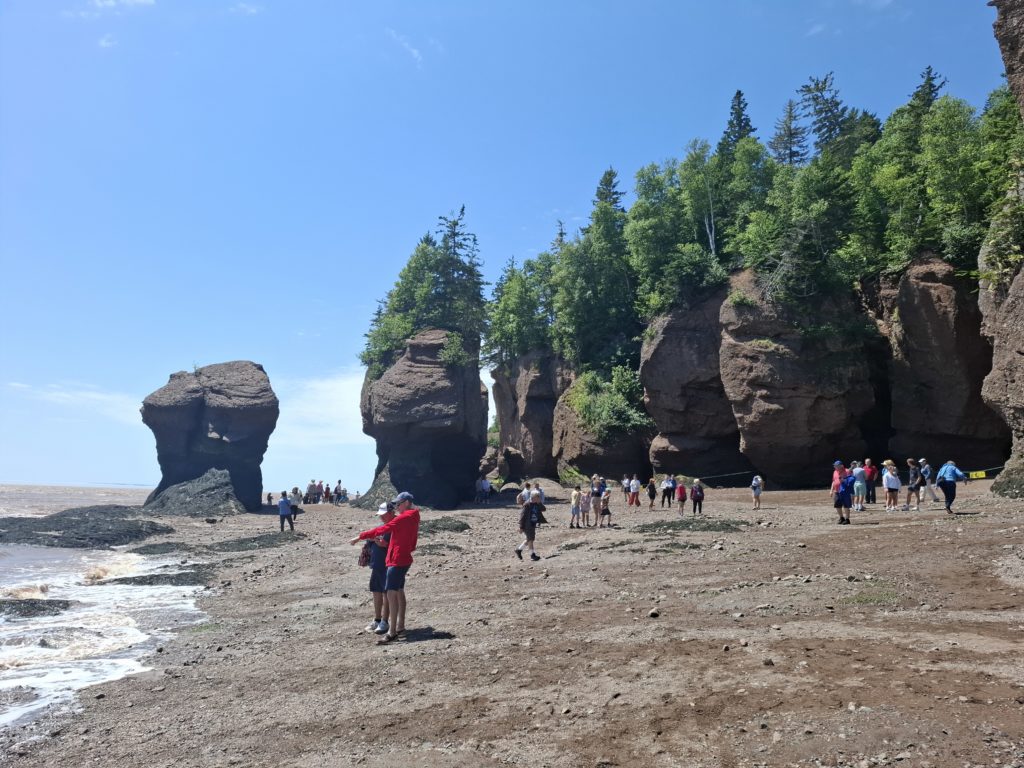 On the southern shoreline is the Bay of Fundy
A cynical outsider might view the enthusiastic friendliness that shows itself time and again as almost overbearingly, stereotypically nice. I’m damp, and slightly seasick, and I can’t see more than 10ft past the edges of my unstable craft, yet I don’t feel cynical. I feel like I’ve met newfound family.
New Brunswick’s links with Ireland run deep. Partridge Island, which we eventually uncover through the shroud, is now connected to the shore by a narrow causeway.
It was once cut off, and played something of an ‘Ellis Island’ role for Canada. Thousands of Irish landed here escaping the famine of the mid-19th century, and now the beautiful, rugged land seems to hide layers of dark secrets, not least the graves of perhaps 1,000 who didn’t make it through the quarantine. Considered too risky to bring ashore, many rode out disease on the small island. Or didn’t.
There’s also the gun turrets and early warning systems of two World Wars.
And a First Nations tradition, which lends the island its other name, Quak'm'kagan'ik, which translates as something like “giant smashed beaver dam”. The place, a little bleak, a little storm-battered, evokes no little sorrow, but my word is it beautiful.
In 1784, New Brunswick was nearly named New Ireland, before the idea was blocked by the British Crown. Through its vast open spaces, the beauty, like Ireland, can be neatly summarised as ‘fresh’, and ‘green’. The culture is blended, sometimes contrary and layered with complex identity.
Cultures that once clashed now exist in parallel. The First Nations, the original people of this land, still celebrate ancient customs with sacred spaces and traditional villages.
The Acadians — early French settlers — still seem to connect with their early rural ideal, and still hang their distinctive flag. Later-era French, British, and Irish culture also sit just below the surface.
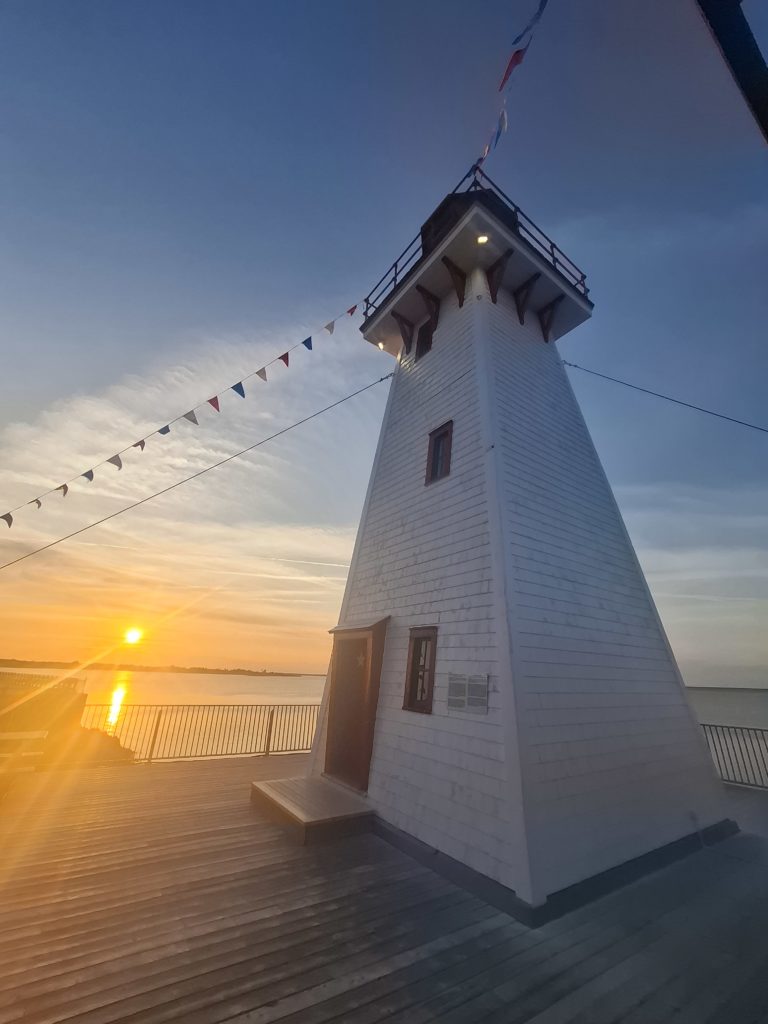 A lighthouse in Shippagan
In Metepenagiag, or ‘Red Bank’, where the Miramichi River takes a sweeping turn, is a sturgeon fishing hot spot that once fed a community, and a museum that explores the local First Nations history. Many guides are young First Nations people deeply connected to their roots.
They cook bread in hot sand as they talk of sacred spaces like The Augustine Mound, an ancient burial site once lost to the First Nations people, where, to their great credit, they keep outsiders away in order to preserve their heritage.
Our own guide is perhaps barely twenty, and does his job unshaven in a loose-fitting tracksuit.
The scrappy presentation is meaningless: his passion shines as he clutches massive, alligator-like sturgeon skins and explains the old catching technique; something akin to wrestling a fish from the deck of a canoe.
As he walks the ground, he plucks plants and explains what they can offer, and talks of great First Nations gatherings brought back to life for the 21st century.
We’re served lightly spiced, rich-tasting moose sausage and tea freshly made with leaves plucked from the river banks. In the heritage building sits a replica of a ceremonial outfit that was once presented to Henry Dunn O'Halloran.
O’Halloran was an Irish-British soldier who won the Mi'kmaq community’s enduring affection in the 1840s by, unusually for the time, trading and interacting with the community with fairness and respect.
The original coat still exists, but is carefully guarded, but the replica allowed a moment of reconnection with ancient techniques, its beaded, intricate design taking over 2,700 hours of work to produce.
Like the site itself, it feels like both a tribute to, and a fostering of, a deep connection to the land and its past that runs through local life.
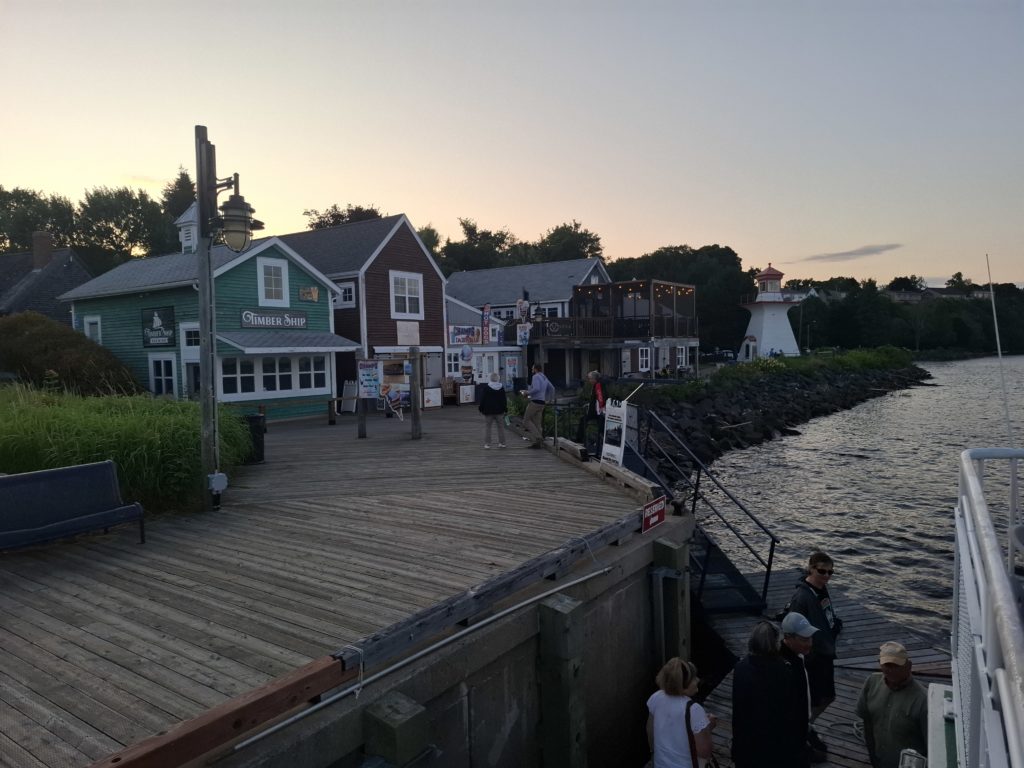 The picturesque Miramichi wharf
In Cielo Glamping, near Shippagan, we see this rooted connection in a more modern form. Overlooking the sea, the small site and its clear geodesic domes, ‘Les Perles’, are pointed towards the beach in a quiet, gentle little spot.
Cielo features both escapism and live music, connection and quiet, but the rugged restaurant is the highlight. They pull together a platter from their farm-style shop, producing a beautifully decorative display board featuring your choice of oysters, lobster, prawns, meats, cheeses, sauces and herbs.
Explaining its origins, owner Pat can simply point straight to where many of the products are sourced from the site's communal space.
The town of Miramichi itself brings home the laid-back, outdoorsy lifestyle. The gentle wharf, set against the broad river that shares the town’s name, has rugged bars and restaurants, and a boat cruise featuring sing-alongs and gentle explanations of ancient fires and political rivalries.
Above the quays, a small square hosts performances of live ballads, with dozens of elderly locals gently waltzing in the summer sun.
At mid-river, Beaubear Island is a former shipbuilding heartland, but now a nature reserve where pine-scented trails wind between gorgeous riverside viewpoints.
Little remains of what was once a bustling island community; this place once made use of the towering forestry to produce more than 50 massive trading vessels in the late 18th and early 19th centuries. Today, landing by a more modern boat — oddly, a journey piloted by a boisterous, relocated Geordie — offers contrast to the serenity on the naturally reclaimed island itself.
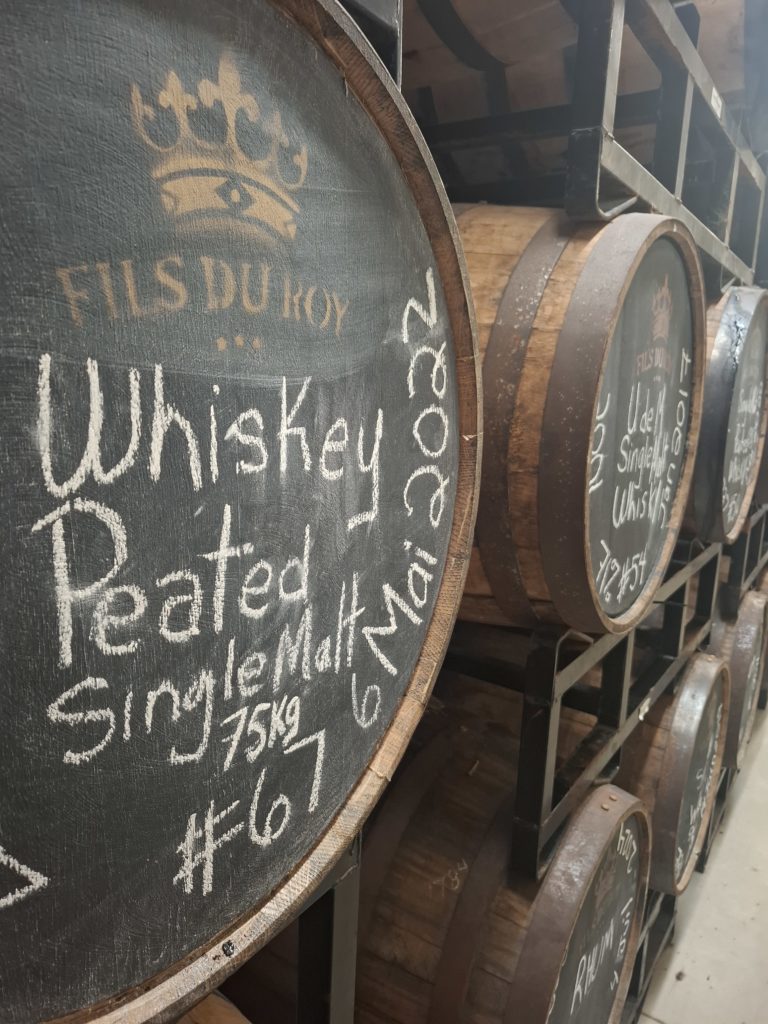 Fils Du Roy Whiskey barrel
Later, in O’Donoghue’s Irish pub, which dates back to 1864, a local trad band plays while guests sup lager with a local twist: the summer’s fresh crop of blueberries liberally floating amid the foam.
Back in our B&B, the quietly luxurious Down East Comfort, where a couple are living out their dream in owning the place, our rooms have regional Monopoly sets and record players.
Large baths wash the day away, and at breakfast, we’re handed postcards to write and send home alongside our pancakes, a quiet promotional campaign for the place that relies, typically for New Brunswick, on charm and that personal touch.
There’s another gentle Irish link in the heart of Arcadian country. Distillerie Fils du Roy is run by endlessly enthusiastic master distiller Sébastien Roy and his mother Diane.
The distillery, which features a bar and shop, is little larger than a small community centre, and located in the dispersed rural town of Petit-Paquetville.
Yet Roy has tried his hand at almost everything fermented or distilled, and enthusiastically serves up his various beers, rum, vodka, gin and coffee liqueur from behind the bar at a dangerously enthusiastic pace.
“This one is a little strong,” he jokes in a French-Canadian twang, while throwing generous shots from the bottle and encouraging you to connect with his scents as the heady concoctions kick in.
His ‘New Ireland’ whiskey — with that Irish E inserted as an added tribute — is aged in a stack of oak barrels out the back, proofed with Roy’s own beer, and named for that New Brunswick branding that never was.
It also represents a rare occasion on which Roy makes something strong without dabbling in his vast array of botanicals. It’s not quite got the Irish feel, but it does sit perfectly amid his wider range.
Of course, it’s hard to explore New Brunswick and its vast forest and river landscapes without also touching on the sea. In the north, that might mean gentle strolls to beautiful lighthouses, or a coffee on a grassy trail. On the southern shoreline, the Bay of Fundy is where extreme tides — one of the area’s claims to fame — reach their peak. Within the bay, tides have a global maximum variation of as much as 16.8 metres.
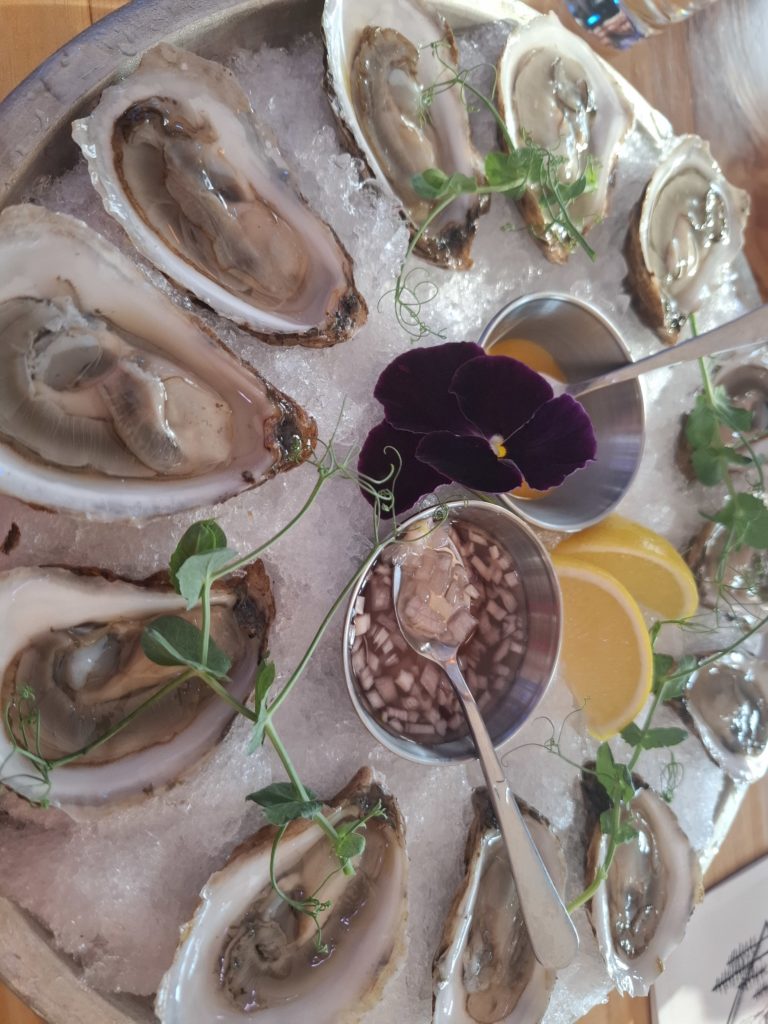 Cielo camping oysters
Muddy Fundy’s best spots are squelching beaches littered with house-sized rocks that take on the shapes of surrealist art. The slosh of the tides — their flow visible to the naked eye — is slowly undercutting the stone and leaving top-heavy stacks that can be explored at low tide.
Ocean floor walks and kayaking take place in the same spot here just a few hours apart. Above it all, visitors can stroll the extensive national park, or listen to the water roar in and out whilst snacking on the ubiquitous (and sublime) lobster rolls in any number of local restaurants.
There’s just enough habitation in New Brunswick to make it a place where comfort is easily obtainable, and just little enough to feel like you’re never far from being alone in the wilderness. It’s the endless countryside that many visitors connect with.
The Appalachian Hills in the north offer something close to rolling farmland, and hide the charming, performative Arcadian Museum. Elsewhere, the province has over 80% tree cover, and there are spaces where it feels like the pine forests are all that can be seen right to the horizon, almost like the modern world simply never happened.
The vast, fresh-feeling space of the province is awe-inspiring and, in summer, somehow both rugged and kindly soft-edged and welcoming, like its people. Roads are easy to navigate, with bright yellow “moose crossing” signs and vast houses set back into the woodland.
A car means freedom here. On the right day, for all the wilderness, it can feel like you’re never more than a few miles from a Tim Horton’s and their ubiquitous Timbits.
Back in Saint John, the old industrial town is undergoing a rejuvenation, with a container market pushed up against the seafront, the old industrial buildings brought back to life beneath the fading paint of the advertising, with art and high-end food outlets now occupying the steep streets of downtown.
By the port, sacred First Nations spaces are being both reclaimed and explained, with walking tours that almost sweep the city away in their evocation of the past. Affordable business hotels and trendy coffee shops serving ‘London fog’ — a type of steamed sweet tea — sit in buildings largely unaltered for a century.
So as I float, senses inhibited on the sloshing seas of Saint John, just a few hours before flying home, I feel strangely present, and a real sense of belonging, on another continent. I’m busy and fulfilled, but rested, and truly connected to this proud province’s gently Irish — and French, and First Nation, and Canadian — sense of place.
I think of the ancestral connections of the place; the people who came here to live, and sadly, also, to die. And the people who still uphold their ancestors’ traditions in a way that gives such a distinctly wholesome, welcoming and positive sense of place.
Canada is vast, and New Brunswick a relatively small corner that doesn’t top many tourists' Canuck bucket lists.
What it lacks in a single world-class tourism offering, though, it more than makes up for in authenticity and natural beauty.
A trip here is fresh, outdoorsy, simple and connected. It grabs gently at the soul.
See More: Canada, New Brunswick
