





IRELAND’S Ancient East is less a single touring route than an enormous open-air history book.
Events both tumultuous and heroic lurk round every corner of this ancient landscape.
Its hills and valleys have seen Neolithic farmers clear the land, rebel fugitives hiding in its woods, and great armies massing on its plains ready for combat.
Its monasteries and friaries have sheltered the monks who turned Ireland into the very centre of Christianity while the rest of Europe struggled in the quagmire of the Dark Ages.
The culture, the music, and the heritage of Ireland’s Ancient East have been shaped by centuries of thunderous happenings. But today it's a tranquil, peaceful place with a real sense of its eventful past. The area is divided into The Historic Heartlands, The Land of 5,000 Dawns, and The Celtic Coast.
Stretching from the Boyne Valley to Cork and from the Midlands to the coast, it brings together prehistoric tombs, early Christian monasteries, Viking cities, Norman castles and grand country estates.
The Historic Heartlands form part of this wider region, encompassing counties including Kildare, Laois, Offaly, Carlow, Kilkenny and Tipperary. Wherever you begin, these experiences provide an excellent introduction.
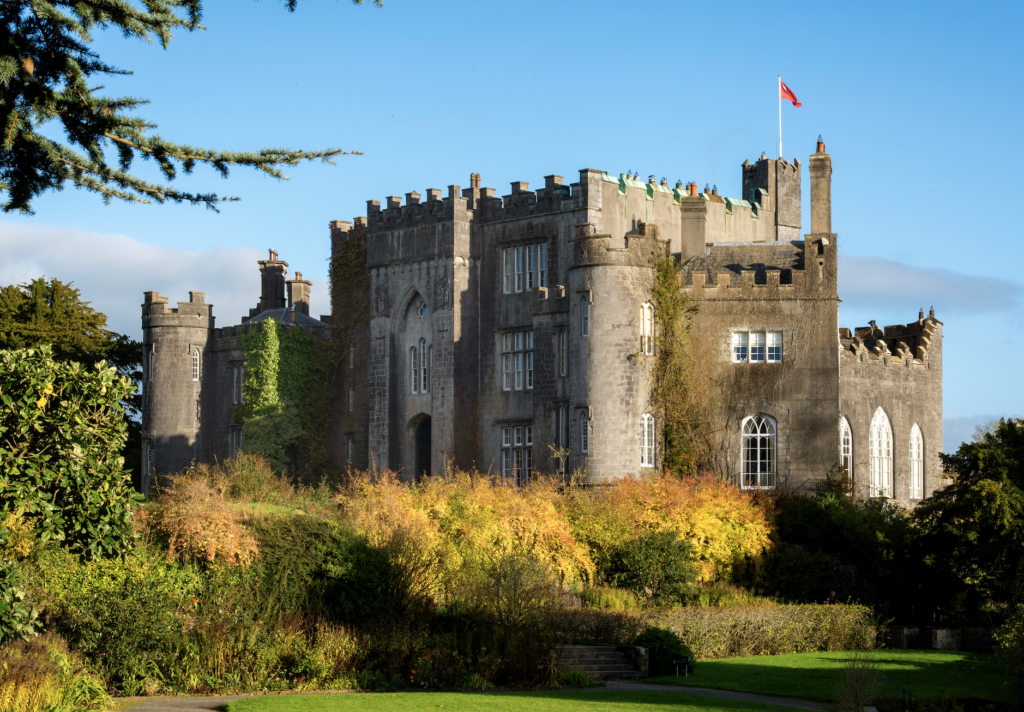 Birr Castle Demesne in Birr, Co Offaly
Step inside prehistory at Brú na Bóinne, Co. Meath
Older than Stonehenge and the Egyptian pyramids, the great passage tomb at Newgrange was built around 3200BC. Its builders arranged the passage so that, at sunrise around the winter solstice, a shaft of light enters through the roof box and reaches the inner chamber.
Newgrange is part of the wider Brú na Bóinne complex, together with Knowth and Dowth, in a landscape shaped by the River Boyne. Even without the midwinter sunlight, entering the chamber is an unforgettable encounter with Neolithic Ireland. People have been queuing up for 5,000 years to get a glimpse of the winter solstice.
Visits are organised through the Brú na Bóinne Visitor Centre. Tickets are limited and advance booking is essential, particularly during summer and at weekends. Heritage Ireland
Walk with kings on the Hill of Tara, Co. Meath
Tara has no monumental buildings. Its power comes instead from the ancient landscape, the long, long history, and the extraordinary sweep of country visible from the dummit of the hill.
For centuries it was associated with the inauguration of Ireland’s high kings, although the site’s ceremonial importance reaches much further into prehistory. Its best-known monument is the Lia Fáil, or Stone of Destiny, traditionally said to have cried out when touched by the rightful king.
The hill itself is accessible all year, all weather. But during the visitor season, an introductory exhibition and guided tours are available from the former church near the entrance. Or you could just soak up the atmosphere on your own.
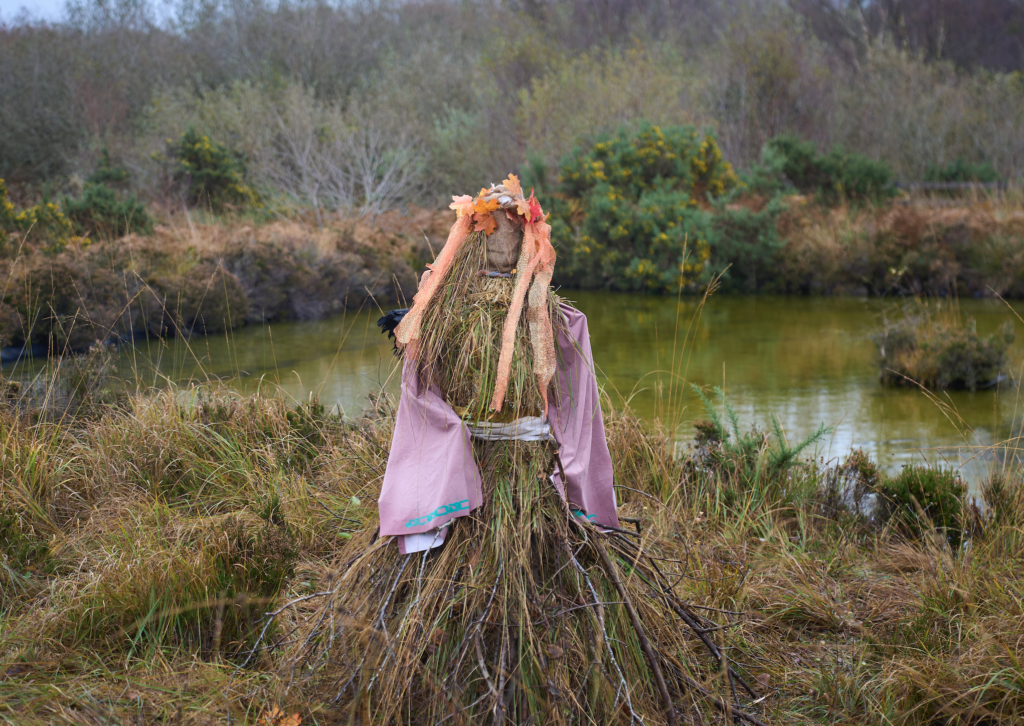 Corlea Trackway in Co. Longford
Find sanctuary at Glendalough, Co. Wicklow
St Kevin established a religious settlement here in the 6th century, and the “valley of the two lakes” subsequently became one of Ireland’s most important centres of Christian learning.
The surviving round tower, churches, carved crosses and stone gateways are impressive, but Glendalough rewards those who go beyond the monastic enclosure. Walking trails lead through woodland and around the lakes, with longer routes climbing into the surrounding Wicklow Mountains.
Arrive early if possible. Even better — a Tuesday in November. Nobody about except the odd raven, maybe a hare or two. The valley can become busy, but in the quieter morning light it is still possible to understand why generations of monks sought contemplation here.
Explore mediaeval Kilkenny
Kilkenny contains more history than you could reasonably shake a pikestaff at. Begin at Kilkenny Castle, one of the great castles of Europe, up there with Edinburgh’s, or anything along the Rhine. Princess Diana was directly descended from the family. So who knows? This area might make a des res for Harry and Meghan if the Cotswolds don’t work out.
Kilkenny’s great trick is that it has kept more of its mediaeval character than any other Irish city — Rothe House, one of Ireland’s finest surviving Tudor merchant houses; the medieval Butter Slip; two imposing cathedrals and the extremely impressive 12th-century castle overlooking the River Nore put it right up there with the very finest of Europe’s cities.
If you look up ‘hurling’ in Wikipedia, the first line says: “Not to be confused with curling or hurdling.” You’ll work hard in Kilkenny to find someone who might make that error. The sport is an obsession in the county. Locals say: “Hurling is a game for piano tuners; football is a game for piano removers,” although clashes can sometimes make the stands shake.
In 1366 the Statutes of Kilkenny were brought in to chasten English settlers who found the native ways very much to their liking and had become “more Irish than the Irish themselves”. The sanctions thus introduced included a ban on hurling — a somewhat unpopular move.
Kilkenny’s hostelries are underpinned by a brewing tradition that stretches back to the 14th century. As ever, the monks were at the centre of the licensed victualling trade (unlicensed back then, as it happens), brewing ale and saving souls at this spot on what is known as the Mediaeval Mile.
But commercialism soon reared its lucrative, creamy head, and Smithwick's was founded by John Smithwick in 1710 in St Francis Abbey Brewery. Today this is Ireland's oldest operating brewery, situated on the site of the old Franciscan Abbey — tours of the brewery are available: www.smithwicksexperience.com
On the High Street, spare a thought for Alice Kyteler who in 1324 stood trial for witchcraft. Her crime sheet also accused her of being a heretic. Accused by her stepchildren of sorcery, demonism, and murdering her husbands, she faced charges brought by Bishop Richard de Ledrede. But, according to legend, she escaped from Kilkenny Castle before she could be executed, likely fleeing to England. Her maid, Petronilla de Meath, was less fortunate — burned at the stake, the first such execution in Irish history.
You’ll learn all about this on a Kilkenny Walking Tour: https://kilkennywalkingtours.ie/
Command the plains from the Rock of Cashel, Co. Tipperary
Rising dramatically above the Golden Vale, the Rock of Cashel dominates the surrounding countryside.
Once associated with the kings of Munster, the limestone outcrop later became an important ecclesiastical centre. Its collection of medieval buildings includes a round tower, cathedral, high cross and Cormac’s Chapel, celebrated for its Romanesque architecture and surviving wall paintings.
Allow time afterwards to walk down towards the ruined Hore Abbey. The view back towards the Rock is one of the finest in Ireland — and one of the most photographed. The hilltop is extremely exposed, so even summer visitors should bring an extra layer.
Defend the realm at Cahir Castle, Co. Tipperary
Built on a rocky island in the River Suir, Cahir Castle is among Ireland’s largest and best-preserved medieval fortresses.
Its towers, battlements, courtyards and defensive walls provide the sort of castle experience younger visitors generally hope for, while exhibitions explain how the stronghold developed under the powerful Butler family. The castle’s relatively complete appearance has also made it a favourite location for film and television productions.
From Cahir, a pleasant riverside walk leads to the Swiss Cottage, an extravagantly picturesque early 19th-century retreat whose thatched roof and rustic appearance conceal a surprisingly elegant interior.
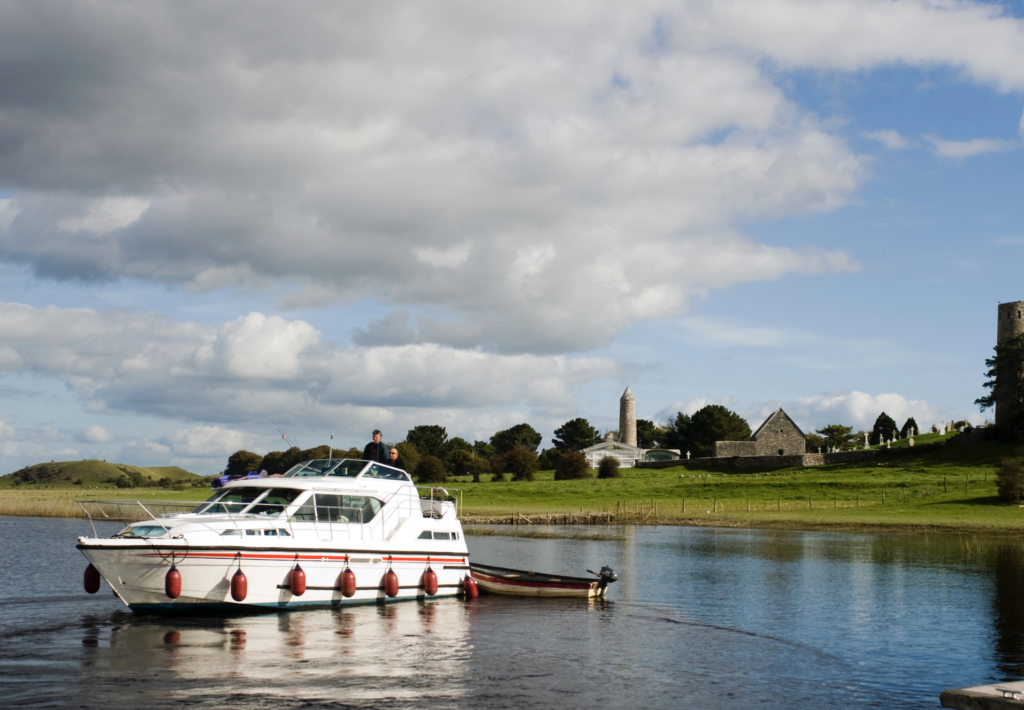 Cruising on the River Shannon in Clonmacnoise
Enjoy silent contemplation by the Shannon
The Pilgrim’s Road to Clonmacnoise monastery settlement skirts the northerly edge of Mongan Bog before arriving at the monastery on the banks of the Shannon. Just to the south stands Clonony Castle, built by the local MacCoghlan clan but subsequently seized by Henry VIII’s people. It eventually ended up in Thomas Boleyn’s possession. Mary and Elizabeth Boleyn lived and died at Clonony and would doubtless have wandered through the bogland, perhaps contemplating the fate of their tragic cousin Anne Boleyn, executed by Henry VIII. The sisters’ tombstone stands some 100 metres from the castle.
Clonmacnoise Monastery itself was founded by St Ciarán around 544 AD and is located strategically on a wide bend of the River Shannon. The preserved ruins include churches, two round towers, and several intricate high crosses. It was repeatedly attacked by Vikings before being largely abandoned by the 13th century. It is a beautiful, melancholy spot, and with its round towers and high crosses, the Shannon flowing slowly by and the boglands stretching to the horizon, this is Ireland being as Absolutely Ireland as it can be.
Visit the boglands
A fox munching on bilberries, a kestrel stalking a field mouse, dragonflies flitting about the wild orchids. The strange, ancient, magic boglands of Ireland are home to a cast of characters who intimately know every inch of their distinctive habitat.
The hares know all about the bogs too — where to shelter, where to find the best hummocks to graze on, and how to escape predators. This they do with commendable élan. Although their feet look like a clown’s, a hare can speed across the bog with an acceleration that wouldn’t disgrace a Formula One racing driver. It is a startlingly dramatic sight.
The hare knows other things too: like the location of the entrance to the Otherworld, where the gods and heroes dwell. Oddly enough, this happens to be in Ireland’s boglands — if legend is to be believed. According to the same source, hares also know where buried treasure lies; so they’re a multi-tasking, buck-toothed bargain.
Whatever the legends of the bogs, the science is straightforward. A bog is a wetland that accumulates peat, or dead plant material, to a considerable depth below ground level.
And they have a special property: because there isn’t much room for oxygen, anything that fell into the bog — including humans — was preserved for posterity. For more information on this, head for the National Museum of Ireland in Dublin. The remarkable bog bodies on show offer a haunting glimpse into Ireland’s past. Preserved for more than 2,000 years by the cold, acidic conditions of the bogs, the remains retain extraordinary details, including hair, skin and fingernails. Several show signs of violent death, possibly connected with ritual sacrifice or the punishment of failed kings. They form the centrepiece of the Kingship and Sacrifice exhibition at the museum’s archaeology branch in Kildare Street, Dublin.
The bogs have preserved all manner of material.
In the 1980s a number of wooden trackways were discovered at Corlea Bog in Co. Longford. One is an exceptionally fine oak roadway: tree ring analysis dates the construction to 148 BC, making it the oldest and largest of its kind in prehistoric Europe. Not that this record would have held any interest to those who built it. Because the Corlea Road appears to have been something of a special thoroughfare, a definite cut above the brushwood trackways that allowed locals to pick their way through the mire.
The bog has preserved enough of Corlea’s oak planks for archaeologists to confirm that its construction was relatively sophisticated. The Hill of Uisneach, the ritual centre of Ireland, and Rathcroghan, the ancient capital of the province of Connacht, are nearby. So perhaps the road connected these royal sites for ceremonial purposes.
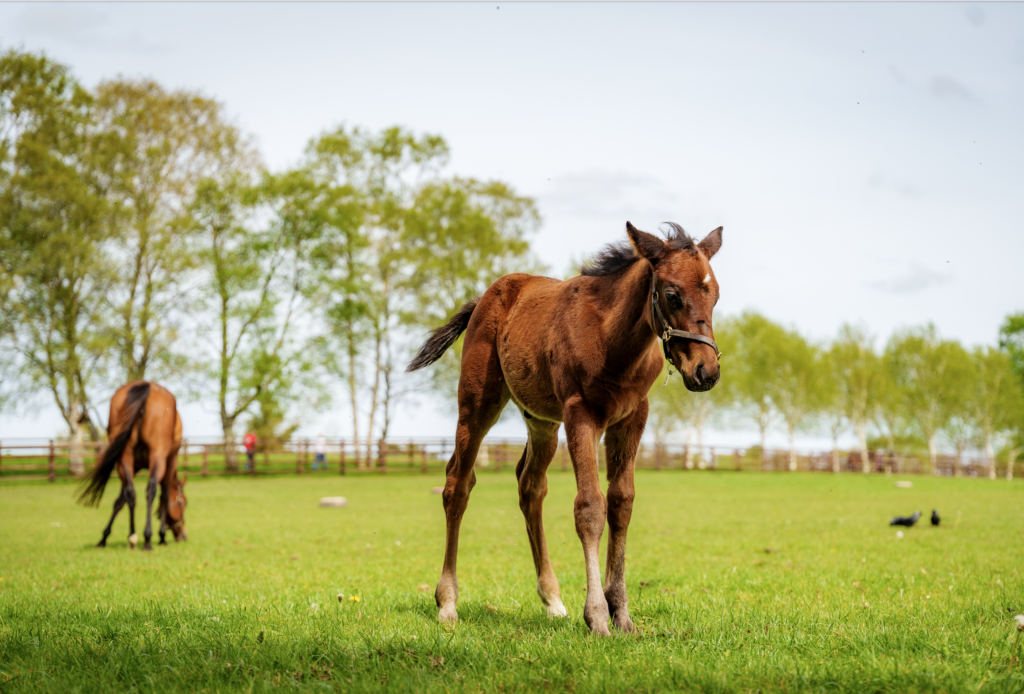 The Irish National Stud and Gardens, Co Kildare (Pic: Fáilte Ireland)
Meet champions at the Irish National Stud, Co. Kildare
Ireland’s history is not confined to the past. At the Irish National Stud, the country’s enduring relationship with the thoroughbred horse is on show.
A guided tour introduces you to some of the resident stallions and explains the breeding operation, while the interactive Irish Racehorse Experience allows visitors to test their own racing judgement. The attraction also contains the wonderful Japanese Gardens, created in the early 20th century to represent the journey of human life.
Take a starfari at Birr Castle, Co. Offaly
The Parsons family has lived at Birr Castle for generations, but it was the third Earl of Rosse who placed the estate at the centre of international science.
In the 1840s he constructed the Leviathan of Parsonstown, for decades the largest telescope in the world. With it, he identified the spiral structure of distant galaxies at a time when the nature of these formations was still fiercely debated. His son, the fourth Earl, continued Birr’s astronomical work, making remarkably accurate measurements of the Moon’s heat — an effect so faint it has been compared with the warmth of a candle several miles away. There is, apparently, no limit to the extent of human curiosity.
A reconstructed version of the enormous telescope stands in the castle grounds. Visitors can also explore extensive gardens containing rare trees, formal terraces, riverside paths and what is claimed to be the world’s tallest box hedges. The private residential areas of the castle are not normally open, but the demesne alone merits several hours.
Discover Ireland’s Viking story in Waterford
Founded by Vikings in 914, Waterford lays claim to being Ireland’s oldest city. In fact, it is older than other celebrated Viking cities such as Stockholm, Oslo and Copenhagen.
Sitting on the River Suir, Waterford’s history is concentrated in the compact Viking Triangle, where several museums tell different chapters of the story. Reginald’s Tower explores the Viking period, the Medieval Museum contains treasures from the city’s later history, and the Bishop’s Palace moves the narrative into Georgian Waterford.
The city’s long glassmaking tradition can also be explored, while its quays recall centuries of trade, departure and emigration. For a coastal extension, follow the Copper Coast or continue to Hook Head in neighbouring Co. Wexford, where the 800-year-old lighthouse stands above some of the southeast’s most dramatic rocks.
For more information on holidays in Ireland click here and here.
Everything from irishpost.com and the print edition is available on the Irish Post App — plus more! Download it for Android or Apple IOS devices today.
See More: Ancient East, Ireland, Travel
