





FOR Helen Riddell, the connection between Britain and Ireland has always been part of everyday life.
“My mother is from Bere Island in County Cork, and my father was from Galway.”
Despite growing up in England, “Every school holiday we were out the door and off to Bere Island".
Those visits eventually turned into something more permanent. Riddell first moved to the island in 2002 while working as a freelancer after a long career with the BBC.
Today she is part of the Bere Island Projects Group, a community development organisation working to sustain life on the island.
Beyond infrastructure, the group’s goal is to keep the island alive.
“Really our main aim is to get more people to come and live on the island,” she said. “The population at the moment is 218, but back in the early 1900s it would have been over 2,000.”
Despite its small size, Riddell says Bere Island is a lively and welcoming place.
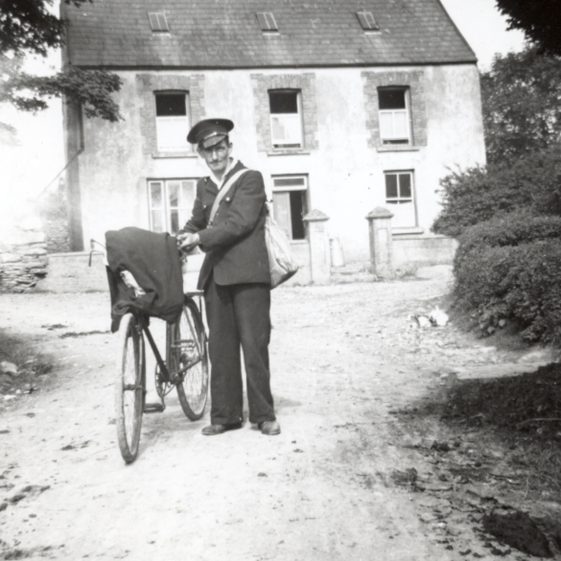 Postman Timmy Kelly outside Ballinakilla Post Office. 1960. (Bere Island Projects Group/John O'Sullivan)
“We put on various courses and classes here on the island. We invite theatre groups and sports groups. There is a really vibrant community here with loads of events going on.”
Recent arrivals have added new energy to island life.
“In the past couple of years, we’ve had four Ukrainian families move here, and they’ve really integrated into the community."
Technology has also helped maintain connections with the outside world.
“We’ve had fibre optic broadband here since December, so we are fully connected,” she said.
Alongside her work supporting the island’s development, Riddell plays a key role in preserving its heritage.
Her specific focus is ensuring the island’s stories, traditions and historical records are protected for future generations.
To help safeguard this history, Riddell and the island’s heritage group partnered with the Irish Community Archive Network, a national initiative that helps communities digitise and share historical material online.
“When we applied to join iCAN I think we were in a group of 200 other applicants, and we were one of four to be chosen in Cork,” she said.
“The main reason that I suggested we join was because we had just started recording oral histories on the island,” she said. “We had all these amazing recordings and no way of getting them out to people.”
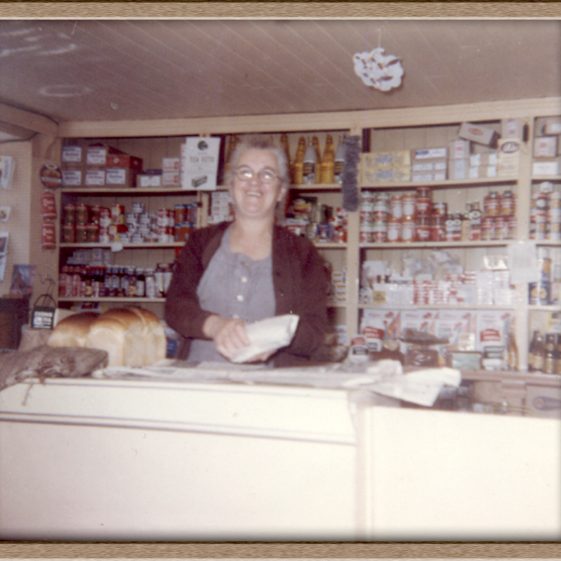 Julia Moriarty O'Sullivan(1900-1977), in her shop at Ballinakilla. (Bere Island Projects Group/John O'Sullivan)
“The oral history project is very important because some of our islanders are in their 80s and upwards, so it’s important to get their memories down,” Riddell said.
To ensure the project was done properly, the group worked with professional oral historian Dr Angela Maye-Banbury.
Interest in the project quickly spread through the small community.
“Then it became a sort of word-of-mouth thing, and people had their friends and neighbours wanting to be a part of it,” she said.
The interviews have captured remarkable personal memories spanning generations.
“One man, he’s 90, and his name is Mick Orpen, and he remembered attending a sports day here as a child on the British military base,” she said.
The project also reaches far beyond the island itself, connecting with Bere Island’s global diaspora.
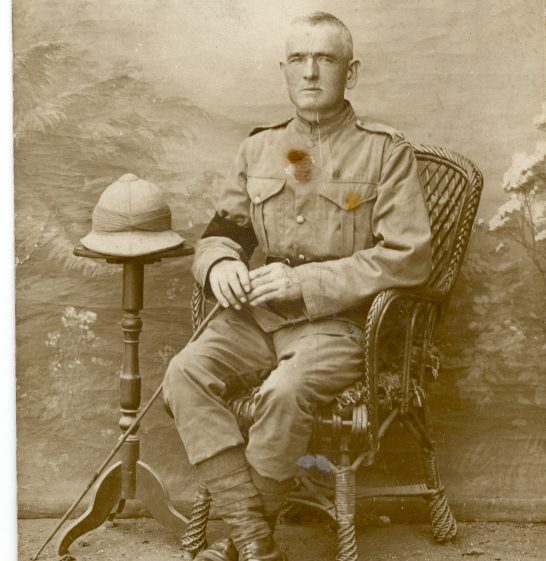 John Rogers just before he went to the front lines in 1915. (Bere Island Projects Group/ Jack Sullivan)
“Obviously we are very keen to include the diaspora as well in the oral history project, and we can do that on Zoom,” she explained.
Some of those connections have led to unexpected discoveries.
“For some reason Bere Island has a huge connection to Argentina. A few left in the 1800s to work on the railroads,” she said.
One email from an Argentinian researcher even uncovered a family link.
“One day I got an email from this guy called Guillermo Murphy, and he was tracing his ancestry,” she said.
“He gave me dates and names, and I thought, 'Hang on, these kind of match up with my own great-grandfather, and it turned out our great-grandfathers were brothers.'"
Since the project launched online in 2022, the digital archive has continued to grow.
Among the resources now available is a digitised map of the island graveyard, allowing people around the world to locate family graves.
Although Bere Island is not Irish-speaking, the archive includes recordings of Irish words and phrases still used in everyday life on the island.
“Two ladies put together a list of Irish words or phrases that would still be used,” Riddell said. “So I worked with the people at iCAN to get that online, and you can hear them with little audio links attached.”
Historical documents are also being preserved.
“We had an internment camp on the island during the War of Independence, and some of the internees created a book with poems and memories of their time there,” she said.
Riddell is already planning future additions to the archive, including an interactive project exploring shipwrecks off the island’s coast.
“I always loved history,” she said. “And now my job is island history.”
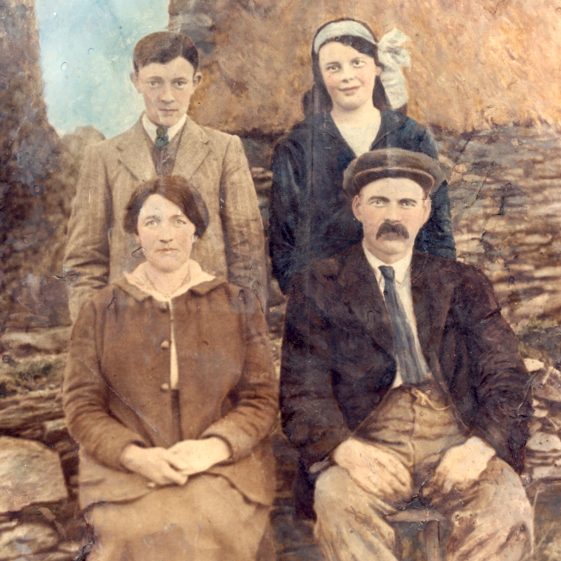 Humphrey Connolly (with moustache), Sis Moore, Julia Moriarty and Patrick Connolly. 1920. (Bere Island Projects Group/John O'Sullivan)
For more information you can find them: here
Everything from irishpost.com and the print edition is available on the Irish Post App — plus more! Download it for Android or Apple IOS devices today
