



WILD IRIS is a book that draws the reader steadily inwards, until completely hooked.
It follows the life of the central character, Eve, as she confronts a psychological crisis; will she reconnect with Johnny, an old lover, or end her own life?
The book describes happenings over a day — her 42nd birthday. The background is an Easter weekend (yes, the dates are symbolic and important); much of the action takes place on Good Friday.
Chapters are based partly in the South (County Dublin) and the North (County Antrim and a university town). Time goes backwards and forwards from childhood to maturity.
Eve, an orphan, is adopted by Gerty, a practical and fundamentalist Presbyterian with a Biblical quote or moral observation for any situation (make-up is dismissed, for example, as ‘rouge’ and is used by women who are ‘damaged goods’).
 Author Ruth McKee
Eve shares a university house, number 39, with Louise, fashionable and dismissive of restriction, who can produce an explanation of the origin of almost any cult or saying, and Johnny. A death at Eve’s 21st birthday party, after a night of drink and drugs, is a pivotal moment in the book.
Other minor but important characters are Hannah, Jo and Amy, who work with Eve in a bakery shop; Alice, Louise’s flashy and flighty mother; Lara, a kindly childminder; and Agnes, Gerty’s helper and supporter.
There are two central male figures, Tom, Eve’s greatly loved son but a cause of much anxiety, and Johnny. He is the kind of man that mothers should warn their daughters about as they enter their teens – feckless, occasionally charming, selfish and mixed up.
He is organised but very much on his own terms. Much of the book is taken up by Eve wondering if she can find out some more about Johnny and rekindle their relationship. (By this time, the reader is so involved in the plot that it is very tempting to scream a loud and emphatic "No!")
The writing is tight and well organised. It is not for the skim reader. There are some good throwaway observations. I liked, for example, the claim: ‘Misery, like ecstasy, is a dissociative state.’
There is a lot of emotive description. Eve realises that Johnny is gone for good. ‘Gone was the old toothbrush for getting into the grooves around the taps, the various textured cloths, the bottle of Jif, the biscuit-tin full of Brillo pads and his favourite, the wooden-handled scrubbing brush.’
It is the central achievement of the book that we come to know Eve and some of the complexities of her character.
The reader watches as she drinks wine or Guinness or smokes cigarettes, and follows her train of thought. The popular songs of the period are not only emotive but personal.
The sight of an elderly man in a pub gets her contemplating what old age really means. ‘He had an air of loneliness, of sorrow even.’
Eve faces the ultimate question: if she ended it, what about Tom?
To find out the ending, you’ll need to read the book. I recommend that you do just that.
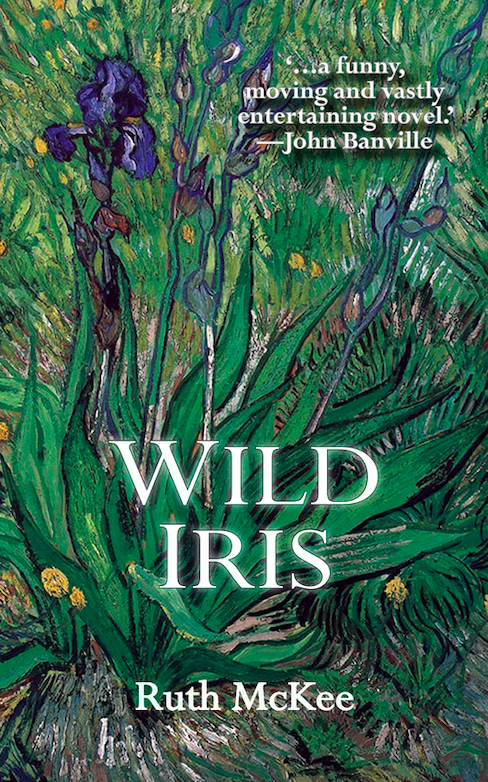
Wild Iris by Ruth McKee is published by Dedalus.
Everything from irishpost.com and the print edition is available on the Irish Post App — plus more! Download it for Android or Apple IOS devices today.
See More: Dedalus, Ruth McKee, Wild Irish
