



ULTAN COWLEY is an Irish writer, historian and broadcaster best known for documenting the experiences of Irish emigrants in Britain, particularly those who worked in construction.
He has spent much of his career researching the social history of the Irish in Britain, giving a voice to the thousands of often-overlooked labourers whose work transformed Britain's infrastructure, while their own stories frequently went unrecorded.
In the early 1990s, when Cowley began researching the history of Irish male migrant labour in Britain, ‘Irish navvy’ was often a pejorative term – not least in Ireland. Today however, amongst those for whom these things matter, it is considered a badge of honour.
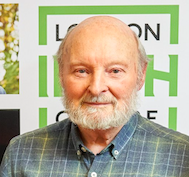 Historian Ultan Cowley
Cowley, now based in Wexford, is the author of several acclaimed books on Irish migration and working life, including The Men Who Built Britain and McAlpine’s Men, which chronicle the lives of Irish construction workers through interviews, archive material, and personal testimony.
His work, told with unflinching honesty, combines meticulous historical research with oral history, preserving the memories of a generation whose contribution was immense but whose experiences were rarely reflected in official histories.
Alongside his writing, he has contributed to radio documentaries, lectures and heritage projects, and is widely respected as one of the foremost chroniclers of the modern Irish experience in Britain.
Cowley is now working on a new project, Taking the Boat: Irish Emigrants Tell It Like It Was, and has this question for Irish Post readers.
"Do you remember when you first took The Boat?" Cowley asks.
"I do – it was 1961, and I was just fifteen. Today parents would be asked hard questions, as to how they could allow their child to leave alone, but back then that was not unusual.
"While these memories remain, whether amongst first-generation emigrants or their children, I want to put them into their true contexts," he added.
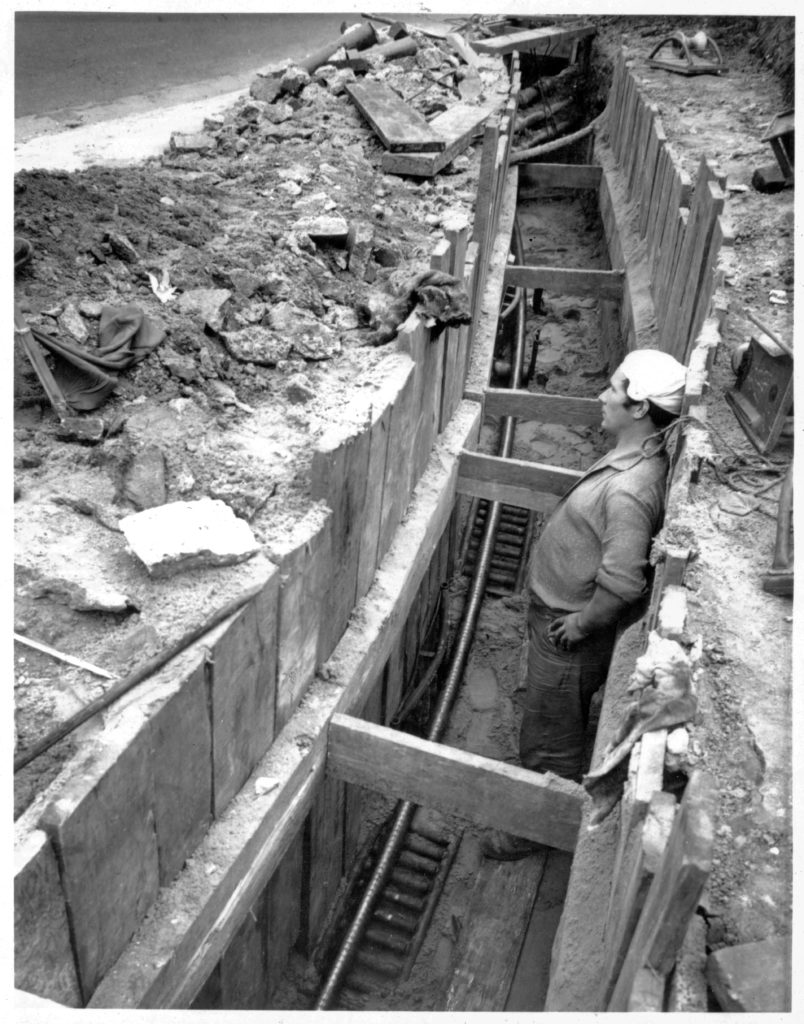 A navvy contemplates his handiwork (Pic: Ultan Cowley)
"Those contexts are the world from which they left – some willingly, others perhaps not so, and the one in which they made their way thereafter. Often, it has to be said, neither treated them particularly well.
"I explored aspects of this in my earlier books - The Men Who Built Britain and McAlpine’s Men but, I believe, much yet remains unsaid - especially by women," the historian adds.
"Not least of what is still unsaid is why, in the words of President Michael D. Higgins, ‘we have sought to hide, rather than to understand, the Irish who went to Britain’.
"For many in Ireland it was Boston, not Birmingham, that really counted. Why was that? I welcome any recollections, reminiscences, or reflections which readers may wish to share, while there is still time, with those for whom it really matters.
"If you were one of the so-called Ryanair Generation then you didn’t take the boat although, in all likelihood, just like your predecessors you left home because you had to.
"But what happened next? Did you return home, for the boom-and-bust of the ‘Nineties, or did you ride the wave of prosperity that was Nineteen Eighties Britain?
"The fierce ‘Fifties stricture to ‘send the money home’ was not imposed on you but, instead, you had to bear the burden of the PTA - ‘Who did you murder, or are you a spy?’, as the song Missing You had it.
"So I’m inviting your generation, also, to tell it like it was."
If you can contribute to the research call Cowley on +353 (0)87 9060020, email [email protected], or write c/o The Potter’s Yard, Duncormick Y35WC63, Co. Wexford.
Everything from irishpost.com and the print edition is available on the Irish Post App — plus more! Download it for Android or Apple IOS devices today.
See More: Britain, Historian, Irish, Ultan Cowley
