





IN HIS book The Web Beneath the Waves: The Fragile Cables that Connect Our World, Samanth Subramanian turns his attention to one of the least visible yet most consequential systems in the modern world: the submarine cables that carry the overwhelming majority of the world’s digital communications.
These fibre-optic lines, laid quietly along the ocean floor, underpin everything from financial markets and government communications to personal emails and video calls.
Subramanian’s achievement is to render this hidden infrastructure both legible and urgent at a moment when its fragility has become impossible to ignore.
The physical reality of these cables is startling. Subramanian describes them as slim, almost vulnerable objects, no thicker than a garden hose, containing hair-thin glass fibres wrapped in steel, copper and tar-soaked nylon. \
Through these fibres, light pulses at astonishing speed, transmitting data across oceans in milliseconds. That something so delicate should be responsible for roughly 95 percent of global internet traffic feels, as Subramanian suggests, both miraculous and faintly reckless.
The scale of the network is immense. Nearly 900,000 miles of cable now crisscross the seabed, linking continents and islands in a dense, ever-expanding web. The book ranges widely, from major landing points on the eastern seaboard of the United States to Ireland, the first landfall in Europe, Africa and Asia.
The range stretches from densely connected hubs to remote outposts that rely on a single line to the wider world.
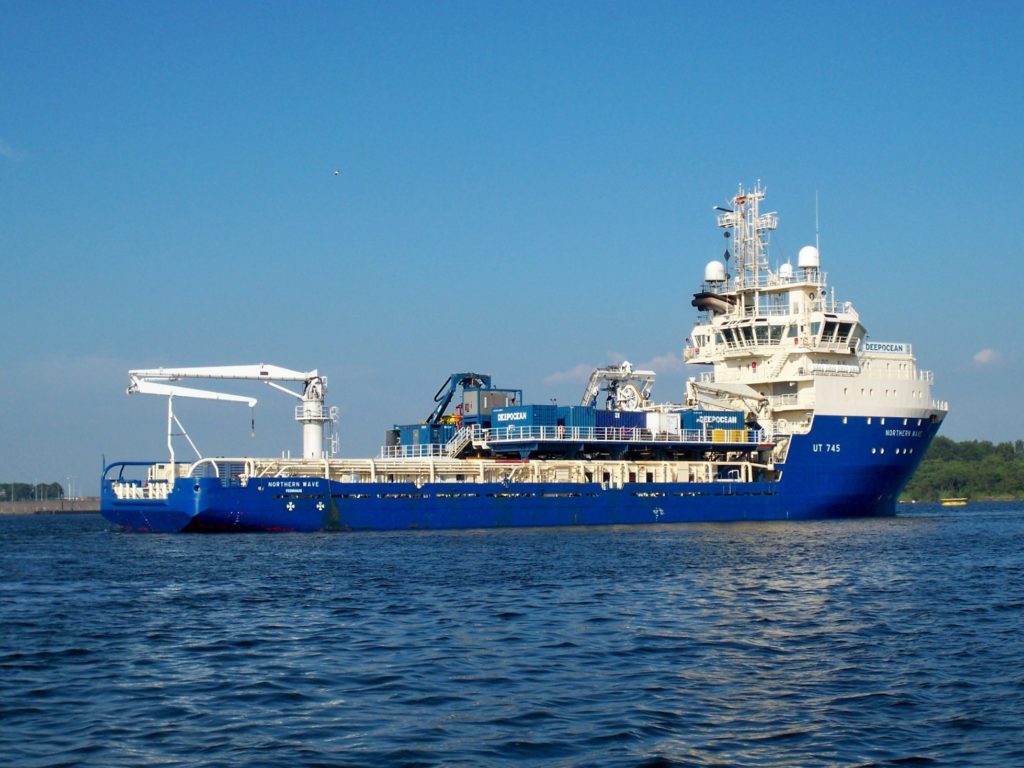 The cable-laying ship Northern Wave from Deepocean (picture Ein Dahmer, Wikimedia CC-AS 4.0)
Even small or isolated communities—St Helena, Svalbard, Pacific island nations.
For Irish readers, the history embedded in this infrastructure carries particular resonance. Long before fibre optics, Ireland stood at the forefront of global communications.
The first successful transatlantic telegraph cables in the nineteenth century ran from North America to Valentia Island, off the coast of Kerry, making a remote Atlantic outpost a critical node in the world’s information network.
Subramanian’s account of modern submarine cables sits squarely in that lineage. Today’s glass fibres are descendants of the copper wires that once made Valentia a place where continents spoke to one another for the first time.
The book also draws attention to the dense and often overlooked cable geography of the Irish Sea. Among the shortest submarine cables in the world is the 41-mile link between the Isle of Man and Northern Ireland, a reminder that these systems do not merely connect distant continents but also knit together neighbouring islands and economies.
Subramanian’s reporting lands in an era increasingly defined by what strategists describe as hybrid war: conflict conducted below the threshold of open military engagement, using cyberattacks, disinformation, economic pressure—and infrastructure sabotage.
Submarine cables, lying unguarded on the seabed for much of their length, present an obvious vulnerability.
The book does not dwell on conspiracy or alarmism, but the implications are clear. In recent years, Western governments and security agencies have grown openly concerned about hostile states using submarines or specialised vessels to map, tap, damage or sever undersea cables.
A single cut can disrupt communications across whole regions, slow financial transactions, or isolate islands and smaller nations. Multiple, coordinated attacks could have far-reaching consequences. Subramanian shows how this vulnerability is not a theoretical concern but an acknowledged strategic risk.
The seabed, once imagined as a neutral void beyond politics, has become a contested space where power is exercised quietly and plausibly deniably.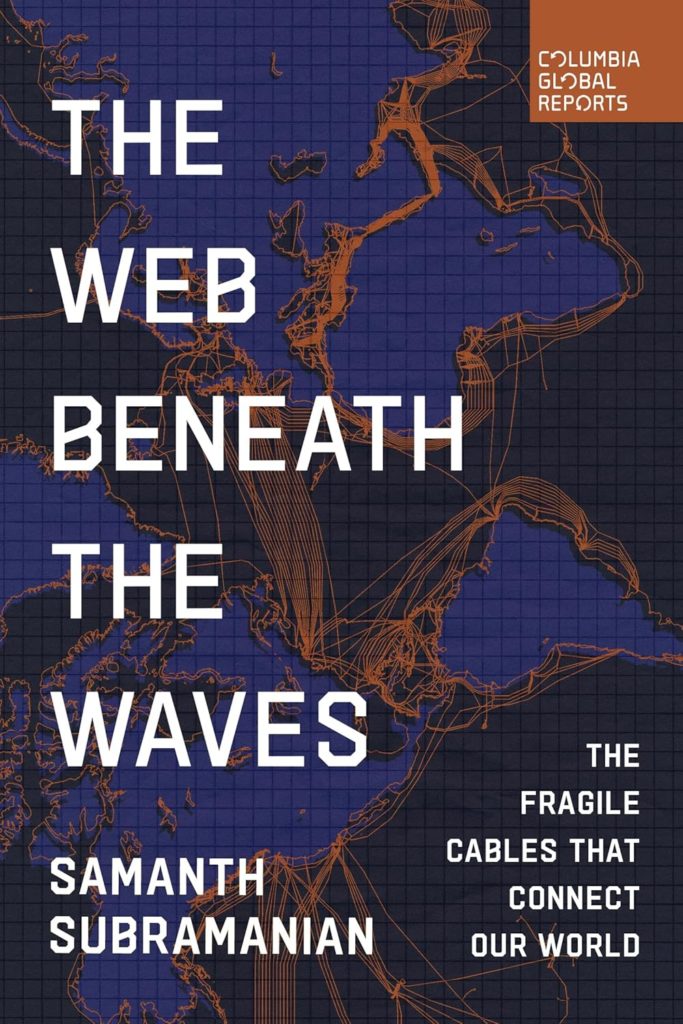
Nature, too, remains an ever-present threat. Laying cable in geologically volatile regions complicate route planning. Engineers are forced to choose what one interviewee calls “the least worst option”, balancing cost, safety and survivability in environments where hazards are unavoidable — volcanoes, undersea earthquakes, seamounts and steep continental slopes
Even fishing trawlers and ship anchors pose a greater risk to cables than many people realise.
The Web Beneath the Waves ultimately succeeds because it makes readers see the internet not as a cloud or abstraction, but as a physical system with a history, a geography and real points of failure.
For Ireland, with its early role in transatlantic communication and its continued dependence on undersea links—north and south, east and west—the story feels especially close to home.
Subramanian’s book leaves us with an unsettling but necessary insight: the more connected our world becomes, the more it depends on fragile lines laid silently beneath the waves.
The Web Beneath the Waves: The Fragile Cables that Connect our World, By Samanth Subramanian, is Published by Columbia Global Reports
Everything from irishpost.com and the print edition is available on the Irish Post App — plus more! Download it for Android or Apple IOS devices today.
See More: Samanth Subramanian, Web Beneath The Waves
