





THE DEATH of Johnny McEvoy was announced on November 9. He was 81.
His manager Darren Farrell confirmed that he had died peacefully at his home in Greystones, Co Wicklow, on November 8.
McEvoy first sprang to widespread public attention in 1966 with the traditional ballad Muirsheen Durkin.
From Banagher in Co Offaly, McEvoy occupied a distinctive place in Irish entertainment. Neither wholly folk nor country, and with a career that also took him around the showband circuit, he moved between musical worlds without fitting neatly into any of them.
McEvoy was initially part of a duo called the Ramblers Two, the other member being fellow art student Michael Crotty. They supported the Rolling Stones at Dublin’s Adelphi cinema in 1965.
After a stint touring Ireland and England in the mid-1960s, the Ramblers Two went their separate ways — and Johnny McEvoy ploughed a furrow that would make him one of the biggest draws in Ireland and among the Irish community in Britain.
An accomplished interpreter of other people’s songs, McEvoy also developed into a fine songwriter. His musical influences included American folk and protest singers, giving rise to comparisons with Bob Dylan.
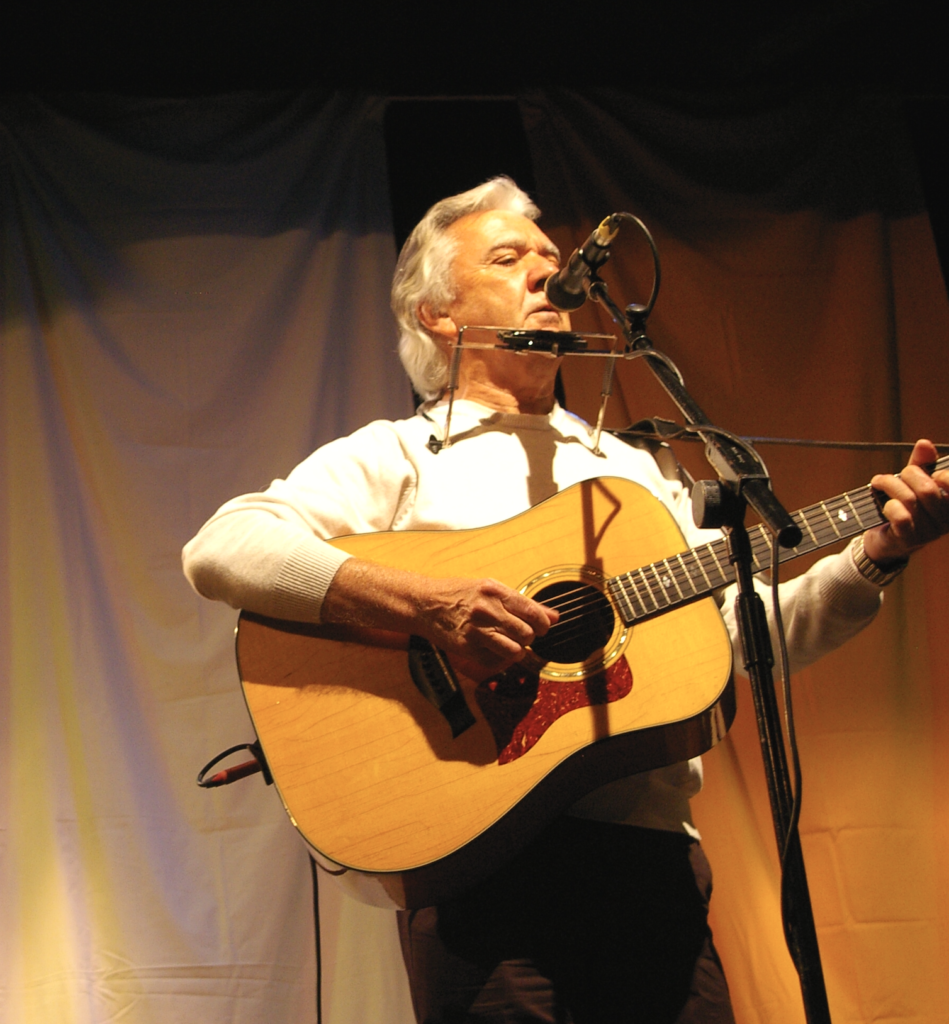 Johnny McEvoy (Pic: Gerry Molumby)
Over the years, his songwriting developed in myriad directions, producing songs that many regard as genuine classics: Long Before Your Time, a hit in 1976, Rich Man’s Garden, You Seldom Come to See Me Anymore and Michael, his tribute to Michael Collins. His song The Planter’s Daughter was written about his wife Odette, whom he met in 1967. She died of cancer in 2013.
But it wasn’t one of his own songs that rocketed Johnny McEvoy to fame. It was Muirsheen Durkin. It may have been something of a come-all-ye, but McEvoy’s distinctive vocals endowed it with a touch of magic.
In 1966, the song reached number one in the Irish charts. McEvoy’s version helped make Muirsheen Durkin an essential part of many a ballad singer’s repertoire. It was seldom off the airwaves in Ireland in the mid to late Sixties.
Although his breakthrough appeared to be an overnight success, it was far from it. Johnny already had a sackful of Irish ballads in his repertoire.
“From the early sixties I was doing folk clubs and fleadhs. I was always interested in traditional music. I used to spend every summer at my grandmother’s in Co Galway, and I was fed music and storytelling intravenously. It’s one of the abiding memories of my childhood days,” he told The Irish Post.
Alongside that grounding in Irish music, he drew inspiration from country singers, poets and protest singers — Hank Williams, Pete Seeger, Bob Dylan, Arlo Guthrie and Leonard Cohen. Those influences helped shape a style with considerable box-office appeal.
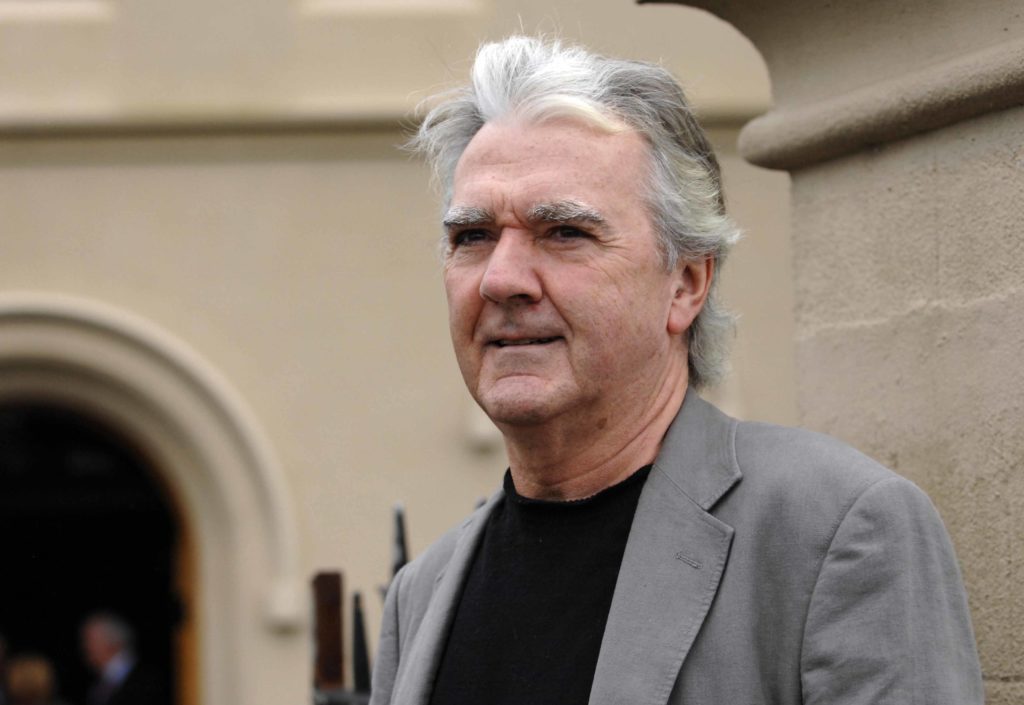 Johnny McEvoy died earlier this month
Fame beckons
IN IRELAND the ballad scene was gathering momentum, with the Dubliners and the Clancy Brothers helping to bring folk music to an ever-wider audience. Irish music was become known internationally. It was against this background that Johnny achieved his first hit.
“In 1965 I recorded Today Is the Highway — which didn’t do a lot. But the folk boom had begun, and I had a go with Mursheen a year later. It just clicked and sped up the charts. Getting to number one then was about the most exciting thing that had ever happened to me.”
Two further massive hits followed: The Boston Burglar in 1967 and Nora in 1968. Johnny McEvoy, sometimes described as Ireland’s answer to Bob Dylan, was well on his way. His career brought television appearances, a performance at New York’s Carnegie Hall and extensive touring.
“They were great days alright,” he recalled. “I even did a week at the Gaiety Theatre in Dublin. I was the first singer to try a one-man show, and it was a roaring success.”
With this background — hit records, television appearances and major concert engagements, plus an abundance of natural talent in writing and performing his material — an obvious question presents itself: why did Johnny McEvoy not become a bigger international star?
I posed that question to Johnny in 2024. I had interviewed him a few times over the years. He had clearly pondered the question many times. He believed fame scared him on one level; on another, there were practical reasons that were partly to blame for stalling his career.
“Well, paradoxically, it was the demise of the showband that really hit me. Up till then, there was a circuit of venues that could host a one-man show like mine, for forty-five minutes or so. But with the end of the showband era, and the closure of a lot of the big ballrooms, that circuit no longer existed.
And it was then that I made a big tactical error. Instead of going solo as an out-and-out folk performer, I took the wrong course. I got a country & Irish band together and started touring what was left of the old showband circuit. I was never happy in that band — neither the material nor the format really suited me. In a way, I felt I had sold out.”
There was something touching about hearing a man with so much behind him still wondering whether he had taken the wrong turning. Yet the records and the songs suggest a career with plenty to be proud of.
His warmth as a singer could make an old ballad feel newly discovered; his own writing gave him stories that were entirely his to tell. As an interviewee he was warm, truthful and helpful. It was more like chatting to an old friend than interviewing a mjor figure in the folk revival.
For listeners in Ireland and the Irish community in Britain, Johnn McEvoy’s songs became familiar on records, on the radio and at concerts. The young man from Banagher who had once been swept along by Muirsheen Durkin had given them much more besides. That is a substantial legacy, whatever his own doubts about the road he took.
Everything from irishpost.com and the print edition is available on the Irish Post App — plus more! Download it for Android or Apple IOS devices today.
See More: Johnny McEvoy
