





A HARD-HITTING new book on the British military leader Field Marshal Bernard Montgomery offers a fascinating insight into his Irish ancestry and his service in Ireland during the War of Independence.
In Montgomery: Unbeatable, Unbearable, author Gary Mead highlights how Montgomery’s family came from Protestant planter stock.
A striking number of senior British military figures during the Second World War also had connections to the north of Ireland. They included Harold Alexander, who commanded Allied forces in Italy; Claude Auchinleck, who became Commander-in-Chief in India; John Dill, head of the British Joint Staff Mission in Washington; and Alan Brooke, Chief of the Imperial General Staff.
Brooke played an important part in Montgomery’s rise and helped to advance his cause with Winston Churchill.
Montgomery arrived in Ireland in 1920 and adopted an uncompromising attitude towards the republican campaign. Mead identifies a brutal and unsentimental streak in the future field marshal’s approach.
Writing later about his time in Ireland, Montgomery said: “Personally, my whole attention was given to defeating the rebels and it never bothered me a bit how many houses were burnt.”
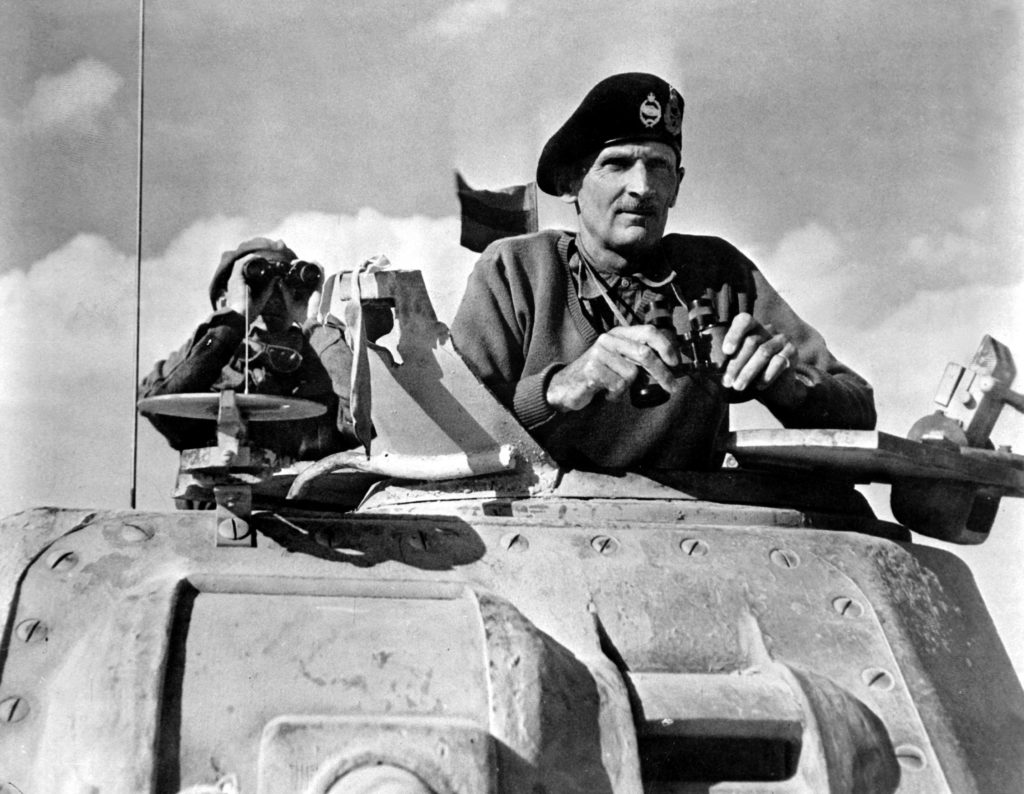 General Bernard L. Montgomery watches his tanks in North Africa (Pic:OWI)
He also wrote: “Oliver Cromwell or the Germans would have settled it in a very short time.”
The remarks offer an unsettling insight into his thinking during a bitter conflict in which reprisals, destruction and violence were commonplace.
Another striking element of the book is its reference to Canadian troops cheering when they heard of the killing of Lord Louis Mountbatten by the IRA. “Even today some Canadians raise a glass to the Provos on the assassination’s anniversary,” writes Mead. The author explores Montgomery’s involvement in preparations for the disastrous Dieppe Raid of August 1942. More than 900 Canadians were killed during the operation and almost 2,000 were captured.
Lord Louis Mountbatten, who oversaw Combined Operations at the time, has often attracted criticism over the raid, although historians continue to debate where responsibility for its failure should lie. Mead records the lasting resentment felt by some Canadians towards Mountbatten and others involved in its planning.
The biography traces Montgomery’s life from his early years in Tasmania, where his father was Bishop of Tasmania. He adored his father but had a much more difficult relationship with his strict and disciplinarian mother.
Montgomery developed a rebellious streak and a marked dislike of authority. From school, he entered the Royal Military College at Sandhurst and embarked upon the career that would make him one of Britain’s most celebrated—and contentious—soldiers.
Mead highlights Montgomery’s early recognition of the value of publicity. He understood that a carefully cultivated public image could help to inspire his troops and reassure civilians at home.
Captain Warwick Charlton assisted with this publicity campaign, while Montgomery made himself available to journalists, photographers and portrait painters.
Alan Whicker, the future television journalist who served with the Army Film and Photographic Unit, recalled that Montgomery would begin pointing commandingly whenever he saw a camera.
“It was his way and it seemed to work,” Whicker observed. “Half a century ago he had television-style fame before television.”
Mead subjects Montgomery’s military reputation to close examination. His defining victory at El Alamein in 1942 was achieved after his predecessor, General Claude Auchinleck, had already strengthened the British position and developed plans for renewed action.
Montgomery nevertheless reorganised the Eighth Army, restored morale and commanded the battle that transformed him into a national hero.
His subsequent caution allowed German commander Erwin Rommel to withdraw with part of his army, but El Alamein provided Britain with a badly needed victory and established Montgomery as a household name.
His performance during the D-Day landings and the subsequent campaign in north-west Europe is also examined. Montgomery’s relationships with fellow Allied commanders were frequently difficult, particularly his dealings with Supreme Allied Commander Dwight Eisenhower.
Eisenhower is widely quoted as describing Montgomery as “a good man to serve under; a difficult man to serve with; and an impossible man to serve over”.
Montgomery’s confidence inspired his troops, but his ego and manner frequently irritated politicians and fellow commanders.
One celebrated exchange has Churchill telling King George VI: “Monty would like my job.”
“That’s a relief,” the King is said to have replied. “I thought he wanted mine.”
Montgomery’s popularity declined after the war as his eccentricities and outspoken opinions became increasingly conspicuous.
His final major appointment was as Deputy Supreme Allied Commander Europe for NATO. Churchill is said to have remarked: “In defeat, indomitable; in victory, insufferable; in NATO, thank God, invisible.”
Mead does not ignore Montgomery’s less admirable qualities, including his views on race and his support for apartheid-era South Africa. He also considers the debate surrounding Montgomery’s private life, while avoiding easy or sensational conclusions.
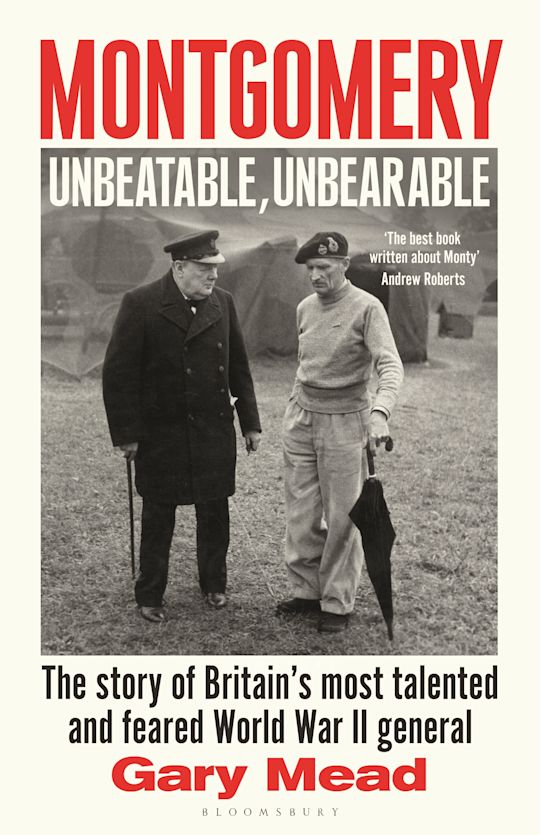
Montgomery: Unbeatable, Unbearable is a fascinating study of one of the most recognisable military figures of the past century.
The portrait that emerges is of a commander who cared about the welfare and morale of his troops and possessed a remarkable understanding of publicity, but whose abilities as a strategist remain the subject of historical debate.
The great war hero appears in his final years as an increasingly isolated figure, still conscious of—and perhaps still pursuing—the fame and glory of his wartime career.
It is an excellent read for military historians, although members of the Montgomery family may find parts of it uncomfortable.
Montgomery: Unbeatable, Unbearable. Published by Bloomsbury. Price £17.50
Everything from irishpost.com and the print edition is available on the Irish Post App — plus more! Download it for Android or Apple IOS devices today.
