





ALL across Ireland, in fields, on hillsides and beside ancient ruins, lie sites that many pass every day without ever knowing their story.
These places are called cillíní, and they carry immense historical and emotional importance.
Cillíní were mainly used for the burial of unbaptised babies or those that died shortly after birth, at a time when Catholic doctrine did not permit their burial in consecrated ground.
According to archaeologist Dr Marion Dowd, these sites are both culturally important and increasingly vulnerable.
While many sites are known locally, a lot have never been formally recorded, which leaves them without legal protection and at risk of being lost.
Recent research led by Dr Dowd in County Sligo at the Atlantic Technological University has shown just how much remains undocumented.
By combining archival folklore from the 1930s with local knowledge and fieldwork, her study identified 32 previously unrecorded cillíní, bringing the total number in the county to 57.
Nationally, it is estimated that there are around 1,500 such sites, many concentrated along the western seaboard.
In her work Dr Dowd emphasises the importance of folklore in understanding these burial grounds.
Cillíní offer what she describes as an “archaeology of emotion", reflecting the lived experiences of families who buried their children in these secluded places.
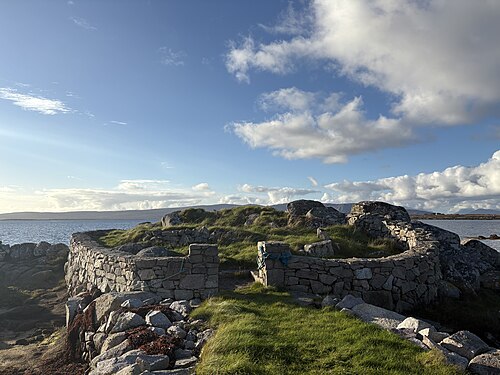 One site from Bealadangan, County Galway (Wikimedia Commons/Photo by Sawyer77)
For Deirdre McGuirk, who works with Louisburgh Killeen Heritage in County Mayo, the story of cillíní is also personal.
“I would have passed it every day on my way to work, so that’s what sparked my interest,” she said.
McGuirk said that while cillíní are most usually associated with babies, they were also used for others excluded from consecrated ground.
Adults were buried in them as well, including women who died in childbirth, unmarried relatives, and those considered outsiders, such as strangers or people who died by suicide.
The origins of the practice lie in religious teaching that dates back centuries to the 12th century.
“In Catholicism you are born with original sin, and your baptism washes you of that sin,” McGuirk explained.
It wasn’t until the Second Vatican Council in the 1960s that the practices around death, burial and limbo started to change.
Before those reforms, many families believed their unbaptised children could not enter heaven.
Yet even in the face of such beliefs, communities sought to honour their dead with care and dignity.
“They selected these beautiful places for them to be buried,” McGuirk said.
Many cillíní are in striking settings, near holy wells, ancient ring forts, standing stones or the ruins of early churches.
These pleaces were often chosen deliberately, drawing on folk traditions and a sense of spiritual protection.
“People believed ringforts were fairy dwellings, and you didn’t want to upset the fairies or the good people,” McGuirk said.
“They would have placed cillíní close to those to make sure they were protected and weren’t interfered with.”
Despite their significance, cillíní were rarely spoken about openly.
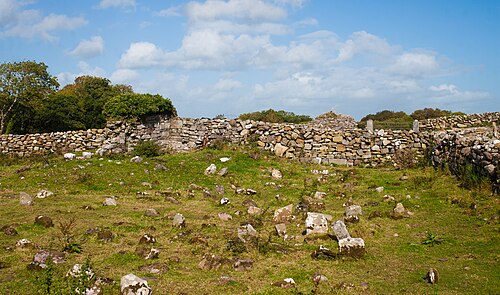 One site in Inishmicatreer in Lough Corrib (Wikimedia Commons/Photo by Andreas Borchert)
“Women who lost a child were expected to just forget about it and move on. Nobody ever talked about it, but everyone knew the sites were there.”
Burials were often carried out quietly, sometimes under cover of darkness, and organised not by the Church but by local communities.
This shared, if unspoken, knowledge has proven vital in recent efforts to rediscover and document the sites.
“I’ve been interviewing local people, and that allowed me to identify two cillíní that hadn’t been mapped,” McGuirk said. “That just goes to show the power of local knowledge.”
In recent years, there has been a growing movement to acknowledge and preserve these burial grounds.
In parts of Mayo, community groups have worked to have sites marked with plaques and recorded.
In the early 2000s, the community got together and had all the sites blessed by a local parish priest.
That process of recognition has also opened the door for long-silenced stories to be shared.
"I've had people come to me and say, ‘I had a sister or a brother who was buried there,’” she said. “Some parents would talk about it, and others didn’t.”
For many, these conversations are an important step in acknowledging a past that was once hidden.
As Dr Dowd’s research shows, many cillíní are still unrecorded and at risk of disappearing entirely.
“It’s important for young people to know about these sites,” McGuirk said. “They are part of our history that is in danger of being forgotten.”
Today, through research, awareness and a community effort, their stories are finally being told.
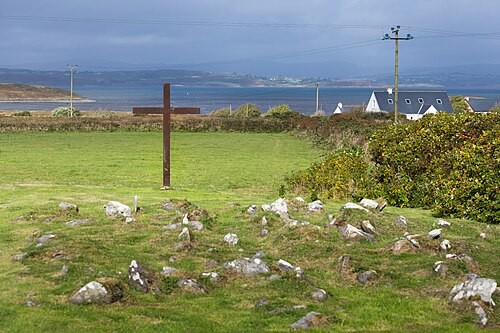 Heir island in County Cork (Wikimedia Commons/Photo by Podstawko)
Everything from irishpost.com and the print edition is available on the Irish Post App — plus more! Download it for Android or Apple IOS devices today
