





THE most talked about sporting event in Northern Ireland in 2025 was the 153rd Open, one of the biggest golf tournaments in the world.
It was held at the Royal Portrush, about an hour from Belfast, on the coast of County Antrim. Alongside its line-up of golfing greats, the Open was also a showcase for Northern Ireland’s dramatic landscape.
In between TV coverage of match-winning putts and tense walkabouts, it was impossible to ignore the sweeping aerial shots of clifftops, towers, castles and sand dunes.
No matter who came away with the Claret Jug, I was determined to take a closer look at this spectacular Atlantic coastline.
While buses and trains run along much of the coast in Northern Ireland, there’s no denying that a car would be the simplest way to travel – especially as I was holidaying with my mother and two toddlers!
So, when Ford gave me the opportunity to test drive their latest EV, the Ford Explorer, I jumped at the chance.
Having had petrol cars for over 20 years, this was going to be my first electric car experience. The big question was… would I love it or loathe it?
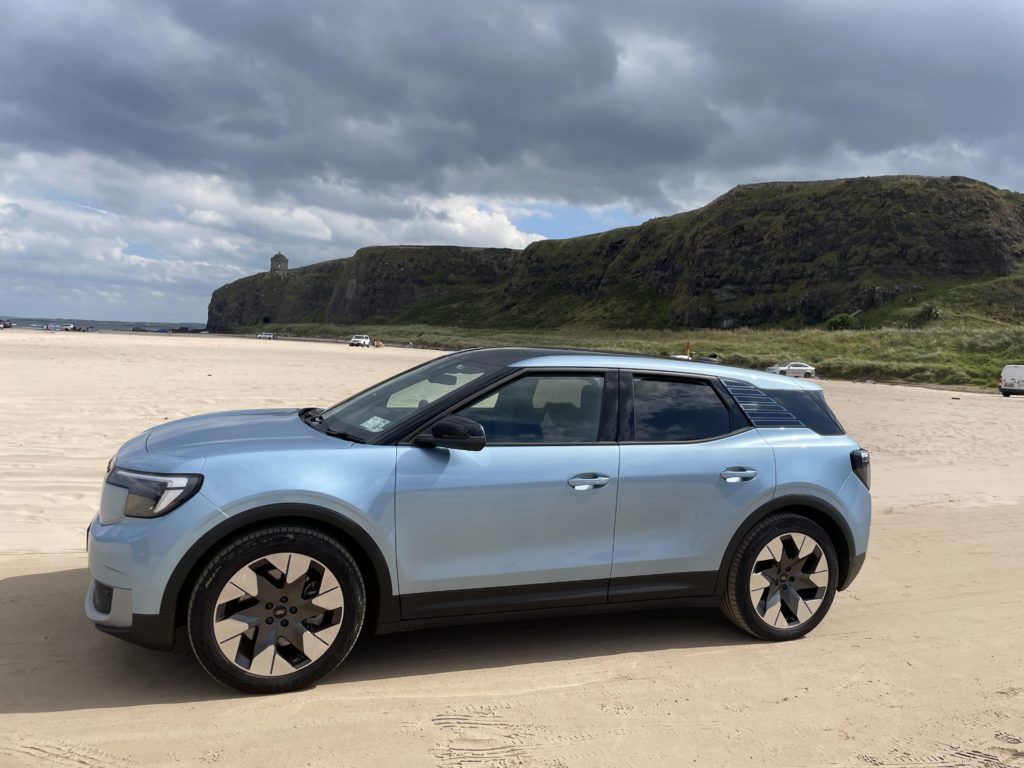 Ria Higgins' explored the Northern Irish coastline in new EV the Ford Explorer
For practical reasons, we decided to base ourselves in one place and rented an Airbnb in Portrush’s neighbouring seaside town of Portstewart.
Portrush is in County Antrim; Portstewart is three miles down the road in County Derry. Both attract lots of visitors in the summer and both have impressive golf courses.
We chose Portstewart for two reasons. Firstly, its famous promenade (known as The Prom by locals) is home to an endless string of coffee shops, ice-cream parlours and brilliant bakeries – the wheaten bread at The Griddle is to die for.
Secondly, when it comes to first-class beaches, you are simply spoilt for choice.
With its sleek lines and dreamy blue colour, the Ford Explorer is a beautiful looking car. In fact, it was love at first sight.
But I couldn’t just gaze at it all day… the Explorer had a tough fortnight ahead: double buggy and suitcases in the boot, two child seats in the back, plus bulging bags with milk bottles, snacks, books, toys and a thousand other things.
Mum also needed plenty of leg room at the front to get in and out without pulling something and was delighted to know, she could heat her seat without turning the whole car into a sauna. Mine also had a massage function and a heated wheel.
As soon as I sat behind the wheel, I made full use of the impressive number of hidden side pockets and hidey-holes – perfect for keys, purses, phones, tablets – while the storage space under the central armrest was big enough to house my handbag and laptop.
A central moveable touchscreen had all you expect, and more, and 12 ultrasonic sensors (five cameras and three radars) kept me alert at all times!
The car does an impressive 370 miles (600km) on a single charge, but I didn’t want to leave anything to chance, so the first thing I did when we arrived was locate my nearest charging points – two handy petrol stations. We were all set.
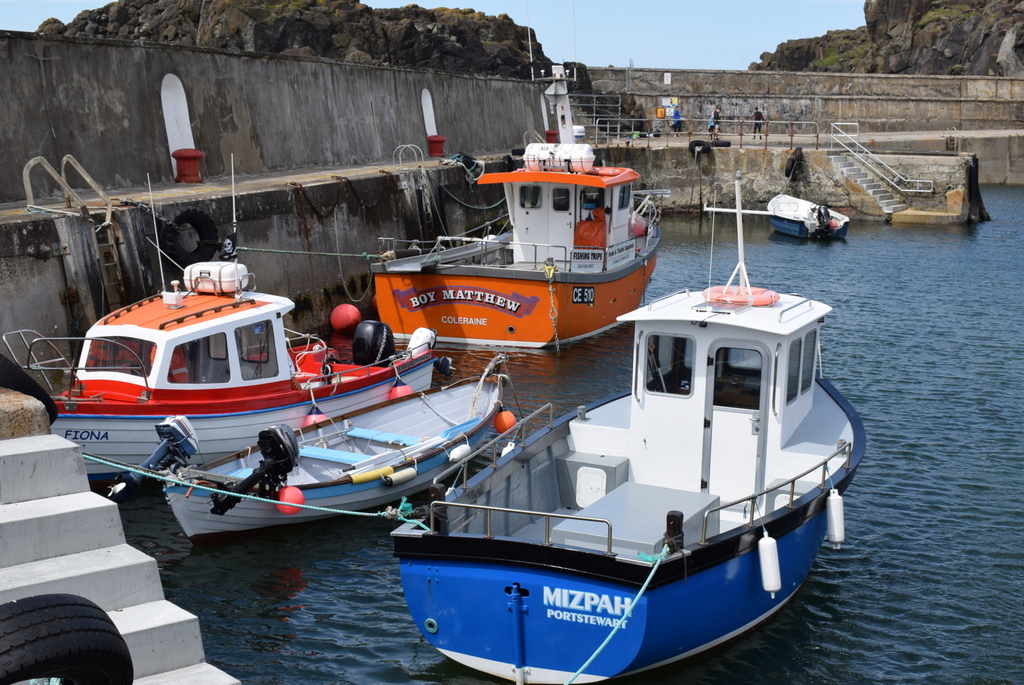 Portstewart Harbour (Pic: Kenneth Allen)
The first beach on our list was Portstewart’s two-mile long Strand, impressively crowned the UK’s Best Beach in this year’s Sunday Times Guide.
Popular with families, surfers and local dog walkers, it’s run by the National Trust who charge £8 for cars (free if you walk on) and keep the golden sand spotless.
With its distinctive dunes stretching along the whole two miles, the Strand has also garnered a vast new army of fans thanks to the coastal locations in Game of Thrones – this landscape was perfect for the series.
And there is just one bar and restaurant, Harry’s Shack, where they pair locally-caught fish with breathtaking views – and some of the finest sunsets on the whole island.
At the western end of Portstewart Strand is the River Bann, which originates in the Mourne Mountains in County Down.
On its opposite shore is the much smaller Castlerock Beach and another very popular golf course. After that, it is the start of the staggering seven-mile Downhill Strand – the longest beach in Northern Ireland.
Thanks to Mussenden Temple, which sits on a 120ft cliff at its eastern edge, you will have no trouble finding it. It was built in the 18th century for the Earl of Bristol, who was also the Protestant Bishop of Derry and known as something of an “English Casanova”.
You can drive onto Downhill Strand free of charge and the entrance is under a small tunnel and picturesque railway line that runs from Belfast to Derry City.
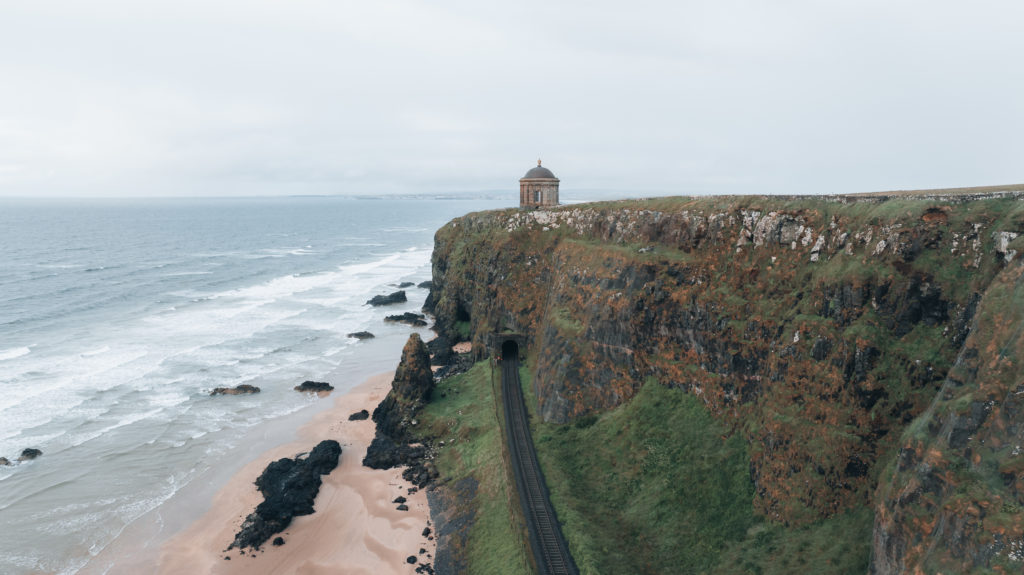 The Derry - Coleraine railway track passes along Benone Strand and under Mussenden Temple
The dark steep cliffs behind it, look like they have been beaten out of the earth with a giant hammer.
They were, in fact, formed some 60 million years ago by molten lava and are part of Binevenagh, which some call a hill, and others call a mountain. It has table-top plateaux and stretches all the way along the coast. A drive along it will give you some of the most spectacular views of the north.
If, however, you carry on along the beach, you will see a waterfall tumbling from the cliffs and this runs into the Umbra “Burn” or stream, which then flows beneath the aptly named Seacoast Road before reaching the Atlantic Ocean.
This staggering seven-mile stretch is actually divided into two beaches, Downhill and Benone, and the latter starts on the other side of the stream.
The dramatic combination of dark cliffs, shifting sands, rolling waves and expanse of sky make this stretch of coast equally enchanting.
The whole area is also home to one of the largest natural sand dune systems in the British Isles, with some of the rarest species of plants and insects in the UK, including the Bee Orchid, Petalwort and the Marsh Fritillary Butterfly – in the last 20 years, more than 50 scientific papers have been published about it.
At the end of Benone is Magilligan Point and the mouth of Lough Foyle, which comes out of the River Foyle that flows through Derry City.
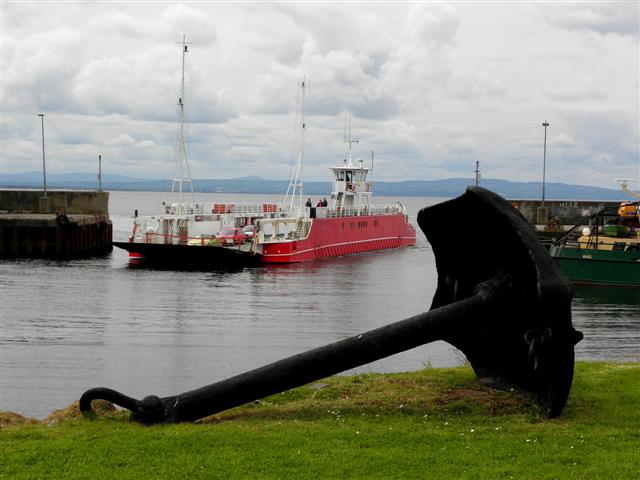 The Greencastle to Magilligan ferry (Pic: Kenneth Allen)
On one of our last days, we decided to catch the small car ferry near Magilligan Point to Greencastle Harbour in County Donegal. It’s just a mile long and takes you across to the Inishowen Peninsula and into the heart of the most northern of the Irish counties.
This time we were headed for the beach at Kinnagoe Bay, which has a beautiful, secluded sandy haven and was ideal for a picnic on a sunny afternoon.
This bay, however, also has a less sunny tale to tell. It was here in 1588 that La Trinidad Valencera, the fourth largest ship in the Spanish Armada, was destroyed by gales as she sailed around Scotland into the Atlantic.
The leaking ship finally went down in the bay with over 400 crew onboard – including 250 who had survived another battered ship.
The men managed to get ashore, and a few of them did survive with the help of a local O’Doherty clan, but over 300 of them were slaughtered by pro-English mercenaries – according to records held at the Maritime Museum & Planetarium at Greencastle.
The wreck was only discovered in 1971 by divers from City of Derry Sub Aqua Club, and artifacts found on it, including bronze guns and a Ming porcelain bowl, are on display at the Tower Museum in Derry City.
By the end of our two-week holiday, we had well and truly put the Ford Explorer through its paces. We could have built several castles with all the sand hidden under the seats and in the carpet, but the car had done its job beautifully.
The biggest learning curve with an electric car for me is knowing where you can charge it, especially if you are new to a place or travelling long distances in one day.
There are now plenty of apps which provide this information, including Zap-Map, PlugShare, Next Gen and ChargePoint. But you will find them mostly at petrol stations, public car parks, hotels and supermarkets.
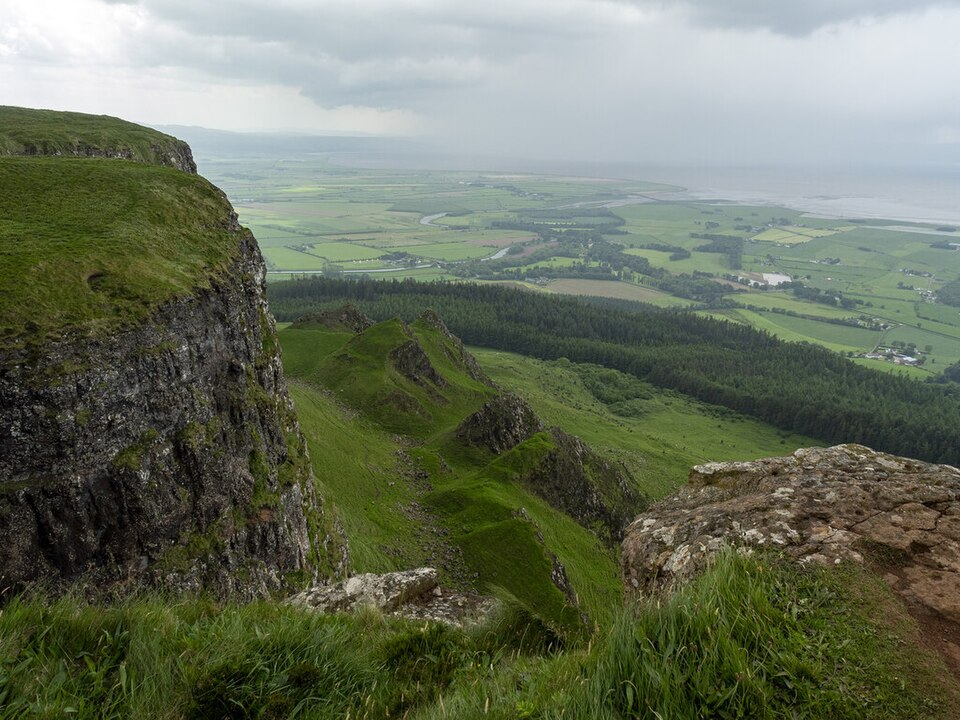 The table-top plateaux Binevenagh stretches all the way along the coast
However, we are all very accustomed to using our direct contactless payment to fill our petrol cars. This is not always possible with EVs. Many of the supermarkets, for instance, require you to download a specific app. For example, Tesco requires you to download the Pod Point app while Lidl requires you to use their own app.
Also, whatever the location, prices do vary, as do charging times, so look out for the ultra-rapid charging points which can whack you up to 80% in 30 minutes. It’s best to arm yourself with all this information in advance.
For me, the Ford Explorer was the perfect introduction to an eco-friendly electric future.
It was hard to say goodbye to this dreamy blue car and return to my old petrol ways.
Four of Northern Ireland’s six counties are along the coast, and we just about managed to explore one of them… I’m already gearing up for my next EV coastline adventure.
