





BY THE mid-1950s Irish traditional music, and Irish folk music, was in a bad way.
It’s hard to believe at this juncture — with our music being, perhaps, the most easily identifiable and popular ethnic art forms across the world — that by the 1950s traditional music was in danger of becoming a very marginalised activity. For a mix of reasons Irish music had been confined to a few rural outposts and to a few small, increasingly isolated pockets in Dublin. The populace, in general, shunned.
The tradition still flickered – the Pipers Club in Dublin kept the tradition alive. In 1951, members of the original Pipers' Club (such as Leo Rowsome and Jim Seery) were instrumental in forming the national traditional music organisation Comhaltas Ceoltóirí Éireann in 1951. Up north, the McPeakes were the public face of folk music, and kept the uilleann tradition going, as well as finding time to write Wild Mountain Thyme.
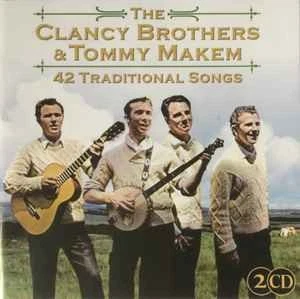
But largely speaking, from the start of the 20th century until the mid-century, the music had been in a slow decline. But then something happened. In America. In the mid-1950s along came the Clancys and their friend Tommy Makem and began singing, and recording, “the old songs”; even better, they performed them with gusto and panache. The brothers from Carrick-on-Suir, along with Makem, contrived through a series of unplanned adventures and happy coincidences, to virtually re-invent Irish music, and to influence subsequent generations ever since.
Christy Moore believes this marked an enormous turning point in the revival of our culture. He told The Irish Post: “Our traditional Irish music and songs were outlawed by the invader, then banned and denounced by Church and State. But it somehow survived underground across centuries of oppression.
“The Clancy Brothers and Tommy Makem revived our traditional songs and tunes. They gave them life once more. This revival in the 1950s/60s was a turning point in our history and culture. These four balladeers turned our heads, caused us to wonder who and where we were …. Many of us loved and embraced what we heard, our passion for the pure drop has survived. The music reverberates and continues to expand. Long live the raw bar!”
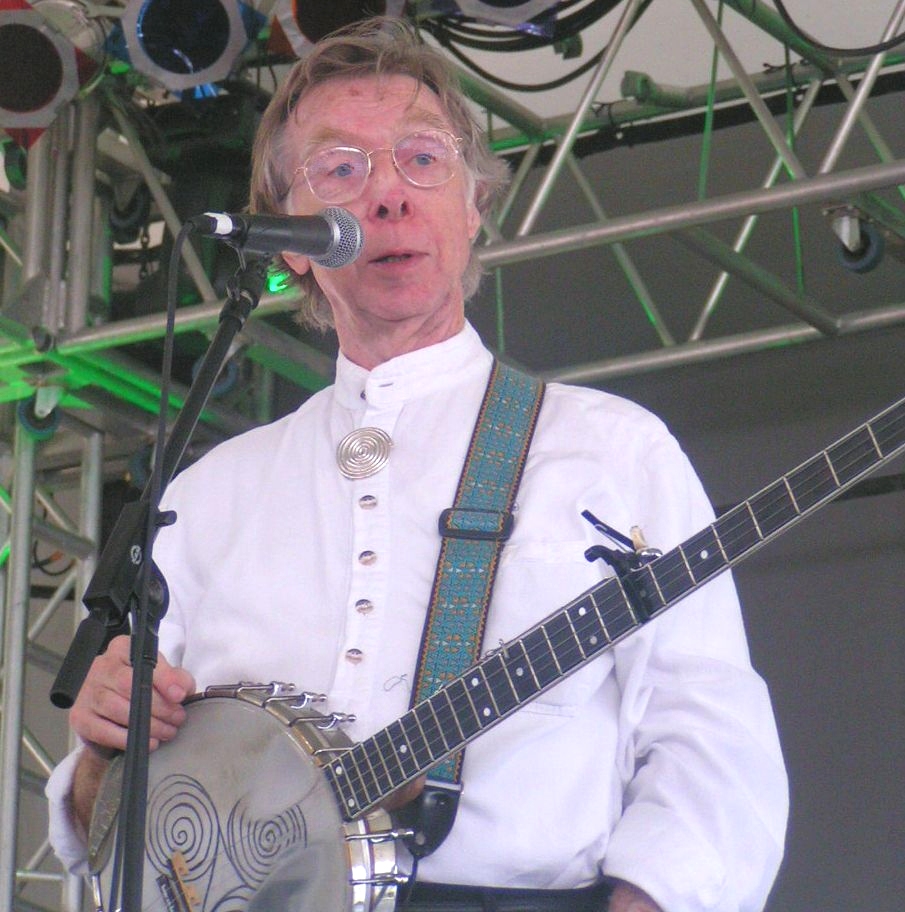 Tommy Makem (Cindy Funk CC BY 2.0 via Wikimedia Commons)
If it’s good enough for the Yanks…
BUT how did the Clancy Brothers do this?
Liam Clancy, in an interview with The Irish Post not long before he died, said: “In the mid-fifties I wanted to make a career in acting - not an easy thing to achieve in Carrick, and not much better in Dublin. So like many before me (including my brothers), it was off to America. When I left Ireland the old music was on its last legs.
“Folk songs were associated with poverty, squalor and hardship. People didn’t want to know about the old music any more - it reminded them of the bad old days. And God knows, Ireland had plenty of them.”
These songs made up the true music of the people, even though the people seemed to be turning their collective back on them. The Clancy boys had heard the songs from their parents and grandparents. Their mother, Joan Clancy, had an enormous repertoire of old ballads, comic songs and local favourites, while their father loved singing as well.
Although traditional music was in the doldrums, there was still a canon of songs — some traditional, some from the music hall tradition, and some from the popular music of the time — sung by people in those far distant days before television, the internet and so on. But musical entertainment was heard in kitchens, pubs and céilís, often sung quietly by a single singer. Not on big stages or television.
The Clancy Brothers' greatest achievement wasn't writing songs—it was changing the way they were performed. And this came to pass in America.
Irish music, especially traditional music, was largely shunned by polite society in Ireland at that time. Nonetheless when The Clancys set off for America they took the music along with them.
Then, at this point, fate took a hand.
Trying to make a living as an actor, either in the theatre or in the movies, wasn’t much easier in New York than back home, and very soon the brothers, who had now been joined by Tommy Makem from Armagh, started playing the likes of The Irish Rover, Brennan On The Moor, The Rising of the Moon and The Parting Glass at parties and functions around the city to help make ends meet.
They were soon mixing with the likes of Bob Dylan, Joan Baez, Pete Seeger, and their music was going down a storm. It helped that Liam Clancy was the possessor of one of the most instantly recognisable voices in Irish music.
The Clancys became immensely popular and influential; Bob Dylan even nicked the tune of The Patriot Game from them to write With God On Our Side.
Talking to The Irish Post, Liam recalled the breakthrough moment. “Pete Seeger booked us for our very first concert. It was a Woody Guthrie tribute. Sadly he was dying in hospital in New Jersey. Funds were running out. So Pete got a bunch of us together to do a benefit for him. We just got up and sang a slew of ballads. It went down a treat, and the likes of Bob Dylan and Phil Ochs encouraged us to go for it full time. So we got together, and said 'Ach, we’ll give it six months,' and off we went.”
Wider recognition soon followed, and the band found themselves delving even deeper into the buried treasure trove that was Irish music, breathing life into ballads that hadn’t seen the light of day in fifty years or longer. Soon The Jug Of Punch, The West’s Awake and Kelly from Killane were being heard throughout the world for the very first time.
Then on St Patrick's Night 1961, another seminal moment. The band appeared on America's most influential television programme, The Ed Sullivan Show. They entranced 50 million viewers coast to coast. The Clancy Brothers and Armagh man Makem were a major international act.
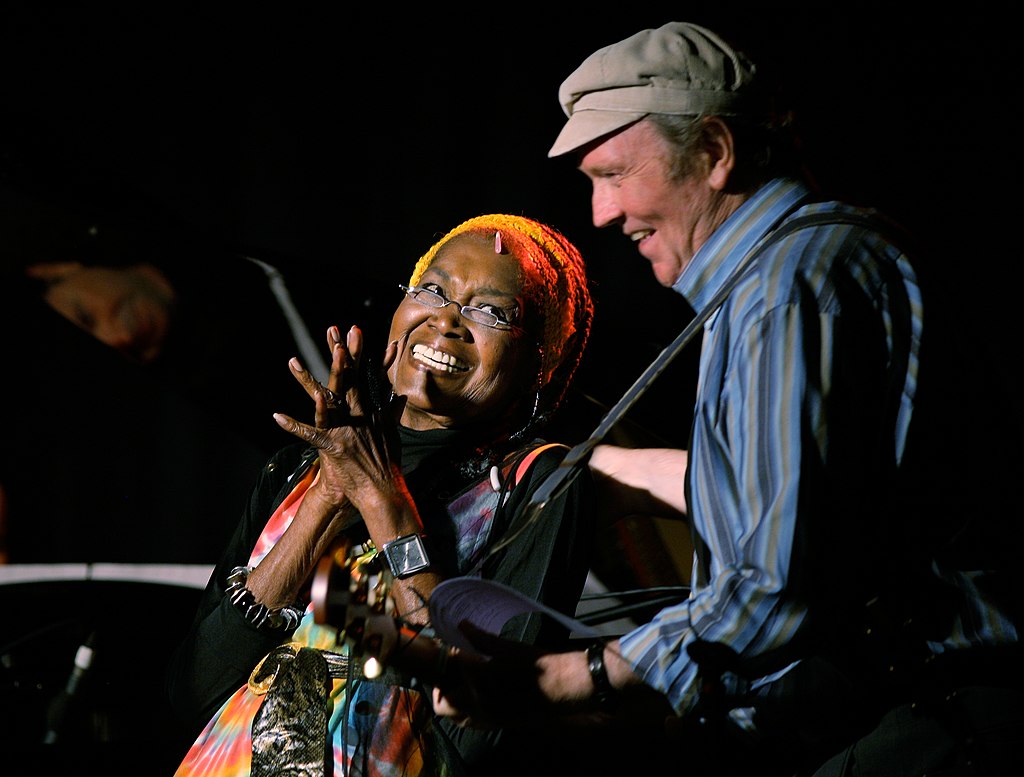 Two legends of the folk music world, Odetta and Liam Clancy enchant at Junction Festival in Clonmel
Meanwhile back home in Ireland the radio stations began playing the Clancys. In the 1950s radio output in Ireland consisted largely of céilí bands and the Radio Athlone Orchestra playing Danny Boy and the like, interspersed with the Tin Pan Alley songs of the day (Begin the Beguine etc).
But soon a whole generation of musicians were transfixed by this new rugged, energetic Irish band singing a forgotten music with attitude. In America, of all things. And of course a familiar theme soon kicked in - “if it’s good enough for the Yanks, then be God it’s good enough for us.”
Irish music was on its way back. Big time.
The Clancys, in various combinations, continued to record and perform until the 1980s. But it was that initial spark that they provided which is perhaps their greatest gift to the tradition.
Whatever the dynamics between those four Irishmen, one thing is certain: they changed the very shape of our music culture.
Liam had no clue what he was embarking on when he packed his bags in Carrick-on-Suir, heading for the New World with the old music in his heart. “We never dreamt we were on any kind of mission.”
Maybe not, but when they started playing in America they seemed to inadvertently open a door that no-one knew existed, and through that door Irish music has blossomed.
Meanwhile, in the pubs of London
THE evolution of Irish music was, of course, not a linear progression. Other influences fed in, including the traditional session.
The misty-eyed view of the session, a word retrospectively translated into Irish as ‘seisiún’, is that groups of Irish musicians would have gathered together since time immemorial, maybe even before, and battered away.
In the distant past they would have played their fiddles, accordions, uilleann pipes et al, enjoying tunes and having the craic. St Patrick himself might have enjoyed an ould session.
This view is, of course, somewhat at odds with the actual facts. Irish music as we know it today isn’t particularly old — probably stretching back a couple of hundred years, and the seisiún is very much younger than that.
The first session that we would recognise as such today was in Kentish Town, London — it began in the 1940s.
Dr Reg Hall, a globally acknowledged expert on Irish music, explained the background: “Until around 1946 there was no Irish music in the English pubs. There was no Irish music in pubs back home in Ireland for that matter. It just wasn’t played in pubs.
“After the war, the new immigrants in London didn’t expect to play music in the pubs.
“Some Irish musicians even refused to play in English pubs — they believed it shouldn’t, or couldn’t be done. You couldn’t play an Irish tune in a London pub. You might get somebody playing a fiddle at Christmas or on St Patrick’s Day in some London pub, and probably get thrown out.
“One reason was licensing laws; musical groups weren’t allowed. There is even a case of one fiddler being allowed to play as long as he had one foot outside the pub.”
But this situation changed after the Second World War. Irish people arrived in their thousands to rebuild Britain, or to serve in the fledgling National Health Service.
Entertainment was available in those post-war years, but not in pubs.
During the forties dance halls became more and more showband-orientated, and the céilí bands virtually disbanded in the face of this opposition from this new-fangled sound.
So Irish immigrants were now deprived of an important connection with home — céilí bands might not have been to everyone’s taste, but the tunes were a definite link with home. So those from rural areas were deprived of at least some link with home, no matter how tenuous. But now they had to find an alternative.
In Kentish Town in London there was a moment when this penny dropped. It was in the Devonshire Arms in 1946: “The landlord was from Sligo,” explains Reg Hall, “and had been keen on traditional music back home.”
Even when Irish music was at its nadir of fortunes, rural outposts in parts of counties like Sligo, Mayo, Roscommon and Donegal kept the tradition alive.
So the governor at the Devonshire invited people from Mayo and Sligo, and a few from Roscommon, to bring along their instruments and play just as if they were in somebody’s kitchen back home, playing for dancers.
“They were mostly from a small area round Tobercurry, and knew each other, and their relatives, and so on...
“They would have been used to music in the kitchen, or dancing outdoors, or in the odd event in a hall back home. But now they were doing it in a pub.”
In London however, there was one significant difference. Mostly in the pubs there was no dancing. Instead, people were doing an unusual thing for Irish music – they were sitting listening, clapping along, having the craic. The musicians, instead of tailoring their programme for the dancers, were playing for each other, and to some extent to a listening audience. And banjo players were sitting down with accordionists, fiddlers and whistle players — a mostly unknown turn of events up to this point.
The ‘traditional’ session had been invented.
Some of the most talented young traditional musicians from rural Ireland found themselves in London in the 1950s, working on the buildings and in heavy construction, away from home, but among hundreds of people like themselves. People such as Liam Farrell, Raymond Roland, Bobby Casey. They soon found their way to these sessions which had now spread well beyond Kentish Town.
Musicians from different counties began to meet up in ways they couldn’t back home in Ireland, and new sounds, new traditions developed.
Between the reels and jigs
IN 1959 another event occurred which greatly helped the promotion of Irish music. One of Ireland’s seminal films, Mise Éire (I Am Ireland) was first shown at the Cork Film Festival in the autumn of that year. The film went on general release in the Irish Republic in the following January, and its effect was as galvanising as it was far-reaching.
Mise Éire, which took its name from a 1912 poem by Pádraig Pearse, was meticulously assembled from old newsreels, period films, and photos of key figures in Ireland’s fight for freedom: James Connolly, Éamon de Valera, Michael Collins, Pádraig Pearse himself, and many more all featured.
The film covers the crucial period in Ireland’s fight for independence surrounding the 1916 Rising. The first in a trilogy of Gael-Linn productions interpreting the evolution of the Irish state, the documentary was an innovative mix of still and moving archival images with an Irish-language voiceover.
As well as graphically telling the story of the evolution of Irish nationhood, Mise Éire had a powerful and largely unpredicted side effect: it brought Irish music, then in the doldrums, to undreamed-of popularity. The film paved the way for a renaissance of the tradition — it might be compared to the success of Riverdance in 1994 at the Eurovision, but with an even deeper and more significant legacy.
The dramatic and emotive score was composed by Seán Ó Riada; his music was key to the success of the film. The largely unintended spin-off was that it helped preserve Irish music and promote it both in Ireland and ultimately worldwide.
As much as the film itself, Mise Éire’s soundtrack captured the national imagination. Ó Riada’s orchestrating of traditional music, ballads and folk tunes revitalised material such as Róisín Dubh, The Croppy Boy, Kelly from Killane, Sliabh na mBan, Boolavogue and many other gems of the tradition. Irish music had been repressed for centuries, but it had displayed a tenacious longevity. Nonetheless, much of the Irish music canon was hitherto unknown to large sections of the Irish public.
The title track Mise Éire — in fact the traditional tune Róisín Dubh — in particular electrified the nation. Of all the Irish music released in the 20th century, this tune, and its effect, is one of the most momentous. An entire population was awakened to the great heritage that was theirs; one that had been in grave danger of being lost forever.
The title track Mise Éire — in fact the traditional tune Róisín Dubh — in particular electrified the nation. Of all the Irish music released in the 20th century, this tune, and its effect, is one of the most momentous. The Clancys had begun the ballad boom in Ireland, the traditional seisiún would soon become the very leitmotif of Ireland, and Seán Ó Riada had demonstrated how majestic Irish music could be.
An entire population was awakened to the great heritage that was theirs; one that had been slipping towards being lost forever.
Sadly, Seán Ó Riada never lived to see how universally popular and revered Irish music would become — although he did see the beginning of its flowering. He died from lung cancer in London in 1971 at the age of 41. Ó Riada had revitalised Irish music, founded the band Ceoltóirí Chualann — the group that evolved into The Chieftains — and provided the template for the traditional music ensemble as we know it today.
A near miss
PROBABLY one of the most intriguing Irish misses in the field of Irish origins is the Beverly Hillbillies. According to Liam Clancy this was originally planned to be a series based round an Irish family.
Liam Clancy and Tommy Makem, then resident in America, were auditioned for the star roles, but deemed not to be ‘Irish enough’. The producers consequently decided on the hillbilly option, so instead of the Clancys we got the Clampetts. But apparently the option of an Irish family settling still exists in copyright – Pat pending, so to speak.
See More: Irish Music
