





FEW Irish sports figures have said — or meant — more than Roy Keane.
Over nearly four turbulent decades, he has evolved from raw teenage prospect into one of the most recognisable and outspoken figures in modern sport, a man whose influence stretches far beyond the pitch.
For many, Keane has embodied the country itself — its pride, its contradictions, and its capacity for both brilliance and controversy. At times revered, at others fiercely debated, he has remained a constant presence in the national conversation, as capable of inspiring devotion as he is of dividing opinion.
We Need to Talk About Roy uses Keane’s remarkable career as a lens through which to view modern Ireland. From the charged atmosphere of Lansdowne Road to the fallout of Saipan, it charts the cultural shifts that defined an era — from the Celtic Tiger years to the rise of tabloid culture — touching on themes of identity, loyalty, faith and rivalry along the way.
More than a sporting biography, it is a portrait of a country in transition, told through the story of its most compelling footballing figure. Keane’s triumphs and controversies mirror Ireland’s own journey — its highs, its excesses, and its ongoing search for self-definition.
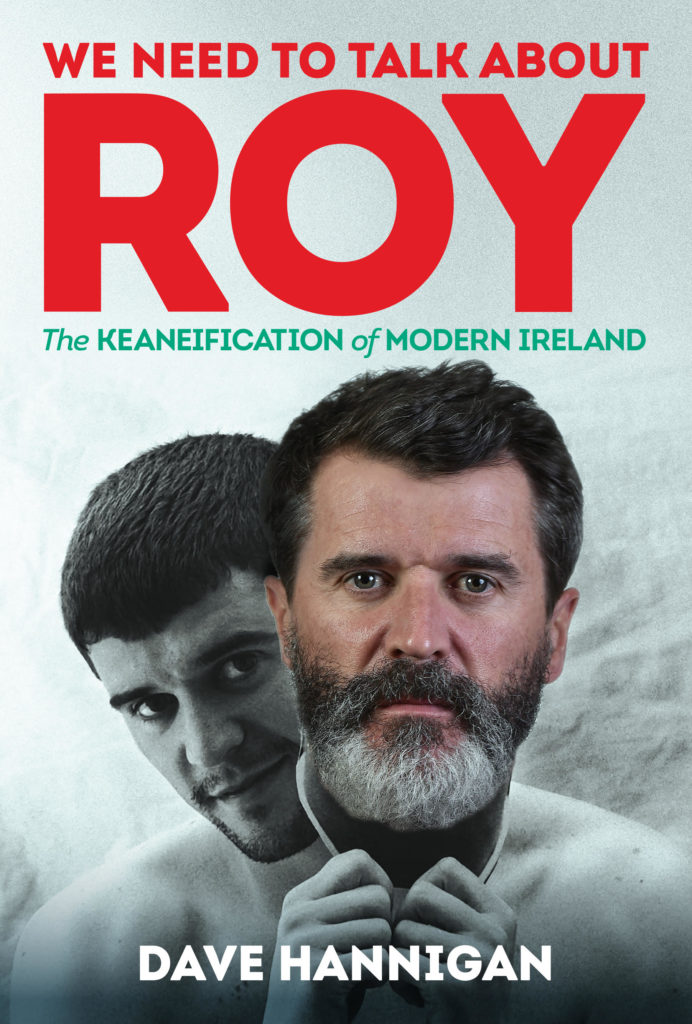 We Need to Talk About Roy, by Dave Hannigan
In many ways, you cannot fully understand one without the other.
Author Dave Hannigan highlights a defining moment in Keane’s career:
On November 8, 2000, Manchester United punched their ticket into the next round of the Champions League with a 1–0 victory over Dynamo Kyiv. It’s not a game many remember, but the result mattered far more than the performance.
Having taken an 18th-minute lead through Teddy Sheringham, United looked nervy at times. During a far-from-vintage display, sections of the Old Trafford crowd could be heard barracking players whenever they gave the ball away in the second half.
By the time Roy Keane had a microphone thrust in his face afterwards, he had showered and changed into his club blazer — but was still bristling.
“Sometimes you wonder, do they understand the game of football?” he said, staring down the camera. “We’re 1–0 up, then there are one or two stray passes and they’re getting on players’ backs. It’s just not on. At the end of the day, they need to get behind the team.
“Away from home our fans are fantastic — I’d call them the hardcore fans. But at home they have a few drinks and probably the prawn sandwiches, and they don’t realise what’s going on out on the pitch.”
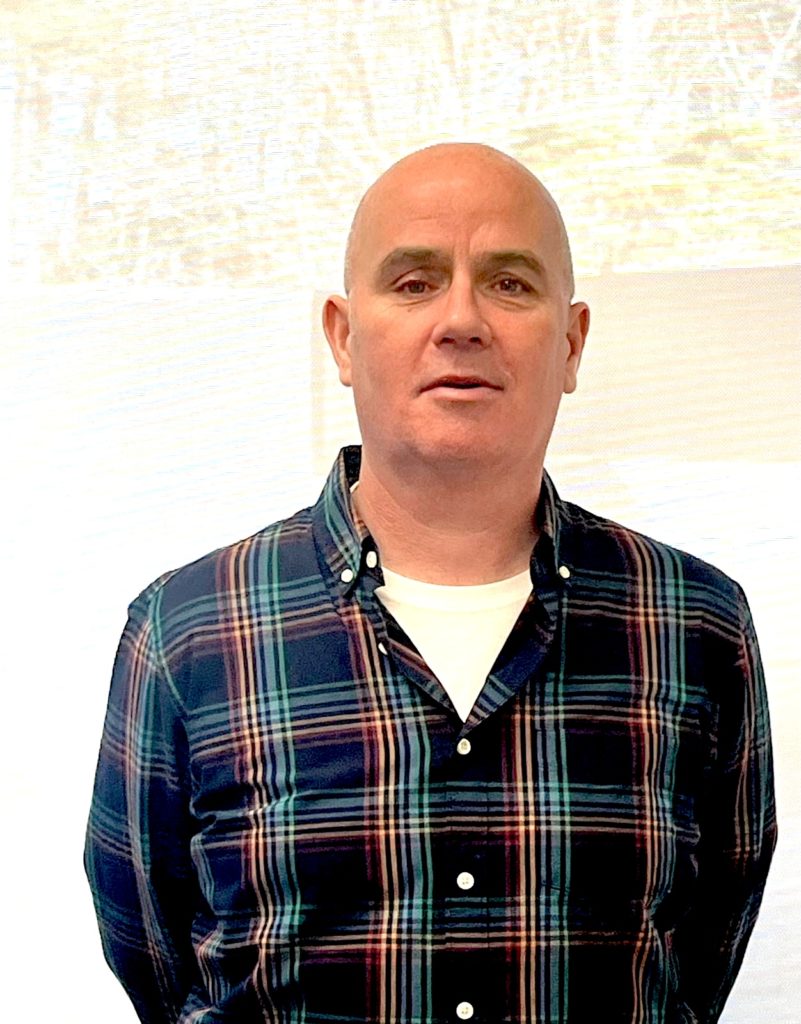 Author Dave Hannigan
In one pithy moment, Keane captured how much English football had changed since Italia ’90 made it fashionable again. The working-class ballet had begun attracting those more usually found at the actual ballet.
Commercialisation meant some of the best seats in the ground were now occupied by “impress me please” day-trippers from the upper tiers of the business world. For them, a matchday involved fine dining and vintage wine in the comfort of a corporate box.
Many never grasped the subtler demands of the game — the value of grinding out a narrow win in Europe.
In the aftermath of the interview, Keane was widely credited with coining the phrase “the prawn sandwich brigade”. In truth, he never used those exact words. But the shorthand was too perfect to ignore, and it quickly entered football folklore — a catch-all term for corporate spectators seen as detached from the tribal loyalty of the terraces.
Six years later, Keane was settling into life as Sunderland manager when chairman Niall Quinn asked him for a favour. The club was hosting a reception for high-earning business figures from across the north-east — precisely the kind of clientele who could afford corporate boxes.
A shrewd operator, Quinn framed it as a request rather than a demand.
“Why wouldn’t I want to go?” Keane replied.
When he entered the room, the atmosphere shifted instantly. Even the most confident business figures seemed momentarily awestruck. But what they encountered was not the snarling caricature, but a composed and effective salesman.
Working the room, Keane ended each conversation with a simple question: “Have you bought a box yet?”
At £15,000 plus VAT, Sunderland sold 38 boxes in just 90 minutes. The same guests gave the manager a warm round of applause as he left early.
As a player, Keane could afford to rail against the corporate side of the game. As a manager, he understood the reality. Football clubs need revenue — and corporate hospitality is part of that equation.
Principles are easier to hold onto early in a career. With time, and responsibility, the moral high ground can begin to feel like a colder, lonelier place.
Roy Keane: football’s fiercest competitor at a glance
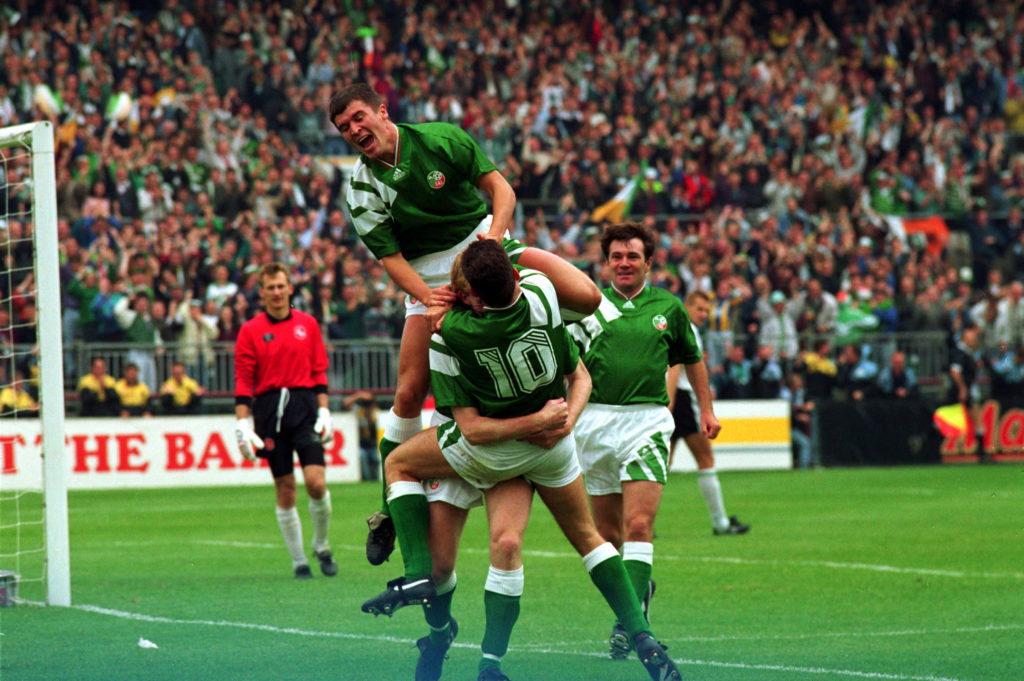 Roy Keane(top) celebrates with team mates after Ireland scored against Lithuania in a World Cup match in Landsdowne Rd in 1993
BORN in Cork in 1971, Keane’s rise from local side Rockmount to professional football began with Cobh Ramblers before a move to Nottingham Forest in 1990, where his combative style quickly drew attention.
In 1993, Keane joined Manchester United for a then British record fee. Under Sir Alex Ferguson, he became the team’s driving force, captaining United during their most successful period. He won seven Premier League titles, four FA Cups, and famously lifted the Champions League in 1999, despite missing the final through suspension after a heroic semi-final performance against Juventus.
On the international stage, Keane earned 67 caps for the Republic. That international career, however, was forever marked out by the infamous Saipan incident at the 2002 FIFA World Cup, where he left the squad following a dispute with manager Mick McCarthy.
After leaving United in 2005, Keane had a brief spell at Celtic FC, winning a league and cup double before retiring. He later moved into management and punditry, becoming one of football’s most incisive and outspoken voices.
See More: Dave Hannigan, Roy Keane
