





MASON Island lies off the coast of south Connemara and has haunted me for a lifetime.
“Are there ghosts on the island?” is a question I once asked of a man who grazed his cattle there, long after the last inhabitants had left. He paused to find the words, translating from his first language, Irish, before saying: “You go your way and they go theirs.”
As a child, I was rowed there by my uncle, cattle swimming alongside our currach as we brought them over from the mainland.
For a young child growing up in industrial Coventry, everything about that time was sublime: the force of the sea and wind; the sound and certainty of the language (my uncle and grandparents spoke little English); the cattle, fishing, the harsh yet impressively skilled way of life.
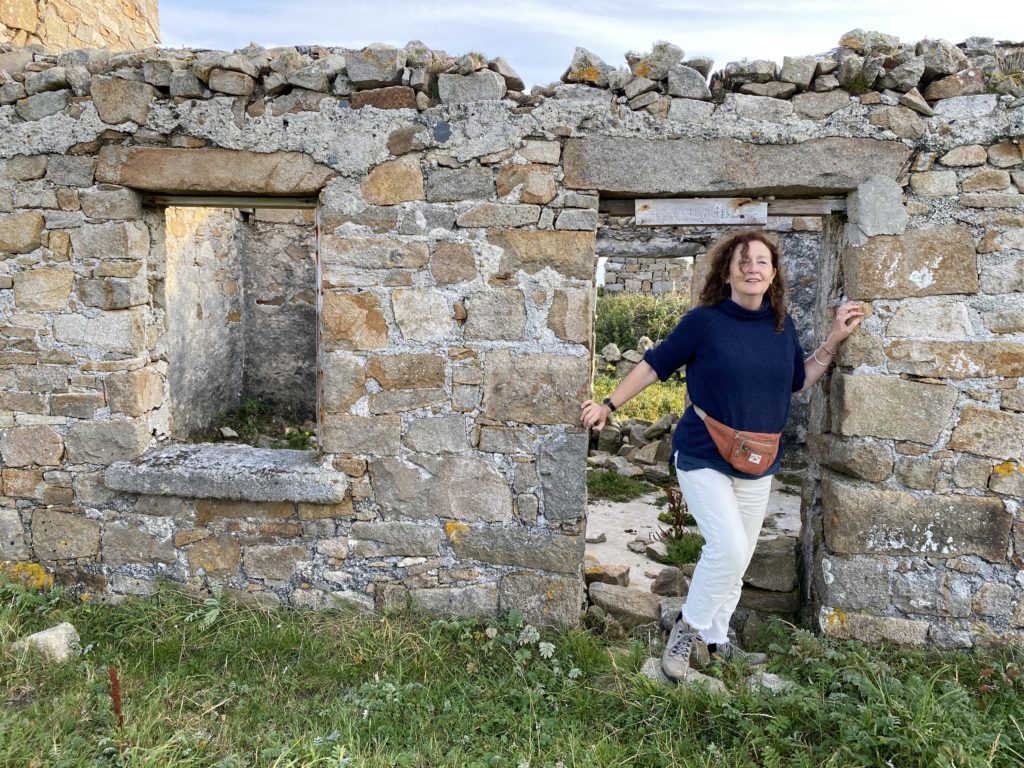 Cathy Galvin pictured on Mason Island
And there were the ghosts. It was impossible not to sense their presence. Close to the quayside stood the cottage built by my great-grandfather, Patrick Connolly, as part of public works commissioned by the Congested Districts Board post-famine.
Fifteen families built homes and a small school house for themselves at Mason. My grandmother was born on the island; her children played there. As an adult, I inherited the shell of that home, gable ends still standing but the roof tiles long gone. In the muck near the hearth I unearthed a knife, fork and spoon which I took to be a welcome to a distant table.
It’s true: the ghosts go their own way while I found myself stumbling on my own.
But I won’t be alone among the Irish diaspora, or the Irish-born, in trying to piece together some sense of the power of the past to shape what forms our understanding of the present, what makes us who we are. Some of that sense is ghostly and yet resonates in landscape, in language, in spirit.
The ghosts know I would not survive for long as an islander. I don’t know how to build or re-roof; how to weave or sow; how to live off the land or sea; how to build a currach or a coffin.
What I can make is the shape of words and offer them back to my great-grandfather who, in an early census, was described in this way: ‘Farmer, cannot read or write.’
I’ve done so through the form of poetry, though there is also some prose, in my book: Ethnology. A Love Song for Connemara.
Keening for the island, speaking back to the silence
SOME ghosts are very close. The one who walks with me from the quay to the crossroads is what I can conjure of my mother, who died when I was eleven years old.
Her mother, who always claimed she was happiest when she lived on the island as a child and young woman, died a few months later.
What began as a project to find out more about them and their relationship to this place took research and many forms, non-fiction, fiction, memoir, before finding its right place in a poetry that has elements of all of those things but also echoes the music, in the language, and sea-scape, of this place.
Another ghost is my son, who died more recently, in his twenties, and who loved the island. His heart is buried on our land.
An English friend called this book an elegy. An Irish friend called it a caoineadh, a keening.
There are certainly elements of both. I would call it a dialogue, with the ghosts and with the largely Anglo-Irish nineteenth-century elites, literary and anthropological, who recorded how my people, largely uneducated and with an oral, not written, culture lived.
These elites had, broadly, one of two agendas: the revivalist, who found inspiration in the Irish-speaking people of the west coast, seeing them as pure and noble; and the ethnographic, who viewed them as inferior.
Whether they wanted it or not, the Connollys and their neighbours were to be studied and classified: hence the slightly odd title of this book: Ethnography.
The sub-title of the book, A Love Song for Connemara, reflects the fact that one of the key dialogues in the work is in response to Douglas Hyde, the first President of Ireland.
His Love Songs of Connacht, a translation of songs and poetry he heard from many Irish-speaking women, is a treasured possession.
So, as the wise man of the island suggested, I have gone my own way in order to attempt to better understand those ghosts. The journey has been surprising.
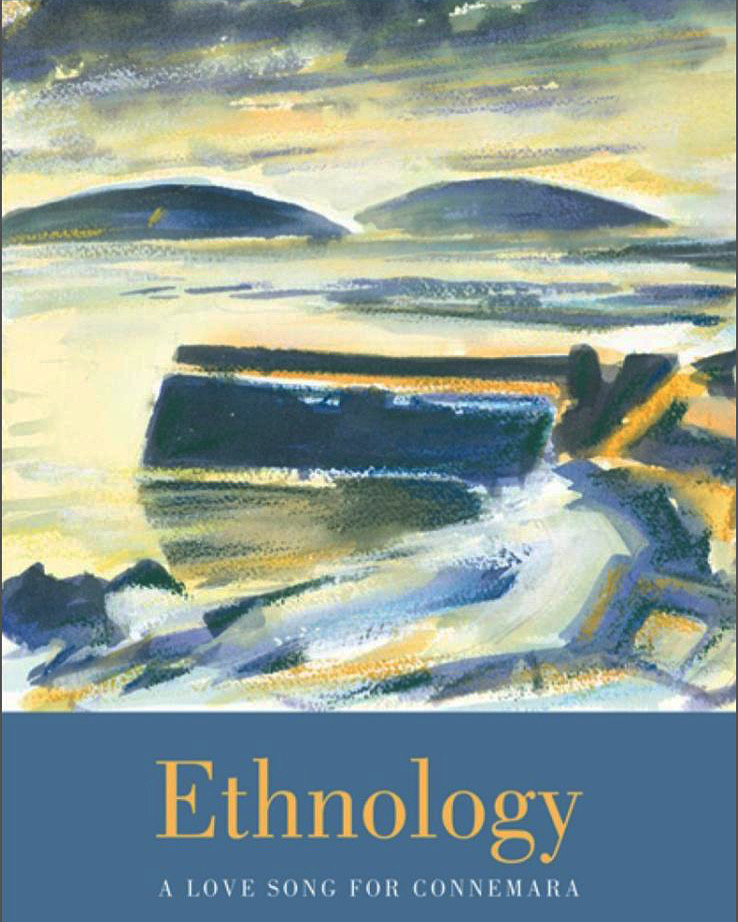 Cathy Galvin's latest book
I became involved as a poet with the Haddon-Dixon Repatriation Project, campaigning alongside the people of Inishbofin island in north Connemara and other west-coast representatives to secure the return and burial of human remains, mostly skulls, stolen in 1890 from burial grounds in the west of Ireland by anthropologists.
The title poem of this book was read at the graveside on Inishbofin when their skulls were reburied in 2023.
There has been a reversal of power in writing this book, the island girl finding the words to speak back to the elites in their language, English, from the heart of her own people.
Yet the ghosts, tantalisingly, can’t express their view or give their permission. If they could, they would choose to do so in their own language which, though I have tried to learn with the Manchester Irish Language Group late in life, would have subtleties beyond this poetry.
Nonetheless, I hold a faith in what I saw and felt within my own family. I am moved by the thought that, in some way, what we are is made up of layers of translation, generation after generation.
In the medieval sense, translation was the movement of something sacred from one place to another.
That seems to make sense. What could be more sacred than what and who we love?
Those hauntings stay in the heart and have kept me tied close to Mason Island, to what went before and what still needs saying.
Cathy Galvin is a journalist and poet. Ethnology. A Love Song for Connemara is available from Bloodaxe Books, from Amazon and all good bookshops. (https://www.bloodaxebooks.com/ecs/product/ethnology-1387)
Cathy on Instagram @cathgalvinwords and at www.cathygalvin.com
