





FROM the pop charts to the terraces, Phil Coulter’s songs have travelled a long way from his native Derry.
Over more than six decades, his career has embraced Eurovision, folk ballads and the anthem Ireland’s Call.
His songwriting credits include My Boy, recorded by Elvis Presley, while The Town I Loved So Well and Scorn Not His Simplicity have become enduring parts of the Irish songbook.
Now he has written something rather closer to home: Wild Flowers, a duet for himself and his wife Geraldine, inspired by his love of Donegal.
The single is scheduled for release at the end of October, ahead of his Irish tour, which opens on November 11.
Before heading back on the road, he answers The Irish Post’s questions about his craft, his favourite songs and the people and places that matter most.
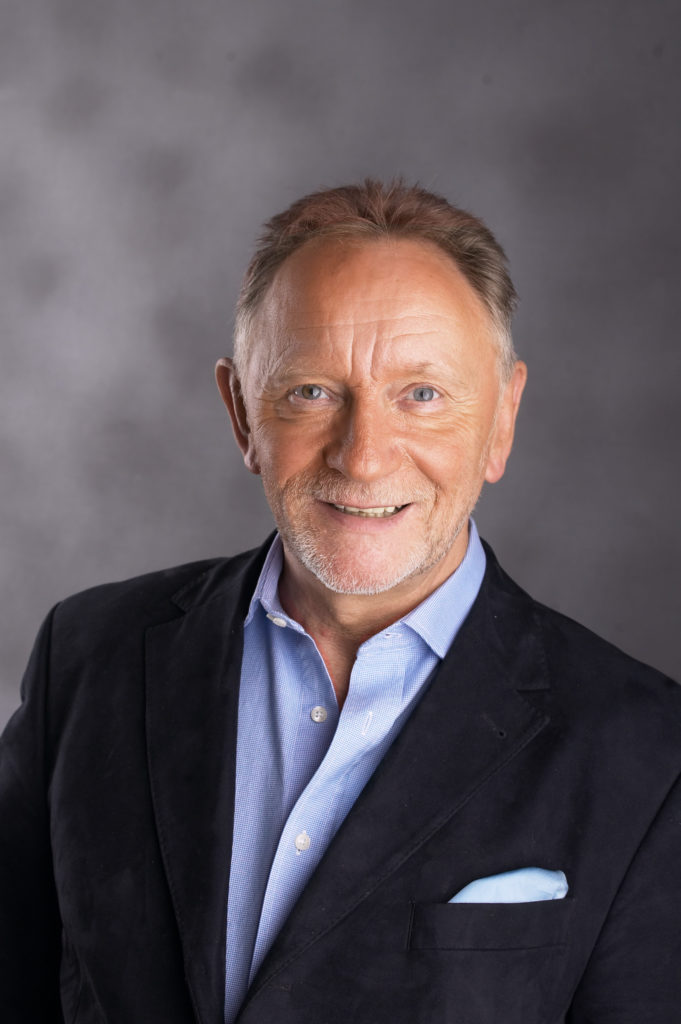 Phil Coulter
What projects are you working on at the minute?
We are currently prepping for our new Irish tour, twenty-something dates all around the country. We have also just recorded a brand-new single. For the very first time, I’ve written a duet for myself and Geraldine, called Wild Flowers. It’s a love song with a strong Donegal theme!
Which piece of music always sends a shiver down your spine?
Mise Éire by Seán Ó Riada. I remember hearing it for the first time when I was a music student. It has never lost its magic for me.
Which musicians have most influenced you?
There have been so many over the years, from Henry Mancini to Bruce Hornsby, Randy Newman to Mark Knopfler.
What usually comes first: lyrics or music?
It’s never the same! Sometimes a song will start with a phrase of music, sometimes a title, sometimes a phone call with a commission.
Do you compose at the keyboard, or do you prefer to compose in your mind?
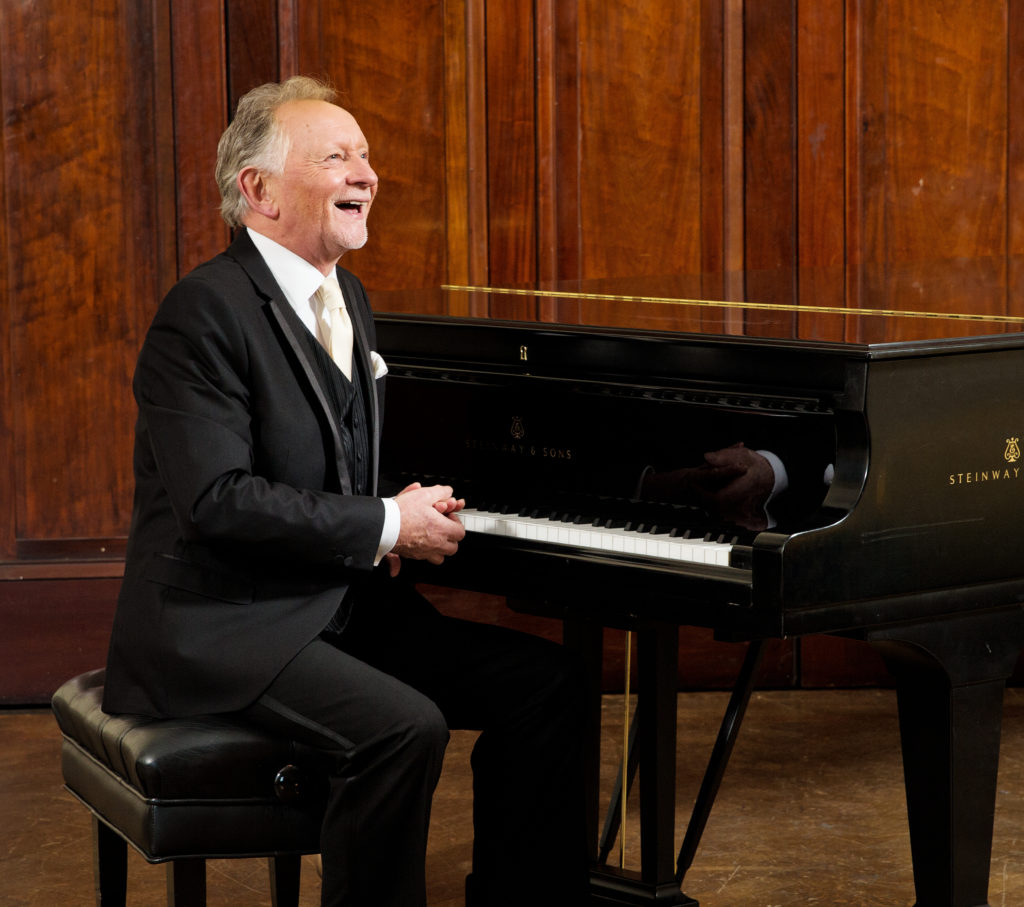
It depends. An instrumental composition will usually progress at the piano. A song will often start in my head and finish at the piano.
The Town I Loved So Well is one of the best-known songs associated with the Troubles. How did it take shape?
I was home in Derry visiting family on the day internment arrived. Horrified, as everyone else in the city was, I wrote an anti-internment song, Free the People. It was not a great song, but it started a process that resulted, maybe a year later, in The Town I Loved So Well.
Which six Irish songs written in the 20th century would you choose as your favourites?
It’s hard to pick just six, but here goes:
- The Island — Paul Brady
- Ride On — Jimmy MacCarthy
- Four Green Fields — Tommy Makem
- Only Our Rivers Run Free — Mickey MacConnell
- Fairytale of New York — Shane MacGowan and Jem Finer
- The Fields of Athenry — Pete St John
Is there a particular recording of one of your songs that you especially value?
I consider myself blessed to have one of my most personal songs, Scorn Not His Simplicity, recorded by two of the greatest voices Ireland has ever produced: Luke Kelly and Sinéad O’Connor.
Your work spans pop hits, Eurovision, folk ballads and sporting anthems. What helped you develop that range?
I learned my craft as a songwriter in Denmark Street, London — Tin Pan Alley, the home of British music publishing. I learned not to be boxed into any particular genre, but to move between as many as possible. That was my training, and it has stayed with me.
Which of your own compositions are you most proud of?
If I had to nominate the one song I’d choose to be remembered for, it would have to be The Town I Loved So Well.
When you hear Ireland’s Call on a match day, does it give you goose pimples?
It absolutely does. Hearing a packed stadium giving it socks — it’s a good feeling to know that even after I have fallen off the perch, they’ll still be singing it.
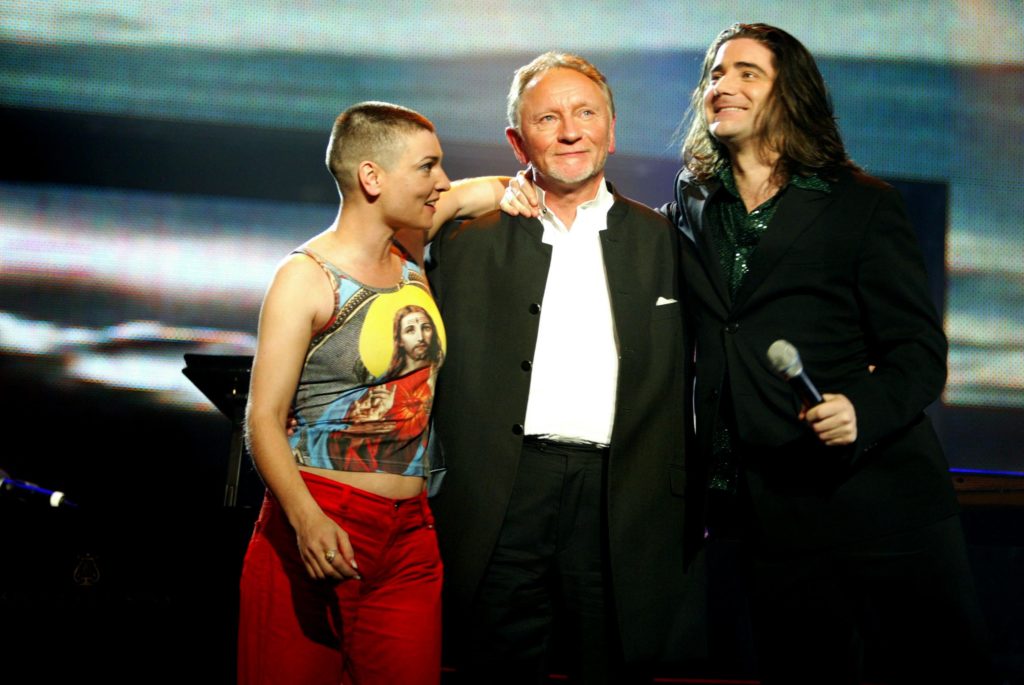 Pictured at the Meteor Awards 2003 (L to R) Sinead O Connor, Phil Coulter and Brian Kennedy in performance during the Meteor Awards at the Point Theatre, Dublin
What’s on your smartphone playlist at the minute?
I don’t have one. I prefer to listen to music on proper speakers, out of respect for the artiste and the producer.
What are your Irish roots — are you Derry born and bred?
My friends in Derry call me a “blow-in”! My father was from Strangford in County Down, my mother from the Markets in Belfast. But I’m still a very proud Derryman!
You went to St Columb’s in Derry. Why do you think it has produced so many high achievers?
St Columb’s instilled in us a very strong work ethic, a responsibility to use the talents God gave you and a promise of access to university as a reward.
What is your favourite place in Ireland?
One of the great adventures in my teenage years was spending a month at college in Ranafast in the Donegal Gaeltacht. Ever since, west Donegal has had a special place in my heart. My new song, Wild Flowers, is inspired by my love of the county.
Is there a book that has been a major influence on you?
The Great O’Neill by Seán O’Faoláin. Hugh O’Neill, Earl of Tyrone, was the key figure in the Nine Years’ War against the English Crown. Defeat at Kinsale led to the Flight of the Earls, which changed the face of Irish history.
Which living person do you most admire?
At the moment, with the world in a state of near chaos, the only leader who stands out for me is Mark Carney, Prime Minister of Canada.
Which traits in others do you most admire?
Generosity of spirit and the ability to stay calm under pressure!
What would be your motto?
Try harder.
What’s the best advice you’ve ever been given?
My first boss in the music industry once told me: “Don’t make it all about the money. You have a lot of talent. Now what you have to do is work hard and the rewards will follow!”
In terms of inanimate objects, what is your most precious possession?
A beat-up acoustic guitar that has been with me through many writing sessions, including all of the Bay City Rollers hits!
What’s the best thing about where you live?
We live in Bray in County Wicklow. The best thing is the promenade in the winter — great for long, peaceful and undisturbed walks.
And the worst?
The promenade in the summer, when it is noisy and crowded!
What’s the greatest lesson life has taught you?
It’s not over till it’s over.
What do you believe in?
I believe in God and the hereafter. I may not be devout, but I am spiritual.
What do you consider the greatest work of art?
The ceiling of the Sistine Chapel in the Vatican. I’ve been there, and it is inspiring.
Who is the greatest love of your life?
Geraldine, my wife, my duet partner and the mother of our six children.
Phil Coulter’s Irish tour opens at The Venue, Ratoath, on November 11. Dates include the Millennium Forum, Derry, on November 17; Ulster Hall, Belfast, on November 21; the National Concert Hall, Dublin, on December 2; Theatre Royal, Waterford, on December 8; and the National Opera House, Wexford, on December 12. Full dates: philcoulter.com.
See More: Phil Coulter
