





WAY back in 1981, having worked for various record companies including Transatlantic, Motown and Decca, I had gone independent and set up a consultancy business to market and promote records.
One day David Thomas, co-owner of the distributor Spartan, rang and asked if I would meet two men from Dublin who wanted to launch a record label in the UK and needed someone based here to help them.
On August 7th I went to the London Ryan Hotel near Kings Cross and met Cavan man Mick Clerkin and Peter Dempsey. They outlined plans for their new label, Ritz, and said they wanted to start with three singles that they needed me to promote.
I assumed they knew my work with Planxty, or perhaps because I was getting some airplay at the time with De Danann’s version of Hey Jude. Then again, it may simply have been the Irish surname.
One of the records was by Sheeba, a girl group, one was by The Furey Brothers & Davey Arthur, and the other by Joe Dolan.
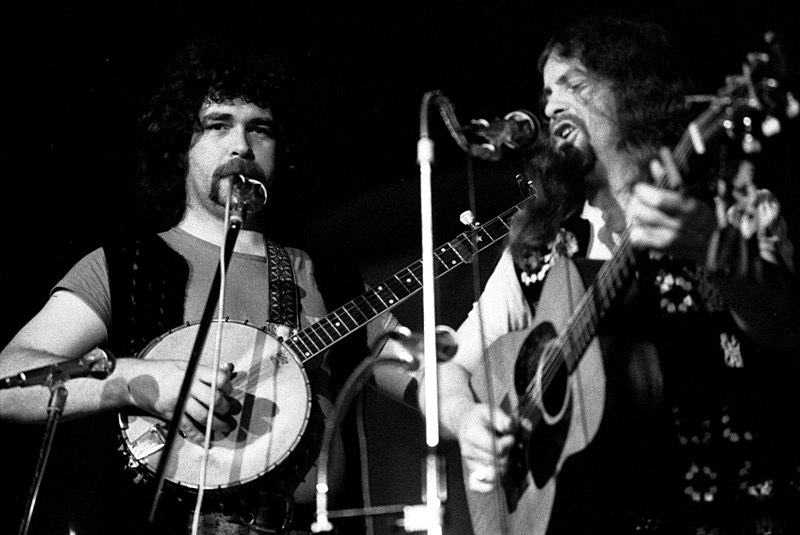 Finbar and Eddie Furey pictured performing in 1974 (Heinrich Klaffs on Wikimedia)
After a long chat over tea I took the singles home. I had no idea then that this casual meeting would prove a defining moment — not just for me, but for several Irish artists whose international careers would follow, not least The Fureys.
Listening carefully, I had reservations. I didn’t think either Sheeba or Joe Dolan had much chance in the fiercely competitive UK pop market, and the packaging felt dated. But the Fureys’ record was different. It was a cover of a song written in 1898 — hardly cutting-edge pop — yet it had something distinctive, a strong folk identity that caught my attention.
I already knew of them. We had released albums by Finbar and Eddie when I was Head of Promotion at Transatlantic, and they had toured with The Clancy Brothers. I rang Mick Clerkin and said I would give it a go — with no promises. What I didn’t mention was that I badly needed the retainer to help cover the rent on my Regent Street office.
From my time at Decca, where I’d worked on several MOR hits thanks to BBC Radio 2 support, I knew how crucial that station could be. I also had a connection — my cousin, Fr Francis McDonagh SJ, had been Terry Wogan’s headmaster at Belvedere, and Terry would occasionally play Irish records.
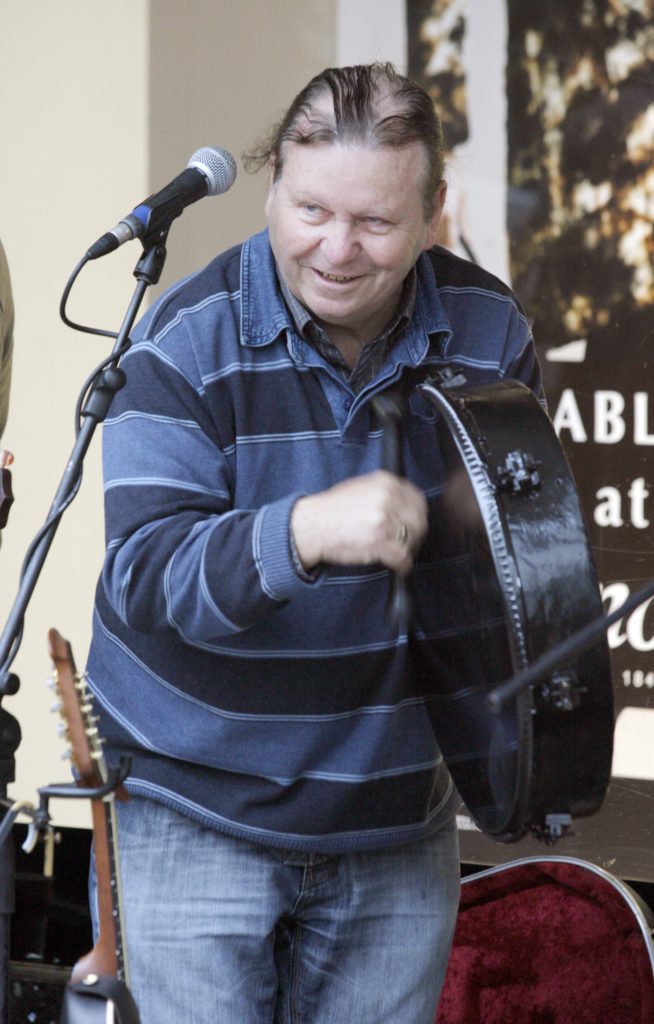 The Fureys and Davey Arthur pictured outside Arnotts in 2009
He had told me he liked De Danann’s instrumental Hey Jude, so I took the Fureys’ new single to him and his producer Denis O’Keefe, hoping for the best. Soon he began giving When You Were Sweet Sixteen the occasional spin, often joking about the banjo intro.
I can admit now that I didn’t push the other two records particularly hard.
Each time the Fureys’ track was played, the BBC received calls. Slowly but surely, week by week, sales began to build until, on October 10th, it entered the chart at No 47. For a brand-new label, that was remarkable. The rollercoaster had begun.
By October 26 it had climbed to No 26. At the weekly early-morning Top of the Pops meeting — where all the promotion men gathered — I persuaded producer Stan Appel to book them. The band flew in overnight from New York and made rehearsal at Television Centre.
Then disaster. A carpenter crossed a demarcation line and unplugged a clock. The electricians walked out. The show was cancelled.
Finbar was not impressed — and for us it meant losing a huge promotional opportunity just as momentum was building.
Thankfully, the record rose again the following week, reaching No 22, and the band returned to appear on October 29th alongside Squeeze, Haircut One Hundred and Rod Stewart. That same night also featured Dave Stewart and Barbara Gaskin’s It’s My Party — a record we had actually produced — which was No 1.
I had wanted the band to arrive in a horse-drawn caravan, nodding to their Traveller roots — it would have made the front pages — but management preferred to play that down. We compromised with a jaunting car for Pebble Mill at One.
The single stayed in the charts for 11 weeks. It was also the first appearance by an Irish folk group on Top of the Pops since The Dubliners in 1967 — a gap of 14 years.
From that point, everything changed. The Fureys went from being a popular cabaret act in Ireland to an international concert draw. The single — and then the album — took off in the UK, Canada, America and Australia.
With the band back in the US on tour, we quickly organised a promo video in case the record climbed further and they couldn’t return. We filmed in Dunlavin, but needed a sixteen-year-old girl. The agency models all looked too modern — more Bananarama than rural Ireland.
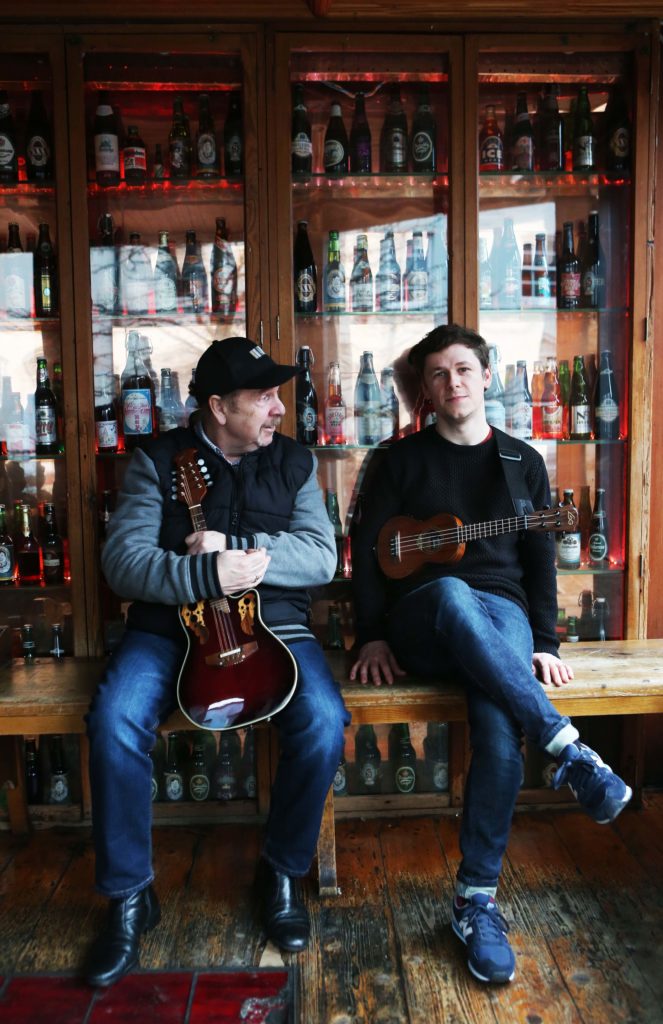 Trad musicans George Furey with his son Anthony Furey pictured in the Porterhouse Bar in Temple Bar in 2016
In the end, we found Ann Marie Elliot, aged 16, in the Sportsman’s Inn. With permission from her mother and the nuns at school, she appeared in the shoot the next day. Her image went on the album cover and was seen worldwide.
The shoot itself was something of a scramble. Thaddeus O’Sullivan, now a well-known director, operated the camera, reading the controls by cigarette lighter late into the night.
I wanted a strong visual identity for the band, so I asked costume designer Consolata Boyle to source original Edwardian dinner suits. The effect was striking. Years later, when we made The Fureys Finest, I had them posed in black coats on polystyrene rocks — like The Magnificent Seven.
From Top of the Pops onwards, we were able to move them into major venues — the National Concert Hall, Sydney Opera House, Carnegie Hall, the Royal Albert Hall.
Tours were supported by successful TV albums like Golden Days and The Fureys Finest, along with hit singles such as The Red Rose Cafe, which became Radio 2’s most-played record that year. We also produced film-based promo videos for tracks like Stealaway and Steamboat Row.
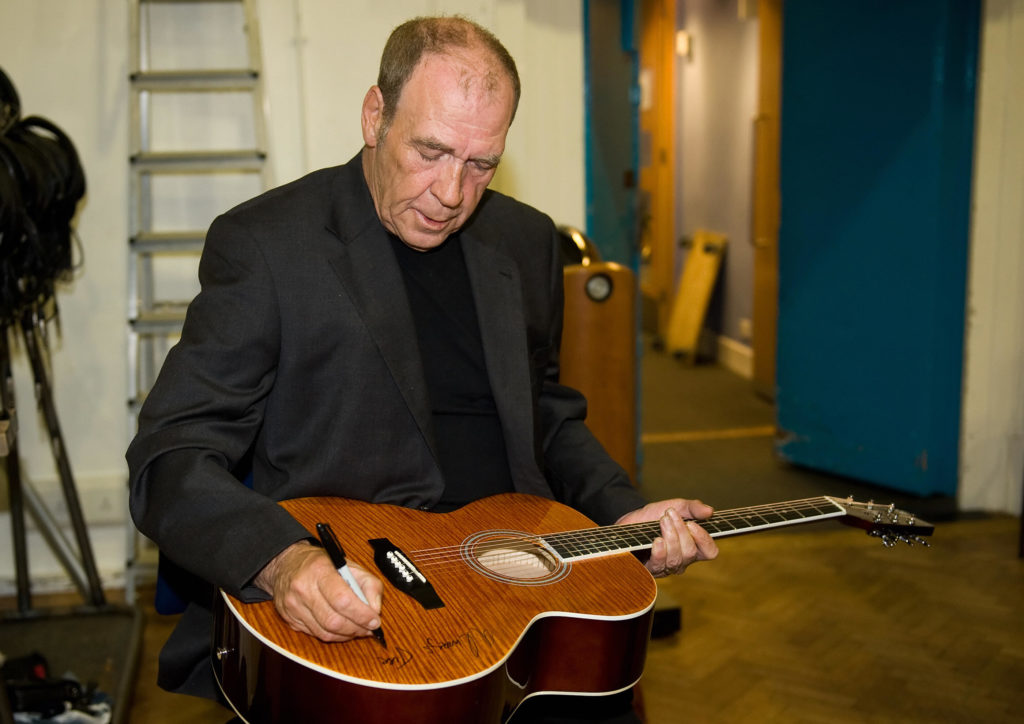 Finbar Furey signs a guitar after taking part in a charity recording of a Children in Need album at Abbey Road studios in west London in 2009.
Their final BMG album, The Scattering, produced by Alan O’Duffy and photographed in San Francisco, was particularly strong. Alongside all this, they appeared on countless television programmes worldwide.
It was an extraordinary journey for a family from Ballyfermot. The Fureys & Davey Arthur became a major live act, filling venues consistently.
In 1986 I became their manager, aiming to put things on a more professional footing, including sorting out tax affairs. Joe McCadden was brought in as Irish agent and remained a constant. His loyalty and belief in the group over four decades cannot be overstated.
After around ten years, Davey Arthur left. Finbar pursued a solo project, and although we made Love Songs with him for BMG, he too eventually departed. Without that distinctive lead voice, and without Davey’s name, the brand inevitably changed. I moved on.
Eddie, George and Paul carried on. Music was all they knew and loved, and with Joe McCadden’s support they rebuilt their audience, playing smaller venues and earning continued respect — a testament to their resilience and talent.
Now, after 60 years, the journey comes to an end. I recently saw them at a sold-out Millfield Theatre with my daughter Cara, who, as a child, had appeared on the cover of Stealaway.
From humble beginnings, they built a remarkable career as ambassadors of Irish music. They will be deeply missed by the loyal audiences who followed them for decades — and who will wish them nothing but the very best in retirement.
The Fureys — their place in music history
IT’S HARD to remember that Irish music was close to extinction by the 1950s, or at best on its way to becoming as marginalised as English folk music. It was confined to rural outposts, to Dublin cultural events, and to London pubs, where the seisún, the quintessential hallmark of Irish music, was developed.
The spectacular turn in fortunes that has turned this simple — but extraordinarily beautiful — music into a vibrant, globally recognisable genre, was a complex affair. The resuscitation involved Sean Ó Riada, the Clancys, the Dubliners, the Chieftains, Planxty. But no comprehensive study of the revival could fail to come up with the name Furey.
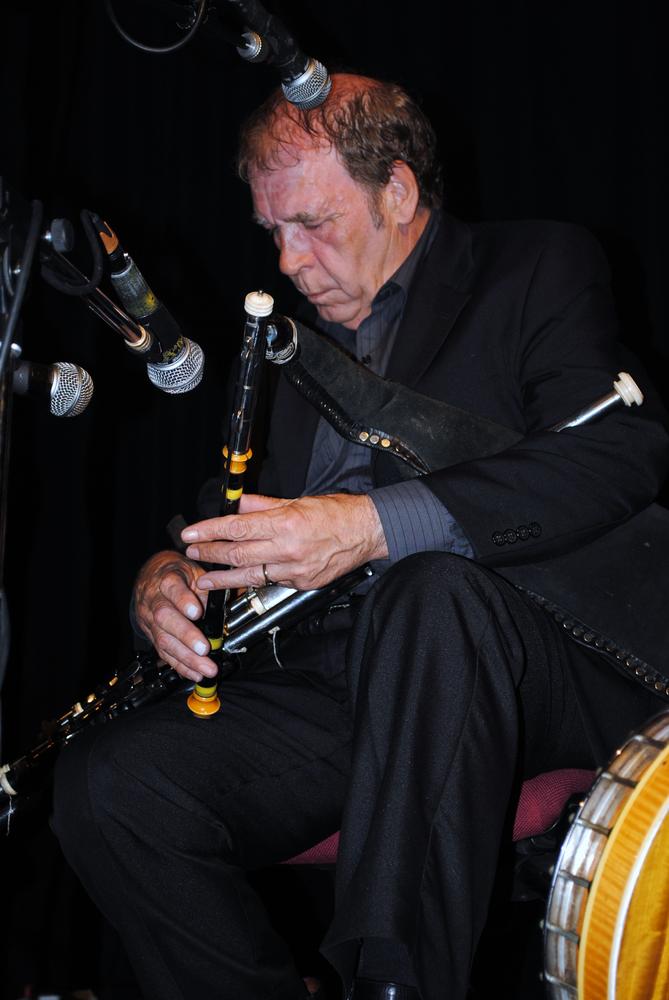 Piping pioneer Finbar Furey in action
Finbarr and Eddie Furey occupy a pivotal place in the story of modern Irish music, bridging the gap between traditional roots and mainstream popularity at home and abroad.
Emerging from a strong Dublin musical family, they brought a raw authenticity to folk performance at a time when Irish traditional music risked being sidelined by changing tastes.
Their early work, particularly in the 1960s and 1970s, helped carry Irish ballads and instrumentation to new audiences across Britain and Europe.
Like the Clancys and the Dubliners, they were the introduction point for many players into traditional Irish music. For a decade or more, stretching into the 1980s, they were the public face of Irish traditional music in much of continental Europe.
They filled concert halls across Germany, Switzerland, Austria and beyond, and sold records by the vanload.
Crucially, the Fureys combined technical musicianship — notably Finbarr’s mastery of the uilleann pipes — with a deeply emotive, accessible vocal style that resonated with diaspora audiences.
As The Fureys, joined by their brothers, they achieved significant commercial success in the 1980s,, helping to normalise Irish folk within the broader popular music landscape landscape. Irish music edged away from ‘File under Folk’ to a category all of its own.
The Fureys demonstrated that Irish music could be both rooted and relevant, traditional yet commercially viable, a balance that continues to shape the genre today.
In short, they helped pushed the boundaries of Irish music way beyond what anyone at the beginning of the 20th century could have imagined.
See More: The Fureys
