



BUNNABLANEYBANE, Muckanaghederdauhaulia, Magheramurphy, Aughnahoory, Glenmagoo, Lisballyfroot — the townland names of Ireland, poetic, historic, evocative. Many an emigrant to England will have dwelt ruefully on the poignancy of swapping a beautiful address such as Tobernafauna or Knockmacaroony for a prosaic NW10 2HX or the like.
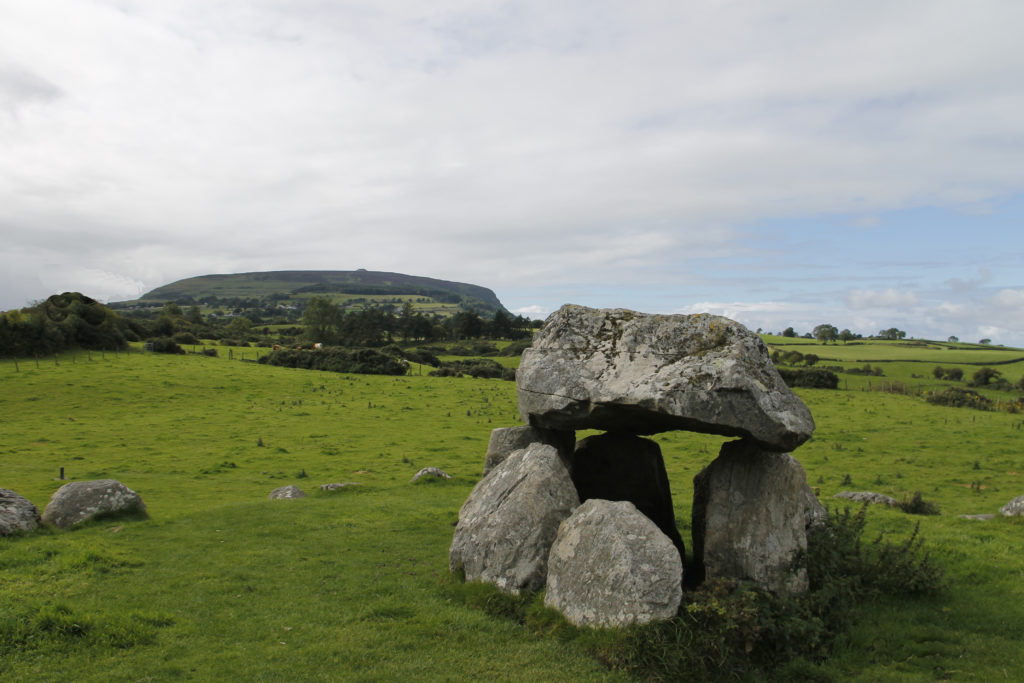 In the townland of Carrowmore (Tourism Ireland)
Townlands in Ireland have long been a distinctive part of our rural culture and topography. As the smallest administrative areas in the country, they stretch back many centuries into the mists of pre-Christian history. First mapped and defined from around the 1600s — about the same time as the county system was introduced — they continue to have legal as well as cultural and social status. And they don’t even need to have a town — or a village — in them. Places like Meenbog or Lismullyduff would be hard pushed to get a hurling side together, never mind a hamlet.
The townland system is not unique to Ireland — there are loose parallels in Britain. But the Irish system is highly distinctive in its extent and its enduring place in everyday local identity.
Thomas Larcom, the first director of the Ordnance Survey of Ireland, tabulated Ireland’s various land divisions into something that almost resembles a piece of poetry:
10 acres equal 1 gneeve; 2 gneeves equal 1 sessiagh; 3 sessiaghs equal 1 tate or ballyboe; 2 ballyboes equal 1 ploughland, seisreagh or carrow; 4 ploughlands equal 1 ballybetagh or townland; 30 ballybetaghs equal 1 triocha céad or barony.
Until recently, large swathes of the country had no means of identifying households except for ancient townland names. The Republic’s nationwide postcode system, Eircode, was introduced on July 13, 2015, extending postcodes beyond Dublin’s existing numbered postal districts.
This, of course, was no problem in areas where the postie knew every inhabitant of Aghnaskew Glebe, Drummannagapple or Tonydrummallard. The names were less helpful to a courier arriving with an internet order or an ambulance crew trying to find a particular house. Townland names identified the locality. Eircode could pinpoint the front door.
In Northern Ireland, Royal Mail postcodes were introduced between 1970 and 1974. Nonetheless, townland identity endured. Ironically (to some extent), Ulster has more Irish names than any other part of Ireland. In the Six Counties, a townland is routinely referred to as ‘a bally’, from ‘ballybo’ or baile bó, meaning ‘cow land’.
The reason for this somewhat curious preponderance of Irish names in the North is that the Gaelic earls and assorted aristocracy managed to keep the English invaders at bay longer than in most other parts of the country.
However, both north and south of the border, townland names such as Borris Big, Tibberedoge Glebe and Dirty Step exhibit Norman influences, while a name such as Tom of the Tae-End, with its Scottish influences, would postdate the Ulster Plantation of the 17th century.
Unfortunately, nobody can remember how the townland of Memory in Kilkenny got its name, although we can probably have a stab at how nearby Bigbog managed to acquire its. As for Inane in Tipperary — it’s not because the inhabitants are pointlessly silly. The townland is in the civil parish of Roscrea and the barony of Ikerrin. Its name is an anglicisation of the Irish Eidhneán, meaning ‘ivy’ or ‘place abounding in ivy’. Nonetheless, when you see a road sign in Tipperary saying ‘Inane traffic diversion’, it does make you think.
In 1972, the Royal Mail decided that the townland element of home addresses was obsolete. But old habits die hard — after all, the events of 1690 are still controversial in the Six Counties — and locals continued to add the likes of Pennefatherslot, Ballyaltikilligan Minor or Ballydollaghan to their addresses.
But Omagh District Council broke the mould and made it official policy to incorporate the townland name where possible or use a name with some historical connection to the area.
In many areas west of the Bann, it is now commonplace to see townland names restored to their former glory. Sinn Féin’s Michelle Gildernew has said that the historical, cultural and linguistic importance of townland names means they should not only be preserved but actively used. Thus the likes of Carrowmurwaghnemucklagh (Maghera, Co. Down) will live on, although surely the most unpopular person at any local GAA match is the guy who goes, ‘Gimme a C … gimme an A …’
In the Republic, townland names continue to be used in everything from postal addresses to land sales, as well as by bodies such as the GAA, even after the introduction of Eircode.
The townlands of Ireland are a living part of the Irish landscape. Ireland was never colonised by the Roman Empire, and so town systems developed differently, revolving more round the ancient Gaelic system of tuaths and settlements that grew up around monasteries and abbeys. Ultimately, this led to the development of townlands. But whatever their origins, they are an ancient part of our heritage and should be cherished for that, and indeed for their sheer poetry — Cloontuskert, Tullanaguiggy, Tawnawanny, Tattynagolan, Leamnamoyle …
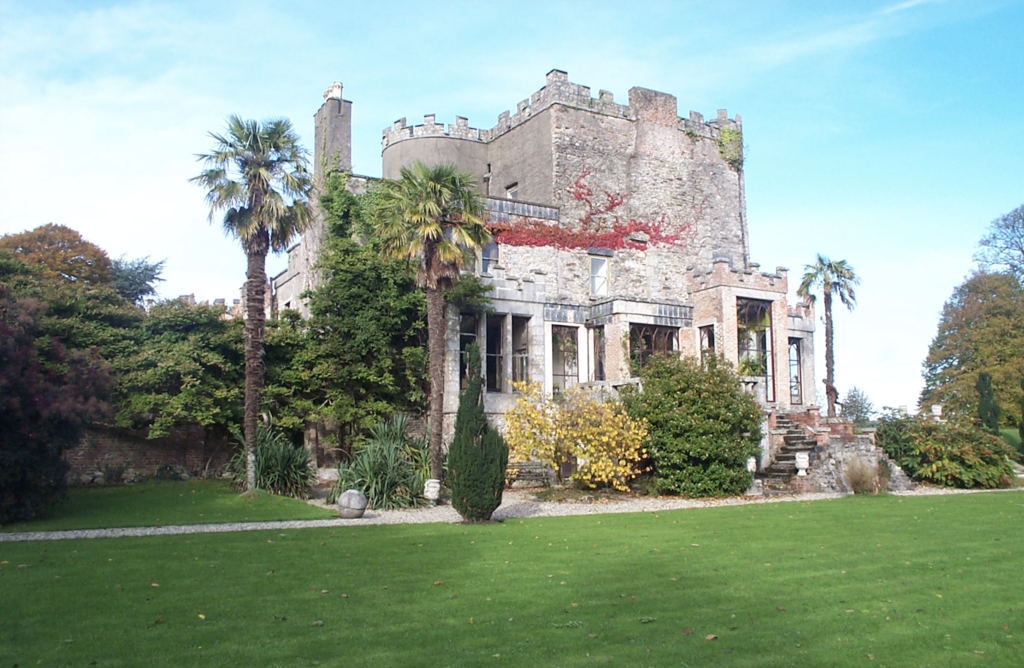 Huntington Castle in the townland of Huntington, Co. Offaly
Everything from irishpost.com and the print edition is available on the Irish Post App — plus more! Download it for Android or Apple IOS devices today
See More: Ancient Ireland, Irish Counties, Maps
