





THOUSANDS of Irish nurses played a key role in the early years of the NHS, yet their contribution hasn't been fully recognised, according to research about their experiences.
When the National Health Service (NHS) was established in 1948, it quickly became clear that Britain needed nurses to keep its hospitals running.
Thousands of young Irish women answered the call, and many left behind their families to build new lives in Britain.
By 1971, over 31,000 Irish-born nurses were working across the NHS, accounting for around 12% of its nursing staff.
Yet despite their enormous contribution to British healthcare, their stories have largely remained untold.
That is something Professor Louise Ryan hopes to change.
Her book, Irish Nurses in the NHS: An Oral History, draws on 45 interviews with former nurses, including 43 women and two men.
Ryan arrived in Britain in 1992 and became interested in the experiences of migrant women.
"I was doing research on Irish women, and this theme of nurses kept coming up all the time," she said.
"So many nurses were Irish in the NHS, and I thought that hasn't been studied very thoroughly."
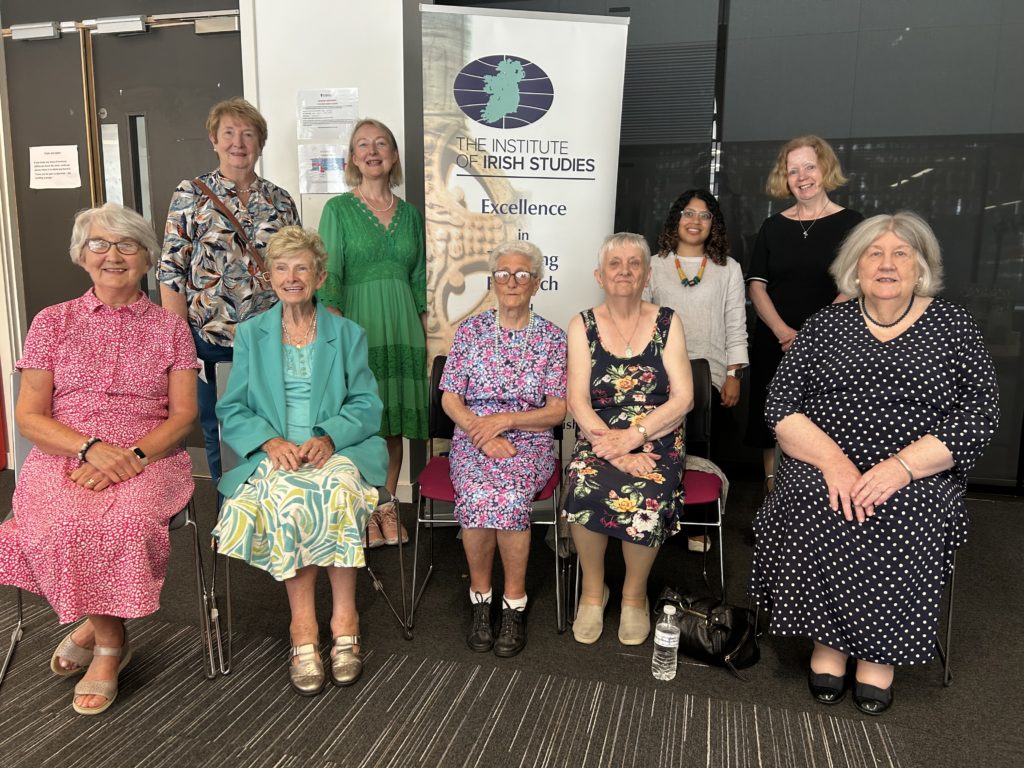 Research team - Louise, Grainne and Neha (Back row), with older Irish nurses in Liverpool, 2023 (Photo by Louise Ryan)
For many young Irish women in the 1940s and 1950s, emigration was less a choice than an opportunity for a better life.
Ireland remained a largely agricultural society, with limited jobs for women outside teaching, nursing and shop work.
In rural Ireland, farms were usually inherited by the sons, leaving many daughters with few prospects.
"If you were an ambitious young woman growing up in Ireland in the 50s, you tended to see migration as your best option," Ryan said.
In Britain the newly established NHS was struggling to recruit enough staff to meet demand.
Ireland, as Britain's closest neighbour and a country where English was widely spoken, became an obvious source of nurses.
Recruitment campaigns ran throughout Ireland during the 1950s, 1960s and into the 1970s, encouraging young women to travel to Britain to train.
This meant they could leave school at 17 or 18 and start training as a nurse while also being paid.
Another big draw was the nurses' homes, which offered guaranteed accommodation to those arriving in Britain.
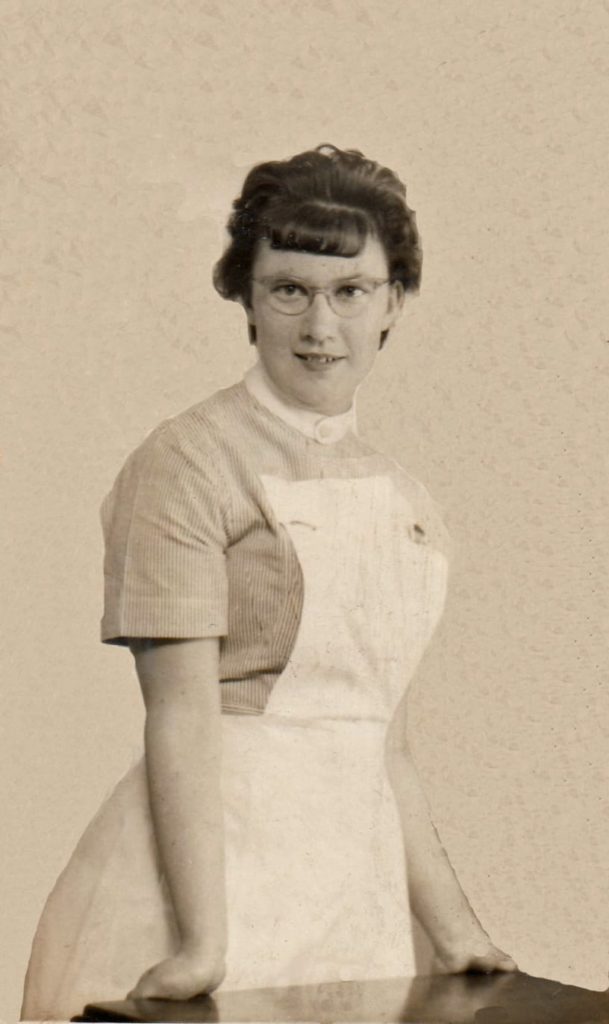 Josie Caulfield, Leeds, 1959 (Irish Nurses in the NHS: an oral history)
These women’s input to the NHS cannot be overstated.
"They were absolutely fundamental; there is no doubt about it," Ryan said.
"The NHS couldn't have functioned without the contribution of overseas nurses, and that's still true today."
But the nurses' experiences were not always good.
While many of them spoke positively about their work and the appreciation they received from patients and colleagues, their Irishness could also single them out.
Ryan said the research uncovered instances of verbal abuse, as well as more extreme cases during the Troubles when patients refused to be treated by Irish nurses.
"These women were professionals, and they were doing a very important job, but nonetheless that didn't protect them from anti-Irish hostility," she said.
Away from the hospitals, Irish centres and dancehalls were vital in helping newcomers settle into life in Britain.
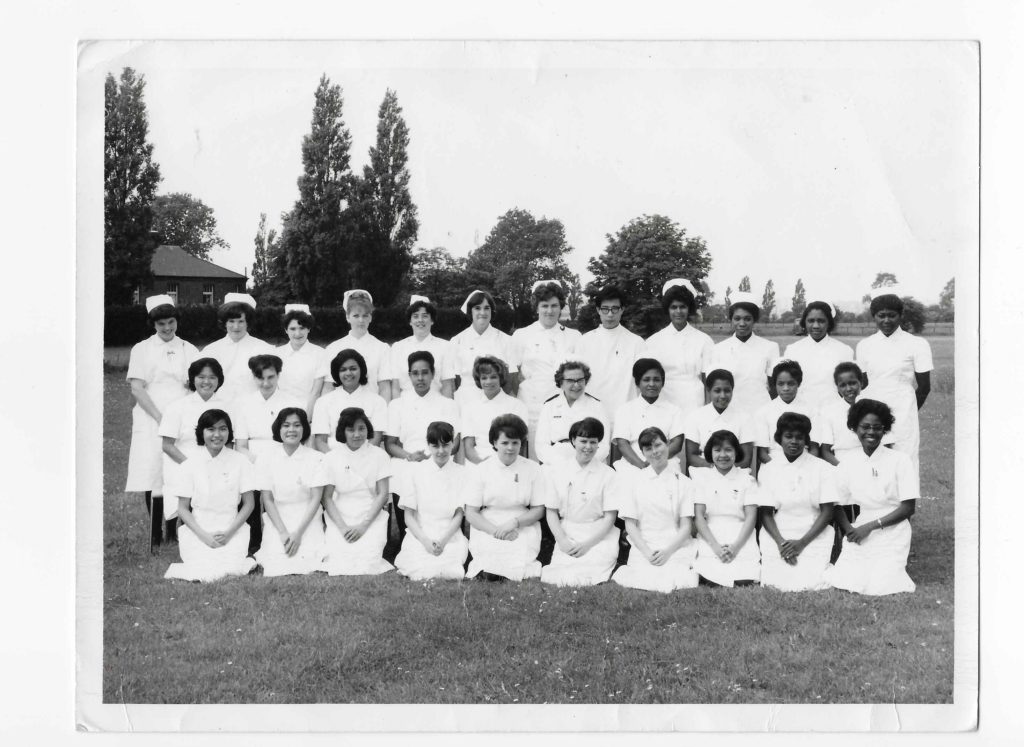 Group photo - Bernie Naughton - Kent - 1966 (Irish Nurses in the NHS: an oral history)
The interviews were especially important given the age of those involved.
Many of the nurses were in their 80s, while some were in their 90s, having spent decades living and working in Britain.
Despite some living in the country for over 60 years, Ryan said they retained strong Irish accents and a deep connection to their homeland.
"They all had a strong affinity with Ireland and were very proud of being Irish," she said.
The research has also extended beyond the book, with Ryan contributing to a podcast and documentary, alongside photo exhibitions at the Florence Nightingale Museum and Whittington Hospital.
She said the response to the project has been overwhelming, describing it as the greatest public reaction throughout her entire career.
For Ryan, the main motivation for the project was ensuring that the experiences of an older generation of Irish migrants were not lost.
"It's important to make sure these stories are recorded and captured," she said.
These nurses helped build the NHS. Now, at last, their stories are being told.
You can find the book: here
Everything from irishpost.com and the print edition is available on the Irish Post App — plus more! Download it for Android or Apple IOS devices today
See More: Irish Nurses, Louise Ryan, Nhs, Nurses
