





IN the last month the governments of Britain and Ireland have reached a landmark agreement to ensure that survivors of Ireland’s mother-and-baby homes living in Britain won't face financial penalties for accepting compensation payments.
The move was announced following a joint summit in Cork, and centres on support for Philomena’s Law.
The law means survivors in Britain can now receive compensation from Ireland’s redress scheme without losing their housing or pension benefits.
In a joint statement, both governments acknowledged the lasting harm caused by the institutions, which operated for much of the 20th century.
They said the decision was intended to ensure survivors are treated equally and can access the compensation they deserve without disadvantage.
The issue had affected thousands of women who emigrated to Britain after experiencing abuse in their homes.
Under previous British rules, compensation payments were treated as personal savings, potentially disqualifying recipients from benefits.
Campaigners warned this created a stark dilemma: accept compensation and lose vital support, or decline redress altogether.
It is estimated that up to 13,000 survivors in Britain were impacted.
The campaign for change was led by Liam Conlon, who introduced Philomena’s Law in Parliament and secured cross-party backing.
He said the reform was not just about financial fairness but also about addressing the stigma faced by survivors over decades, calling it a matter of “dignity as much as justice".
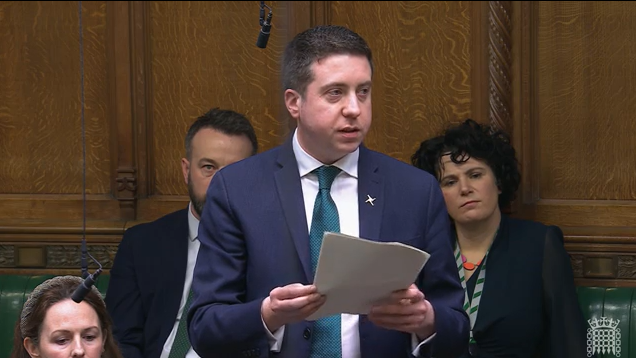 Liam Conlon MP introducing ‘Philomena’s Law’ to the House of Commons (Photo: Liam Conlon constituency office)
The law is named after campaigner Philomena Lee, whose story of forced separation from her son brought global attention to the abuses endured by women in these institutions.
Patricia Carey, who works as a special advocate for survivors, described the announcement to The Irish Post as a critical step forward.
“I am acutely aware of how critical this historic disregard will be for survivors living in Britain who spent time in Ireland’s mother and baby institutions," she said. “It is a testament to Philomena Lee and her courage that this important law is named after her.”
Carey also mentioned the impact previous rules had on survivors, many of whom feared financial consequences if they accepted compensation.
“It is unconscionable that redress for mothers and people born in Ireland’s mother and baby institutions would cause further harm and financial hardship for survivors," she said.
“I am aware from engaging directly with survivors living in Britain that this situation has resulted in a lot of fear and anxiety. As a direct result, some Survivors decided not to apply for the redress they are entitled to or declined to accept their compensation because of these valid fears.”
She hopes the policy change will encourage more people to come forward and claim the compensation they are entitled to.
The Irish government’s redress scheme was established following an inquiry into the experiences of over 50,000 women and nearly 60,000 children in these institutions between 1922 and 1998.
A report from 2021 showed widespread abuse and very high infant mortality rates.
Payments under the scheme began just two years ago and range from €5,000 to €125,000 depending on the length of time spent in the homes.
The Irish government also confirmed that compensation from any British schemes would be disregarded in Ireland, to ensure fairness across the board
For many survivors, the decision represents not just financial relief but also some recognition of the injustices that they have endured.
Everything from irishpost.com and the print edition is available on the Irish Post App — plus more! Download it for Android or Apple IOS devices today
