





MARILYN JONES takes a cultural journey through the Himalayas, Punjab and India’s sacred heartlands
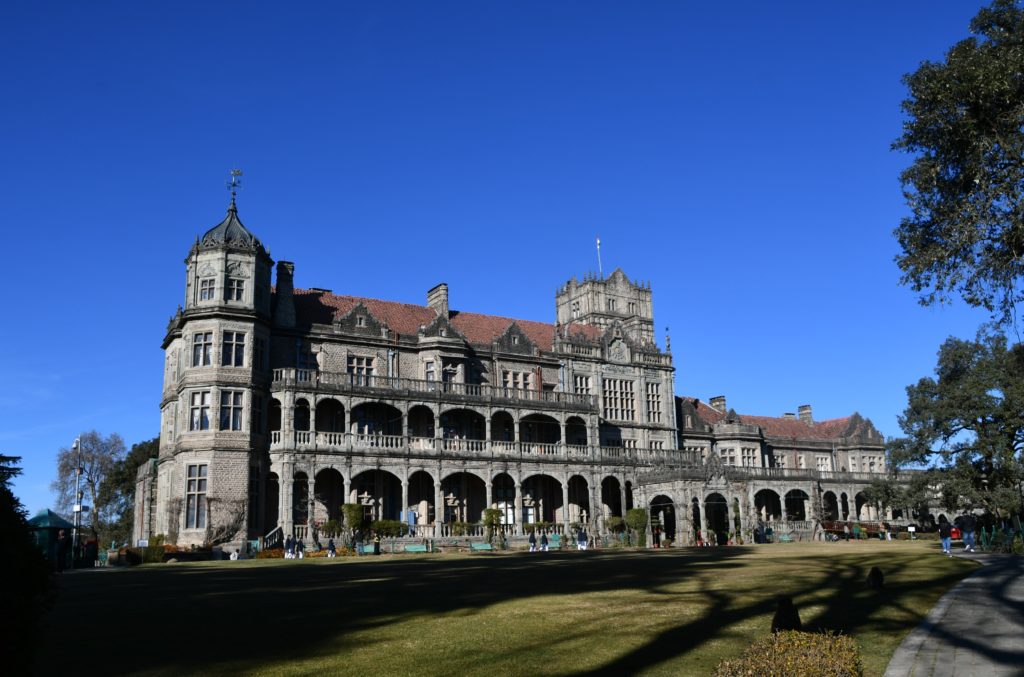 The former residence of the British Viceroy of India, Lord Dufferin, the mansion now houses the Indian Institute of Advanced studies
MY DAY began with a six-hour drive through the Himalayan foothills from Dharamshala, home of the Dalai Lama, and ended with a visit to a local village in Punjab with a welcoming Sikh family.
I watch, mesmerised as a 14-year-old girl uses henna to create swirls, flowers, and lace designs on the back of my hands. She uses small tubes of the plant-based dye with precision that any artist would be proud of.
She is the neighbour of the family I am visiting. We are sitting on a patio-like extension to the large three-generation home, a hub of activity, as the Singh (male surname meaning lion or king) and Kaur (female surname meaning princess) family welcome us into their home.
The eldest woman is preparing pakoda, deep-fried marinated vegetables over an open fire in a clay oven known as a chulha.
This cultural exchange is coordinated by Exodus Adventure Travels, the tour company I am travelling with.
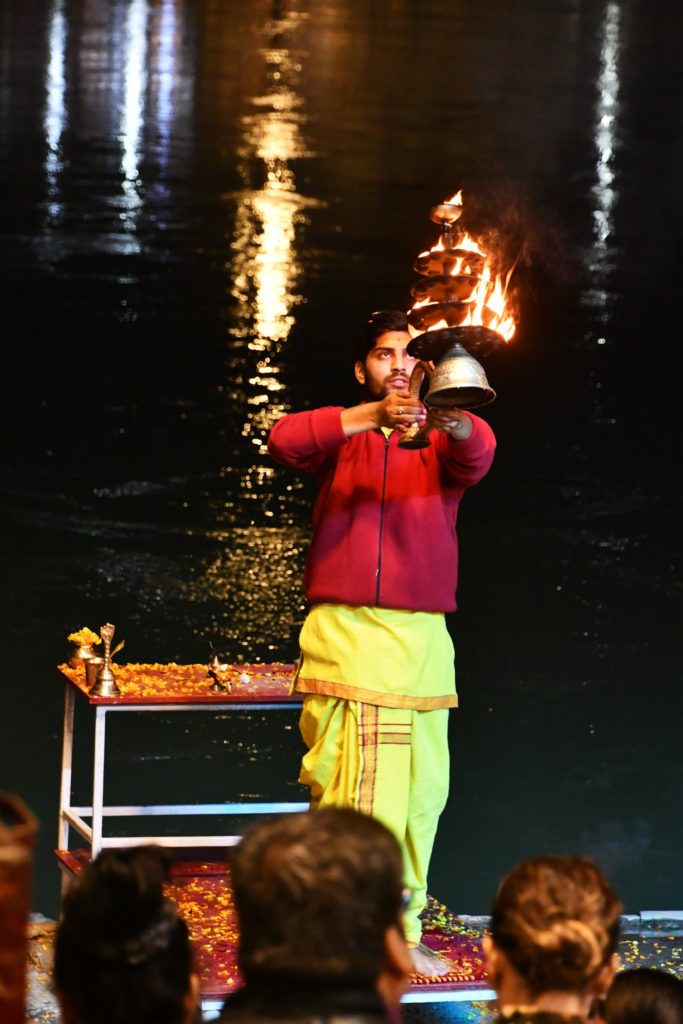 An aarti session on the edge of the Ganges River
Our visit includes delicious pakoda and chai. There are lots of questions, laughter, conversation, a tractor-pulled wagon ride through farm fields, and a children's dance performance during our evening visit.
A family visit takes place on an evening toward the end of our tour in the Himalaya mountains of Northern India.
Our adventure began with an early-morning trip from our hotel to New Delhi Railway Station. Seemingly-crazed drivers vie for space on roads, many streets without lines. Pulling within inches of each other, the madness continues as it seemed everyone was blowing their horns at once.
As soon as we park, porters carry our luggage on their heads and head to the correct train track. A short time later, we settle into our assigned seats for the nearly five-hour journey to Haridwar. The six of us, three from England, two from America and our wonderful Indian guide Anil Kumar make up our tour group. By the end of the trip, we were all friends and felt like family.
We arrive in Haridwar midday. Although all of India is a rush of color, scents, and clamorous noise, the area around the Ganges River seems to slow a bit in reverence for the Hindu Sacred River.
The river flows from the Himalaya mountains to the Bay of Bengal in northern India and Bangladesh. The river is personified as the goddess Ganga in ancient texts and art.
We cross a bright yellow pedestrian bridge to the Har Ki Pauri area. There, we take in the bustle of local life: shops selling jewelry, containers for pilgrims to take some river water home, and decorative items.
We watch ritual bathing, an important part of Hindu pilgrimage, and other ceremonies, including throwing the ashes of the cremated across the fast-flowing turquoise waters.
We had lunch at Jaipuriya Haveli to experience a meal like that of Hindu pilgrims, then continued our exploration.
After lunch, it happened.
I tripped on a grate in the roadway and fell. It happened in a split second.
The fall affected not just me but also everyone in my group, including our tour guide, Anil.
Everything came to a halt as Sarah, a nurse in our group, tended my bleeding elbow. Anil and local shopkeepers ran to the pharmacy for supplies.
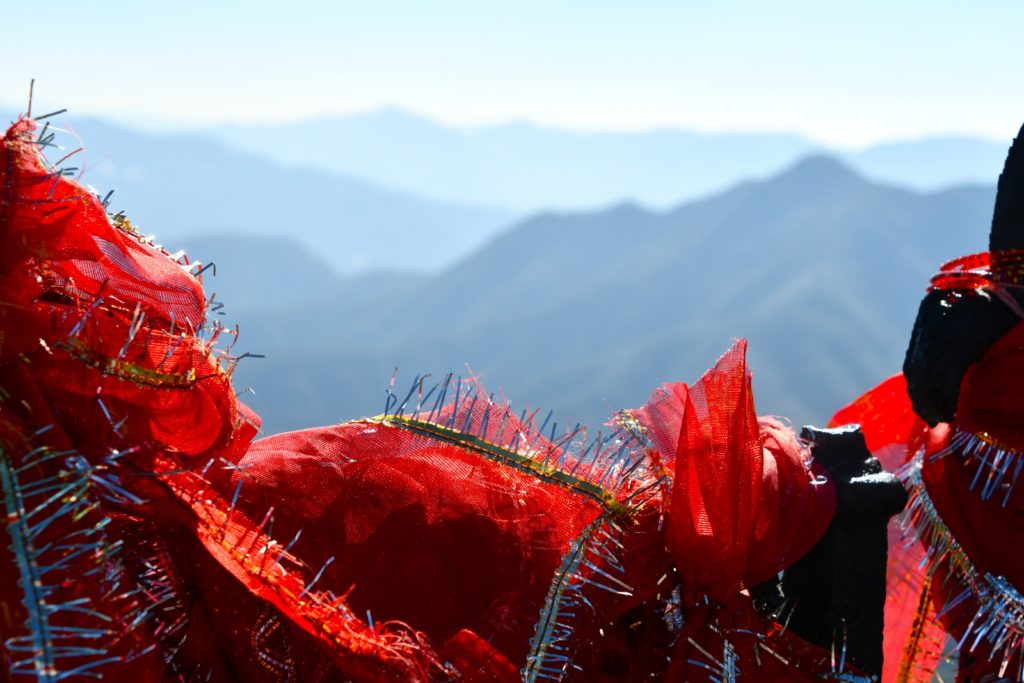 The Himalayas framed by red scarves at Tara Devi Temple
When the bleeding slowed, the group continued the tour with a local tour guide, Mr Subhash, while Anil called a bicycle tuk-tuk to take me back to the tour van.
On the way to the van, my wound began bleeding again. Anil redressed it in the van. When the group returned, our driver took us to the local hospital. An attentive doctor gave me immediate care and four stitches, leaving me almost as good as new, sort of.
The problem was how much anyone could trust that I wouldn’t fall again. I wondered the same thing.
Anil managed the situation well, deciding which excursions I could join. He was always ready to help if there was any risk I might fall again, walking with me, taking my arm as we walked along bumpy streets and sidewalks and up and down staircases, many without railings.
The next day, Anil wisely determined I shouldn’t go on the excursion, which included strenuous hiking. The highlight was to visit what’s left of the Maharishi Mahesh Yogi Ashram, where the Beatles stayed in 1968 and wrote songs for The White Album.
After years of neglect, work is now underway to renovate the property.
But I was able to watch an evening ceremony on the banks of the Ganges River, an aarti session at Shatrugan Ghat. The purpose of aarti is to wave light before the deity in a spirit of humility and gratitude, wherein the faithful become immersed in god's divine form. All accoutrements used for aarti symbolise the five elements: space, wind, fire, water, and earth.
As the sun set, the aarti ceremony unfolded.
Five priests, in almost perfect synchronisation, performed the ritual as the sky grew darker, with drama and meaning to those of the Hindu faith watching from the riverbank.
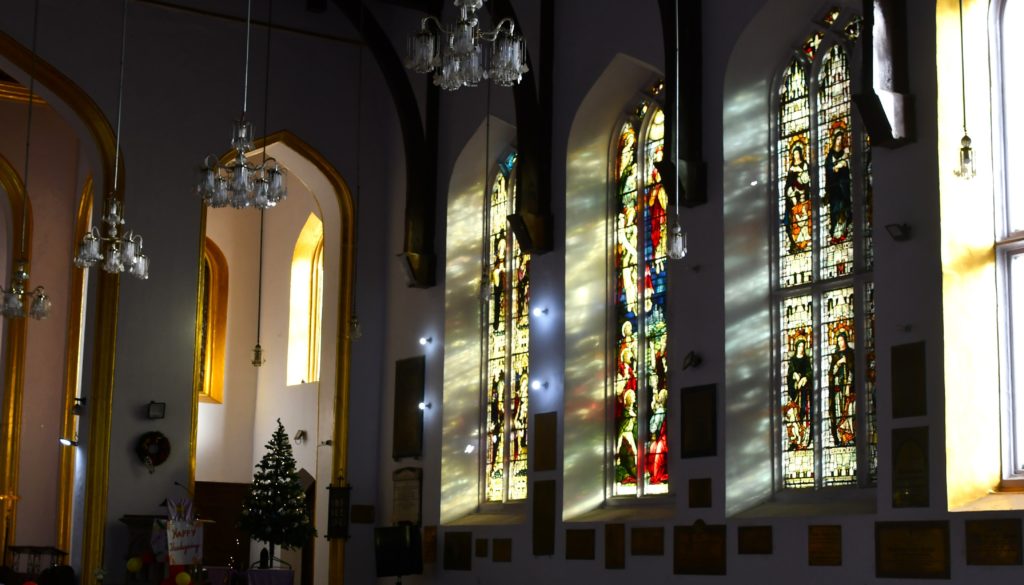 Christ Church in Shimla
Shimla
The next day, once again in the van, we head for Shimla. The best respite from the twists and turns, up and down, of the journey was our lunch at She Haat Café in Sarahan.
The success story of She Haat began with a group of 23 women who have turned their culinary expertise into a thriving success.
The women blended tradition with entrepreneurship. They create a unique dining experience that showcases their skills and reflects their journey of empowerment and community spirit.
After enjoying an authentic taste of traditional Sirmauri cuisine, I excused myself to the gift shop. A range of handmade handicrafts and organic produce was for sale. Lovely items, including locally made baskets, knit scarves, and baby clothes, line neatly displayed shelves.
After our gift shop purchases and farewells to the women and their children, we continued our journey on to Shimla.
Once in Shimla, I enjoyed three nights at the Zion Hotel, with its mesmerising view of city lights at night and breathtaking mountain views by day.
We began our first day in Shimla at Sankat Mochan Temple.
The tree limbs throw shadows over the intricately coloured, decorated buildings. There’s a chill in the air, and only a few other people are at the temple. It’s peaceful; so quiet, mere conversation seems intrusive.
Intricate carvings line the exterior and interior walls of the temple. In a set-off area, men carve and chisel decorative pieces for other temples.
From the temple, we travel to the Viceroy’s Toy Train, a dual-gauge train now used for operational purposes and as a tourist attraction.
The railroad is included in the Mountain Railways of India, a UNESCO World Heritage Site.
We board with a sense of adventure as we are instructed not to leave our windows open when the train slows for stops along the way. Monkeys will try to get into the train to steal food and other things from passengers.
After our 50-minute journey through pine forests, tunnels and over bridges, we depart and make our way to the Tara Devi Temple.
The temple, believed to be over 250 years old, has a rich history and cultural significance. It is dedicated to Goddess Tara, the goddess of stars, a revered figure in Hinduism.
It is located on a hilltop, offering stunning views. The temple is a popular pilgrimage site, attracting devotees year-round. I watch as several women tie red scarves on the railing surrounding a platform and in a tree near the temple. The scarves are often offered as a symbol of devotion and respect to the goddess.
Nearby is another Shimla must-see.
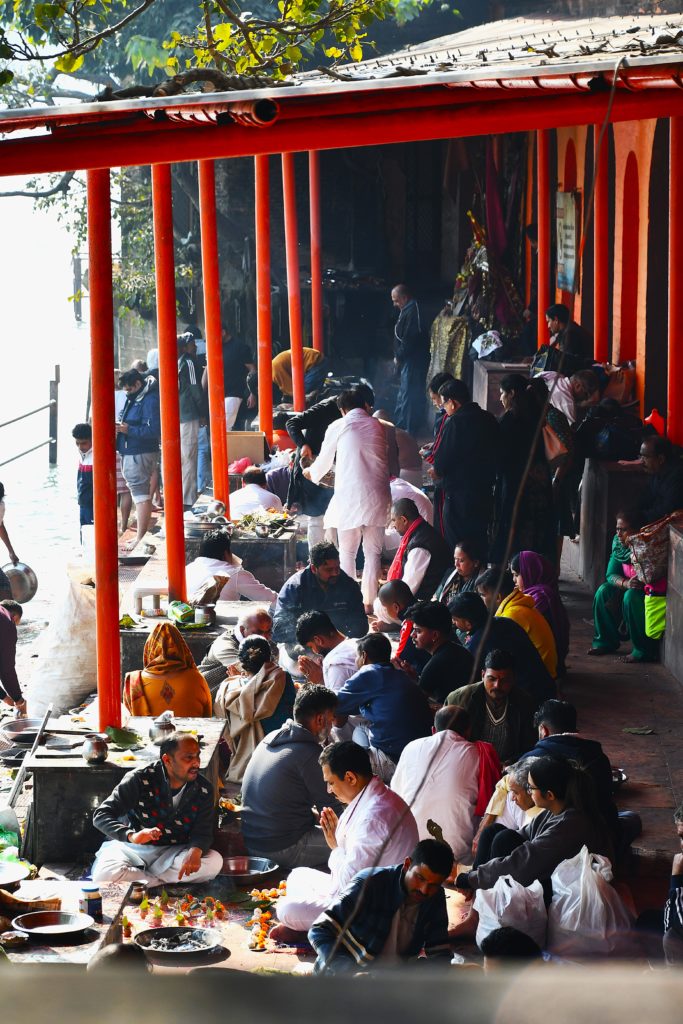 Religious bathing and ceremonies at the edge of the Ganges River
Rashtrapati Niwas is located on Observatory Hill. It was formerly the residence of the British Viceroy of India, Lord Dufferin.
Built in the Jacobethan style during the Lord Dufferin's tenure, construction began in 1880 and was completed in 1888. Only local woods, like pine and cedar, were used to construct this marvel.
The building now serves as the center for the Indian Institute of Advanced Study.
The reception hall features a splendid fireplace and a grand staircase. The building has six stories.
This is the only area guests can visit, although a glimpse of a library, developed inside the lodge, houses some of the most ancient artifacts and photographs dating back to the times of British rule in India.
Day two is more leisurely, with a drive into the heart of Shimla, where we take a stroll along the Mall Road, the main thoroughfare to Scandal Point.
It is believed that the Maharaja and a viceroy’s daughter met at Scandal Point in 1892 and ran away together to be married. This led the British authorities to ban the Maharaja’s entry to Shimla, so he built a new summer capital in Chail.
Before everyone split up to go shopping on Upper and Lower Mall Roads, we toured the historic Gaiety Theatre and later the neo-Gothic Christ Church.
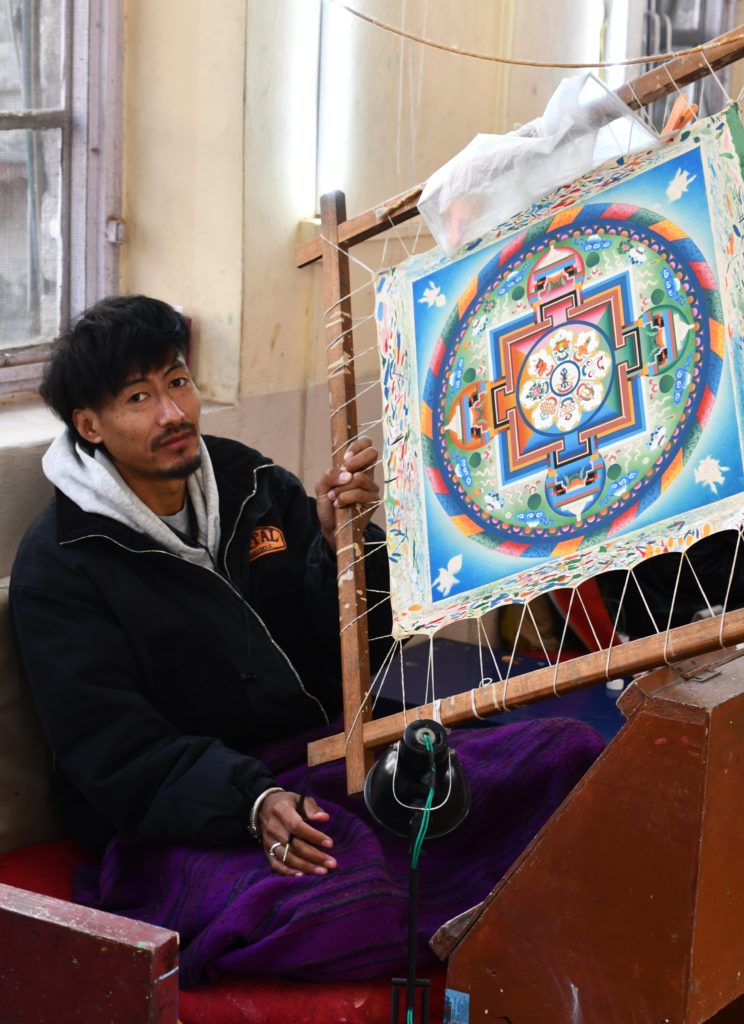 At the Gyuto Tantric Monastery Temple, various workshops are dedicated to Tibetan art and craft
Dharamshala
Home of the Dalai Lama, Dharamshala is a spiritual community. Here, we visit the Gyuto Tantric Monastery Temple, where various workshops are dedicated to Tibetan art and craft.
We continue to the Tibetan Museum and the Namgyal Monastery—the Dalai Lama Temple Complex.
Nearby Amritsar is our next-day destination. Founded in 1577 by Guru Ram Das, the fourth Sikh Guru, it is an important part of Sikhism. The main attraction is the Golden Temple, one of the most revered sites in Sikhism.
We visited the Jallianwala Bagh memorial park the next morning, the site of an infamous massacre, in which hundreds of innocent Indians were killed and wounded by British troops in 1919.
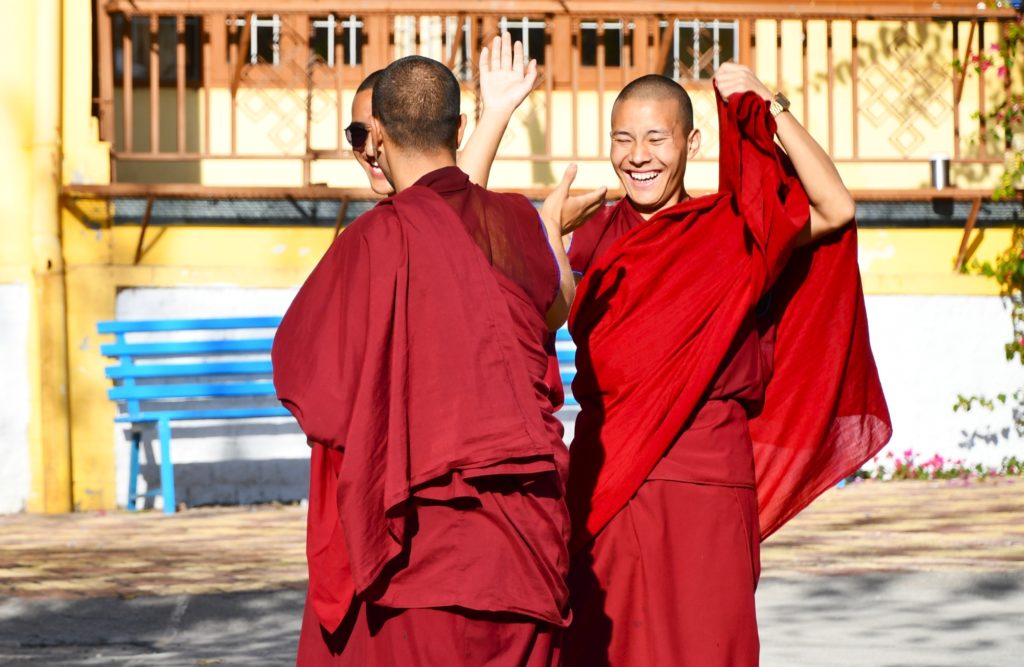 Monks at the Dalai Lama Complex
Next, we head to the Golden Temple. Heavily gilded and beautifully decorated, it is surrounded by a sacred pool and reached by a white marble causeway. Inside is the Guru Granth Sahib, the holy book of the Sikhs.
We also visit the community kitchen, which is manned by volunteers who feed up to 100,000 people every day.
The Ram Tirath Temple was very impressive as well. Here, a priest blessed each of us. Our local guide tells us the temple dates back to the period of the Ramayana, to Rishi Valmiki’s hermitage.
Around 9 pm, tour participants can return to the Golden Temple to witness the Palki Sahib ceremony, where dozens of devotees form a human conveyor belt to carry the Granth Sahib, containing the Adi Granth, to the sanctum, where it is kept until the opening ceremony the following morning.
My last journey is the Vande Bharat Express train from Amritsar to Delhi.
That evening, we met once again for dinner and goodbyes.
India is a magical and mystical destination filled with color, kindness, and lots of horn blowing!
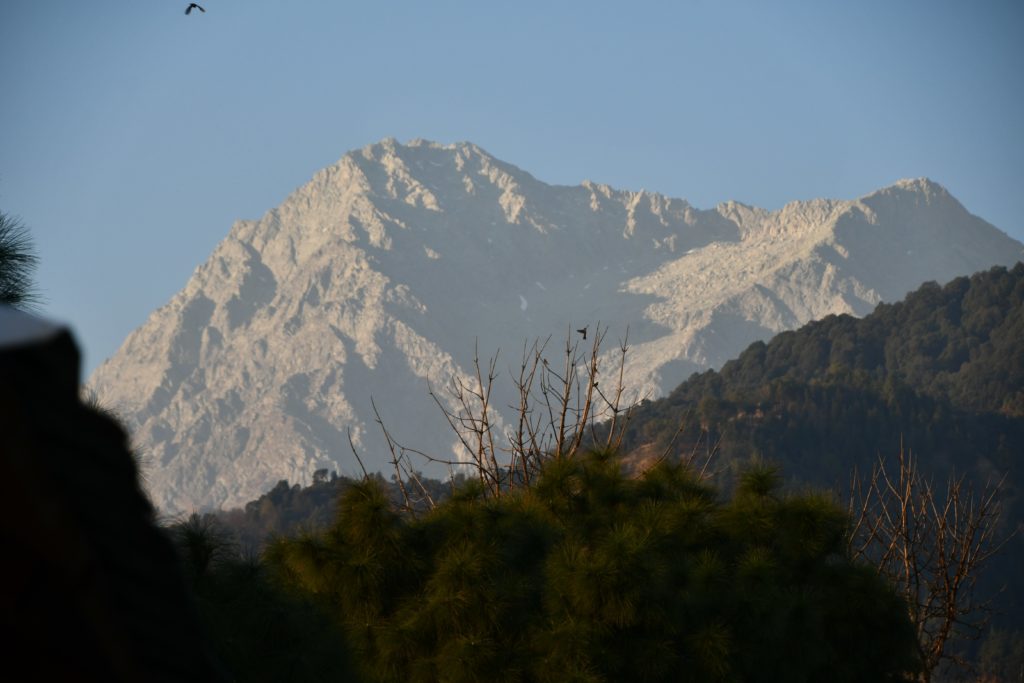 The Himalaya Mountains
All images by Marilyn Jones
For more information: visit website
See More: Himalayas, India, Marilyn Jones, Travel
