





Sinn Féin proposal aims to ensure accent marks are respected across official systems
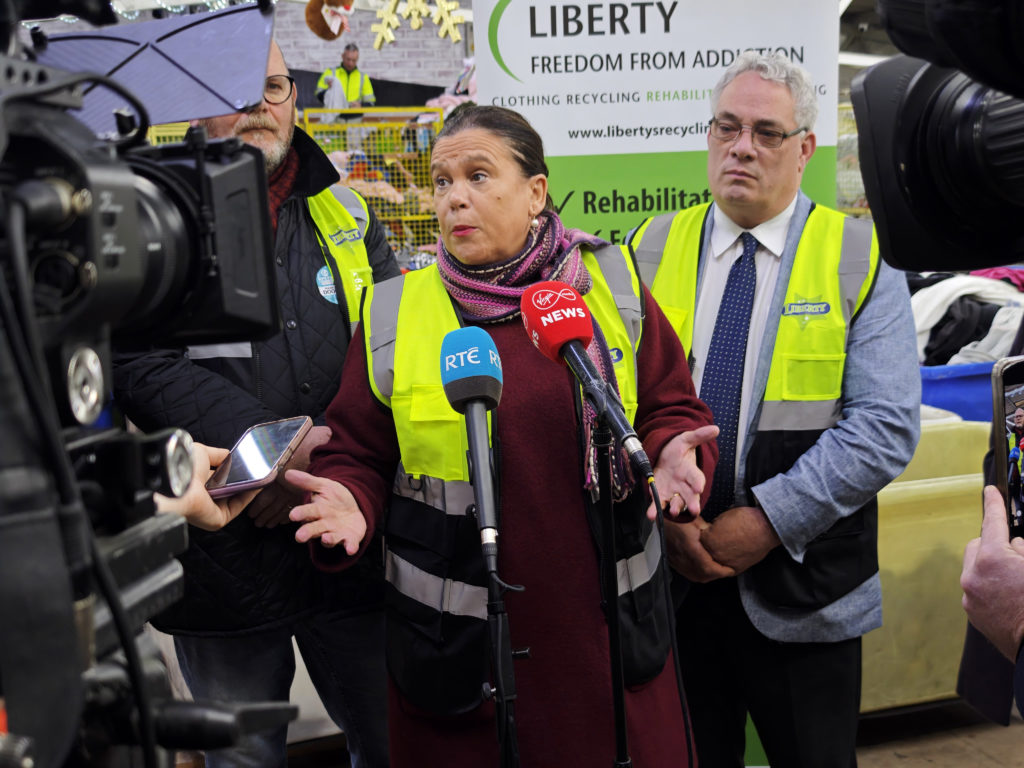 Aengus Ó Snodaigh (right) pictured with Sinn Fein president Mary Lou McDonald (picture Eamonn Farrell / RollingNews.ie)
SINN Féin TD Aengus Ó Snodaigh has introduced new legislation in the Dáil aimed at protecting the use of fadas in Irish names and addresses, in a move supporters say is long overdue.
The proposed Bill seeks to ensure that public bodies, state agencies and private companies properly recognise and accommodate the síneadh fada — the accent mark used in the Irish language — across official systems. Advocates argue that the omission of fadas can alter the meaning and pronunciation of names, and represents a wider disregard for the Irish language in administrative processes.
Mr Ó Snodaigh said the issue affects thousands of people whose names are routinely misspelled or misrepresented on official documents, databases and digital platforms. He described the legislation as a practical step towards linguistic respect and equality.
The Bill would require organisations to update IT systems and record-keeping practices to allow for accurate use of Irish characters. It also reflects ongoing efforts by Sinn Féin to promote the everyday use of Irish.
If passed, the legislation could mark a significant shift in for the Irish language, reinforcing its status not just culturally, but administratively as well.
The Bill must now pass through several stages in the Oireachtas, beginning with a Second Stage debate on its core principles, followed by detailed scrutiny at committee level where amendments may be introduced. It would then return to the Dáil for further consideration before moving to the Seanad for a similar process. Only if both Houses approve the legislation will it be sent to President Catherine Connolly to be signed into law, with Irish government backing likely to prove decisive in determining its progress.
A similar issue is felt acutely among the Irish community in Britain, where fadas are frequently omitted from official records, often without any option to include them. From NHS registrations to HMRC files and driving licences, many Irish people find their names subtly altered to fit systems that do not accommodate the full Irish alphabet. While this may seem minor, it can lead to inconsistencies across documents and, for some, a sense that their identity is being gradually eroded in administrative life.
Campaigners say the contrast with other languages in the UK is striking. Welsh, for example, is routinely supported across public systems, reflecting its official status and long-standing recognition. Irish, despite its constitutional standing in Ireland and its widespread use among diaspora communities, does not always receive the same treatment.
If Aengus Ó Snodaigh’s Bill progresses, it may prompt broader questions for British institutions dealing with Irish citizens. At the very least, it highlights a quiet but persistent issue for the diaspora — one where something as small as an accent mark carries a deeper significance about language, respect and belonging.
See More: Dail Eireann, Irish Language, Sinn Féin
