





THE RELEASE of Ireland’s 1926 census is set to offer amazing insight into a country emerging from one of the most turbulent periods in its history and allow millions of people from across the world the chance to trace back their Irish roots.
Exactly a century after the census was compiled, and covering almost three million people, it will be made publicly available online by the National Archives of Ireland on Saturday, April 18.
Digitised from more than 700,000 original pages, the records promise a detailed snapshot of life in the early years of the Irish Free State.
For genealogists and historians, the importance lies not only in its scale but also in its timing.
“The 1926 census is important because the census before was from 1911, so there hadn’t been a census for 15 years,” said genealogist John Grenham.
“Those 15 years were the most momentous in the history of Ireland.”
In that intervening period, Ireland experienced the First World War, the 1916 Rising, the War of Independence, partition, and civil war.
“It was a huge decade of revolutions and upheavals,” Grenham said, “and the 1926 census is the first snapshot of the aftermath of that.”
Unlike earlier records, the 1926 census offers a more granular view of daily life.
As well as names, ages and occupations, it includes exact birthdates, detailed addresses and, in many cases, employers’ names and places of work, offering what Grenham described as “another thread to pull” for those researching family histories.
The level of detail, combined with the fact that each form was completed by householders themselves, gives the records a uniquely personal quality, capturing a moment in time across cities, towns and rural communities.
For the vast Irish diaspora, estimated at around 70 million people worldwide, the release is likely to spark renewed interest in ancestry.
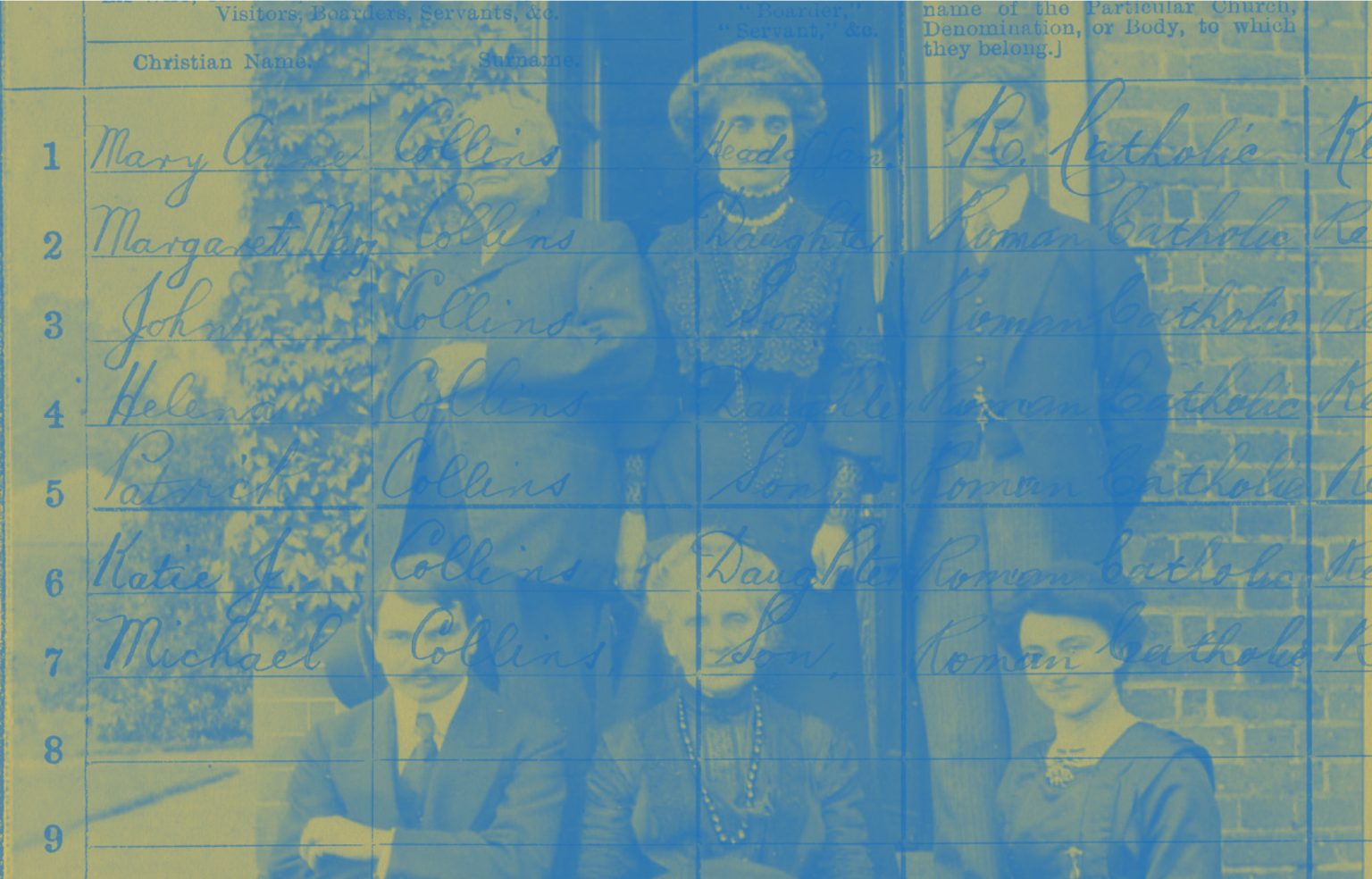 The archives go live at midnight this Friday (Photo from National Archives of Ireland)
For many, it will provide a crucial bridge between generations, particularly for families whose relatives emigrated during the 1920s.
“After the civil war, anybody who fought on the anti-treaty side found it virtually impossible to get any kind of job, so there was massive migration out of the country,” Grenham said.
“So I think a lot of people whose ancestors migrated in the 1920s might find their extended family still there.”
The census may also challenge long-held assumptions about Irish society in the early years of independence.
“It’s interesting in lots of ways because one of the stories we are told about the creation of the free state of Ireland is that there was this great outflux of Protestants,” Grenham said.
“This is the first sort of concrete evidence that we’ll have to compare 1911 and 1926.”
He added that the idea of Ireland as culturally uniform is misleading.
“The story of Ireland being monolithic and monocultural was never true,” he said, pointing to longstanding migration links with Britain and the presence of Jewish and Italian communities in the early 20th century.
But the census also has its limitations.
It covers only the 26 counties of the Free State. While a separate census was conducted in Northern Ireland in the same year, its records have not survived.
Despite that gap, historians say the release marks a landmark moment in understanding modern Ireland.
The census may also reveal subtle cultural shifts taking place at the time.
Grenham noted that more people were beginning to use Irish-language versions of their names, reflecting the growing influence of the Gaelic revival and the social value attached to the language in the new state.
“It was a significant boost in terms of social status and the possibility of public service jobs,” he said.
As the records go live at midnight, researchers, families and historians will be able to explore not just names and dates but also a society reshaping itself after revolution, one household at a time.
Everything from irishpost.com and the print edition is available on the Irish Post App — plus more! Download it for Android or Apple IOS devices today
