





WHEN you walk the coastal paths of the Gower peninsula in south Wales — Britain’s first officially designated Area of Outstanding Natural Beauty — the landscape has a way of rearranging your priorities.
Yes, there are the limestone cliffs and wind-bent grasses, the salt-tanged air and black-suited cormorants standing like chapel elders along the rocks.
Yes, there are the wild ponies grazing above empty coves, and the long beaches unspooling towards the horizon.
But increasingly, as the miles pass beneath your boots, your thoughts turn not to the scenery but to the reward waiting at the end.
Specifically: ice cream.
Joe’s Ice Cream, founded in Swansea in 1922 by Italian immigrant Joe Cascarini, has become as much a part of Gower’s identity as its cliffs and castles. Cascarini’s family had arrived decades earlier from Abruzzo, part of the wave of Italian migrants who opened cafés across Britain.
Today, his legacy lives on in generous scoops of vanilla, rum and raisin, or Welsh cake ice cream — eaten, preferably, after a long coastal walk when it tastes like the best thing in the world.
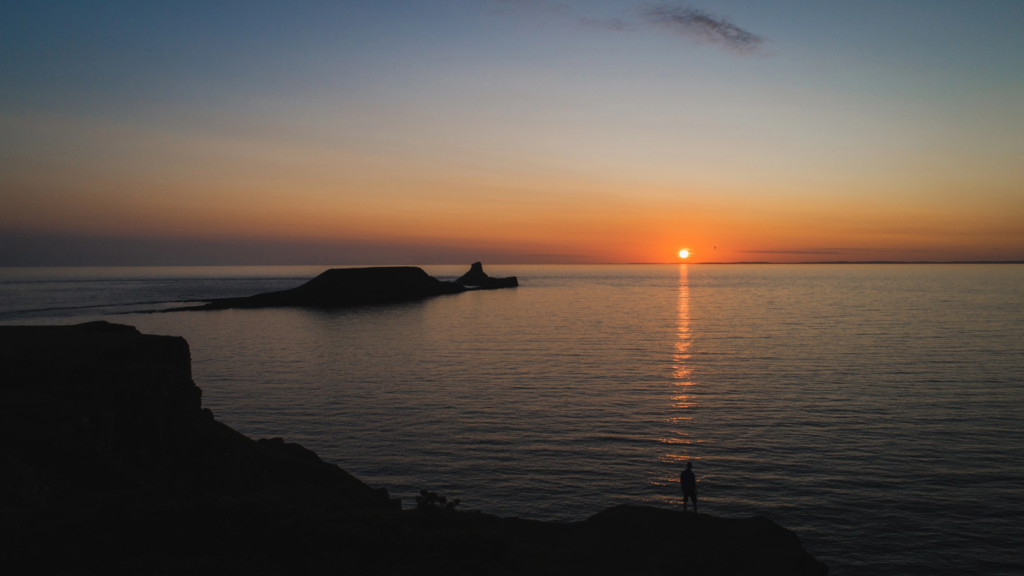 The Gower Peninsula
The Gower, or Gŵyr in Welsh, stretches west from Swansea in a great sweep of cliffs, beaches and salt marsh. Its walking route covers more than 80km, taking in ancient castles, prehistoric caves and quiet villages where time moves at the pace of the tide.
While Rhossili Bay, with its dramatic views of Worm’s Head — a Viking-named headland whose Welsh name, Pen Pyrod, means “worm’s end” — receives most of the attention, Oxwich Bay, four kilometres long and curved like a drawn bow, is its quieter rival.
Here, the rewards are not only scenic but deeply restorative.
The Oxwich Bay Hotel, set within the Oxwich National Nature Reserve, occupies a former rectory dating from the late 18th century.
From its bay-facing rooms, the view stretches across pale sand and shifting light — a perfect vantage point from which to collapse, happily exhausted, after a day on the coastal path.
The reserve itself is one of Britain’s richest ecological landscapes, combining dunes, woodland, cliffs and freshwater pools. Rare plants such as dune gentian grow here, alongside water rail, little grebe and, in winter, the elusive bittern.
On quiet mornings, the only movement is the slow progress of dog walkers and the distant silhouettes of surfers waiting for the right wave.
The hotel has evolved over generations. Originally opened as a bed and breakfast by the Williams family in the 1950s, it grew into a full hotel and restaurant, retaining its character while becoming one of Gower’s most cherished stopping points.
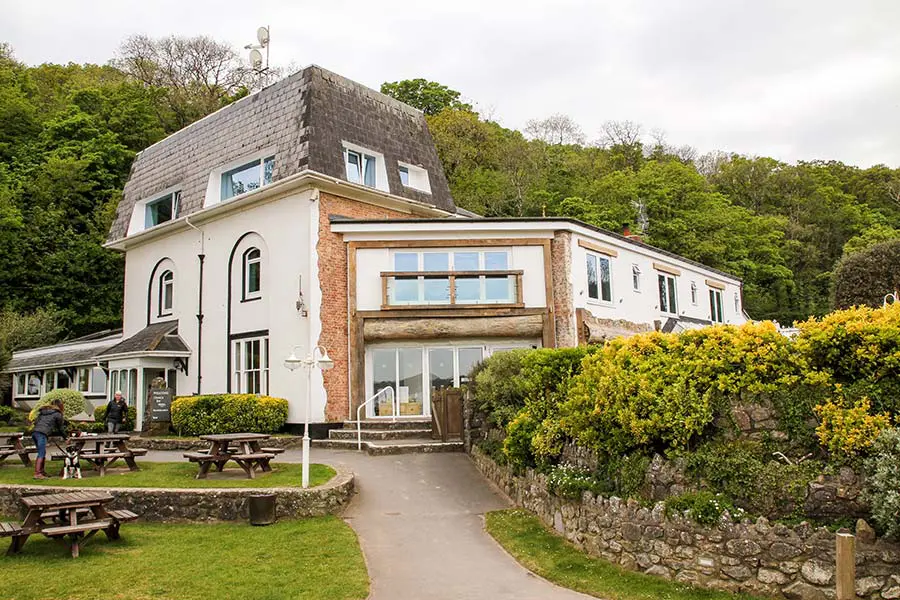 Oxwych Bay Hotel
Inside, wooden beams and stone fireplaces reflect the peninsula’s rural heritage, while the kitchen has built a reputation for generous, restorative cooking — the sort of food walkers dream about in their final miles.
Nearby stands St Illtyd’s Church, its origins reaching back to the early medieval period. Tradition holds that its ancient font was brought here in the 6th century by the saint himself.
In a quiet recess lie two weathered effigies, said to represent members of a local noble family lost at sea centuries ago. Like so much on Gower, the church exists at the intersection of landscape, history and legend.
Follow the coast west from Oxwich and the path leads to Port Eynon, once a centre of oyster fishing and, less officially, smuggling.
Hidden caves along the shoreline were used to conceal contraband brandy. Today, families search rock pools while gulls circle overhead, and the only smuggling taking place involves chips eaten straight from paper in the sea breeze.
Further along lie the Paviland Caves, where in 1823 archaeologists discovered the remains known as the “Red Lady of Paviland” — later revealed to be a man who lived more than 30,000 years ago.
It remains one of the oldest ceremonial burials in Britain, a reminder that long before walkers and holidaymakers, others stood here and looked out at the same restless sea.
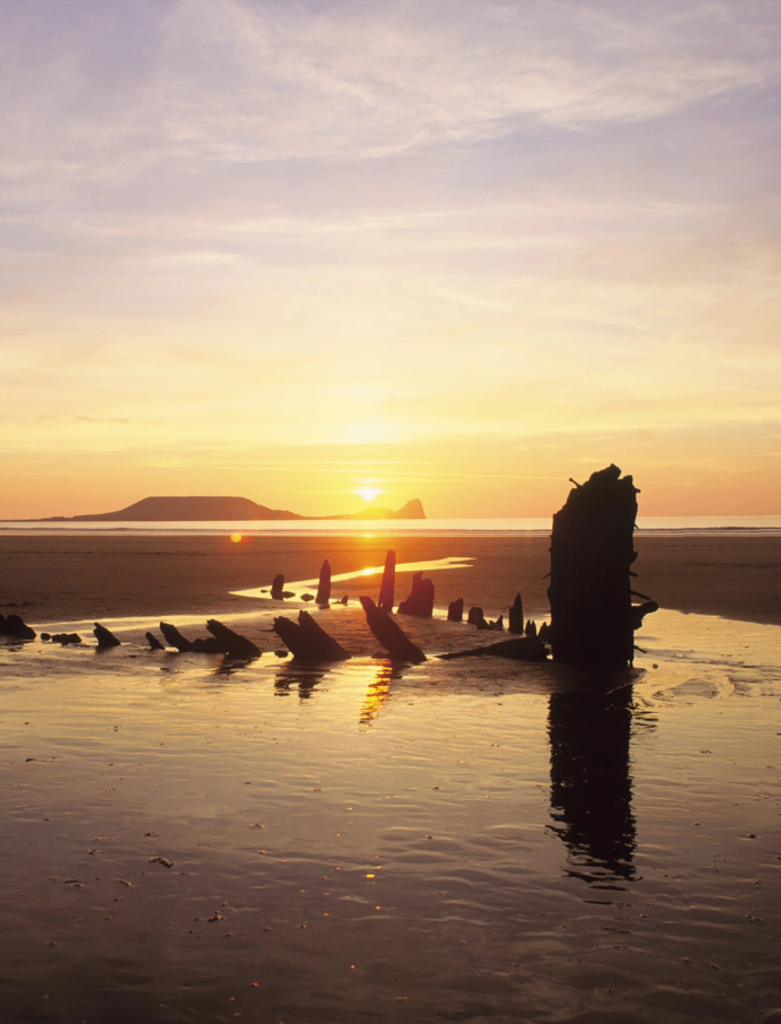 The Helvetia shipwreck
The Gower’s history runs deep — from prehistoric settlements to Norman castles, from Celtic saints to Italian ice cream makers. Its villages, with their whitewashed cottages and narrow lanes, still feel rooted in older rhythms.
Oxwich itself, just 13 miles from Swansea, retains the quiet dignity of a place shaped more by tide and weather than by modern urgency.
Yet for all its ancient stories, the peninsula’s most vivid memories are often the simplest. The final descent towards the bay. The relief of sitting down after hours on the path. The first spoonful of something cold and sweet.
Walking, after all, sharpens appetite as much as perception.
On Gower, the rewards are always waiting: a warm room, a wide horizon, a well-earned meal. And somewhere, at journey’s end, a scoop of ice cream that tastes — briefly, perfectly — like the finest thing in the world.
See More: Gower Peninsula, Travel, Wales
