





TOURISM Ireland has come up with ‘slow travel’ alternatives for your next visit to Ireland.
The holiday breaks are described as eco-friendly, responsible travel choices that reduce a person’s carbon footprint and at the same time put you in touch with local communities.
Boating around the Fermanagh Lakelands
The Fermanagh Lakelands provide several sustainable travel experiences. The best way to explore? There’s quite a choice: barge, canoe, cruiser or even stand-up paddleboard.
You can of course go island-hopping on the 150 or so scattered across the Upper and Lower loughs.
On the ethereal, mist-shrouded islands of Boa Island are two scary-looking statues. What they’re about no one can be exactly sure.
The gloating Boa Man, also known as the Lusty Man, and the enigmatic Janus Stone stand in Caldragh Cemetery. They could be pagan idols or very early Christian statues, although estimates for the stones’ age have put them as old as 2,000 years.
So if they are Christian constructions, somebody must have been pretty nippy with the news from the Middle East. Other research puts their origins in the early medieval period, which seems more likely. Pop along and have a look; see what you make of it. You might even want to write a poem. Seamus Heaney did – he called it January God.
“In the wet gap of the year,
Daubed with fresh lake mud,
I faltered near his power –
January God.”
See? You don’t even need to find a rhyme for Boa.
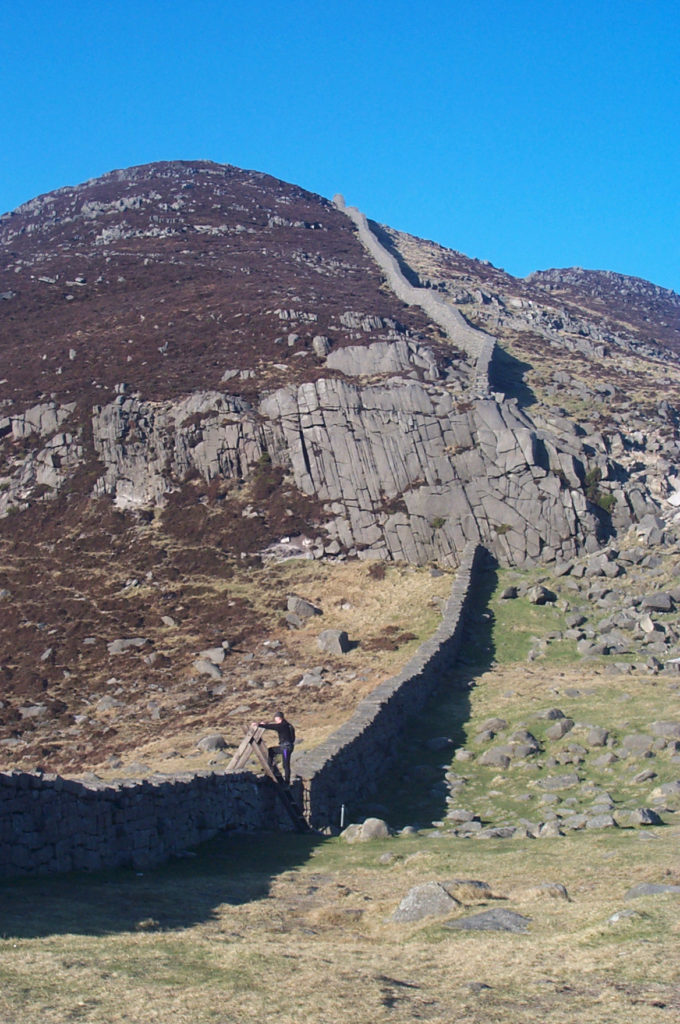 The Mourne Wall (Pic:Richard Watson/Tourism Ireland)
The better to get to grips with the area, and the stories and legends book yourself in at the Lusty Beg Resort on Boa Island https://www.lustybegisland.com/
Making strides in the Mournes
The Mourne Mountains are an Area of Outstanding Natural Beauty in County Down, and in recent years have come to the attention of a global set of admirers due to their appearance (multiple times) in the HBO series Game of Thrones.
These mist-shrouded peaks will simply make you slow down — unless of course you’re a Night’s Watch ranger scanning the horizon for White Walkers, cloak billowing, convinced winter is about to sweep in from beyond the Wall.
To investigate further, base yourself in an off-grid hideaway like Birch Cottage (https://stayatbirch.co.uk/), Ballyroney, close to the unmissable Tollymore Forest Park. And when it says ‘off-grid’ they mean it. At the centre of Lackan Cottage Farm, this rural redoubt generates all its own electricity. WiFi yes, telly no.
To investigate the Mournes further, contact Peter Rafferty who runs Walk The Mournes. A hike along the Mourne Wall is not just invigorating, but fascinating as well.
The mammoth task of making Christians out of the people of County Down fell to Saint Donard in the 5th century. He died around AD 506, after having spent many contemplative years wandering the Mournes. This was an early version of mindfulness, and really you could scarcely do better in terms of tranquillity, surrounded as you are by crags and crevices of an extraordinary variety, not to mention babbling streams and ancient gnarled hawthorn trees.
The Diamond Rocks have been a famous mineral-collecting locality since the early 19th century when ‘Diamond Pat’ (Patrick Doran), a local commercial mineral dealer, started to trade semi-precious stones here.
The gemstones arrived through a long geological process.
Around 65 million years ago a quartz-rich melt cooled and deposited itself over the Mournes. The gases in the molten lava formed cavities in the rocks, and large crystals formed. Today the commonest minerals are deep brown smoky quartz crystals, feldspars and dark and pearly mica leaves. Although beautiful, in monetary terms few of the minerals in the Mournes have significant commercial value.
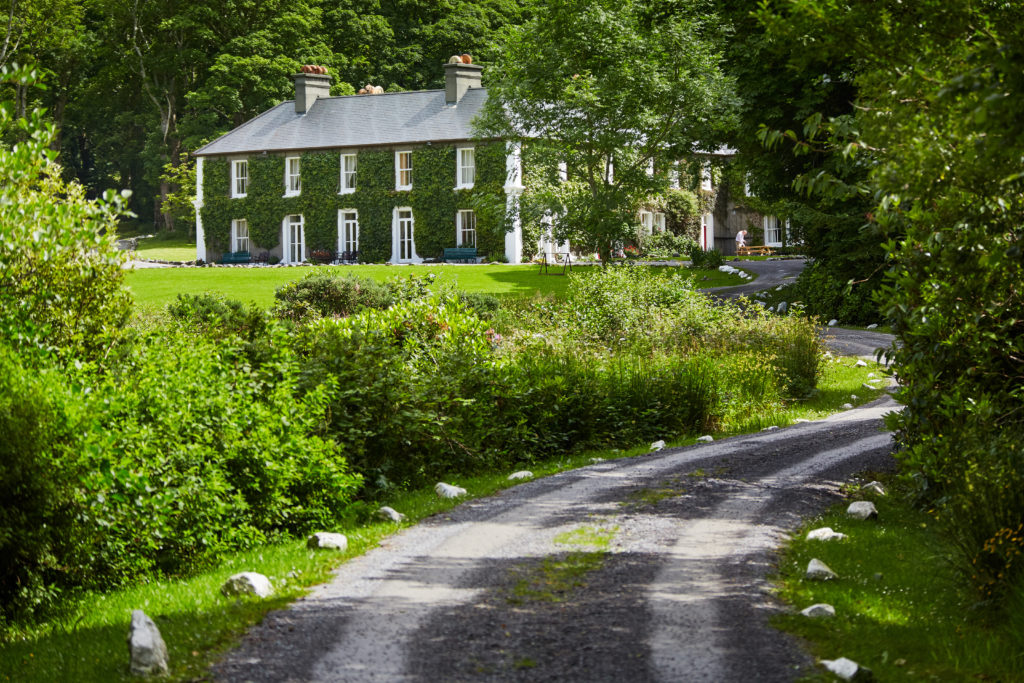 The Delphi Lodge is an 1830s country house hotel with charming rooms, gourmet communal dining and fishing on the estate (Pic: Big Smoke Studio/ Tourism Ireland)
Retreat to the serenity of Delphi Resort, Connemara
Escape: that's what Delphi Resort is all about. Nestled in the foothills of the Mweelrea Mountains, amidst the dry stone walls, the wild orchids, the orange montbretia that dot the Connemara landscape, this resort is all about going slow and taking things at a gentler pace.
Originally a Georgian lakeside fishing lodge, today it features a deep wine list accompanying fresh catch at communal oak dining tables. Peat fires from sustainable turf beds, warm lounges and a library filled with books. Remember how the old saying goes: all you need for a happy life is good friends, good books, bad memory.
A hidden treasure on the Wild Atlantic Way
Mulranny has been voted as Ireland's Best Destination for Responsible Tourism at the Irish Responsible Tourism Awards – and for good reason. This small coastal village in County Mayo is beautifully situated between Clew Bay and Blacksod Bay along the Wild Atlantic Way. Known for its sweeping beaches and panoramic views of Croagh Patrick and the Nephin Mountains, it is a haven for walkers and cyclists. The Great Western Greenway passes through the village, linking Westport and Achill Island along a former railway line. With its fresh Atlantic air, quiet charm and dramatic scenery, Mulranny offers a classic taste of Ireland’s rugged western coastline.
Stretch your legs on Sheep’s Head
The Sheep's Head Way is one of Ireland’s most rewarding long-distance walking routes, tracing the narrow Sheep’s Head Peninsula in West Cork. Stretching roughly 93km along gorse-covered trails — with plenty of fuchsia on show too — the route winds along quiet boreens, across heather-clad hills and along dramatic Atlantic cliffs. Walkers are treated to sweeping ocean views, seabirds wheeling overhead and, on clear days, glimpses of the Beara and Mizen peninsulas. Keep watch for whales or dolphins.
Less crowded than many Irish routes, it offers solitude, wild beauty and a deep sense of connection to the landscape.
Make your base in the charming village of Durrus, a small village set between Bantry Bay and the Sheep’s Head Peninsula. It’s surrounded by lush farmland and Atlantic inlets, with tranquillity guaranteed. The artisan food culture, including the famed Durrus cheese made locally, is internationally acclaimed.
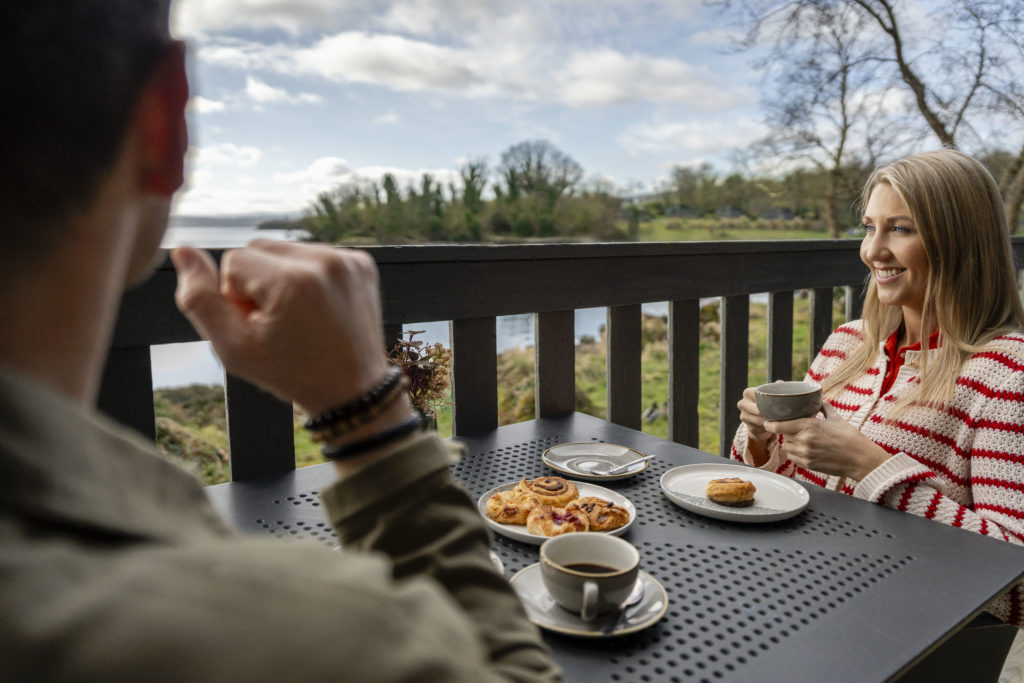 A secluded island retreat in the Fermanagh Lakelands, Lusty Beg Resort offers a mix of adventure and relaxation.or a family adventure, it’s a unique and unforgettable destination (Pic: Rob Durston for Tourism Northern Ireland)
At the nearby village of Ahakista (around a three-mile hike away) stop off for lunch and a pint at The Tin Pub.
Marvel at Mother Nature in the Burren
The Burren is, quite simply, unique. A harsh, strange, hauntingly beautiful region, it occupies most of the top north-western corner of Clare.
Spectral limestone pavements loom out of the turf, criss-crossed by deep trenches called grykes. In spring and summer these are filled with wild flowers, sphagnum moss and piles of heather.
The Burren is internationally important for its botany – with 70 per cent of the native species occurring here. You’ll find great stone tombs nearly 4,000 years old, cooking stones going back two thousand years, churches a thousand years old, and mass stones going back to the Penal times.
This EU-designated Special Area of Conservation is a cornucopia of wild delights. Make sure to take time to peruse The Burren Perfumery, where the Chowen family has been busy bottling Ireland's scents and sharing its horticultural secrets since 1972.
Breathe deep in the Boyne Valley
Newgrange, the Hill of Tara, Trim Castle, the Battle of the Boyne: the Boyne Valley is at the heart of so much of Ireland's history, myth and legend that you really shouldn’t rush it.
The Boyne Valley, straddling Counties Meath and Louth, is one of Ireland’s most historically resonant landscapes — a place where myth, monarchy and modern identity intersect along the gentle curves of the River Boyne.
At its heart stands Newgrange, a 5,000-year-old Neolithic passage tomb older than the pyramids of Giza. Each winter solstice, a shaft of sunlight pierces its roof box and illuminates the inner chamber, a feat of prehistoric engineering that really leaves you scratching your head. Was this some attempt to get in touch with we-know-not-what, or was it merely an early calendar, a sort of early Teams Event alert kind of thing?
Nearby is the great mound of Knowth and the smaller Dowth, together forming part of the Brú na Bóinne UNESCO World Heritage Site.
The valley is equally central to early Irish legend. The Hill of Tara, once the ceremonial seat of the High Kings of Ireland, rises above the surrounding farmland. According to tradition, it was here that sovereignty was conferred and where St Patrick later challenged pagan authority.
History of a more modern kind unfolded in 1690 at the Battle of the Boyne, when the forces of William III defeated those of James II. The encounter shaped the political and religious trajectory of Ireland and remains a touchstone in unionist and nationalist memory alike. There is no truth in the legend that after the battle William saw a dejected James sitting by the battle site and rode up to him saying, “Never bother, Jim! Everyone will have forgotten about it in a couple of weeks.”
Trim Castle is Ireland’s largest Anglo-Norman fortress. Begun in 1172 by Hugh de Lacy, its massive stone keep dominates the River Boyne. A symbol of medieval power in Meath, the castle later featured in Braveheart and remains one of Ireland’s best-preserved Norman strongholds.
It’s not all sightseeing, or contemplating the landscape or mulling over the history. Get your pulse racing at Boyne Valley Activities (https://boynevalleyactivities.ie/ Kayaking, rafting, archery, low ropes in gloriously bucolic surroundings.
For accommodation, nowhere better than Decoy Country Cottages, charming self-catering cottages near Trim.
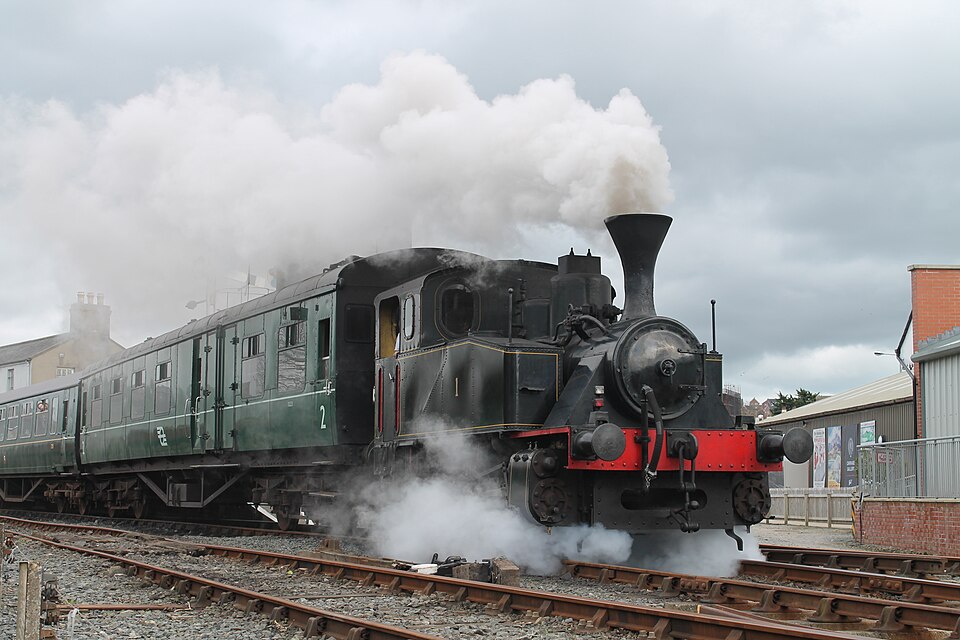 Explore Ireland by rail
Explore Ireland by rail with Railbookers
THE trip from Derry to Coleraine is, according to Michael Palin, “one of the most beautiful rail journeys in the world.” The Derry train along the banks of Lough Foyle (be sure to sit on the left) is truly astounding. The railway is the best way to see the reclaimed appearance of the coastal strip between Derry and the mouth of the Roe — an unusual terrain in Ireland. But it also passes some of Europe’s most spectacular scenery: the Causeway Coast, Mussenden Temple, the Giant’s Causeway, Dunluce Castle.
Michael enjoyed the journey, and at one point — on the Derry train — fell in with a gentleman called Tom McDevitte. Tom had served as a rail clerk on the now-defunct Clogher Valley Railway, and he recalled some of the vicissitudes of serving on the branch line.
At one village the train was regularly held up by a goat on the line owned by a woman called Maggie Coulter. The fireman had to dismount and pelt the goat with small shards of coal to make it move. When Maggie decided she had enough fuel for the fire, she called the goat in.
Just like the old West Clare Railway really. That line was immortalised in verse by Percy French.
The songwriter and poet used the train regularly, and on one occasion when it made an unscheduled stop in the middle of nowhere he asked a guard what the problem was. “Ah, ’tis an ould cow sitting on the line, sir.”
Eventually the train started up again and lumbered towards Ennis. But after ten minutes it shuddered to a halt again. As the guard sauntered through the carriage, Percy said, “Don’t tell me – another cow?”
“Ah no, sir. ’Tis the same ould cow.”
The Waterford Suir Valley Railway historically was a vital community link, before being disbanded. Thanks to local efforts, a small part of the track has been restored for visitors and locals to enjoy.
One of the many beautiful restorations on these tracks is Kilmeadan station. This is where you’ll start your slow journey and where you can pick up some home-baked treats and a fine cup of tea at the Whistlestop Café. This is true mindfulness.
You can choose to travel the full 10km to Bilberry station, just outside Waterford city, or stop at Mount Congreve Gardens, an utter profusion of flowers and shrubs as soon as spring arrives.
The carriages,specially built for the Suir Valley Railway, have partial open-tops the better to take in all the sights on the journey: the River Suir, rolling farmlands, the Waterford Greenway, and glimpses of County Kilkenny across the river.
In the low-lying land in the lee of Down Cathedral — where the mortal remains of St Patrick lie — you catch a train from the Downpatrick and County Down Railway. The engine chugs gently along to Inch Abbey, a majestic ruined Cistercian monastic site, dating back to the 12th century, on the banks of the River Quoile. As well as the atmospheric puffs of steam that accompany the trip, the landscape offers exceptional views of the Mourne Mountains, farmland and pastures, and abundant wildlife.
For further travel inspiration click here Slow travel in Ireland | Ireland.com
A slow travel adventure in Ireland | Ireland.com
See More: Ireland, Slow Travel
