





WE TEND to imagine neglected children as they’ve been depicted in literature or film.
There’s the cheeky ‘Orphan Annie’ model that in popular entertainment, and a comical ‘Matilda’ quality which depicts a clever than average child struggling beneath the domination of grotesquely vile parents or teachers.
We adore it when these figures are shown to be ridiculous out-of-date authoritarians who eventually get their just desserts as justice is done.
This Victorian model has trickled down into modern social consciousness, and in some literature includes figures like Francie Brady in Pat McCabe’s The Butcher Boy, or Katriona O’Sullivan’s child self in her autobiography, Poor.
The lesser child has featured strongly over the past two centuries or so, and includes fairy tales such The Little Match Girl, Hansel and Gretel, as well as Dickens’s Oliver Twist.
In the last few decades, Jeanette Winterton’s Oranges are Not the Only Fruit and more recently Anna Burns’s Milkman, or Claire Keegan’s Small Things Like These depict young people completely ignored and neglected within a family group or by society itself.
But it doesn’t always have to be slapping and beating, starvation and physical abuse. Less dramatic forms of neglect do exist but we tend not to hear about those.
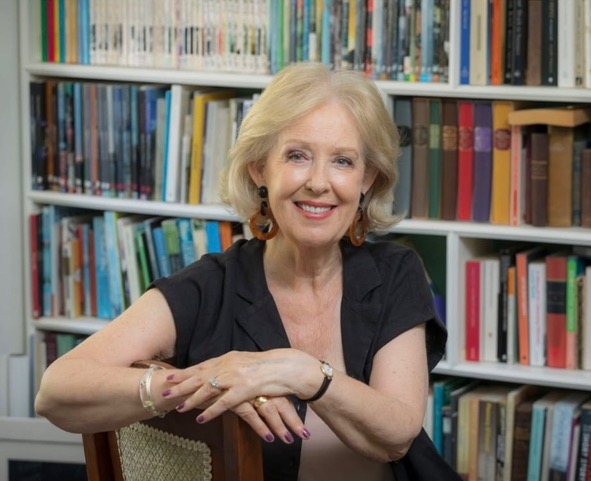 Author Mary O'Donnell
The low-grade quiet performer for example, the ones who outwardly appear competent and cooperative, but whose behaviour may be masking a different story.
So what makes a child feel ‘lesser’ and who, usually, is responsible for such feelings?
If anything, silence is the key, the kind of load-bearing silence in which nobody ever notices, or intervenes when they witness something not quite right within a child’s life.
In my novel ‘Sweep the Cobwebs off the Sky’, a story unfolds in which an over-responsible protagonist called Frankie recalls aspects of a childhood where she witnessed some very cruel actions perpetrated by her mother against her adopted sister, Tess.
Back home and caring for this frail and dying mother provokes a stream of overwhelming memories she has never really cared to dwell on.
With an age gap of six years between the sisters, Frankie as a child witnesses and remembers everything, but like many children confronted with something they don’t understand, she has also suppressed everything.
Who, in the 1960s had the language to tell an adult to stop slapping their sibling?
Nor can Frankie speak to her gentle medical father, Paddy. It’s worth remembering that this was the era in which the influence of the US paediatrician Dr Benjamin Spock peaked.
In his seminal book Baby and Child Care, the cure for what well-intentioned leftie Spock called ‘chronic resistance to sleep in infancy’ was straightforward: you firmly said good night to the infant, then walked out of the room, and left the infant to self-soothe.
As time passes, Frankie finds herself the favoured or ‘easy’ child in her home, in which her ‘difficult’ and adopted sister Tess plays the ‘bad’ girl on the scene. So far so crystal clear in this see-saw relationship of sibling discontent.
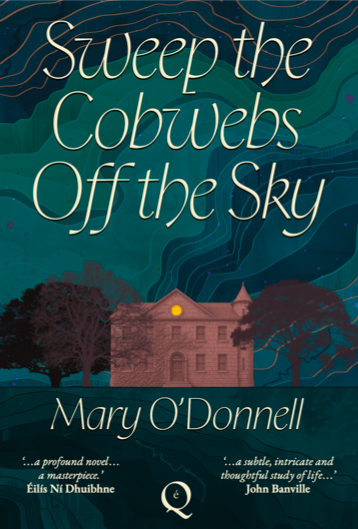 O'Donnell's latest book Sweep the Cobwebs off the Sky
But hang on a moment. Who really is the lesser child?
I admit to making a strong case for the protagonist herself in my novel, and how she is actually ‘lesser’—the cooperative girl who witnesses so much neglect during childhood that it silences her completely, traumatising her entire nervous system to the point that she actually cannot cry in moments of distress.
This is sometimes the fate of outwardly good girls, a kind of pernicious neglect of their moods, their physicality, their potential, and sadly, two parents entirely focused on the child considered to be the problematic one.
In reality, Frankie is the child who needs help, who desecrates her mother’s garden by spraying weed-killer on the plants. She gets away with it.
She is also the child who smashes every pane of glass in the green-house, and nobody notices.
Frankie grows to adulthood with no particular expectations of her, with neglected teeth (her chaotic parents forgot to bring her to the dentist), because she is a coper, an achiever, a girl accustomed to pleasing adults.
But time passes and by the time she is in her twenties, Frankie finds herself taking responsibility for Tess, who has ricocheted into alcoholism and drug addiction, during the course of which she is unable to hold down a job.
Again and again, Frankie takes her part, writing indignant letters to the employers who sacked her sister, and in a manner of speaking enabling Tess.
And why? Frankie is a victim of unconscious guilt who realises that Tess is injured, that Tess needs help.
The bravery of overlooked children can never be underestimated.
They are fed and clothed, often sent to the best schools, do the routine school trips to Paris or Rome, go through all the rites of passage as expected: Junior Cert, Leaving Cert, perhaps third level, and then they continue to meet family and social expectations in the form of relationships (the right ones, of course!), marriage, careers and children. Yet inside they are screaming.
We can only balance so much in our lives, right?
I remember my very sage GP once telling me to put guilt in the bin, that it had no place in our lives, that it was destructive. And of course he was right.
To that end, I set out in this novel to attempt to restore some kind of peace and even inner reconciliation for my protagonist Frankie.
She is surrounded by the remnants of a past she cannot control, but as with all of us, if we can’t park some of those elements, the sadder, deep-cutting ones, we will never blossom sufficiently as adults to experience contentment or even—heaven forbid!—happiness.
I don’t think anyone owes anyone very much beyond the ‘everything’ of respect, which, frankly, is a big deal.
That means that for parents the question of respect for children and their magical becoming may be the greatest human role they will ever play.
Anything else, from physical punishments to a range of other careless, narcissistic, and unadult activities (I don’t need to name them) may be doing the shit on children who see, observe, witness and feel.
It may not be Matilda or Orphan Annie, but a different kind of reality with justice for children at its heart.
PROFILE: Mary O’Donnell
MARY O’DONNELL is an acclaimed novelist, poet and short story writer whose work has helped broaden Ireland’s literary landscape. Her debut novel The Light Makers won the Sunday Tribune Best New Irish Novel Award in 1992, and she has since published several novels including The Elysium Testament and Where They Lie.
Her latest novel Sweep the Cobwebs Off the Sky is a tender exploration of ageing, memory, place, and the desire for reconciliation. It is published by Époque Press
Everything from irishpost.com and the print edition is available on the Irish Post App — plus more! Download it for Android or Apple IOS devices today.
