



LABOUR MP Catherine McKinnell has spoken of the lasting influence of her Irish grandfather, Michael Grady, whose journey from Kerry to Newcastle nearly a century ago helped shape both a community and her own life.
Michael Grady emigrated from County Kerry to Newcastle in 1928, part of a wave of Irish men and women who crossed the Irish Sea in search of work and opportunity.
“Although I don’t know a huge amount about his childhood, I know much more about the impact that he had on the local community in Newcastle.”
“When he first moved over, he went straight into working on the building sites,” McKinnell said.
“He was a labourer, and in post-war England, there was a lot of building and a lot of houses to be built.”
Family stories still circulate about his strength.
“From some of the stories that I’ve heard, he had such long arms and was so strong that he could carry two toilets under each arm,” she recalled.
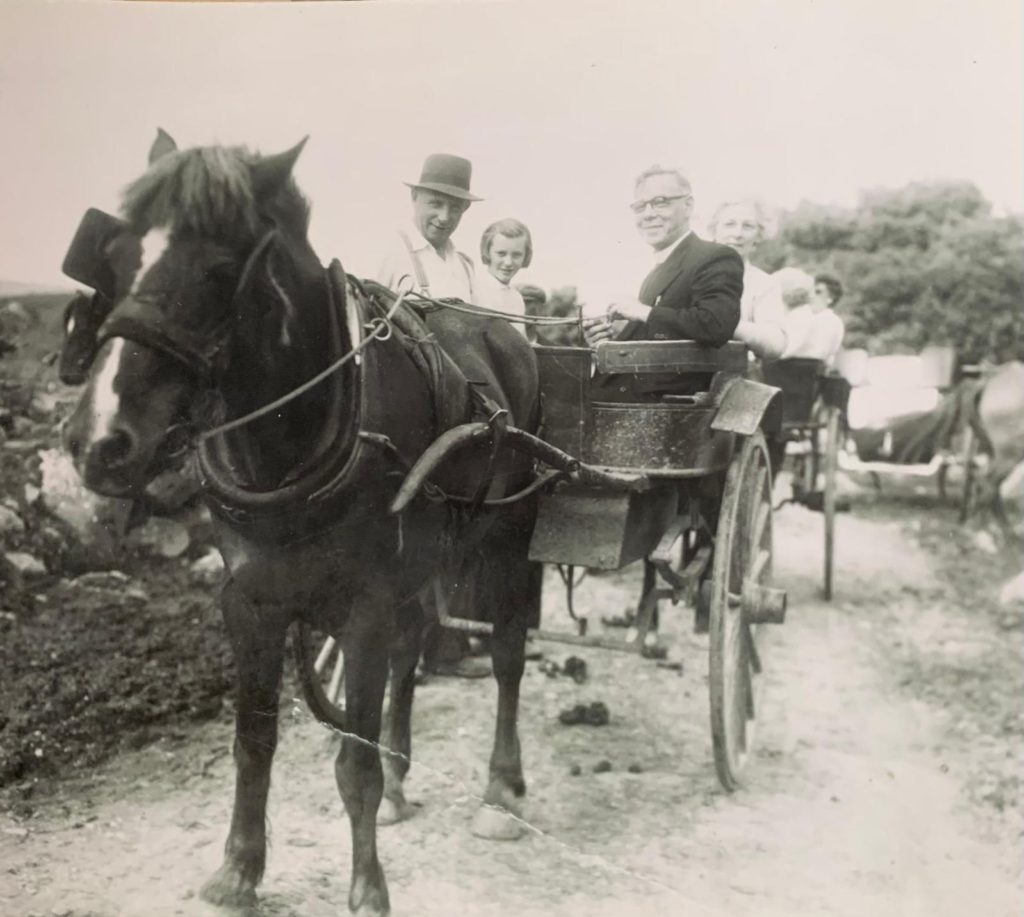 Back in Ireland with his family (Photo courtesy of Catherine McKinnell)
In time, Grady recognised the opportunity not just to work, but to build something of his own.
He went on to establish the M Grady Building Company in Newcastle, constructing houses that would become known for their quality.
“There were people that would say to me, ‘Oh, everyone wanted a Grady house,’” McKinnell said.
“There was a waiting list for them because they were good quality houses and he was so well respected.”
Many of those homes are still lived in today.
When McKinnell was first elected Labour MP for Newcastle upon Tyne North in 2010, part of her constituency covered the area where her grandfather had lived and worked for most of his adult life.
“So when I would be going around knocking on people’s doors, they would remember him and talk about how much they love him and how helpful he’d been to them over the years,” she said.
“Lots of people would have stories as I went out and about, and it was always lovely knocking on doors in that area.”
Known as a quiet man, Grady was a familiar figure within Newcastle’s Irish community.
“He was a much-loved character, and he was very well known at the Irish centre,” McKinnell said.
“He was known for playing cards. He was a quiet man, but when he did speak, it was always quite profound.”
Despite his business success, “He lived a very simple life,” she said. “I remember he always drove the same car, and he always wore a trilby. He lived in the same house that he built, and he grew potatoes in the back garden.”
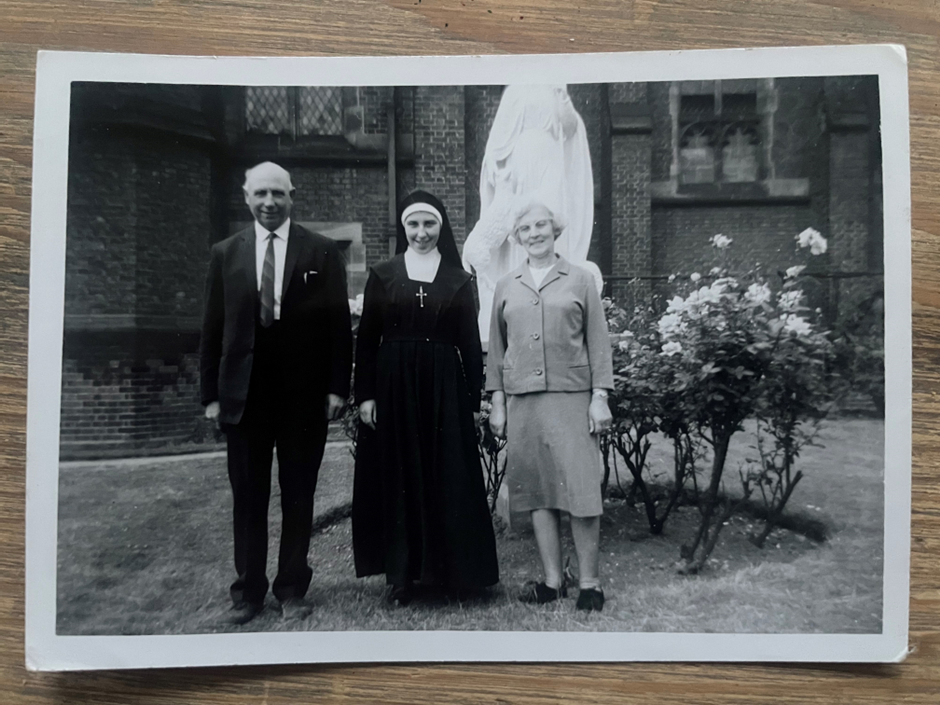 Later visiting a church with his wife, on the right (Photo courtesy of Catherine McKinnell)
McKinnell believes her grandfather’s story reflects both the bravery and hardship inherent in emigration.
“He was obviously an incredibly brave person to just up and move to England to build a new life,” she said.
“We sometimes romanticise it, but I don’t underestimate how hard it is to leave your home and to leave everything you know.”
That understanding has shaped her own views on immigration.
“It’s a really important story about the sacrifice that people make to build a better life for themselves,” she said, “but also the contribution that people make to the place that they choose to make their home and build their life.”
Growing up in a working-class family with Irish roots also influenced her sense of public service.
“We are all the product of our ancestors and our upbringing and the roots that are within us,” she said.
“I was always proud to be of Irish descent, and I think there is a really strong Irish community in Newcastle.”
Today, McKinnell describes her identity as “very much Geordie, an English person but with very strong Irish roots”, a reflection, she says, of the generations of Irish people who helped build modern Newcastle brick by brick.
See More: Catherine Mckinnell, Emigration, MP, Newcastle
