





IT WAS a story that gripped the nation and the empire.
Morgan v Morgan had every ingredient to justify the phrase ‘truth is stranger than fiction’: taboos, family, class, money, power, religion and sex.
All found their way into a Dublin matrimonial court in the sweltering summer of 1876. The case had been anticipated for months, and the main characters were well used to courtroom battles, but this was different. Under the law as it stood, even if Richard won, he could live apart from his wife but could not remarry.
Captain Richard Spread Morgan, 50, of the Cork Artillery, was the son of a magistrate. Adding to the intrigue, it was the husband who brought the petition, alleging adultery and cruelty by his wife.
She was Lady Catherine Louisa Morgan, 43, the youngest daughter of Stephen Moore, 3rd Earl of Mount Cashell, and the mother of their three daughters. Her father, then in his eighties, was said to be the longest-serving member of the House of Lords.
Considered an eccentric aristocrat, he was in a precarious financial position despite owning the 800-acre Moore Park estate in Kilworth, Co. Cork. If Louisa lost, she risked losing her children and any property rights she held.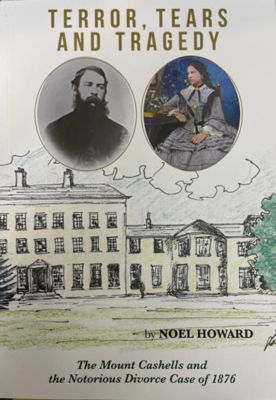
Earlier court appearances had involved squabbles over money and property. At this hearing, Louisa sat in an otherwise all-male courtroom with her father there to support her.
Every part of her personal and public life was open to discussion, and she was cross-examined with what her defence team called ‘a ruthless brutality’. Adding to the strain, her mother, the Earl’s Swiss wife, was dying at the family home, Moore Park.
Interest in the case was so great that police kept back people seeking admission once the court was full; only ‘gentlemen’ were allowed in.
Crowds gathered outside, eager for snippets of news, and there would be plenty to occupy them. Richard and Louisa were represented by leading members of the Irish legal profession, each conscious of the attention their performances would attract.
At times, the courtroom became a theatre, with Shakespeare, Dryden and Coleridge among the writers quoted. The presiding judge, Judge Warren, had his hands full keeping order.
Richard told the court that his wife had claimed to have had ‘a hundred men’, but only four were named in connection with the adultery allegation: Cork solicitor Henry Bacon Julian; Arthur William Vincent, described as a ‘gentleman’; and William Mangan and John Fleming. Judge Warren decided not to pursue cruelty as a separate issue, although many exchanges on both sides concerned the couple’s treatment of each other.
Richard alleged that Louisa had pulled his whiskers, struck him with a whip, thrown his shirts out of a window and trampled them in the mud.
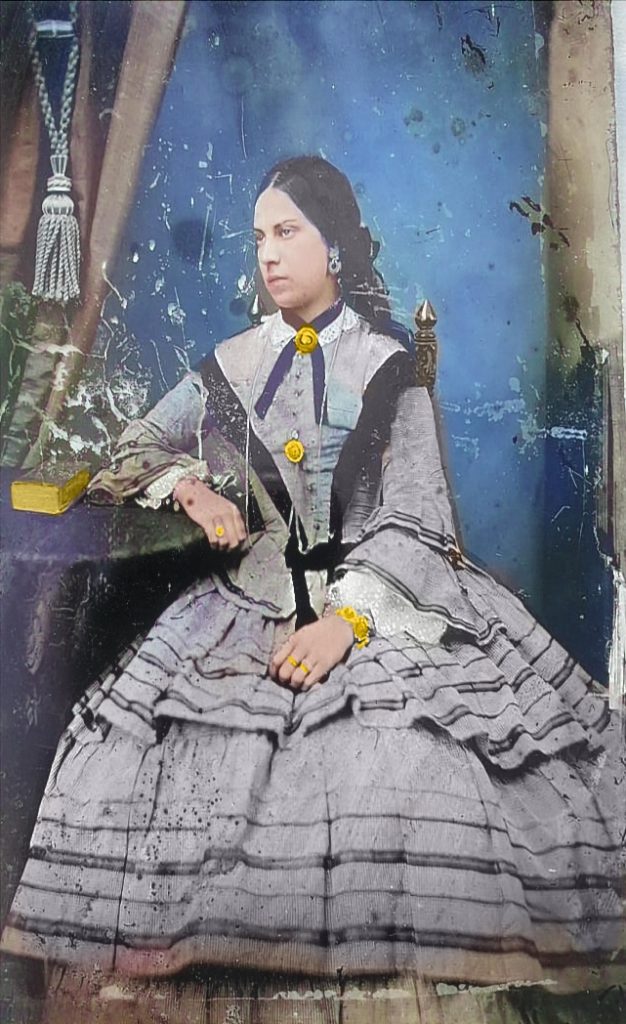 Lady Catherine Louisa Mount Cashell
He also accused her of pointing a loaded gun at him, throwing water over him and into his bed, selling his clothes, striking him with a chair and spitting at him. Louisa had allegations of her own: she said Richard had dragged her and a servant through mud, pulled her from her horse and shot her pet dog in front of her.
As the trial progressed, someone suggested that newspapers carrying its more salacious details should be kept from women in rural Ireland — a revealing glimpse of the attitudes of the time.
One piece of evidence was considered too improper to be read aloud and was instead written down for the judge and jurors alone.
Richard’s evidence was at times sketchy, contradictory and implausible. Some witnesses called in support of his case came from what were then regarded as the lower classes, and Louisa’s counsel ridiculed or dismissed parts of their evidence. Her lead lawyer, James Murphy, pressed Richard when he struggled to remember events or appeared to contradict himself.
Louisa, meanwhile, impressed the court with her testimony. Among her witnesses was Richard’s sister, Sarah Westropp, whose appearance was a coup for the defence.
Louisa was emotional when questioned about her children and her dying mother, and spirited when challenged. ‘I am not afraid of anyone,’ she declared. Judge Warren referred specifically to her manner and evidence in his summing-up.
After days of testimony and legal jousting, the jury retired. It returned five minutes later, finding that the allegation of adultery had not been proved in relation to any of the men named. Cheers broke out in the courtroom. One newspaper reported that Louisa ‘wept bitterly’ as the verdict was read.
There was a similar reaction outside. When Louisa emerged, members of the crowd tried to unhitch the horse from her carriage and pull her back to her hotel in triumph, but police intervened. A man who resembled Richard was mistakenly attacked.
Louisa’s victory was bittersweet: her mother died the next day. Richard’s case had collapsed, and he was ordered to pay the costs of the trial. His father died two weeks later.
Ten years on, in 1886, Louisa died of cancer. For a woman whose life had been exposed to such intense public scrutiny, the surviving account of her death appears remarkably slight.
Terror, Tears and Tragedy – The Mount Cashells and the Notorious Divorce Case of 1876, by Noel Howard. Available from Buythebok.ie
Everything from irishpost.com and the print edition is available on the Irish Post App — plus more! Download it for Android or Apple IOS devices today.
