



IRELAND’S police ombudsman has revealed nearly half of the cases referred to them by gardai involved people with mental health issues.
Fiosrú, the newly launched Office of the Police Ombudsman, previously known as Gsoc, launched its inaugural research report on Incidents of Death and Serious Harm 2024 this week.
The report examines incidents involving contact with gardaí where a member of the public has died or been seriously injured.
It reveals that in 2024, 37 statutory referrals of incidents of death or serious harm were reported by An Garda Síochána to Fiosrú’s predecessor body, GSOC.
The incidents involved 42 people, 21 who died and 21 who were seriously harmed.
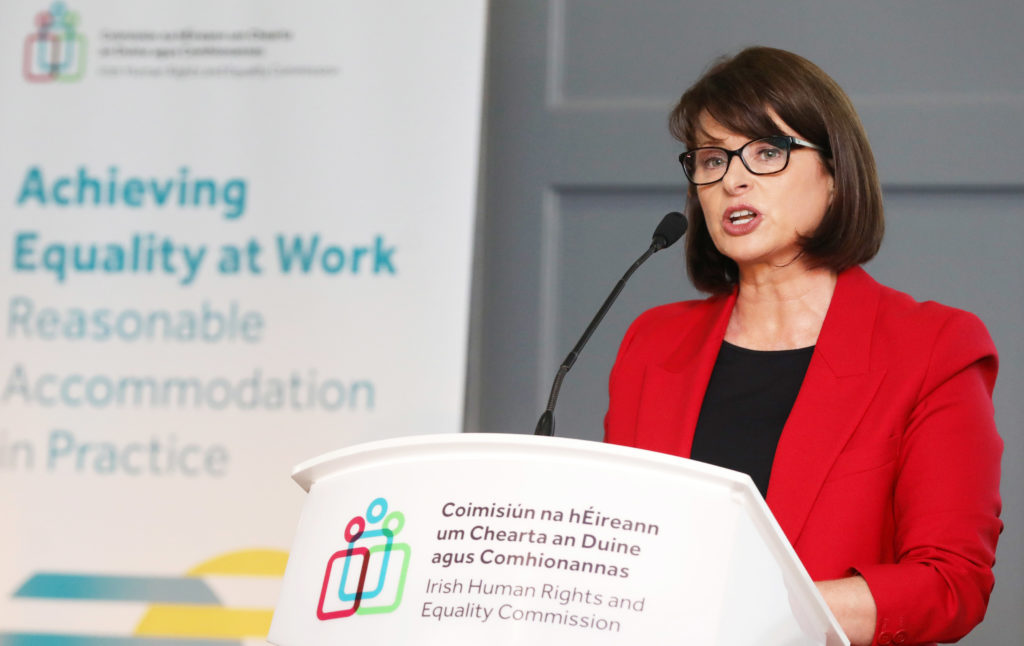 Police Ombudsman Emily Logan
The figures showed that “vulnerability and crisis were central features in many of the incidents”.
“Of the 37 referrals, 18 involved people with known mental health difficulties,” the report confirmed.
“Alcohol was a factor in 19 referrals, while 13 referrals involved drug use,” it added.
“Taken together, 29 incidents involved at least one of these three factors, accounting for 78% of all referrals.”
Four of the incidents involved people who were homeless or had a history of homelessness.
Road traffic incidents accounted for 13 referrals, resulting in three deaths and 15 non-fatal injuries.
Eight incidents in or following Garda custody, involved five deaths and three serious injuries and there were 10 referrals relating to apparent or attempted suicides, including nine deaths.
The remaining six referrals involved other Garda contact before the person died or was seriously harmed, involving four deaths and two serious injuries.
“The demographic profile is also notable,” the report states.
“Of the 42 people involved, 37 were male,” they explained.
“Six people were aged under 25, all of whom were involved in road traffic incidents.
“The largest age category recorded was 31 to 40 years, accounting for 17 people, or 40% of all those who died or were seriously harmed.”
It adds: “At the conclusion of our investigations, Fiosrú’s role is to either make recommendations to the Garda Commissioner for potential internal disciplinary proceedings or to send files to the Office of the Director of Public Prosecutions to consider criminal prosecutions."
Eight criminal investigations were initiated as a result of the referrals, including two which identified an apparent criminal offence where files were referred to the Office of the Director of Public Prosecutions.
“These figures demonstrate both the complexity of the situations frontline gardaí face and the value of strong, independent oversight,” Police Ombudsman Emily Logan said.
“Behind every one of the 21 deaths and 21 incidents of serious harm is a person and a family dealing with trauma and loss,” she added.
“The fact that almost eight in ten of these referrals involved people with mental health difficulties, or users of alcohol or drugs, shows that gardaí are repeatedly encountering people who are vulnerable or in crisis.
“Policing alone cannot shoulder these complex issues.
“This raises the question as to whether a wider, coordinated response across health, addiction, housing and social services is necessary.”
Ms Logan added: “The incidents documented in this report are exceptional and represent but a small fraction of the investigations which Fiosrú carries out each year.
“The often challenging and complex circumstances behind these referrals provide real opportunities for learning with the objective of minimising harm and preventing deaths in the future.
“As Ireland’s independent policing oversight body, Fiosrú seeks to contribute where it can to fostering capacity and resilience among frontline gardaí in responding to challenging or high-risk scenarios.
“My hope is that the yearly publication of this statistical data and analysis will facilitate better understanding of systemic issues and areas for improvement for consideration by the Garda Commissioner.”
See More: Fiorsu, Garda, Ireland, Police Ombudsman
