





AT THE end of a week filled with welcomes at so many doors and tables filled with hearty and exquisite mezzes, my waistband had growing evidence that Cyprus can still lay claim to that specific Greek word for hospitality, Kopiaste, meaning ‘sit down with us and share’.
As the notches on my jean belt came under increasing pressure, I was reminded of that ancient Irish practice of oigidecht, the obligation under the Celtic Brehon Laws for households to provide food, drink, shelter - even entertainment - to complete strangers, regardless of either party’s wealth or status.
Such welcome generosity is, of course, to be encountered in many parts of the world, notably in Greece itself where Filoxenia (friendliness to strangers) can still be found extensively and in Arabic regions where Bedouin customs and Islamic teachings converge to instil karam (generosity/nobility) or deliver al-diyafa (hospitality) as a sacred obligation and a point of honour.
So it was, in the pretty stone villages that dot the pine-carpeted Troodos Mountains, the towering backbone of Central and Western Cyprus, that I encountered ageless parallels with Irish traditions of kindness and welcome – something I met in my own childhood when my evening meal was often halved by my parents so it could be shared with a young friend who had just called round.
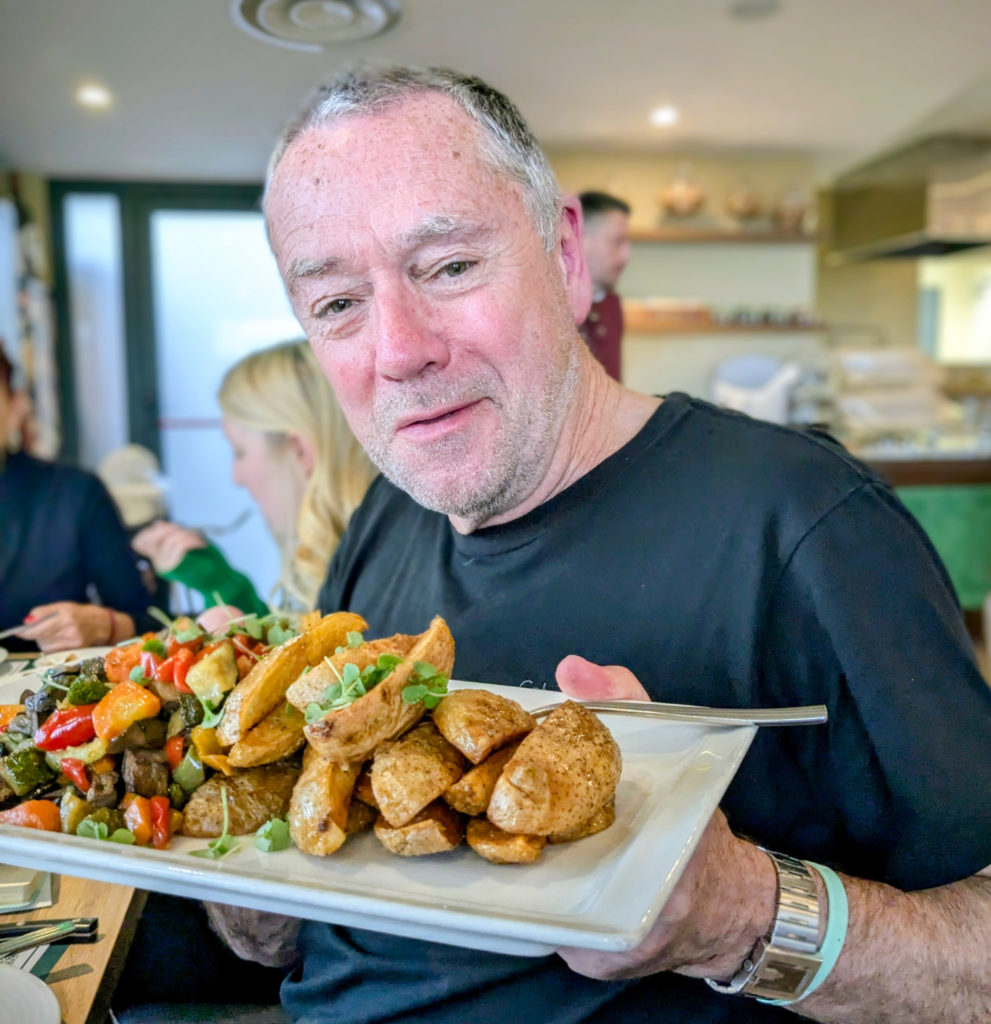 James Ruddy enjoyed fine food and a warm welcome in Cyprus
Despite their graphic differences in climate and landscape, in their very heartlands, modern Cyprus and Ireland still have much in common that has been shaped by their shared histories of foreign invaders, deep Christian belief, supportive community spirit and a definite enthusiasm for the benefits of good food and, most importantly, tsunamis of proudly-produced local alcohol.
On one visit, 12 years ago, I will never forget a chance meeting near Paphos, where my partner and I asked an elderly passing woman for directions to a church and, after a very friendly chat, she invited us to the nearby wedding she was attending.
After brief introductions, we were treated as honoured guests who, joyfully, ate, drank and danced the evening away in what quickly felt like a gathering of long-lost friends.
We still exchanged cards and letters with the old lady, a retired physician, until her passing two years ago.
Indeed, on my latest trip – split between the lively coast around Limassol and a wander through those much more sedate and inviting mountains – the Cypriot passion for hospitality, openness and a genuine desire to connect with strangers was as deeply enshrined as that universal invitation to join the craiq over a Guinness in an Irish village pub.
For both nations, maybe a form of pragmatism has developed from being invaded so often. In the case of Cyprus, the list has included Assyrians, Egyptians, Persians, Greeks, Romans, Venetians, Ottomans and, naturally, the British from 1878 to 1960, after which came independence and the Turkish invasion of 1974 that has left a large chunk of the north occupied and partitioned – in another vivid parallel with Ireland’s position.
Such thoughts were uppermost in my mind as I flew into a relatively quiet Paphos Airport on a warm winter afternoon following a four-and-a-half hour Jet2 hop from East Midlands, joining my small group of experienced travellers keen to explore the country’s two very different worlds, coast and mountains, with their common thread.
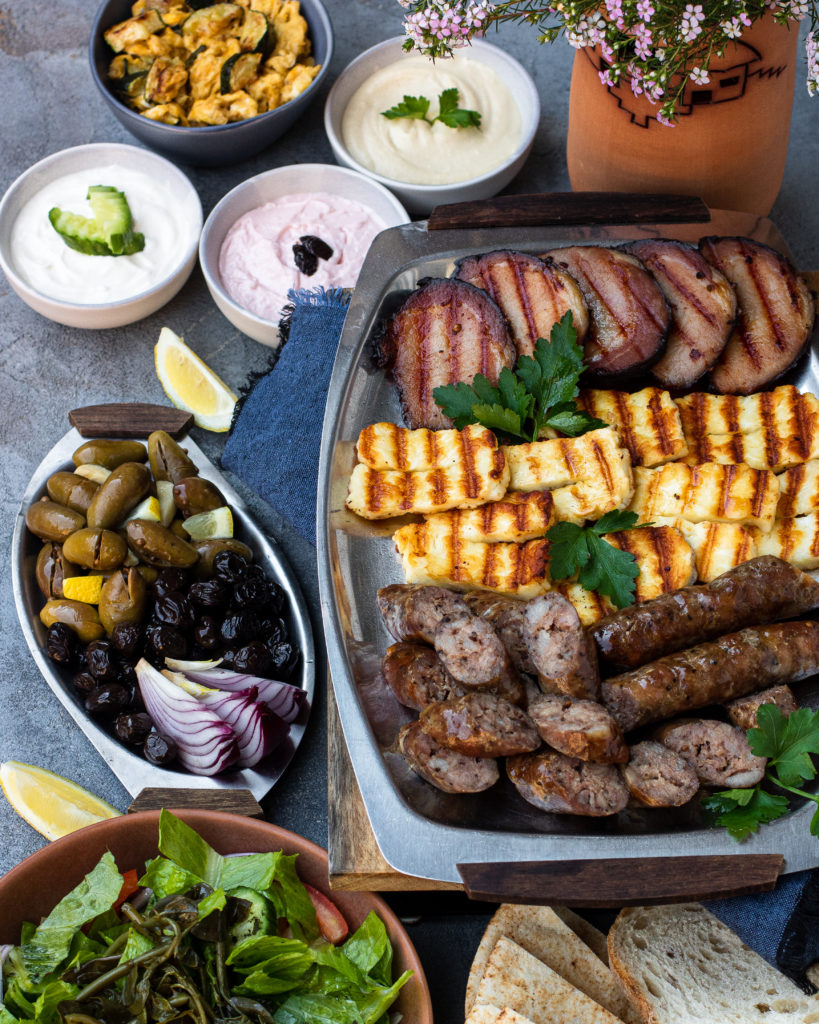 A huge mezze makes for the perfect lunch
Of course, it’s not easy to feel authentic culture among the country’s highly commercial resorts, like the former sleepy fishing village of Ayia Napa, long since identified as being one of those leading – and rowdy - clubbing capitals of Europe, vital to the country’s economy as a key magnet in the attraction of 4 million tourists annually, with the UK still being the most sizeable group.
Yet Cypriots, like the Irish, have long been accustomed to adapting to world events. Lively Limassol, where I stayed at the sleek beachside Royal Apollonia Hotel, was once known as Moscow on the Med due to the influx of Russian investors and workers. But the Ukraine war fallout and the ending of the golden passport system have reshaped the major resort and port into a much wider-based cosmopolitan city with a traditional heart.
In the reshaped Old Port and the much-restored Old Town, there were the indelible reminders of past invaders – the pier built by the British to export wine and Ankara Street in the Turkish quarter – as well as that soaring Cypriot focal point, the1906 Ayia Napa Cathedral, with its precious gold icons - one bearing the image of the Virgin Mary herself and said to have been discovered in a glen (a narrative not dissimilar to those of Irish religious shrines).
In a shared minibus, touring Limassol’s southern coast over the coming days - without once treading the golden sands of the EU nation’s famed beaches - an alternative Cyprus emerged; here were visits among the uncovered ruins of Kourion Amphitheatre and the Sanctuary of Apollo, as well as Limassol Castle (where Richard the Lionheart married his fiancé in 1191) where the ghosts of the island’s past civilisations were laid bare in the stones and streets of a 3500-year-old city kingdom, a Roman theatre and a regularly rebuilt medieval fortress.
Yet it was in the meals, some at Limassol’s traditional tavernas or even at the hotel’s very popular and contemporary Akakiko ‘easy Japanese fusion’ restaurant, the Kopiaste never ceased amid a cavalcade of huge and endless servings of sumptuous dishes and an unstoppable ‘intravenous’ pipeline of local wine and beer.
That spirit – and its Irish links – continued out of the city, at the charity-based Golden Donkeys Farm, where another mammoth mezze followed a tour of the rescue centre which included workshops on those proudly Cypriot creations, olive pies and halloumi – the cheese made, authentically, in most villages across the country and now a 40,000 tonnes-a-year export.
Of course, it is cats as much as donkeys for which Cyprus is famous (it is claimed there are more cats there than people) so it was inevitable that I would take the short trip south to Akrotiri’s Monastery of St Nicolas of the Cats, where hundreds roam free and are cared for by the local nuns – and the visiting tourists!
Away from the donkeys, cats and lively Limassol, it was in the countryside and Troodos Mountains that I felt the Celtic parallels most deeply. In pretty, limestone and terracotta Lefkara village, elderly lace makers, cutting patterns and threading intricate shapes into imported Irish linen, were concentrating with the same diligence as Ireland’s knitters still employ every day in Aran.
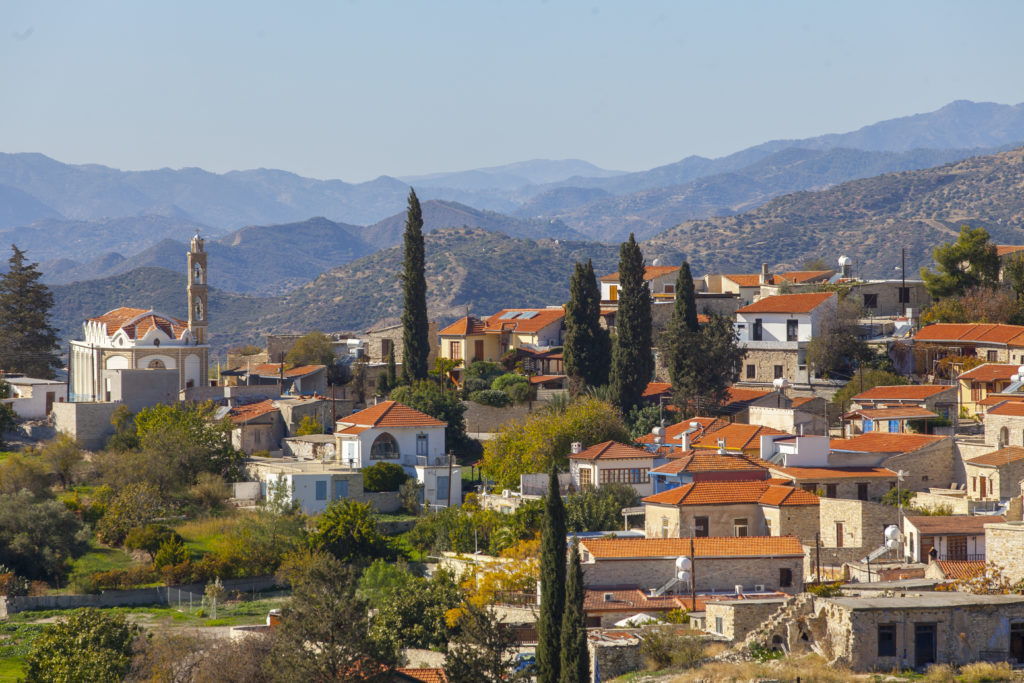 The picture perfect Kato Drys rural village in Cyprus
Leonardo da Vinci is said to have purchased lace there in 1481 and it is claimed to have influenced the tablecloth design for his Last Supper masterpiece. Today, though, the business is waning, as young people have left in droves for the easier and more lucrative work on the coast.
That drift away from the Troodos Mountains and lowland rural villages is being arrested though, as I found when I relocated for an idyllic few days, amid morning mists and pine-scented heights of Platres village, at the newly-opened Pendeli Resort, part of an extensive 300 million euro investment and reshaping of the area’s hotels, outdoor activities and restaurants.
Now is a good time to visit a region that has suffered a decline in tourism over the past four decades, from neglect and unforeseen pressures, including a drop in ski visitors due to global warming reducing winter snow quality.
Hence, where the often frenetic coast offers the three S’s - sun, sea and sand – the Troodos, commanded by towering Mount Olympus at 6,400 feet, bring a breath of fresh air, filled with cobblestone villages, UNESCO World Heritage churches and monasteries, wine tours, waterfall hikes and welcoming traditional family tavernas.
Here too, much like in Ireland, the hand of one major past occupier is obvious, in the British architecture (including attractive century-old mansions built for the colonial elite) and the roads that Royal Engineers carved into the heavily-forested mountainsides, happily making them more accessible to today’s returning visitors.
And so, over the next few days, the legacy, of those British Sappers took me along winding mountain roads to easy hikes to Millomeris Waterfall and along the lofty Artemis Nature Trail round Olympus itself, as well to view the mesmerising icons at St John Lampadistis Monastery.
There were also tastings at wineries dedicated to producing the sweet dessert Commandaria that makes Cypriot hearts glow with pride (and cheeks glow pink), as the oldest named wine in the world still in production, dating back 4000 years.
And all the time, back at the Pendeli Resort and at local tavernas, there was that constant presence of warmth and welcome to visitors that brought so many famous people to Platres in its heyday, from author Daphne Du Maiurier (said to have written most of Rebecca there), US actor Telly ‘Kojak’ Savalas and King Farouk of Egypt ( claimed to have had his famous Brandy Sour Cocktail created there for him).
So it was that early one morning, after a misty walk through the local hills, I wandered into Platres Cultural Centre in the former 1913 market hall where an English Lavender show was under way, another link with the past that has been in use locally for more than a century after being introduced by British officers.
As I wandered past stands displaying everything, from smelling salts to lavender chocolate and potions claimed to help with memory loss and hyperactive children, a woman offered me a pile of biscuits she said were ‘a favourite of Queen Victoria’ whose granddaughter, Princess Mary and her husband Prince George, also came to enjoy the cool mountain air.
“Where are you from?” she asked me. “I live in England,” I replied, “but my parents were both Irish.”
She smiled and handed over yet another pile of ‘Queen Victoria Lavender’ biscuits. It felt like kopiaste was working its magic in Cyprus yet again.
Factfile
Local info
For lots of detailed tourist information go to www.visitcyprus.com
Flights are operated from several UK airports year-round. James flew from East Midlands with Jet2. Go to: https://www.jet2.com/
Airport Deals
For cut-price airport parking and hotels, try Holiday Extras: go to www.holidayextras.com or call 0800 316 5678
